
Blacktorch (Erithalis fruticosa)
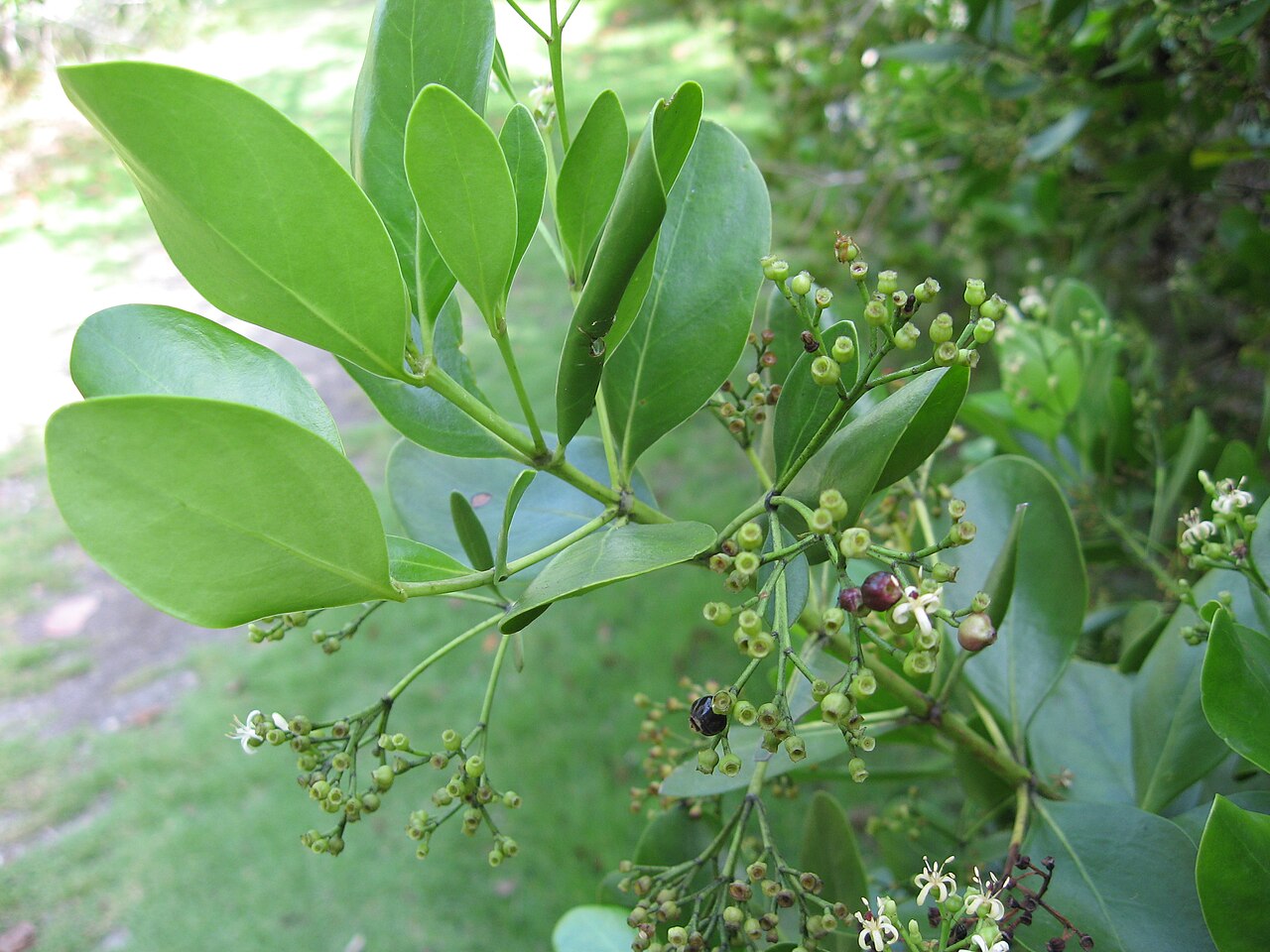
Erithalis fruticosa, known as Blacktorch or black torch, is a dense evergreen shrub of coastal hammocks, rocky shores and thickets in the Florida Keys and along the southeast Florida coast. It has thick, glossy, dark green leaves, clusters of small white starry flowers through much of the year, and shiny purple-black berries that birds relish. It belongs to the coffee family (Rubiaceae), the same family as wild coffee, snowberry and firebush.
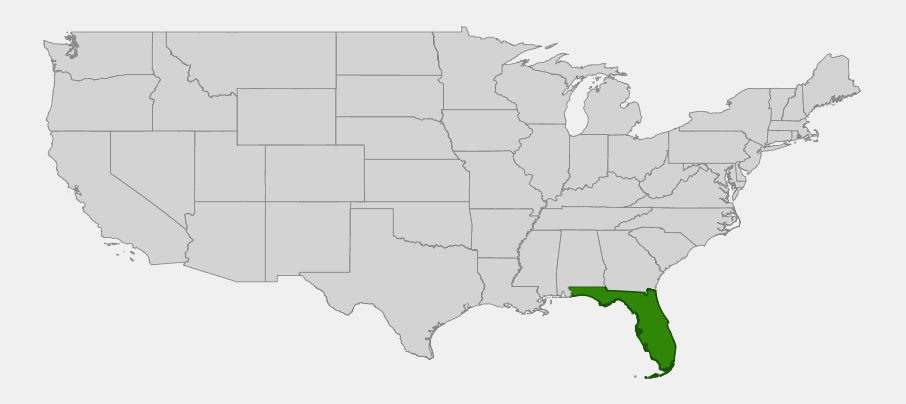
Blacktorch is listed as Threatened by the State of Florida (FDACS Regulated Plant Index). In Florida it grows from the Keys north along the Atlantic coast to Martin County, but outside the Keys it is rare, and much of its mainland coastal habitat has been developed. It is still a fairly common shrub in coastal thickets of the Keys. Gardeners should buy only nursery-propagated plants, which are available at native nurseries in south and central Florida, and never dig plants or collect cuttings from the wild.
For coastal gardeners in south Florida, blacktorch is an excellent native shrub: it tolerates salt wind, poor sandy or limestone soils and drought once established, and it supports both pollinators and fruit-eating birds. This guide covers how to identify blacktorch, where it grows, and how to use it in a seaside landscape.
Identification
Blacktorch is a neat, rounded shrub with an unusually glossy, almost polished look. The combination of thick opposite leaves, small white flowers in branched clusters and round black fruit makes it fairly easy to identify in coastal south Florida.
Growth Habit & Bark
Blacktorch is usually a densely branched shrub 4 to 8 feet tall, generally taller than wide. In sheltered hammocks it can become a small tree 10 to 15 feet tall, while on exposed rocky shores it may stay low and wind-pruned. The bark is dark brown, striped with lighter brown on older stems.
Leaves
The leaves are opposite, thick, leathery and very glossy, dark green above and paler beneath. They are mostly obovate to elliptic, rounded at the tip, and generally 1 to 3 inches long. As in other members of the coffee family, a small triangular stipule sits between the bases of each leaf pair.
Flowers
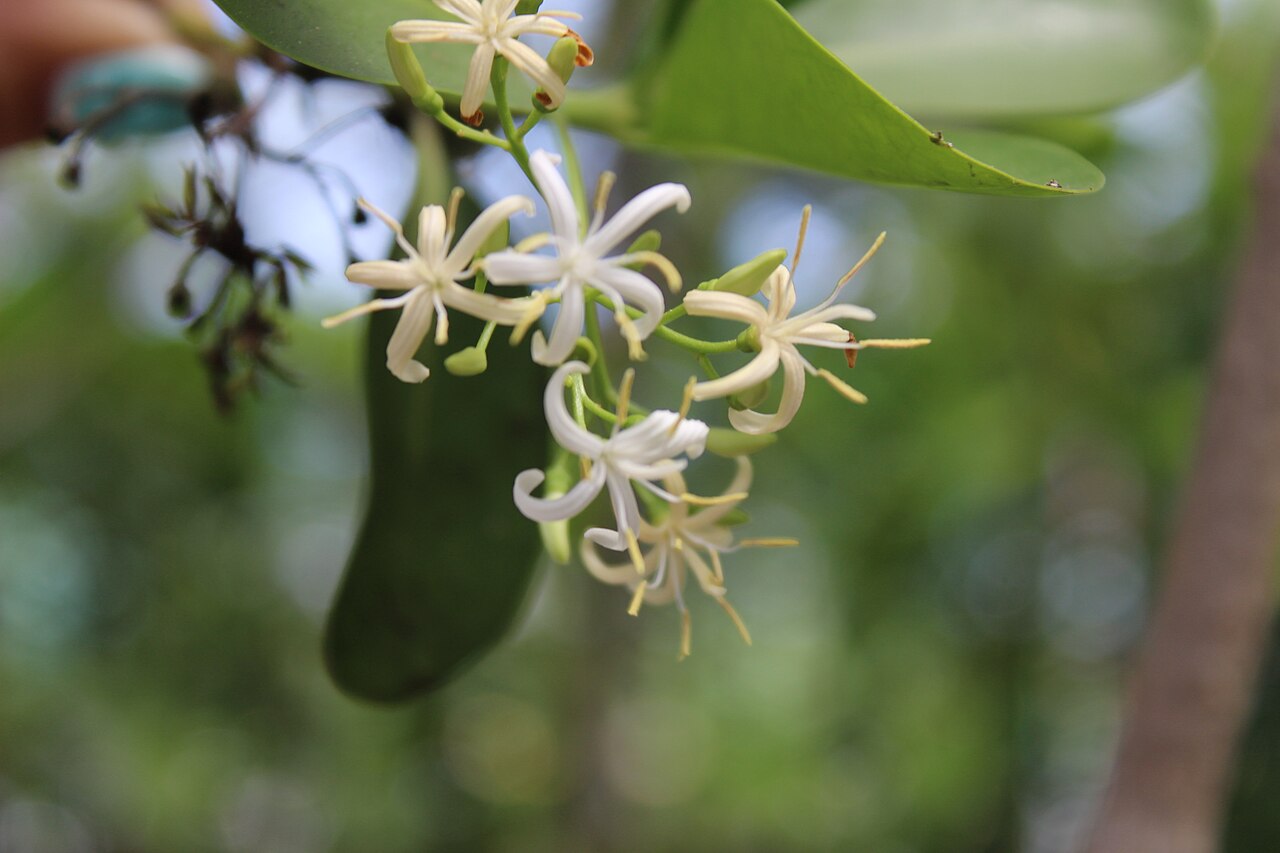
The flowers are small, about a quarter to a half inch across, white to creamy white, with five (sometimes more) narrow petals that curl back and expose the stamens. They are borne in branched clusters at or near the branch tips and appear through much of the year in south Florida, with the heaviest flowering usually in spring and summer.
Fruit
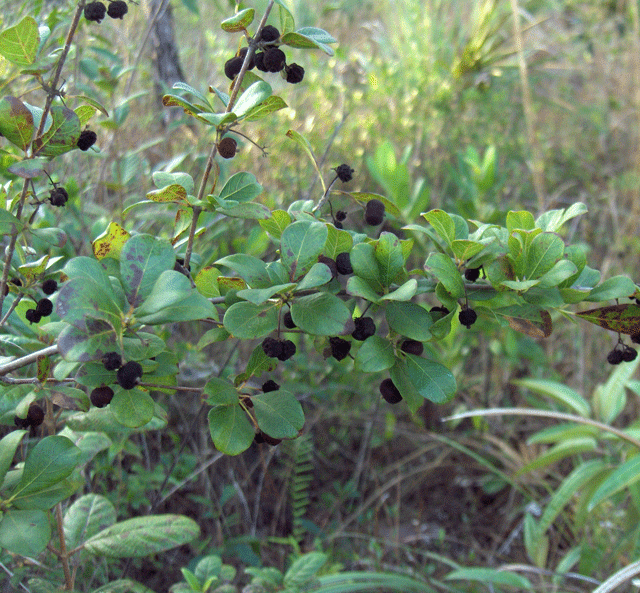
The fruit is a round, juicy drupe about a quarter inch across, ripening from green to shiny purple-black. Each fruit contains several small seed-like stones. Plants often carry flowers and fruit at the same time.
Similar Species
Wild coffee (Psychotria species) has larger, thinner leaves with deeply impressed veins and red fruit. Snowberry (Chiococca alba) is a sprawling, vine-like shrub with yellowish bell-shaped flowers and white fruit. Inkwood (Exothea paniculata) has alternate compound leaves. Blacktorch’s thick, shiny, rounded leaves in opposite pairs and black fruit are the best clues.
Quick Facts
| Scientific Name | Erithalis fruticosa (accepted by USDA PLANTS and the Atlas of Florida Plants) |
| Family | Rubiaceae (coffee or madder family) |
| Plant Type | Evergreen shrub or small tree |
| Mature Height | 4–8 ft (occasionally to about 15 ft) |
| Mature Spread | 3–6 ft |
| Growth Rate | Slow to moderate |
| Sun Exposure | Full sun to light shade |
| Water Needs | Low to moderate; drought tolerant once established |
| Soil Type | Well-drained sand or limestone with some organic matter |
| Soil pH | About 6.5–8.5 (neutral to alkaline) |
| Bloom Time | Year-round; heaviest in spring and summer |
| Flower Color | White |
| Fall Color | None; evergreen |
| Fruit | Shiny purple-black drupe about ¼ in |
| Deer Resistant | Not well documented |
| USDA Hardiness Zones | 10b–11 |
Native Range
Blacktorch is a widespread plant of tropical American coasts. It grows throughout the West Indies, including the Bahamas, Cuba, Hispaniola, Puerto Rico and the U.S. Virgin Islands, and on the Caribbean coasts of Mexico, Central America and northern South America. In the continental United States it is found only in south Florida, where it reaches the northern edge of its range.
In Florida, the Atlas of Florida Plants and the Institute for Regional Conservation record it from the Monroe County Keys north along the east coast to Martin County. It is a common element of coastal thickets and hammock edges throughout the Keys, from Key Largo to Key West, but it is rare on the southeast mainland. In Broward County, for example, it is known only from Hugh Taylor Birch State Park. Its scarcity on the mainland, where coastal hammocks have been almost entirely developed, is the main reason it is state-listed.
Typical habitats are coastal hammocks, especially their sunny edges, coastal rock barrens, sand ridges just behind the beach, and thickets on exposed limestone near the shore. In the lower Keys it also grows in pine rocklands. It prefers sites with good drainage and tolerates salt wind and occasional brief flooding by salt water.
📋 Regional plant lists featuring Blacktorch: North & South Florida
Growing & Care Guide
Blacktorch is a tough, slow-growing shrub well suited to seaside gardens in south Florida. It asks for sun, good drainage and protection from frost, and it rewards those conditions with year-round glossy foliage, flowers and fruit. Because it is state-listed as Threatened, buy nursery-propagated plants only and never collect plants, seeds or cuttings from parks or other natural areas.
Light
Plant in full sun for the densest growth and best flowering. It tolerates light shade at the edge of a hammock but becomes more open and flowers less in deeper shade.
Soil & Water
Blacktorch grows in well-drained sandy or limestone soils and does best when there is some organic matter in the top layer. It does not need fertile soil. Water regularly during the first several months after planting; once established it tolerates drought well, though it looks best with occasional watering during long dry spells. It has high tolerance for salt wind and moderate tolerance for brief salt-water flooding, so it can be used close to the shore, behind the first line of dune plants.
Planting Tips
Plant from containers in the warm season, spacing plants 3 to 5 feet apart for a hedge or buffer planting. It works as a specimen shrub, an informal hedge, or part of a mixed coastal hammock planting with sea grape, stoppers and other natives. It is suited to Zones 10b and 11 and can be damaged by frost, so it is not reliable north of the southern third of the peninsula except in very protected coastal sites.
Pruning & Maintenance
Blacktorch keeps a naturally neat shape and needs little pruning. Light shaping after flowering keeps hedges dense, but heavy shearing reduces flowering and fruiting. Keep mulch away from the base of the stems. It has few serious pest problems; scale insects occasionally appear on stressed plants.
Propagation
Nurseries grow blacktorch from seed. Remove the pulp from ripe black fruits, sow the seeds just under the surface of a well-drained mix in a container, and keep them in a bright, warm place. Germination and early growth are slow. Use seed only from cultivated plants, not from wild populations.
Landscape Uses
- Coastal landscapes: salt-wind-tolerant evergreen shrub for seaside gardens in south Florida
- Hedges and buffer plantings: a dense, glossy informal screen that needs little pruning
- Butterfly gardens: a recorded nectar plant for the endangered Miami blue butterfly and many other pollinators
- Bird gardens: purple-black fruits much of the year for fruit-eating birds
- Coastal hammock restoration: a characteristic shrub of hammock edges and coastal thickets in the Keys, using propagated stock
Wildlife & Ecological Value
Blacktorch flowers and fruits almost continuously in south Florida, which makes it a reliable food source in coastal habitats.
For Pollinators
The small white flowers attract butterflies, bees, wasps and flies. The Institute for Regional Conservation lists blacktorch as a nectar plant for the Miami blue (Cyclargus thomasi bethunebakeri), a federally endangered butterfly now restricted to a few sites in the Florida Keys, which makes it an important plant in Keys butterfly gardens and restoration projects.
For Birds
The juicy black fruits are eaten by mockingbirds, catbirds, thrashers, warblers and other fruit-eating birds, including migrants passing through the Keys in spring and fall. Dense branches provide nesting and roosting cover.
For Mammals
Small mammals may eat fallen fruit. On Big Pine Key and nearby islands it grows within the range of the endangered Key deer, although it is not known as an important food plant.
Ecosystem Role
As a common shrub of coastal thickets in the Keys, blacktorch helps stabilize sand and limestone soils near the shore and forms part of the windbreak at the seaward edge of hammocks, protecting more sensitive plants inland from salt spray.
Cultural & Historical Uses
Carl Linnaeus described Erithalis fruticosa in the eighteenth century from West Indian material. The species name fruticosa simply means “shrubby.” Several other Erithalis species grow in the Caribbean, but this is the only one native to Florida.
The common name blacktorch is often said to refer to its resinous wood, which burns readily and was reportedly used for kindling or torches in the Caribbean, together with its black fruit. Similar names, such as “torchwood,” are used in the region for other plants with flammable wood, so names alone are not a reliable guide to identity.
In south Florida today, blacktorch is valued mainly as a landscape plant. It is recommended in local native landscaping guides for coastal sites and is used in butterfly gardens in the Keys because of its link with the Miami blue.
Frequently Asked Questions
Is blacktorch a protected plant?
Yes. Erithalis fruticosa is listed as Threatened by the State of Florida (FDACS Regulated Plant Index). Buy nursery-propagated plants from native nurseries and never collect plants, seeds or cuttings from the wild.
Is blacktorch salt tolerant?
Yes. It tolerates salt wind well and can handle occasional brief flooding with salt or brackish water. It is a good shrub for second-row coastal plantings behind the dunes in south Florida.
How tall does blacktorch get?
Most plants reach 4 to 8 feet tall and somewhat less wide. In sheltered spots it can become a small tree up to about 15 feet, while plants exposed to constant wind stay shorter.
Can I grow blacktorch in central Florida?
It is a tropical shrub suited to Zones 10b and 11 and can be damaged by frost. In central Florida it may survive in very sheltered coastal sites, but it is best treated as a south Florida plant.
Are blacktorch berries edible?
They are a food for birds, not a recognized human food, and their edibility for people is not well documented. Treat them as wildlife food.

Looking for a nursery that carries Blacktorch?
Browse our native plant nursery directory: Florida