Broomsedge (Andropogon virginicus)
Andropogon virginicus, commonly known as Broomsedge or Broomsedge Bluestem, is one of the most distinctive and ecologically important native warm-season grasses of the eastern and central United States. Its unforgettable autumn transformation — from summer green to vivid tawny-orange and golden-bronze — makes it one of the most visually striking components of fields, meadows, and disturbed lands throughout its vast range. Despite its reputation as a “weedy” grass in agricultural contexts, Broomsedge is a true native, playing a vital ecological role as a pioneer species and supporting an array of wildlife year-round.
A perennial warm-season grass in the bluestem family, Broomsedge forms dense, upright clumps 2 to 4 feet tall, with narrow, graceful foliage that turns a luminous reddish-tan in fall — providing one of the most spectacular and underappreciated shows of autumn color in the native plant palette. The fluffy, white-woolly seed clusters that emerge in late summer persist through winter, catching the light in the low winter sun like tiny lanterns. In a meadow or naturalized landscape, a stand of Broomsedge backlit at sunset is a sight of remarkable beauty.
Broomsedge thrives across an extraordinarily wide range of conditions — from full sun to part shade, and from drought to temporarily wet soils — making it one of the most adaptable native grasses available to Mid-Atlantic gardeners and restoration practitioners. Its deep, fibrous root system helps stabilize eroding slopes and improve soil structure, while providing thermal cover and food resources that benefit birds, small mammals, and invertebrates throughout the year.
Identification
Broomsedge is a warm-season, perennial bunchgrass forming loose, erect tufts or clumps 2 to 4 feet tall. The overall growth habit is upright and somewhat vase-shaped, with the upper stems and seed heads arching gracefully outward as the season progresses. The entire plant turns a characteristic tawny-bronze to reddish-orange in autumn — a color so distinctive that Broomsedge can be recognized across a field from a considerable distance.
Stems & Leaves
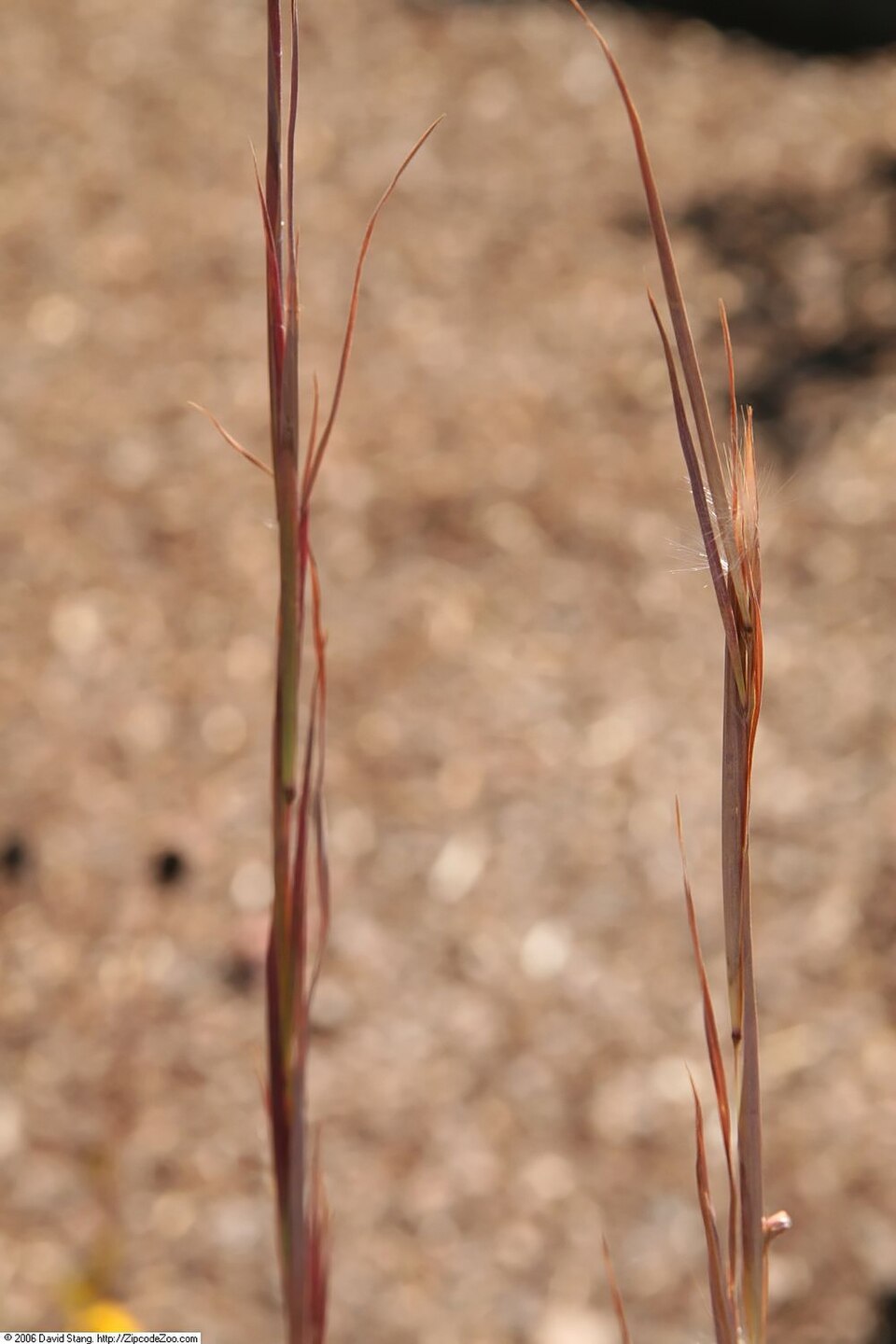
The stems (culms) are slender, erect, and compressed — noticeably flat in cross-section. The leaves are flat, narrow, and elongated — 6 to 18 inches long and ½ inch wide — with a prominent midrib and a somewhat rough texture. The leaf sheaths are strongly compressed and keeled. A key identification feature is the presence of distinctive leaf sheath papillae (small bumps) and a hairy margin at the sheath opening (ligule region). In autumn and winter, the foliage turns tawny-orange to reddish-brown, drying to a persistent straw color that remains standing well into the following spring.
Flowers & Seed Heads
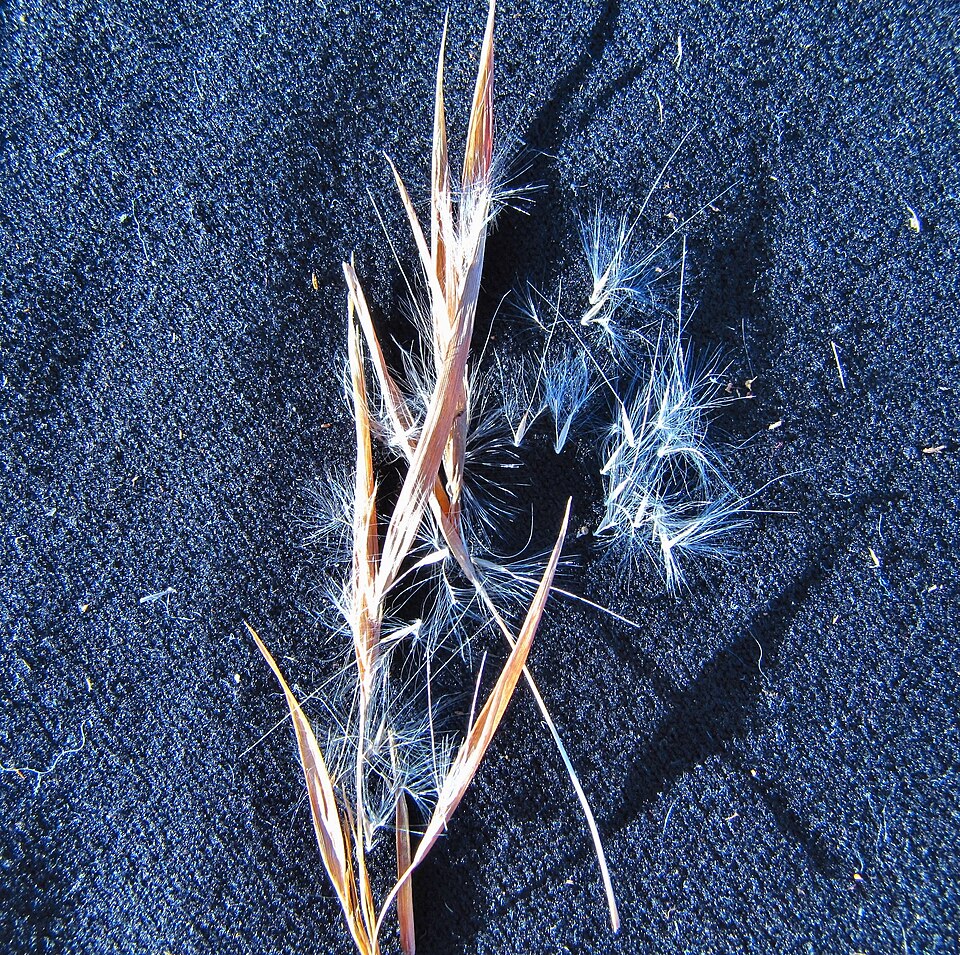
Broomsedge blooms in late summer and early fall (August–October), producing narrow, feathery inflorescences — technically racemes — from the upper leaf sheaths. Each stem produces 2 to 4 racemes that are partially enclosed in the inflated, boat-shaped upper leaf sheaths. The individual spikelets (florets) have long, silvery-white hairs that give the seed head a fluffy, cottony appearance, catching sunlight and creating a sparkling, luminescent effect. The seeds are small and wind-dispersed via the feathery hairs. The seed heads persist through winter, providing winter interest and bird food.
Quick Facts
| Scientific Name | Andropogon virginicus |
| Family | Poaceae (Grass) |
| Plant Type | Warm-season Perennial Grass |
| Mature Height | 4 ft |
| Sun Exposure | Full Sun to Part Shade |
| Water Needs | Low to High |
| Soil Type | Highly adaptable; clay, loam, sand, or poor, infertile soils |
| Soil pH | 4.0–7.5 (highly adaptable) |
| Bloom Time | August – October |
| Seed Head Color | Silvery-white, fluffy |
| Fall Color | Tawny-orange to reddish-bronze |
| Deer Resistant | Yes (generally avoided by deer) |
| USDA Hardiness Zones | 5–9 |
Native Range
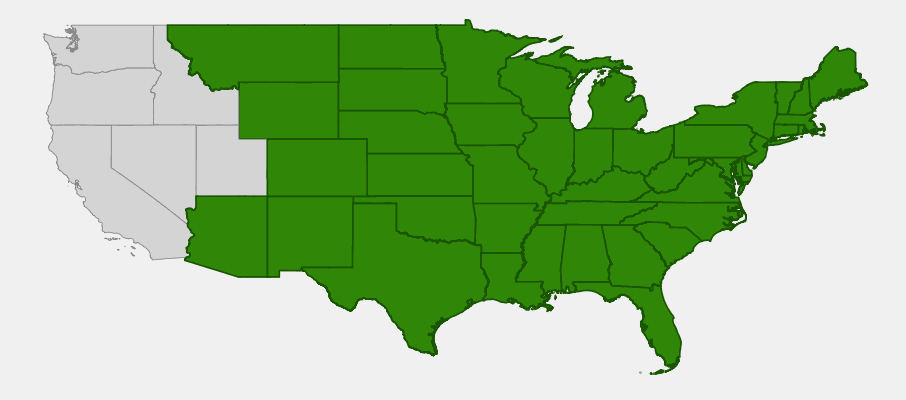
Broomsedge is one of the most widely distributed native grasses in eastern and central North America, occurring from Maine and southern Ontario south throughout the eastern United States to Florida, and west through the Central Plains to Nebraska, Kansas, and Texas. It is especially common throughout the Mid-Atlantic and Southeastern states, where it frequently dominates old fields, roadsides, and disturbed areas in dense, monospecific stands that can persist for decades.
In Maryland, Virginia, and West Virginia, Broomsedge is a ubiquitous component of the rural landscape — the tawny-golden winter fields visible along roadsides and fence lines throughout the region are frequently dominated by this native grass. It colonizes disturbed areas rapidly from wind-dispersed seed, often becoming the dominant species within 2–3 years of soil disturbance. On abandoned agricultural land, Broomsedge typically forms a dense groundcover that persists for many years before successional shrubs and trees gradually shade it out. It is equally common in upland forests, woodland edges, and open meadows.
The species shows remarkable ecological plasticity, occurring across an extraordinarily wide range of soil types, moisture levels, and site conditions. From the dry sandy soils of the New Jersey Pine Barrens to the clay uplands of the Piedmont and the mountain valleys of Appalachia, Broomsedge adapts to virtually any open or semi-open site within its range. This adaptability, combined with prolific seed production, makes it a pioneer species par excellence in eastern North America.
📋 Regional plant lists featuring Broomsedge: Maryland, Virginia & West Virginia
Growing & Care Guide
Broomsedge is one of the easiest and most forgiving native grasses to establish in the landscape. Its exceptional adaptability to poor, disturbed soils and wide moisture tolerance make it an ideal choice for difficult sites, naturalized plantings, and low-maintenance meadows. However, its enthusiastic self-seeding requires thoughtful placement.
Light
Broomsedge performs best in full sun but tolerates part shade without losing its ornamental qualities. In deeper shade, the plants become more open and sprawling and produce fewer seed heads, but remain attractive. The most dramatic autumn color develops on plants grown in full sun. In meadow or prairie restorations, Broomsedge competes well with other native grasses and wildflowers in full-sun conditions.
Soil & Water
One of Broomsedge's most valuable qualities is its tolerance of poor, infertile soils where other plants fail. It grows on everything from dry, sandy, or gravelly soils to dense clay and temporarily wet areas — a moisture tolerance range spanning dry to wet (hence the D-W designation in native plant lists). Avoid fertile, amended garden soils, which favor aggressive competition from other plants and cause Broomsedge to become overly lush and prone to flopping. This is a grass that thrives on neglect — the poorer the soil, the more it belongs.
Planting Tips
Broomsedge can be established from seed or container plants. Direct seeding is most effective in fall on a disturbed or scarified soil surface — no soil cover is needed, as the seeds require light to germinate. Container plants establish quickly if planted in spring. Once established, Broomsedge spreads vigorously from self-seeding; in smaller gardens, remove seed heads in late fall to prevent unwanted spread into adjacent areas. Broomsedge is an excellent choice for naturalized areas, meadow restorations, and challenging sites such as slopes, roadsides, and areas too dry or poor for most other plants.
Pruning & Maintenance
Cut Broomsedge back hard in late winter or very early spring — before new growth emerges — to about 4–6 inches above the ground. This removes the dead winter foliage and prevents the clumps from becoming overly thick and thatchy. The plant regrows vigorously from the base as temperatures warm. No fertilization is needed or desired — excess nitrogen causes floppy growth and loss of the characteristic compact form. Broomsedge has essentially no serious pest or disease problems.
Landscape Uses
Broomsedge is most valuable in naturalistic settings where its autumn and winter display can be fully appreciated:
- Native meadows and prairies — a classic meadow component throughout eastern North America
- Roadside and slope stabilization — deep roots prevent erosion on challenging sites
- Rain garden borders — tolerates both wet and dry extremes
- Autumn and winter interest — spectacular tawny-bronze color persists through winter
- Wildlife habitat plantings — provides essential cover and food for birds
- Low-maintenance buffer areas — thrives on poor, disturbed soils with no maintenance
- Old field restoration — naturally colonizes disturbed land and builds soil structure
Wildlife & Ecological Value
Broomsedge plays a surprisingly important ecological role in eastern North America, particularly in open habitats and old fields where it often dominates the winter landscape. Its dense clumps, persistent seed heads, and structural complexity provide essential resources for wildlife throughout the cold months.
For Birds
The fluffy, wind-dispersed seeds of Broomsedge are consumed by a variety of seed-eating birds, including Savannah Sparrow, Grasshopper Sparrow, American Tree Sparrow, Field Sparrow, and Dark-eyed Junco. The dense clumps of persistent dead foliage provide excellent thermal cover and nesting concealment for ground-nesting birds such as Meadowlark, Bobolink, and Dickcissel. In winter, stands of Broomsedge are important roosting habitat for sparrows and finches seeking protection from cold and predators.
For Mammals
The dense clumps of Broomsedge provide critical thermal cover for small mammals including meadow voles, white-footed mice, and shrews. Rabbits and cottontails use stands of Broomsedge as daytime resting and escape cover. The deep, fibrous root system creates a complex soil structure that supports populations of ground beetles, earthworms, and other soil invertebrates that in turn support insectivorous mammals such as shrews and moles.
For Pollinators
As a wind-pollinated grass, Broomsedge does not directly support pollinators with nectar or pollen. However, its value in grassland habitats is indirect but significant — dense stands provide critical nesting habitat for ground-nesting native bees including bumble bees (Bombus spp.), which nest in abandoned rodent burrows in dense grass clumps. The structural complexity of Broomsedge stands also supports a diverse community of beneficial insects.
Ecosystem Role
Broomsedge is a critical pioneer species in the ecological succession of eastern old fields — colonizing bare or disturbed mineral soil rapidly, building organic matter, and creating the groundcover conditions that allow woody shrubs and trees to establish over time. Its deep, fibrous root system improves soil structure, reduces compaction, and dramatically decreases erosion on bare or disturbed slopes. In the Mid-Atlantic region, stands of Broomsedge represent some of the most important grassland bird habitat remaining, as native grasslands of all types have been dramatically reduced by development and landscape change.
Cultural & Historical Uses
Broomsedge has a long history of practical use in rural American life, particularly in the South and Mid-Atlantic regions. The common name "Broomsedge" reflects its most widespread historical use — the dried stems were bundled and tied to create simple but effective household brooms for sweeping floors and hearths. These homemade brooms were a staple of rural households throughout the 19th and early 20th centuries, and the practice of gathering Broomsedge for brooms persisted in some areas well into the mid-20th century.
In agricultural history, Broomsedge has a more complex reputation. Farmers of the eastern United States viewed it as an indicator of soil exhaustion — Broomsedge rapidly colonized fields that had been depleted of nutrients by repeated cropping without amendment, thriving where competition from more demanding crops and grasses was reduced. The old saying "where broomsedge grows, the land is no good" reflected this observation. Modern ecologists recognize that while Broomsedge does favor nutrient-poor soils, it is actively improving those soils through organic matter addition and root activity — serving as a natural soil rehabilitation agent.
Various Indigenous peoples of the southeastern United States used Broomsedge for basket weaving and as thatching material for shelters. The dried grass was also used as kindling and fire-starter material, as it ignites readily and burns hot. Today, Broomsedge is increasingly appreciated as a valuable component of native meadow restorations and wildlife habitat plantings, and several ornamental cultivars have been developed that bring its spectacular autumn color to a wider range of garden settings.
Frequently Asked Questions
Is Broomsedge a sedge or a grass?
Despite its name, Broomsedge is a true grass (family Poaceae), not a sedge (family Cyperaceae). The name "Broomsedge" comes from its historical use as broom-making material. It is a member of the bluestem grass group (genus Andropogon), which also includes Big Bluestem and Little Bluestem.
Will Broomsedge take over my garden?
Broomsedge self-seeds prolifically and can spread aggressively in open, disturbed areas. In a naturalized meadow or wildlife habitat planting, this spreading habit is an asset. In a more structured garden, prevent unwanted spread by cutting back seed heads before they mature (October) or removing seedlings as they appear. In competition with established perennials and shrubs, Broomsedge rarely becomes problematic.
How do I tell Broomsedge from Little Bluestem?
Both are native warm-season grasses with similar autumn colors and seed heads, but they can be distinguished by growth habit and seed head structure. Broomsedge (Andropogon virginicus) has seed heads that emerge from leaf sheaths in 2–4 short racemes, each partially enclosed in an inflated bract. Little Bluestem (Schizachyrium scoparium) has a more distinctly blue-green summer color, slightly shorter stature, and seed heads borne on individual branches rather than enclosed in leaf sheaths.
Can I mow Broomsedge into a lawn?
Regular mowing will prevent Broomsedge from producing seed and may gradually weaken clumps over time, but a single annual mowing (as in meadow maintenance) actually benefits Broomsedge. The plant is mowing-tolerant as long as it is not mowed below a few inches in the growing season. An annual late-winter mow (February–March) removes dead material and stimulates fresh growth.
Does Broomsedge provide fall color?
Yes — Broomsedge is one of the most spectacular sources of autumn color among native grasses, turning a rich tawny-orange to reddish-bronze in fall that persists as warm straw-gold through winter. The color is most vivid in full sun on lean, dry soils. Combined with the silvery-white seed heads, Broomsedge creates a beautiful winter landscape composition.

Looking for a nursery that carries Broomsedge?
Browse our native plant nursery directory: Maryland · Virginia · West Virginia