Buckwheat Tree (Cliftonia monophylla)
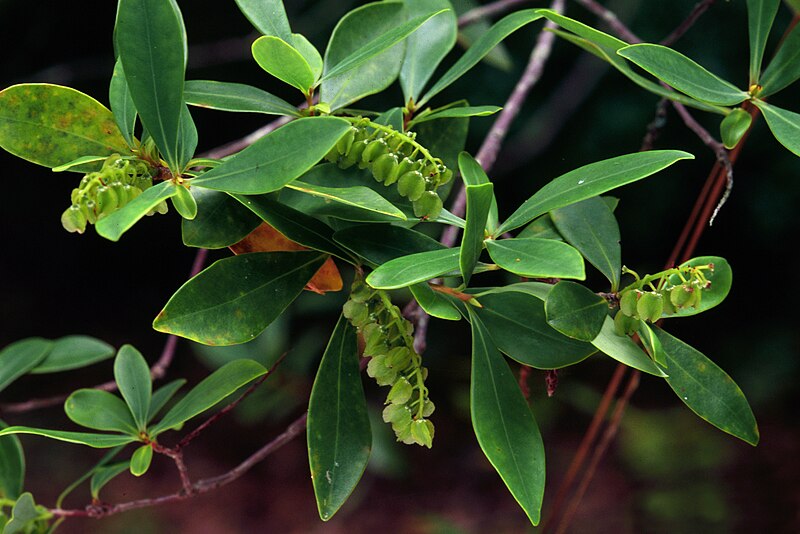
Cliftonia monophylla, known commonly as Buckwheat Tree, Titi, or Black Titi, is a remarkable evergreen shrub or small tree native to the Coastal Plain wetlands of the southeastern United States. A member of the Cyrillaceae family, this distinctive plant is the sole species in its genus, making it a botanical relic of special evolutionary significance. Its scientific name honors George Clifton, an 18th-century English botanist, while monophylla refers to the single-leafed nature of its simple foliage.
What makes Buckwheat Tree truly extraordinary among southeastern natives is its winter-to-early-spring bloom time — the plant produces elegant terminal clusters of small white flowers between January and March, a time when little else is blooming in the swampy longleaf pine flatwoods and pocosins it calls home. These persistent flower clusters gradually transition to winged, buckwheat-like fruits — a feature that inspired the common name. The fruits remain attached to the branches well into spring, providing visual interest long after the blooms have faded.
Growing typically 10 to 20 feet tall, Buckwheat Tree is perfectly adapted to the wet, acidic, nutrient-poor soils of the Gulf and Atlantic Coastal Plain, from the Florida panhandle through coastal Georgia, South Carolina, Alabama, and Mississippi. In its natural habitat along bay edges, blackwater stream borders, and pocosin margins, it often grows in dense thickets that provide critical cover and nesting habitat for neotropical songbirds and other wildlife. Despite its specialized habitat preferences, Buckwheat Tree has proven adaptable in cultivation and is increasingly recognized as a valuable landscape plant for rain gardens, pond edges, and wet native plant gardens throughout the Deep South.
Identification
Buckwheat Tree typically grows as a large, multi-stemmed shrub or small tree, reaching heights of 10 to 20 feet with a spread of 6 to 15 feet. It tends to form dense thickets in natural settings through rhizomatous sprouting. The overall habit is upright to irregular, with branches clothed in lustrous, persistent foliage throughout the year — one of the few broadleaf evergreens adapted to the challenging conditions of southeastern wetlands.
Bark & Stems
The bark of young stems is smooth and reddish-brown, becoming grayish-brown and slightly furrowed with age. The twigs are slender and graceful, often reddish, bearing the alternate leaves that extend nearly to the branch tips. Older trunks develop shallow ridges and a slightly rough texture, though the bark never becomes deeply furrowed. The reddish coloration of stems in winter adds seasonal interest when the plant is in bloom.
Leaves
The leaves are simple, alternate, and evergreen — remaining on the plant year-round. Each leaf is oblong to spatulate (spoon-shaped), 1 to 3 inches long and ½ to 1 inch wide, with a distinctly revolute (downward-rolled) margin and a rounded or slightly notched tip. The upper surface is dark, lustrous green; the underside is paler and often slightly glaucous. Leaves are densely arranged along the stems, giving the plant a lush, full appearance throughout all seasons.
Flowers & Fruit
The flowers are the defining glory of this species. They appear in terminal racemes — elongated clusters 2 to 4 inches long — from January through March, long before any other shrubs are blooming in the region. Individual flowers are small (about ¼ inch), with five petals ranging from pure white to very pale pink, and are mildly fragrant. The clusters emerge from the tips of the previous year’s growth, often appearing while nights are still frosty, providing a valuable early nectar source for the few insects active during mild winter days.
After pollination, the flowers give way to the distinctive fruits that inspire the common name “Buckwheat Tree.” Each fruit is a small, winged, 3- to 5-ribbed drupe, about ¼ inch across, resembling the achene of buckwheat (Fagopyrum esculentum). These fruits ripen in summer but often persist on the branches well into winter, adding additional ornamental interest. The seeds within are dispersed by water — a key adaptation in the wetland environments where the plant grows naturally.
Quick Facts
| Scientific Name | Cliftonia monophylla |
| Family | Cyrillaceae |
| Plant Type | Evergreen Shrub / Small Tree |
| Mature Height | 20 ft |
| Sun Exposure | Full Sun to Part Shade |
| Water Needs | High to Low (Highly Adaptable) |
| Bloom Time | January – March (winter bloomer) |
| Flower Color | White to pale pink |
| Fruit | Winged drupes resembling buckwheat seeds |
| USDA Hardiness Zones | 7b–9 |
Native Range
Buckwheat Tree is endemic to the Atlantic and Gulf Coastal Plain of the southeastern United States, with one of the most restricted natural ranges of any southeastern native shrub. It grows from the Florida panhandle east and north through coastal Georgia and South Carolina, and west through Alabama and the southern tip of Mississippi. The species reaches its northern limit in coastal North Carolina, where it is uncommon and largely restricted to pocosin margins and bay edges.
Within this range, Buckwheat Tree is intimately tied to the distinctive wetland plant communities of the Coastal Plain — particularly the blackwater bay forests, pocosins, pond pine flatwoods, and shrub bogs that characterize so much of this landscape. It rarely ventures far from saturated or periodically flooded soils, and is most commonly found along the margins of blackwater streams and cypress swamps where the organic, extremely acidic soils are too challenging for most other shrubs. In these environments, it often grows alongside Swamp Titi (Cyrilla racemiflora), Fetterbush (Lyonia lucida), and various species of blueberry and huckleberry.
Buckwheat Tree is considered a pyrophyte — a fire-adapted species that thrives under the periodic burning regimes that historically maintained the longleaf pine savannas and flatwoods of the Coastal Plain. After low-intensity fires, it resprouts vigorously from its root system, quickly rebuilding the dense shrub thickets that provide cover for wildlife. In areas where fire has been suppressed for many years, the species can become shaded out by taller trees, making prescribed burning an important tool for its conservation.
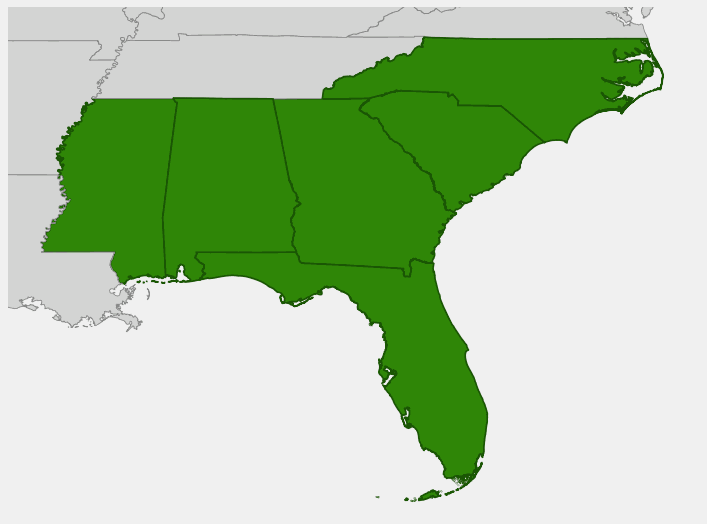
📋 Regional plant lists featuring Buckwheat Tree: Alabama, Georgia & Mississippi
Growing & Care Guide
Buckwheat Tree is best appreciated by gardeners in the Deep South who can offer it the wet, acidic conditions it craves. When properly sited, it is an extremely low-maintenance plant that requires no supplemental fertilization, minimal pruning, and rewards its caretaker with one of the most unusual seasonal attractions in the native plant garden: masses of white flowers in the depths of winter.
Light
In the wild, Buckwheat Tree grows in everything from open sun along pocosin margins to fairly dense shade beneath bay forest canopies. In cultivation, it performs best in full sun to part shade. In full sun with adequate moisture, it develops the densest habit and most prolific flowering. In shadier sites, it grows more openly and flowers less freely, but remains a handsome foliage plant.
Soil & Water
The most critical requirement for Buckwheat Tree is soil acidity — it thrives in pH 4.5 to 6.0 and struggles in neutral or alkaline soils. Beyond acidity, the plant is remarkably adaptable in terms of moisture, tolerating everything from seasonally inundated soils to periodically dry upland conditions once established. Rain gardens, pond edges, and low areas with amended acid soils are ideal. Avoid limestone-based soils or areas where the pH exceeds 6.5.
Planting Tips
Plant Buckwheat Tree from fall through spring. If your soil is not naturally acidic, amend extensively with pine bark, peat, or sulfur to lower pH before planting. Choose a site with protection from harsh winter winds, and mulch deeply (3–4 inches) with pine straw or bark to maintain moisture and soil acidity. Space plants 8–12 feet apart for naturalistic groupings, or 4–6 feet apart for a dense evergreen screen or hedge.
Pruning & Maintenance
Buckwheat Tree requires minimal pruning. If it develops an uneven habit, shape lightly after the blooming period (late spring or early summer) to avoid removing next year’s flower buds. The plant naturally suckers from its roots, which can be left to create a naturalistic thicket or removed to maintain a single-stem tree form. Fertilization is rarely needed and can harm the plant if it raises soil pH.
Landscape Uses
- Rain gardens and pond margins — its high wetness tolerance is exceptional
- Evergreen screening — dense foliage provides year-round privacy
- Winter interest planting — the only broad-leaved shrub blooming January–March in the Deep South
- Hummingbird and early-bee gardens — critical early nectar source
- Coastal plain restoration — authentic pocosin and bay forest plant
- Native bird habitat — dense thickets provide ideal nesting and cover
Wildlife & Ecological Value
Buckwheat Tree provides exceptional ecological value, especially because of its uniquely timed winter bloom period. When it flowers in January, February, and March, virtually nothing else is blooming across the Coastal Plain landscape — making its nectar and pollen an irreplaceable resource for overwintering honeybee colonies, emerging queen bumblebees, and rare early-active native bees that emerge during warm winter spells.
For Birds
The dense, twiggy thickets that Buckwheat Tree forms are highly attractive to nesting birds, particularly neotropical migrants and resident songbirds. Species such as Yellow-breasted Chat, Common Yellowthroat, White-eyed Vireo, and various warblers use the shrub thickets extensively for breeding and foraging. The winged fruits are eaten by a variety of fruit-eating birds including American Robins, Cedar Waxwings, and resident thrushes. In winter, the dense evergreen foliage provides critical thermal cover for sparrows, wrens, and other small birds.
For Mammals
White-tailed deer browse the foliage of Buckwheat Tree but rarely cause serious damage given the plant’s tough, leathery leaves and dense thicket-forming growth. Bears use the dense shrub thickets for bedding. Small mammals including cottontail rabbits and various rodents take shelter in the dense stands. The fruits are consumed by raccoons, opossums, and other small omnivores.
For Pollinators
The winter blooms of Buckwheat Tree are perhaps its most critical ecological contribution. In the Coastal Plain’s seasonal landscape, January–March flowers provide nectar during the “winter nectar gap” — when bee colonies are at their lowest energy reserves. Buckwheat Tree honey is highly prized in the South for its distinctive flavor. Multiple species of native solitary bees depend on these early flowers as their first food source of the year.
Ecosystem Role
In its natural wetland habitats, Buckwheat Tree is a keystone shrub layer species. Its root systems stabilize the saturated soils of bay forests and pocosins, reducing erosion and maintaining the sponge-like hydrology of these important wetland systems. The dense thickets sequester carbon in both biomass and the organic soils of its waterlogged habitat. Following disturbance — including fire and storm damage — Buckwheat Tree is among the first woody plants to resprout and re-establish vegetative cover, making it a critical early successional species in Coastal Plain wetland restoration.
Cultural & Historical Uses
Buckwheat Tree holds significant cultural importance for Indigenous peoples of the southeastern Coastal Plain, particularly the Creek (Muscogee) and Seminole nations, whose homelands encompassed the Gulf Coast wetlands where this plant is most abundant. The dense, hard wood was used for tool handles and small woodworking projects. The plant’s flowers, blooming in the depths of winter, were noted as seasonal markers — their appearance indicating the time to begin certain agricultural preparations.
The plant’s common name “Titi” (also spelled “Tity” or “Tit”) comes from an older English usage of “tit” to mean small, referring to the plant’s small flower clusters. “Black Titi” distinguishes it from “White Titi” or “Swamp Titi” (Cyrilla racemiflora), though in some areas the two names are used interchangeably for either species. The name “Buckwheat Tree” derives from the striking resemblance of its winged fruits to buckwheat seeds.
Historically, Buckwheat Tree was known as an important honey plant throughout the Gulf States, and beekeepers specifically positioned hives near stands of it to access the uniquely timed winter nectar flow. The distinctive “titi honey” — dark, pungent, and strongly flavored — was prized by some and considered an acquired taste by others. In some coastal communities, areas with dense Titi thickets were called “titi swamps,” a name that persists in local placenames across Georgia, Florida, and Alabama to this day. Today, Buckwheat Tree is increasingly recognized by native plant enthusiasts and restoration ecologists as a critically important species for maintaining the ecological integrity of the rapidly disappearing longleaf pine ecosystem.
Frequently Asked Questions
Why does Buckwheat Tree bloom in winter?
Buckwheat Tree’s winter bloom strategy is an evolutionary adaptation to reduced competition for pollinators and minimal disease pressure from fungal pathogens that are less active in cool weather. By blooming January–March, it has access to the few pollinators active during warm winter spells — including queen bumblebees and honeybees — without competing with the hundreds of other spring-blooming species that flower simultaneously a few months later.
Can Buckwheat Tree grow in average garden soil?
It can, but only if the soil is acidic (pH 4.5–6.5) and reasonably moist. This plant is highly intolerant of alkaline soils, compacted soils, or excessively dry conditions. In average garden soils with suitable pH, amend with pine bark and peat to ensure good acidity and moisture retention. If your soil is naturally neutral or alkaline, Buckwheat Tree is not the right plant for your site.
How do I propagate Buckwheat Tree?
Buckwheat Tree can be propagated from semi-hardwood cuttings taken in late summer (July–August), which root readily under mist with bottom heat. It also spreads naturally by root sprouts, which can be carefully dug and transplanted. Seed germination is possible but slow and irregular — seeds benefit from cold stratification and a moist, acidic seed-starting medium.
Is Buckwheat Tree deer-resistant?
Buckwheat Tree has moderate deer resistance — its tough, leathery, evergreen leaves are not a preferred browse, and the plant’s wetland habitat preferences put it outside the regular travel corridors of many deer populations. However, young plants and new growth in cultivated settings may be browsed, especially in late winter when other food sources are scarce.
How fast does Buckwheat Tree grow?
Buckwheat Tree has a moderate growth rate of approximately 1–2 feet per year under favorable conditions (moist, acidic soil, adequate sunlight). It reaches its mature height of 15–20 feet in 10–15 years. In shadier or drier sites, growth is slower. The plant forms thickets relatively quickly via root sprouting, which can expand the planting over time without requiring additional propagation.

Looking for a nursery that carries Buckwheat Tree?
Browse our native plant nursery directory: Alabama · Georgia · Mississippi