Buffalo Currant (Ribes odoratum)
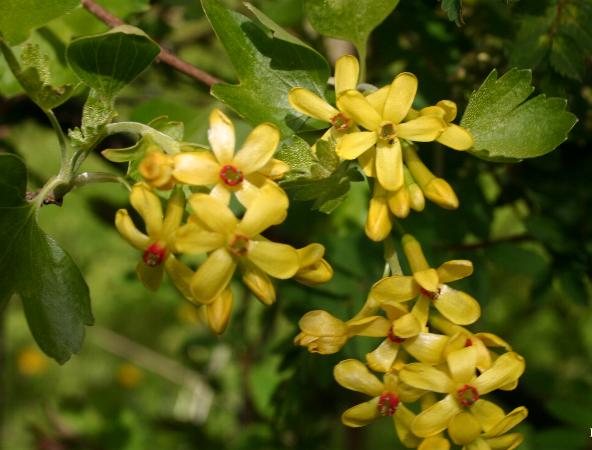
Ribes odoratum, commonly known as Buffalo Currant, Clove Currant, or Flowering Currant, is a captivating native shrub of the Great Plains and Midwest, celebrated for producing some of the most intensely fragrant flowers of any wild shrub in North America. The species name odoratum — Latin for “fragrant” or “scented” — says it all: when Buffalo Currant blooms in mid-spring, a single plant can perfume the surrounding air with a rich, spicy clove scent detectable from dozens of feet away. This extraordinary fragrance, combined with brilliant yellow flowers, attractive fall color, and wildlife-rich berries, makes Buffalo Currant one of the most rewarding native shrubs for midwestern gardens.
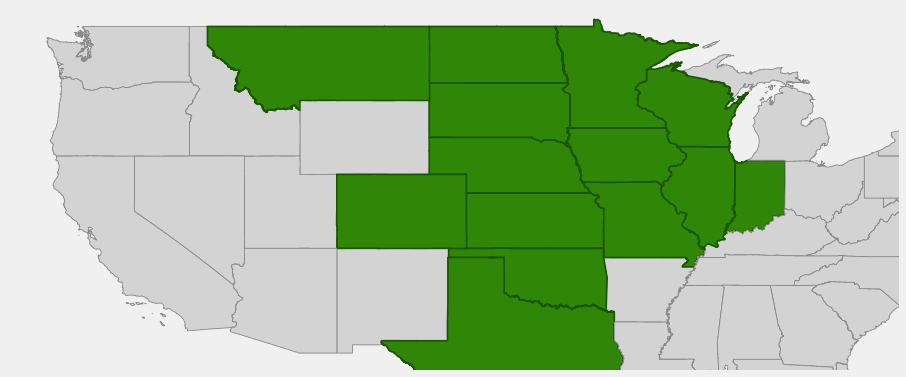
A member of the gooseberry family (Grossulariaceae), Buffalo Currant grows as a loosely branching, arching deciduous shrub reaching 6 to 12 feet tall and equally wide under ideal conditions. It is native to the open plains, prairies, and rocky hillsides of the central United States — from the Dakotas and Nebraska south to Kansas and Missouri — but has naturalized more broadly and is well-suited to gardens throughout Indiana, Ohio, and the surrounding region. The shrub’s adaptability to part shade, its remarkable drought tolerance once established (moderate to low moisture needs), and its exceptional wildlife value make it a multi-functional choice for naturalistic landscapes.
Buffalo Currant produces edible berries — small, round, and ripening from green to amber to dark purple-black — that are relished by dozens of bird species. Its dense, arching structure provides excellent nesting and escape cover. The spring flowers are among the first to attract early pollinators and migrating butterflies. In autumn, the leaves display warm gold and orange tones before dropping. It is a shrub that earns its place in the landscape through every season.
Identification
Buffalo Currant is a multi-stemmed deciduous shrub that typically matures at 6 to 10 feet tall and wide, though specimens in ideal conditions can reach 12 feet. It has an arching, fountain-like growth habit with gently spreading branches that often root where they touch the ground, gradually forming colonies. The stems are smooth and brownish when young, maturing to gray-brown with age.
Leaves
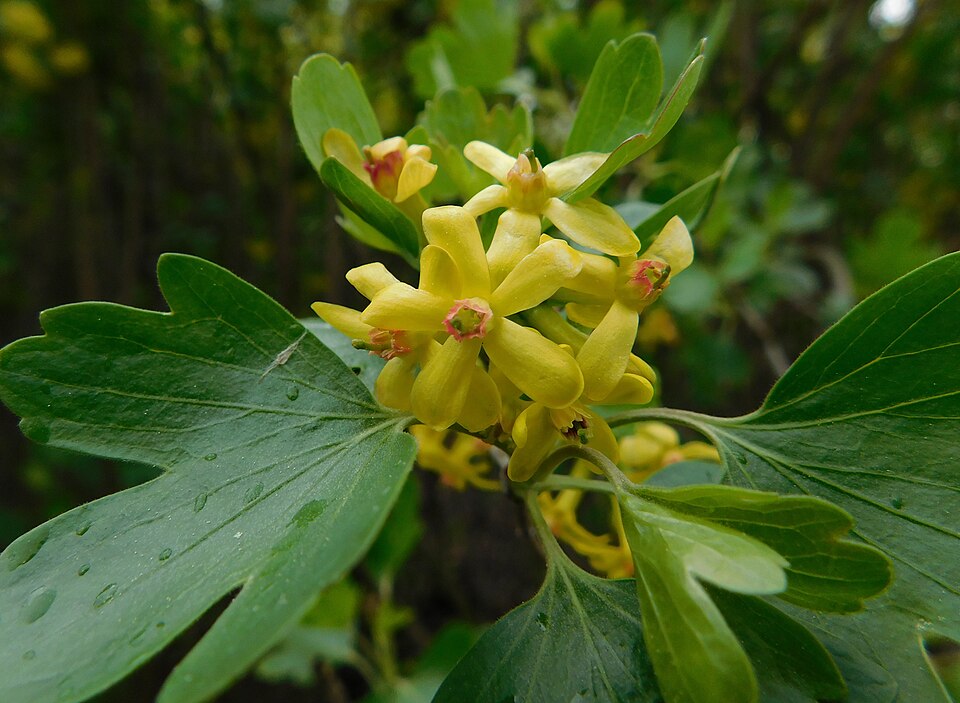
The leaves are alternately arranged, deeply 3 to 5-lobed in a shape reminiscent of a maple leaf, though smaller — typically 1 to 3 inches across. The lobes are rounded to bluntly toothed. Foliage is a clean medium green above, slightly paler beneath, with a smooth surface. In autumn, the leaves turn attractive shades of yellow to orange before dropping. The lobed leaf shape and the distinctive fragrant flowers make Buffalo Currant easy to distinguish from other native shrubs.
Flowers
The flowers are the signature feature of this species and one of the most remarkable of any native shrub. They are bright golden-yellow, tubular, and borne in pendant racemes (drooping clusters of 5–15 flowers) that emerge directly from the stems alongside the new leaves in April through May. Each individual flower is about ½ inch long with reflexed petals around a narrow tube. The clove fragrance — rich, spicy, and extraordinarily powerful — is produced by all parts of the flower and can fill an entire garden with scent. Even a single plant in bloom is noticeable from remarkable distances on a still spring morning.
Fruit
The berries ripen in early to mid-summer, transitioning from green through amber to dark purple-black at full maturity. They are round, about ¼ to ⅜ inch in diameter, hanging in loose clusters where the flower racemes were. The berries are edible — sweet-tart with a pleasant flavor somewhat reminiscent of black currant — and have been used for jams, jellies, and pies. More importantly from a wildlife perspective, they are eagerly consumed by dozens of bird species including Cedar Waxwings, Baltimore Orioles, Catbirds, Thrashers, and many others.
Quick Facts
| Scientific Name | Ribes odoratum |
| Family | Grossulariaceae (Gooseberry) |
| Plant Type | Deciduous Shrub |
| Mature Height | 10–12 ft |
| Sun Exposure | Part Shade |
| Water Needs | Low to Moderate |
| Bloom Time | April – May |
| Flower Color | Bright yellow |
| Fruit | Dark purple-black berries (edible) |
| Fall Color | Yellow to orange |
| Deer Resistant | Moderate |
| USDA Hardiness Zones | 4–8 |
Native Range
Buffalo Currant is native to the central Great Plains and upper Midwest, with its core range extending from the Dakotas and Minnesota south through Nebraska, Kansas, and Missouri, and east into Iowa, Illinois, and Indiana. Historical records suggest it was also present in scattered locations in Ohio and further east, though many eastern populations represent plantings or naturalization from cultivated specimens. It is considered a natural native in Indiana and Ohio for the purposes of regional native plant lists.
In its native habitat, Buffalo Currant grows in prairie edges, open woodlands, rocky hillsides, stream banks, and along bluffs and ravine edges — essentially the transitional zones between open grassland and woodland. It is adapted to sites receiving part shade and to soils that are seasonally dry, ranging from rocky and well-drained to moderately moist. This tolerance of lean, dry conditions (low to moderate water needs) distinguishes it from most other Ribes species and reflects its Great Plains heritage.
The plant’s distribution has expanded significantly beyond its native range through cultivation, as it has been widely planted in gardens and naturalized broadly. It is now found as a naturalized species in many states well beyond its original range. Within Indiana and Ohio, it thrives best in garden situations that mimic the prairie-edge conditions of its native range — good drainage, part shade, and moderate fertility.
📋 Regional plant lists featuring Buffalo Currant: Indiana & Ohio
Growing & Care Guide
Buffalo Currant is a versatile, adaptable, and largely self-sufficient shrub once established. Its tolerance of part shade, low-to-moderate moisture, and varied soil types makes it one of the more forgiving native shrubs for midwestern gardens. The primary challenge is simply finding the right spot — somewhere with good drainage, some shade, and room for the plant to reach its eventual 8 to 12-foot spread.
Light
Buffalo Currant performs best in part shade — perhaps 3 to 6 hours of direct sun per day with protection from the hottest afternoon rays. It also tolerates considerably more shade than many fruiting shrubs, making it useful in spots beneath open woodland canopies. In too much sun combined with dry soil, foliage may scorch in summer. In dense full shade, flowering and fruiting will be reduced, though the plant will survive.
Soil & Water
One of Buffalo Currant’s most valuable traits is its adaptability to lean, well-drained, and even periodically dry soils — a reflection of its Great Plains heritage. It thrives in average to dry conditions (low to moderate water needs) and resents consistently waterlogged soils, which can lead to root rot. Sandy, loamy, and rocky soils are all acceptable, and it tolerates clay soils with adequate drainage. Once established — typically by the second or third year — it requires little supplemental watering except during extended drought.
Planting Tips
Plant in spring or fall from container stock. Choose a site with good air circulation to reduce the risk of the powdery mildew that can affect Ribes species in hot, humid conditions. Space plants at least 6 feet apart; 8 to 10 feet is better, as specimens can spread widely. Buffalo Currant spreads by suckers, and will gradually form a colony — a feature or a problem depending on your design goals. If colonizing is unwanted, remove suckers annually. Near buildings or structures, allow adequate clearance for the plant’s arching spread.
Pruning & Maintenance
Buffalo Currant benefits from annual or biennial renewal pruning to maintain vigor and maximize flowering. Remove the oldest, thickest stems (those more than 4 years old) at ground level in late winter; this forces the plant to produce vigorous new canes that will bloom most heavily the following spring. Avoid shearing — this creates a dense, twiggy exterior that reduces flowering and fruiting. Powdery mildew can be a cosmetic issue in late summer in humid years but is rarely harmful; improve air circulation and avoid overhead irrigation to minimize it.
Landscape Uses
Buffalo Currant is a superb multi-purpose shrub for midwestern gardens:
- Spring fragrance garden — plant where the clove scent can be enjoyed near walkways or sitting areas
- Edible landscape — berries are excellent for jams and jellies and attract fruit-eating birds
- Prairie-edge planting and naturalized shrub borders
- Wildlife hedgerow providing nesting cover, food, and escape habitat
- Foundation planting on the north or east side of buildings where shade is available
- Pollinator garden — early-season flowers provide critical nectar for bees and butterflies
- Rain garden margins — tolerates seasonal moisture variation well
Wildlife & Ecological Value
Buffalo Currant is an ecologically productive shrub that supports a diverse community of wildlife through its flowers, fruits, and structure.
For Birds
The berries of Buffalo Currant are consumed by a wide array of fruit-eating birds, including Cedar Waxwing, American Robin, Gray Catbird, Brown Thrasher, Baltimore Oriole, Purple Finch, and many others. The dense, arching structure makes excellent nesting habitat, particularly for Yellow Warbler, American Goldfinch, and Song Sparrow. The berries ripen at a time (early summer) when many other fruits are not yet available, making them particularly valuable in the seasonal wildlife calendar.
For Mammals
Foxes, raccoons, opossums, and various small rodents consume the berries. White-tailed deer occasionally browse the foliage and young stems, particularly in areas with high deer pressure. The dense colony-forming habit provides excellent escape cover and thermal shelter for rabbits and small mammals throughout the year.
For Pollinators
Buffalo Currant is an exceptionally important early-season pollinator resource. The flowers bloom in April and May when few other native shrubs are in bloom, providing vital early nectar and pollen for native bees (including mining bees, sweat bees, and bumblebees), honeybees, hoverflies, and early-season butterflies and moths. The fragrance, while produced primarily to attract pollinators, makes it a plant that rewards human visitors as well.
Ecosystem Role
Buffalo Currant is a native component of the prairie-edge ecotone — the transitional zone between grassland and woodland that is among the most ecologically productive habitats in the Midwest. Its berries contribute to the fruit-heavy midsummer food supply that supports migratory birds building up fat reserves. Its colony-forming habit creates dense shrub thickets that increase structural complexity in landscapes that would otherwise be dominated by grasses or monotonous shrub plantings.
Cultural & Historical Uses
Indigenous peoples of the Great Plains and Midwest had a longstanding relationship with Buffalo Currant and other native Ribes species. The berries were eaten fresh and dried, and were mixed with dried bison meat and tallow to make pemmican — the high-calorie, shelf-stable trail food that sustained Plains peoples and later fur traders over the long continental winters. The Lakota, Mandan, and other Plains nations harvested the berries and incorporated them into both everyday diet and ceremonial foods.
The clove-like fragrance of Buffalo Currant made it distinctive enough to be used ornamentally even in traditional contexts, and it was one of the first North American native shrubs to be introduced to European gardens in the 18th century. Thomas Nuttall, the naturalist and botanist who explored the Missouri River valley in 1809–1811, described the plant with particular enthusiasm and is credited with bringing specimens to eastern botanical gardens. It became popular in European Victorian garden design for its fragrance, and remains widely cultivated in European gardens today.
In modern horticulture, Buffalo Currant has experienced a significant revival of interest as part of the native plant movement. Its exceptional fragrance, adaptability, wildlife value, and edible berries make it an ideal choice for homeowners seeking to combine ecological benefit with sensory pleasure in the garden. Several cultivars have been selected for garden use, including ‘Crandall’ — a selection with especially large, sweet berries that was popular in homestead gardens of the 19th century Great Plains and is currently experiencing renewed interest for edible landscaping.
The berries are excellent for making jams, jellies, wine, and juice. They have a distinctive flavor — richer and more complex than European black currant — and are high in vitamin C and antioxidants. Growing Buffalo Currant in a home garden is thus both an ecological act and a practical one: the same plant that feeds the birds in July can supply your kitchen through August.
Frequently Asked Questions
How fragrant are Buffalo Currant flowers?
Remarkably so. The clove fragrance is genuine and powerful — on a still spring morning, a single blooming shrub can perfume the air for 20 to 30 feet in every direction. It is considered one of the most intensely fragrant native shrubs in North America, surpassing even Spicebush and most viburnums in sheer olfactory impact. Plant it near a patio, walkway, or open window to fully appreciate this characteristic.
Are Buffalo Currant berries edible?
Yes, the ripe dark berries are edible and pleasant — sweet-tart with a rich, complex flavor similar to black currant. They can be eaten fresh, but are most commonly used for jams, jellies, wine, and baked goods. The Crandall cultivar was specifically selected for large, sweet berries for culinary use. Do not eat any berries that are not fully ripe (dark purple-black), as immature berries may cause digestive upset.
Does Buffalo Currant spread aggressively?
It spreads by root suckers and can gradually form colonies, particularly in favorable conditions. In a naturalistic planting, this is a feature — it creates dense, wildlife-rich thickets. In a more formal garden, annual removal of suckers keeps it contained. It is not considered invasive and does not spread by seed in aggressive ways that would threaten adjacent natural areas.
Does Buffalo Currant get white pine blister rust?
Ribes species are alternate hosts for white pine blister rust (Cronartium ribicola), a devastating fungal disease that can kill Eastern White Pine. In areas where white pines are present or valued, check local regulations about planting Ribes. Some states and counties have restrictions. Buffalo Currant (Ribes odoratum) is generally considered less susceptible than some other Ribes species, but the risk is not zero. Plant with appropriate spacing from white pines.
When should I prune Buffalo Currant?
Prune in late winter before new growth emerges. Remove the oldest, thickest canes at ground level to encourage vigorous new growth. Never shear the plant — this destroys the arching form and reduces flowering. Renewal pruning every 2 to 3 years keeps the plant producing its best flower and fruit display.