California Milkweed (Asclepias californica)
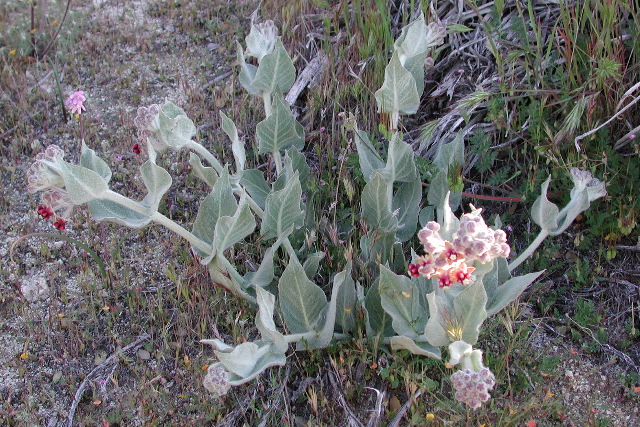
Asclepias californica, commonly known as California Milkweed, is a striking, densely woolly perennial milkweed found through much of lower northern, central, and southern California, plus adjacent northern Baja California, Mexico. A member of the Apocynaceae (dogbane) family, it stands apart from other native milkweeds thanks to its thick, white, felt-covered stems and leaves, which bend or sprawl along the ground rather than standing fully upright, and its rounded clusters of deep rose-pink to maroon flowers.
This milkweed is a true plant of California’s dry, sunbaked slopes — it is most at home in chaparral and coastal sage scrub, where its woolly gray-green coat reflects sunlight and slows moisture loss through the hot, rainless summers typical of the state’s Mediterranean climate. Growing 1 to 3 feet tall with a stout, often reclining stem, it has a softer, more textural presence in the landscape than the stiffly upright milkweeds of wetter regions.
Like other milkweeds, California milkweed is an essential host plant for monarch butterfly caterpillars, and its early, long bloom season makes it valuable to the many spring and summer pollinators active in California’s chaparral communities. For gardeners building a dry, low-water native planting west of the Sierra Nevada, it is one of the best-adapted milkweeds available.
Identification
California milkweed is a flowering perennial that grows from a woody, persistent root crown, typically reaching 1 to 3 feet tall. Its stems are stout but tend to bend, arch, or sprawl along the ground rather than remaining strictly erect, especially as the plant matures through the growing season.
Stems & Leaves
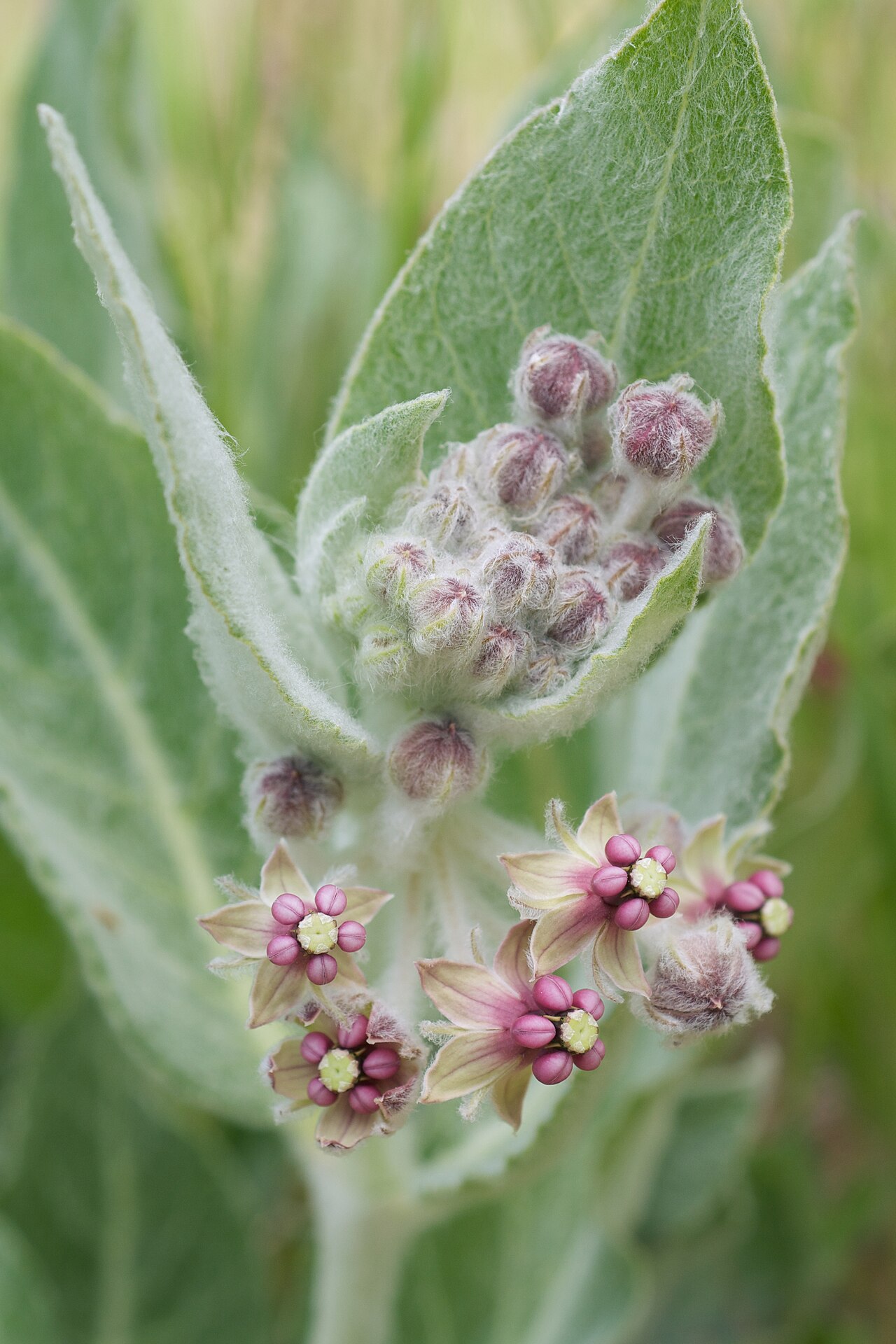
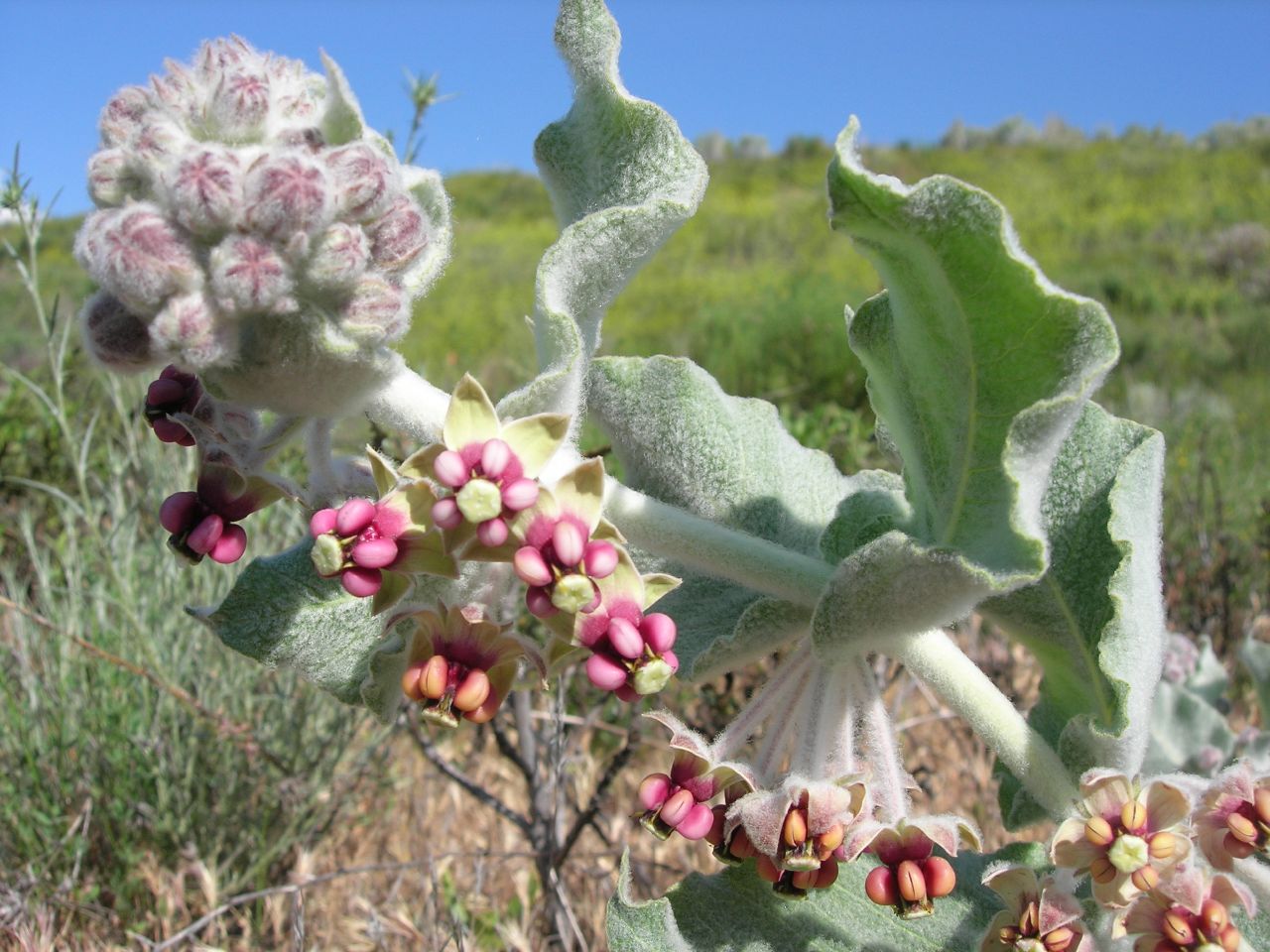
Every part of the plant above ground is covered in a thick coat of white, woolly hairs (tomentum), giving stems and foliage a soft, felted, grayish appearance. The leaves are long, lance-shaped, opposite, and have a waxy, water-conserving texture beneath the wool. This dense pubescence is the single best field mark for distinguishing California milkweed from the state’s other native Asclepias species — nothing else growing alongside it looks quite so frosted-gray.
Flowers
Flowers are borne in dense, rounded umbels and are notably large and showy for a milkweed, with reflexed corollas in shades of deep pink, rose, or maroon surrounding a contrasting, star-shaped array of bulbous anthers at the center. The flower clusters hang downward from the leaf axils, nestled among the woolly foliage.
Fruit & Seeds
Pollinated flowers develop into large, elongated, spindle-shaped seed pods covered in the same soft white wool as the rest of the plant. The pods split open when ripe to release flat brown seeds, each attached to a tuft of silky white floss that carries them on the wind — the same wind-dispersal strategy used across the milkweed genus.
Quick Facts
| Scientific Name | Asclepias californica |
| Family | Apocynaceae (Dogbane / Milkweed) |
| Plant Type | Herbaceous Perennial Wildflower |
| Mature Height | 1–3 ft (often sprawling/reclining) |
| Mature Spread | 1–2 ft |
| Growth Rate | Moderate |
| Sun Exposure | Full Sun |
| Water Needs | Low once established; drought tolerant |
| Soil Type | Well-drained; tolerates clay, sand or rocky soils |
| Soil pH | 6.0–7.5 |
| Bloom Time | Spring through early summer |
| Flower Color | Deep pink to rose-maroon |
| Fall Color | Foliage dies back and goes dormant by late summer |
| Fruit | Large woolly seed pods with silky-tufted seeds |
| Deer Resistant | Yes — toxic cardiac glycosides deter browsing |
| USDA Hardiness Zones | 8–10 |
Native Range
California milkweed is native to lower northern, central, and southern California, from the inner Coast Ranges and the foothills surrounding the Central Valley down through the South Coast and into northern Baja California, Mexico. It is one of the more widespread milkweeds within California itself, though it is nowhere especially common and occurs in scattered, locally dense populations rather than continuous stands.
The species favors dry, sloping ground at elevations from about 600 to 7,000 feet, a wide span that reflects its tolerance for varying temperature and rainfall regimes. It is a characteristic plant of chaparral and coastal sage scrub — two of California’s signature dry-summer shrubland communities, both defined by well-drained soils and long rainless summers — where it is often found growing in part-shade beneath or between larger shrubs as well as in open, sunnier patches.
California milkweed is not currently listed as endangered, but like much of California’s chaparral and coastal scrub, its habitat continues to be lost to urban expansion, and its range should not be extended into irrigated, summer-wet garden settings outside its natural dry-summer climate zone.
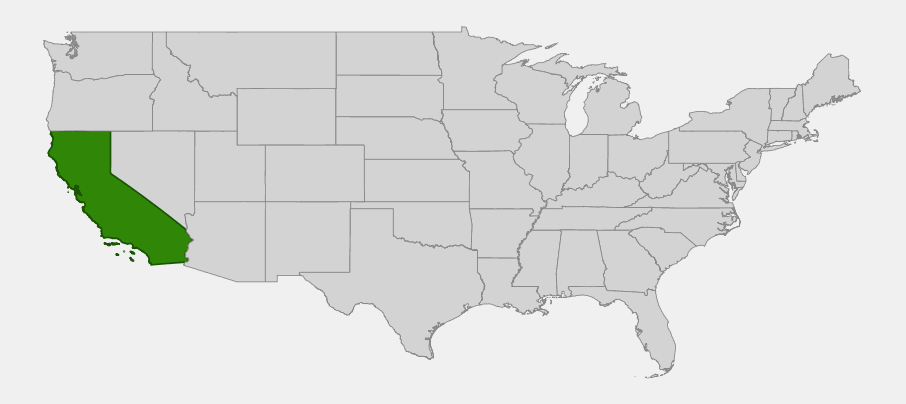
📋 Regional plant lists featuring California Milkweed: none yet — check our California nursery directory below for native-plant sources.
Growing & Care Guide
California milkweed rewards gardeners who can offer it the same conditions it enjoys in the wild: full sun, lean well-drained soil, and a true dry season in summer. It is not a plant for soggy or heavily irrigated beds.
Light
Grow in full sun for the densest, most compact woolly growth and the showiest flowering. In cultivation it can also tolerate the light part-shade found beneath open chaparral shrubs, mimicking its natural companions.
Soil & Water
This species thrives in lean, fast-draining soils, including clay, sand, and rocky ground, and is notably drought tolerant once established — a defining trait of chaparral plants adapted to California’s rainless summers. Avoid summer irrigation beyond occasional deep watering during the first year; established plants that receive regular summer water are prone to root rot and generally shorter-lived than those grown on a natural winter-wet, summer-dry cycle.
Planting Tips
Plant in fall or early winter so roots can establish during the rainy season before the first dry summer. Because of its sprawling habit, give California milkweed some room — 2 to 3 feet of space — so its reclining stems can spread naturally without crowding neighboring plants. It transplants best from small container stock rather than bare-root divisions.
Pruning & Maintenance
The plant typically dies back to its woody crown after setting seed in summer; cut back dried stems in fall or leave them as winter structure and remove them before spring growth resumes. No fertilizer is needed, and overly rich soil or excess water will produce lank, floppy growth and shorten the plant’s life.
Landscape Uses
California milkweed’s woolly texture and sprawling form suit several garden roles:
- Dry chaparral and coastal sage scrub restoration plantings
- Low-water native gardens west of the Sierra Nevada
- Monarch waystations and pollinator gardens in California
- Textural accent among stiffer-leaved native shrubs, thanks to its soft gray wool
- Slope plantings on dry, sunny banks where irrigation is limited
Wildlife & Ecological Value
California milkweed is one of the more important early-season milkweeds for monarch butterflies and other pollinators across its range, flowering before many of California’s summer-blooming natives have even started.
For Monarch Butterflies
California milkweed is a recognized monarch butterfly host and chrysalis plant. Caterpillars feeding on its leaves ingest and retain the plant’s cardiac glycosides, making the resulting butterflies distasteful to bird predators — the same chemical defense shared across the milkweed genus. Because its spring bloom overlaps with the monarch’s return migration into California, it is a particularly valuable host plant for the state’s resident and migratory monarch populations.
For Pollinators
The large, nectar-rich flowers draw a wide variety of bees, butterflies, and other insects, providing both food and, for some species, shelter among the dense woolly foliage. Its early bloom time makes it an important nectar source in chaparral and coastal scrub communities before most other wildflowers are in flower.
Ecosystem Role
By flowering early in the dry-summer cycle, California milkweed helps bridge the gap between the spring wildflower bloom and the longer-flowering shrubs of summer, supporting pollinator populations through a period when nectar sources can otherwise be scarce. Its deep, persistent root crown also helps stabilize the loose, sloping soils typical of its chaparral habitat.
Cultural & Historical Uses
California milkweed has a documented history of traditional use among Indigenous peoples of California, including the Kawaiisu, who are recorded as having eaten the plant’s milky sap, cooked, as a chewy, flavorful treat — a preparation method that neutralizes compounds that are poisonous when the raw sap is consumed uncooked.
More broadly, California’s Indigenous communities made use of various native milkweeds for fiber extracted from the stems, used in making cordage and nets, a practice recorded across the genus Asclepias in California and the wider Southwest. These are historical practices requiring specific preparation knowledge, not guidance for casual modern use — raw California milkweed sap and foliage should be treated as toxic.
Today, California milkweed’s cultural significance centers on its role in California native-plant horticulture and monarch butterfly conservation, as gardeners and restoration groups increasingly plant regionally appropriate milkweeds to support declining monarch populations along the Pacific Flyway.
Frequently Asked Questions
Is California milkweed poisonous?
Yes. Like all milkweeds, its sap and foliage contain cardiac glycosides that are toxic to people, pets, and livestock if eaten, and the sap can irritate skin and eyes. The Kawaiisu traditionally cooked the sap before eating it as a treat; raw sap and plant material should be considered unsafe to consume.
Does California milkweed need a lot of water?
No — it is drought tolerant once established and actually prefers a dry summer dormancy. Regular summer irrigation can cause root rot and shorten the plant’s life; water mainly during the winter-spring rainy season and the first year of establishment.
Will California milkweed attract monarch butterflies?
Yes. It is a recognized monarch host plant, and its early spring bloom makes it especially valuable for monarchs returning to California, providing both egg-laying sites and nectar before many other wildflowers have bloomed.
Why is California milkweed so woolly?
The dense white hairs covering its stems and leaves reflect sunlight and reduce water loss, an adaptation to the hot, dry summers of California’s chaparral and coastal sage scrub habitats. This woolly coat is the easiest way to distinguish it from other native milkweeds.
Is California milkweed native outside of California?
In the United States it is native only to California; its range also extends into northern Baja California, Mexico. It is not native to other U.S. states, so gardeners elsewhere should choose a milkweed native to their own region instead.

Looking for a nursery that carries California Milkweed?
Browse our native plant nursery directory: California