
Canada Wild Rye (Elymus canadensis)
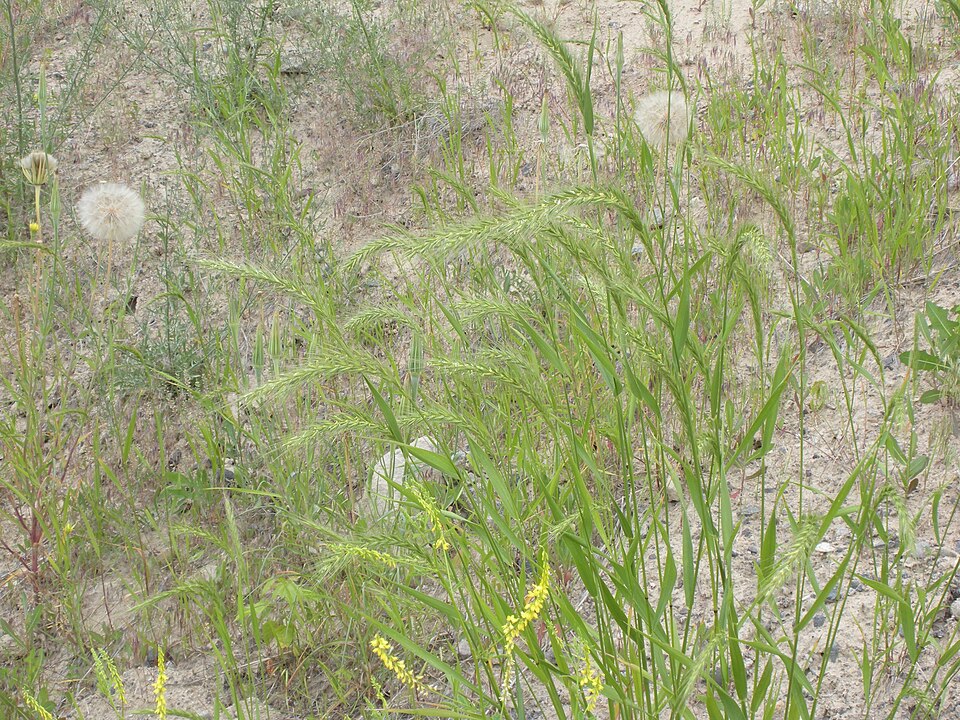
Elymus canadensis, commonly known as Canada Wild Rye, is one of the most versatile and widely distributed native grasses in North America. This robust, cool-season, clump-forming perennial grass belongs to the Poaceae (grass) family and grows throughout virtually every U.S. state and Canadian province, from sea level to mountain meadows above 8,000 feet. Its gracefully arching seed heads, which nod and dance in the slightest breeze, give it a distinctive silhouette that remains attractive well into winter.
Growing 2 to 4 feet tall in dense, upright clumps, Canada Wild Rye is a pioneer species — one of the first native grasses to establish on disturbed sites, where it quickly stabilizes soil and creates conditions for slower-establishing prairie species to follow. This makes it invaluable for restoration projects, erosion control, and quick establishment of native plantings. Unlike warm-season grasses that don’t green up until late spring, Canada Wild Rye begins growing early and provides quick cover.
For gardeners and land managers in the Dakotas and western Minnesota, Canada Wild Rye is one of the easiest native grasses to establish. Its remarkable adaptability to sun or shade, dry or moist conditions, and virtually any soil type makes it a go-to species for challenging sites. The nodding seed heads provide winter interest and food for birds, while the dense root system prevents erosion on slopes and disturbed ground.
Identification
Leaves
The leaf blades are flat, 6 to 12 inches long and ¼ to ½ inch wide, with a rough texture on the upper surface and smooth below. They are blue-green to green in color, with prominent veins running lengthwise. The ligule (the membrane at the junction of the leaf blade and sheath) is short and membranous. Leaf sheaths are smooth or slightly hairy. The overall foliage has a coarser texture than many ornamental grasses, giving it a robust, natural appearance.
Flowers & Fruit
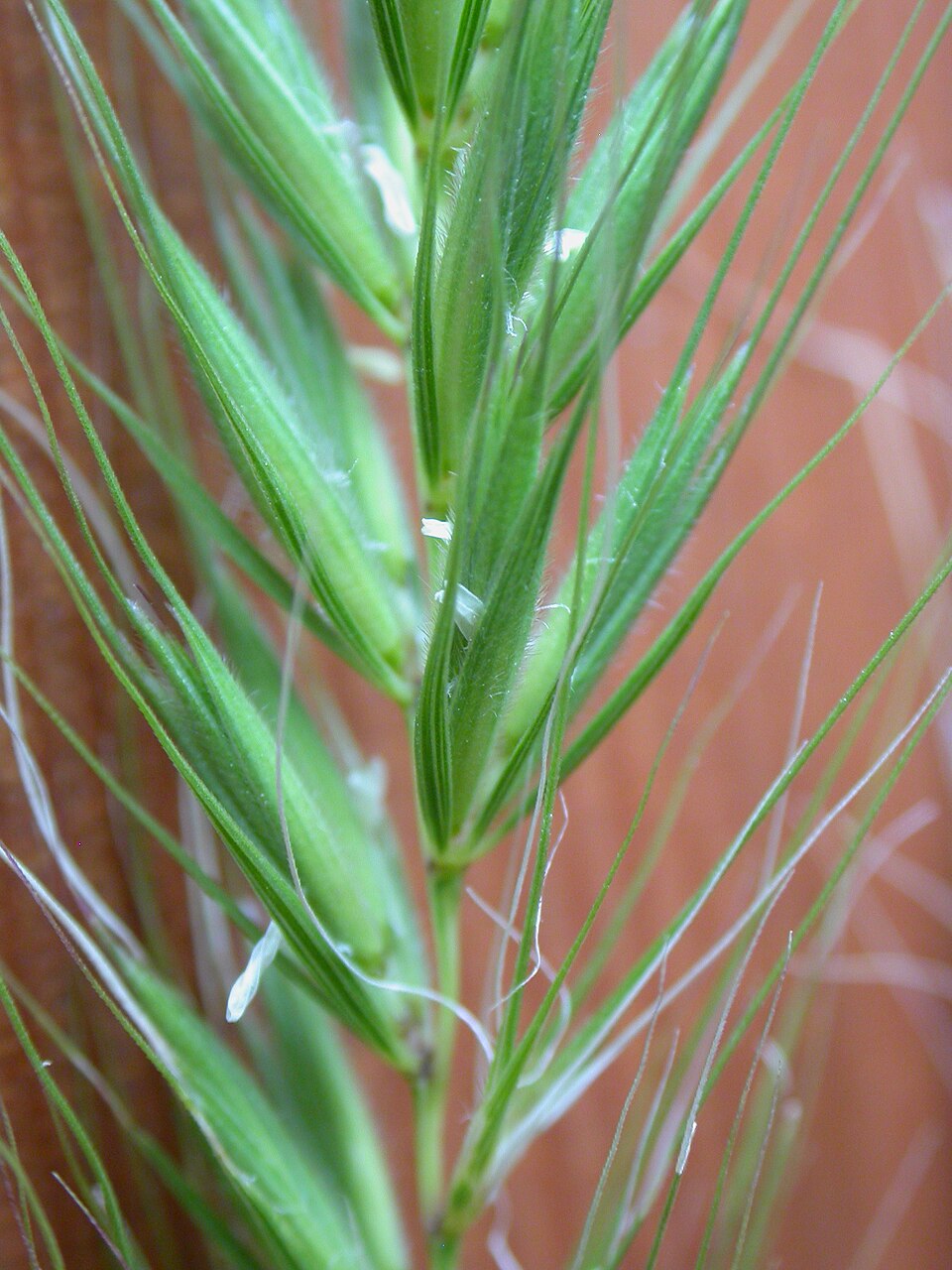
The inflorescence is a distinctive spike, 4 to 8 inches long, that emerges in June through August. The spike is thick, bristly, and nodding — curving gracefully outward and downward at maturity, which is one of the best identification features. Each spikelet has long, spreading awns (bristle-like extensions) up to 1.5 inches long that give the seed head a bushy, whiskered appearance. The seeds ripen to a golden tan color in late summer and persist on the plant through much of winter, providing visual interest and food for songbirds.
Quick Facts
| Scientific Name | Elymus canadensis |
| Family | Poaceae (Grass) |
| Plant Type | Perennial Grass |
| Mature Height | 2–4 ft |
| Sun Exposure | Full Sun to Full Shade |
| Water Needs | Low to Moderate |
| Bloom Time | June – August |
| Flower Color | Green (flower spikes) |
| USDA Hardiness Zones | 3–8 |
Native Range
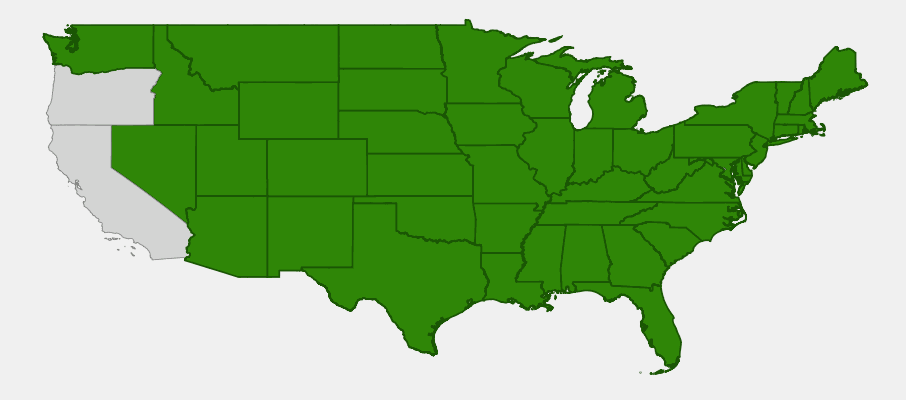
Canada Wild Rye (Elymus canadensis) is native to a broad range across North America, growing naturally in prairies, open woodlands, stream banks, roadsides, woodland edges, disturbed areas. In the United States, it occurs in Alabama, Arizona, Arkansas, Colorado, Connecticut, Delaware, Florida, Georgia, Idaho, Illinois, Indiana, Iowa, Kansas, Kentucky, Louisiana, Maine, Maryland, Massachusetts, Michigan, Minnesota, Mississippi, Missouri, Montana, Nebraska, Nevada, New Hampshire, New Jersey, New Mexico, New York, North Carolina, North Dakota, Ohio, Oklahoma, Pennsylvania, Rhode Island, South Carolina, South Dakota, Tennessee, Texas, Utah, Virginia, Vermont, Washington, West Virginia, Wisconsin, Wyoming. The species is found from Sea level – 8,000 ft elevation, adapting to the local conditions within each region of its range.
Within its native range, Canada Wild Rye is associated with the Widespread across North American grasslands and forest margins ecoregion, where it grows alongside species such as Big Bluestem, Switchgrass, Indian Grass, Black-Eyed Susan, Wild Bergamot. These plant communities have co-evolved over thousands of years, forming the complex ecological relationships that characterize healthy native landscapes. The presence of Canada Wild Rye in a plant community is often an indicator of good site conditions and ecological integrity.
In the Dakotas and western Minnesota, Canada Wild Rye occurs naturally in suitable habitats and is well-adapted to the region’s continental climate with its cold winters, warm summers, and variable precipitation. Conservation efforts and native plant restoration projects are helping to maintain and expand populations of Canada Wild Rye throughout the region, ensuring that this valuable native species continues to thrive for future generations.
📋 Regional plant lists featuring Canada Wild Rye: North Dakota, South Dakota & Western Minnesota
Growing & Care Guide
Light
Canada Wild Rye is remarkably adaptable to light conditions, growing well in everything from full sun to full shade. This is unusual among native grasses and makes it one of the few choices for shaded prairie plantings or woodland edge situations. In full sun, plants are more compact and produce more seed heads; in shade, they grow taller and more open.
Soil & Water
This grass tolerates an exceptionally wide range of soil conditions — from sandy to clay, acidic to alkaline, and dry to moderately moist. It performs best in well-drained loam but is remarkably undemanding. Once established, Canada Wild Rye is quite drought-tolerant, making it ideal for low-maintenance plantings in the northern Great Plains. It does not require supplemental watering after the first growing season except during extreme drought.
Planting Tips
Canada Wild Rye is one of the easiest native grasses to establish from seed. Sow in fall (preferred) or early spring at a rate of 8–10 pounds per acre for pure stands, or 2–4 pounds per acre in mixes. Seeds require no special treatment and germinate readily. For small garden plantings, direct-sow or start in pots and transplant. Space plants 18 to 24 inches apart in groups of 3 to 5 for a natural look.
Pruning & Maintenance
Cut back to 4–6 inches in late winter or early spring before new growth begins. Canada Wild Rye is a relatively short-lived perennial (3–5 years) but self-seeds readily, maintaining stands over time. In restoration plantings, it serves as a nurse crop, providing cover while slower-establishing species like Big Bluestem and Indian Grass fill in. It rarely needs supplemental watering, fertilizing, or pest management.
Landscape Uses
- Erosion control on slopes, ditches, and disturbed ground
- Prairie restoration as a nurse crop and quick-establishing species
- Shade gardens — one of few native grasses for shaded sites
- Winter interest — nodding seed heads persist through snow
- Rain gardens and bioswales
- Wildlife plantings for cover and seed production
Wildlife & Ecological Value
For Birds
The seeds of Canada Wild Rye are eaten by a variety of songbirds, including Juncos, Sparrows (Song, Tree, and Fox), and Goldfinches. The dense clump growth provides excellent ground-level nesting cover for grassland birds like Bobolinks, Meadowlarks, and Dickcissels. In winter, the standing seed heads provide food when other sources are scarce, and the dense dead foliage offers shelter from wind and cold.
For Mammals
White-tailed Deer and Mule Deer browse the young spring foliage. Cottontail rabbits shelter in the dense clumps, and meadow voles and deer mice use the base of plants for nesting and runway systems. Elk and Bison historically grazed Canada Wild Rye across the Great Plains, and the grass co-evolved with these large herbivores.
For Pollinators
As a wind-pollinated grass, Canada Wild Rye is not a direct nectar source. However, it is a larval host plant for several skipper butterflies, including the Hobomok Skipper and Dun Skipper. The dense clumps also provide shelter for ground-nesting bees and overwintering habitat for beneficial insects.
Ecosystem Role
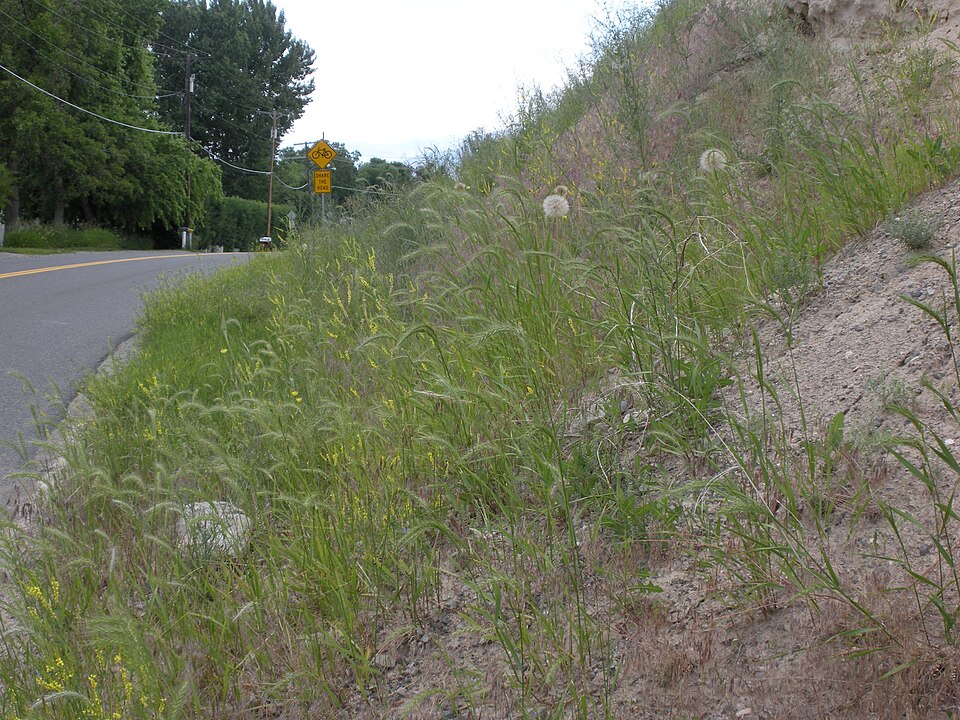
Canada Wild Rye is a pioneer species, one of the first native plants to colonize bare or disturbed ground. Its quick establishment stabilizes soil, adds organic matter, and creates microclimates that allow slower-establishing prairie species to germinate and grow. In this way, it functions as an ecological nurse plant, facilitating the development of diverse native plant communities. Its extensive fibrous root system prevents erosion and improves soil structure by creating channels for water infiltration.
Cultural & Historical Uses
Canada Wild Rye has been utilized by Indigenous peoples across North America for centuries. The seeds, while small, were harvested and ground into flour by several Great Plains nations, including the Dakota, Lakota, Pawnee, and Omaha. The grain was sometimes mixed with other seed flours to make porridge or flatbread. While not as productive as cultivated grains, Canada Wild Rye was an important supplementary food source, especially in years when other crops were scarce.
The grass also had practical and ceremonial uses. The long, flexible stems were used for weaving mats, temporary shelters, and bedding. Some nations used the grass in smudging ceremonies or as a strewing herb in lodges. The extensive root system made it valued for stabilizing earth lodges and riverbanks — a use that continues today in modern erosion control and restoration projects.
In modern agriculture and conservation, Canada Wild Rye has become one of the most important native grasses for restoration ecology. The USDA Natural Resources Conservation Service (NRCS) actively promotes it for Conservation Reserve Program (CRP) plantings, waterway stabilization, and mine reclamation. Several improved cultivars have been developed, including ‘Mandan’ (selected in North Dakota) and ‘Icy Blue,’ bred for improved persistence and vigor. Its ease of establishment and wide adaptability make it one of the most frequently planted native grasses in the northern Great Plains.
Frequently Asked Questions
Is Canada Wild Rye a good lawn alternative?
No — it grows 2–4 feet tall and forms clumps rather than a uniform turf. It’s better suited for meadow plantings, restoration projects, and naturalized areas where its height and texture add beauty and ecological value.
Does Canada Wild Rye spread aggressively?
No. It is a clump-forming grass that does not spread by rhizomes. It does self-seed, which helps maintain stands over time, but it is not aggressive or invasive. It’s generally short-lived (3–5 years) and gradually replaced by longer-lived prairie grasses.
Can I grow Canada Wild Rye in shade?
Yes! Canada Wild Rye is one of the few native grasses that tolerates full shade, making it valuable for woodland edges, under scattered trees, and shaded garden areas. It will be taller and more open in shade but still attractive.
When should I plant Canada Wild Rye seed?
Fall planting (September–November) is preferred, as the seeds benefit from natural cold stratification over winter and germinate readily in spring. Spring planting also works well if done early (March–April) before warm weather arrives.
Why is Canada Wild Rye dying after a few years?
This is normal. Canada Wild Rye is a short-lived perennial (typically 3–5 years) that relies on self-seeding to persist. In prairie restorations, it serves as a nurse crop, establishing quickly and then giving way to longer-lived grasses like Big Bluestem. Allow it to self-seed for continued presence.

Looking for a nursery that carries Canada Wild Rye?
Browse our native plant nursery directory: North Dakota · South Dakota · Minnesota