
Corozo Palm (Acrocomia media)
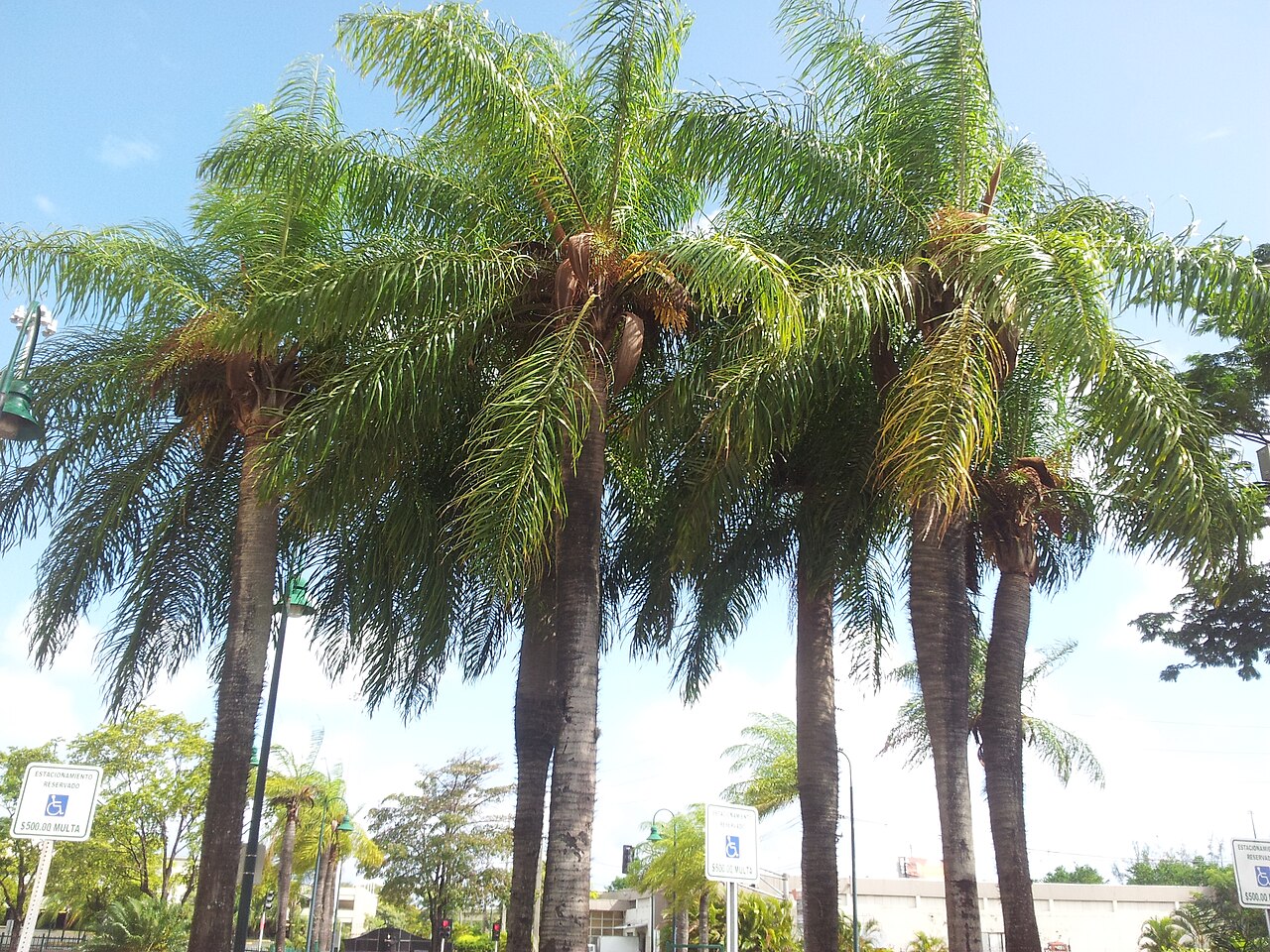
Acrocomia media, the Corozo Palm, is a spiny native palm known in Puerto Rico as corozo or palma de corozo (also spelled coroso). USDA PLANTS lists it under the common name grugru palm and records it as native to Puerto Rico and the U.S. Virgin Islands. The Smithsonian’s Flora of the West Indies treats it as a West Indian endemic found only in Puerto Rico and on St. Thomas.
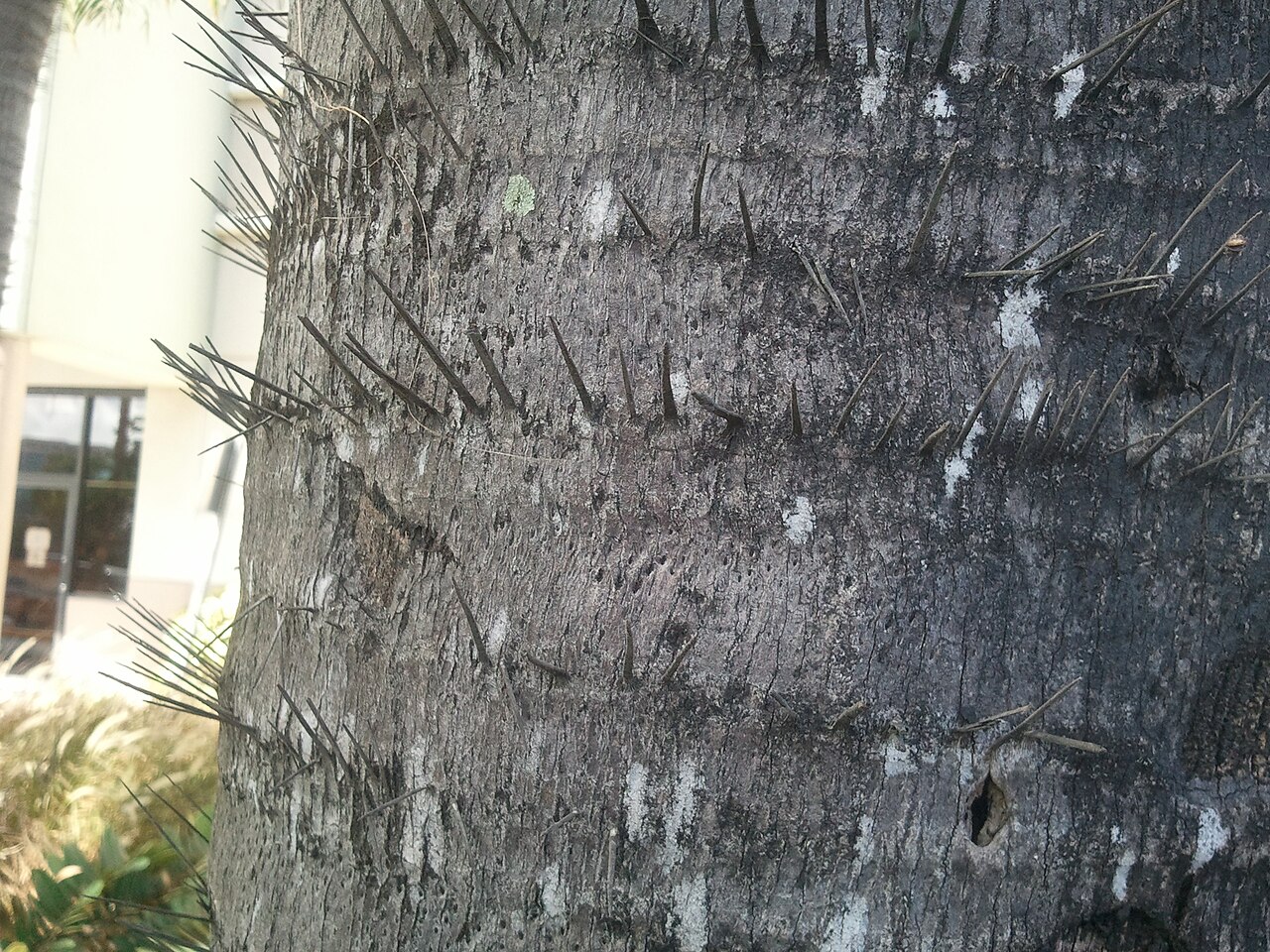
Corozo is a single-trunked feather palm about 25 to 33 feet tall, with a trunk covered in long black spines and round yellow fruits that hang in heavy bunches. It grows mostly in Puerto Rico’s moist limestone and coastal regions, and the town of Corozal is widely thought to take its name from it. The fruits are edible, and their hard nuts hold an oily, edible kernel.
Botanists disagree about its rank. George Proctor and USDA treat Acrocomia media as its own species, set apart by its shorter, more slender trunk, while other authors include it in the widespread mainland grugru or macaúba palm, Acrocomia aculeata. Either way, the Puerto Rican corozo is a tough, wildlife-friendly native palm for sunny sites with room to keep its spines away from people.
Identification
Few palms are as easy to identify as corozo: a single trunk bristling with long, needle-sharp black spines, a dense crown of feathery leaves whose stalks are also spiny, and, much of the year, bunches of round yellow fruits.
Trunk
The single, stout trunk is usually 8 to 10 m (26–33 ft) tall, sometimes up to 15 m (about 50 ft), and 8 to 12 inches (20–30 cm) in diameter. It is gray and ringed with old leaf scars, and on younger palms and the upper trunk it carries bands of long, slender black spines.
Leaves
The leaves are pinnate (feather-shaped), with many narrow leaflets that spread at different angles, giving the leaf a slightly plumose look. The leaf stalks and midribs are covered with sharp spines. Corozo is noted for having a denser crown than other palms of the island.
Flowers
Corozo flowers and fruits throughout the year. Large, branched flower clusters emerge among the leaves from a woody, spiny sheath (spathe) and carry many small, pale yellow flowers.
Fruit
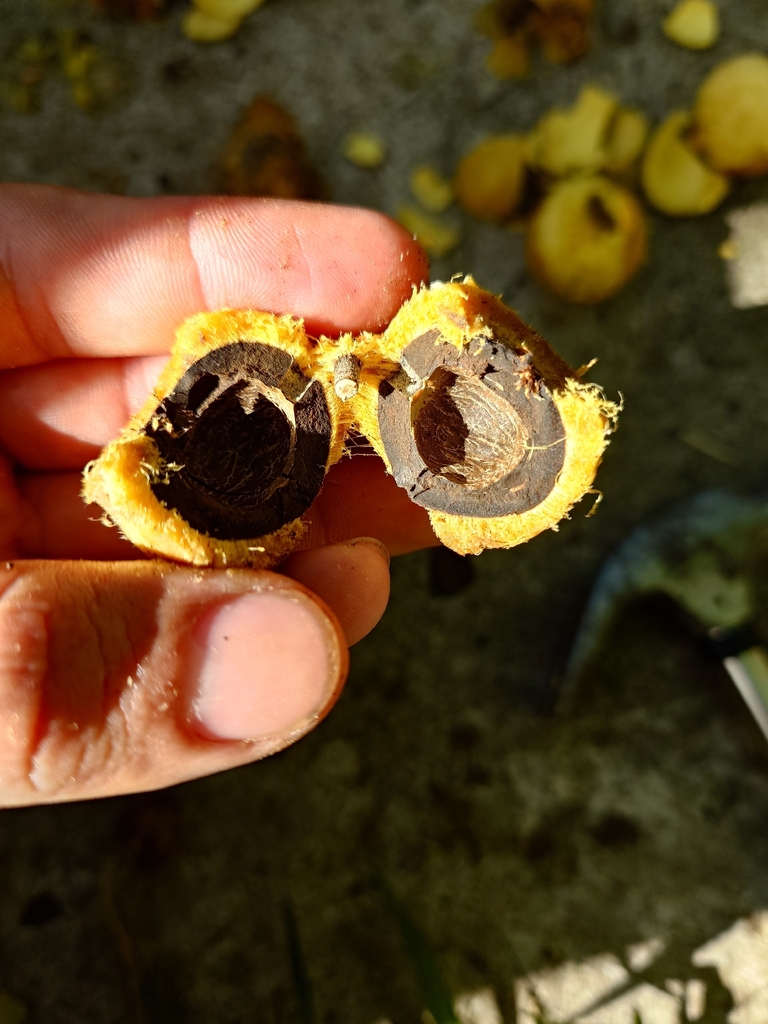
The fruits are round and about 1.4 inches (3.5 cm) across, ripening yellow. A thin skin and a layer of fibrous, sweet pulp surround a very hard, dark nut. Inside the nut is a single seed with a white, oily, edible kernel.
Quick Facts
| Scientific Name | Acrocomia media O.F. Cook |
| Family | Arecaceae (palm family) |
| Plant Type | Spiny single-trunked feather palm |
| Mature Height | 25–33 ft (rarely to 50 ft) |
| Mature Spread | 15–20 ft crown |
| Growth Rate | Moderate |
| Sun Exposure | Full sun |
| Water Needs | Low to moderate; drought tolerant once established |
| Soil Type | Well-drained soils, including limestone |
| Soil pH | Neutral to alkaline |
| Bloom Time | Year-round |
| Flower Color | Pale yellow |
| Fall Color | None; evergreen |
| Fruit | Round yellow fruit about 1.4 in, with a hard nut and oily edible kernel |
| Deer Resistant | Not rated (no deer in Puerto Rico); heavily spined |
| USDA Hardiness Zones | Frost-free tropics only (about zones 10b–12) |
Native Range
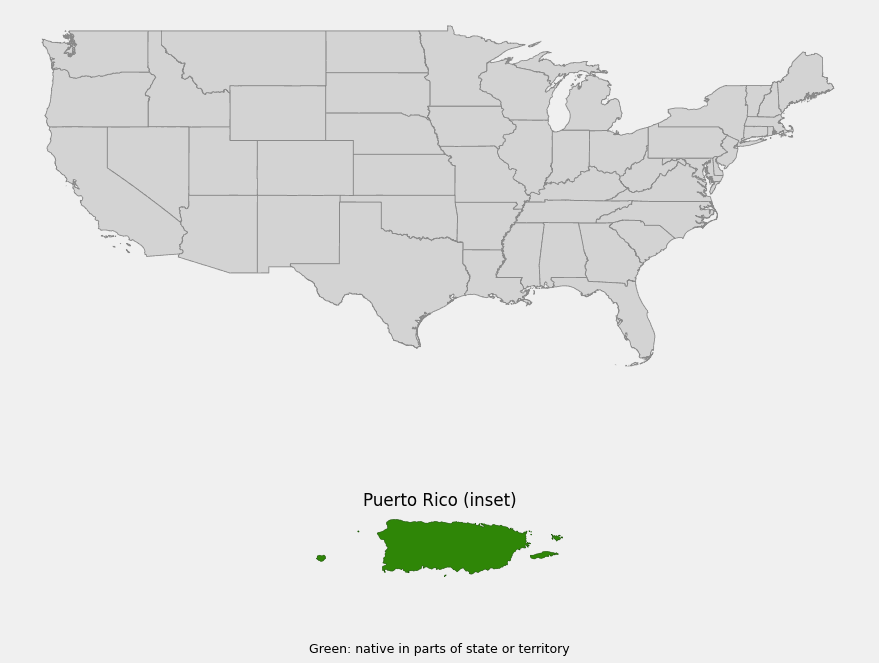
USDA PLANTS lists corozo as native in Puerto Rico and the U.S. Virgin Islands. The Smithsonian’s Flora of the West Indies records it in Puerto Rico and on St. Thomas and treats it as endemic to the West Indies. If it is treated as part of Acrocomia aculeata, the wider species ranges from southern Mexico and the Caribbean through Central America to Brazil, Paraguay and northern Argentina.
In Puerto Rico, corozo grows mostly in the moist limestone (karst) regions and along the coast. Recent iNaturalist records from the island come from the northern karst and coastal municipalities of Manatí and Vega Baja as well as from Mayagüez, San Germán, Cabo Rojo and Yauco in the west and southwest, in forest edges and secondary forest as well as gardens and parks.
It is also planted in parks and yards, as in San Juan, where the photo at the top of this page was taken. The name of the town of Corozal, in the north-central part of the island, is very likely taken from this palm.
📋 Regional plant lists featuring Corozo Palm: Puerto Rico
Growing & Care Guide
Corozo is a hardy, low-maintenance native palm for sunny sites in Puerto Rico. Its main drawback is also its best defense: the trunk and leaf stalks are covered in sharp spines, so choose a spot away from paths, play areas and parking.
Light
Plant in full sun. Corozo grows at forest edges and in open, sunny places and performs best with plenty of light.
Soil & Water
Corozo is adapted to the island’s limestone soils and grows well in a range of well-drained soils. Water young palms during dry spells until they are established; mature palms tolerate drought well. Avoid soggy, poorly drained ground.
Planting Tips
Keep it at least 10 to 15 feet from walkways, driveways and play areas, since both the trunk and the leaf stalks carry long spines. It makes an effective barrier or a specimen palm at the back of a large yard. Wear thick gloves and eye protection when handling it.
Pruning & Maintenance
Remove only dead leaves, using long-handled tools and protective gear because of the spines. Do not cut green leaves. Rake up fallen fruit near paths, as it can attract insects and become slippery.
Propagation
Grow from seed. The nuts are very hard and germination is slow and uneven, often taking several months or more. Removing the pulp and soaking or gently cracking the hard shell can speed it up. Sow in a deep pot or directly in place.
Landscape Uses
- Edible fruit: sweet, fibrous pulp and an oily, edible kernel
- Wildlife food: fruit for birds and other animals
- Barrier planting: its spines make a living fence along property lines
- Specimen palm: a dense-crowned native palm for open, sunny spaces
- Restoration: fits karst and coastal plantings on limestone soils
Wildlife & Ecological Value
Corozo produces flowers and fruit almost all year, which makes it a steady food source in the karst and coastal landscapes where it grows.
For Pollinators
The large clusters of small, pale yellow flowers attract insects. In the closely related Acrocomia aculeata, beetles and bees are important flower visitors; the pollinators of the Puerto Rican corozo have not been studied in detail.
For Birds
Ripe corozo fruits are eaten by birds and other animals, and the spiny crown offers protected perches. Because the palm fruits year-round, it supplies food when other plants are not fruiting.
For Mammals
Fallen fruit is eaten by animals that can get through its tough skin. In South America, the very hard nuts of related Acrocomia palms are cracked open by the powerful beaks of hyacinth macaws.
Ecosystem Role
As a long-lived palm of forest edges and secondary forest, corozo adds fruit and protected perches to open and recovering land.
Cultural & Historical Uses
The genus name Acrocomia comes from the Greek akros (“top”) and kome (“hair” or “tuft”), likely referring to the crown of leaves at the top of the trunk. Orator F. Cook described Acrocomia media in 1901; the species name means “intermediate.”
Corozo fruits are edible, and the seed inside the hard nut contains an oily, edible substance. The fruits of related Acrocomia palms are eaten, pressed for oil and used to make drinks across tropical America, where the mainland grugru or macaúba palm is now being studied as a high-yield source of vegetable oil.
The municipality of Corozal in north-central Puerto Rico is very likely named for the corozo palm. The word “corozo” is also used across the Caribbean and Latin America for several different spiny palms and their fruits.
Frequently Asked Questions
Is corozo the same as the grugru or macaúba palm?
They are closely related. USDA and botanist George Proctor treat the Puerto Rican corozo as its own species, Acrocomia media, with a shorter, more slender trunk. Some authors include it in the widespread Acrocomia aculeata, known as grugru, coyol or macaúba palm.
Are corozo fruits edible?
Yes. The sweet, fibrous pulp is eaten, and the hard nut holds an oily, edible kernel. The nuts are very hard to crack.
Are the spines dangerous?
They are long and sharp and can cause painful punctures, so plant corozo away from paths and play areas and wear thick gloves and eye protection when working near it.
Where does corozo grow in Puerto Rico?
Mostly in the moist limestone (karst) regions and along the coast, at forest edges and in secondary forest, and it is planted in parks and yards. It also grows on St. Thomas in the U.S. Virgin Islands.
What other native palms grow in Puerto Rico?
Other native palms include the Puerto Rico royal palm (palma real), the Puerto Rico hat palm and the sierra palm of El Yunque.

Looking for a nursery that carries Corozo Palm?
Our nursery directory does not yet include Puerto Rico. Browse the native plant nursery directory by state: Alabama–Arkansas · California · Colorado–Hawaii · Idaho–Kansas · Kentucky–Montana · Nebraska–Oklahoma · Oregon · Pennsylvania–Virginia · Washington · West Virginia–Wyoming