
Creeping Juniper (Juniperus horizontalis)
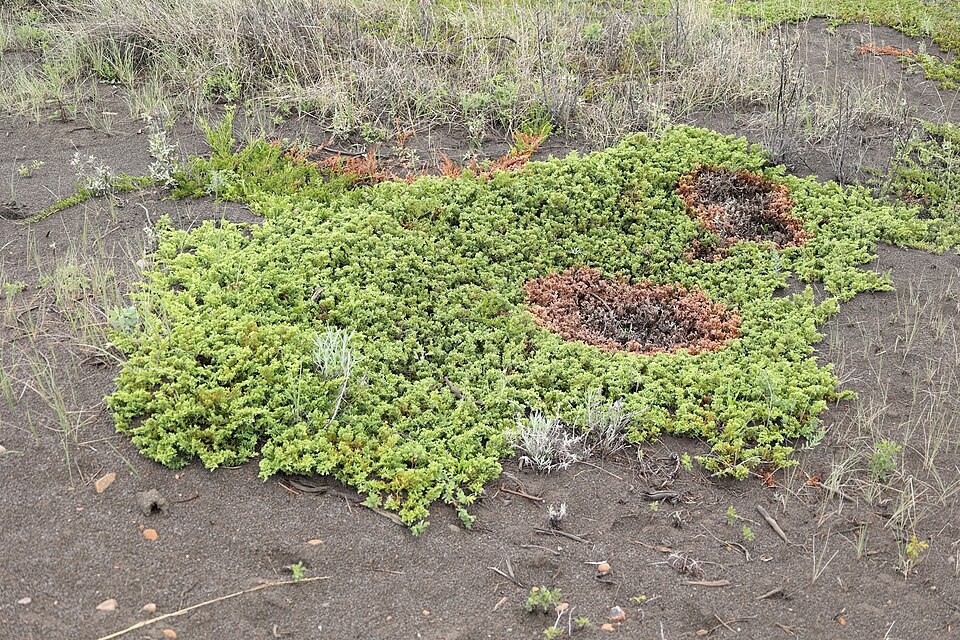
Juniperus horizontalis, commonly known as Creeping Juniper, Trailing Juniper, or Prostrate Juniper, is a remarkable low-growing evergreen conifer that forms dense, spreading mats across the northern landscapes of North America. This hardy member of the Cupressaceae (cypress) family has evolved to thrive in some of the continent’s most challenging environments — from windswept coastal cliffs to harsh prairie grasslands and rocky alpine slopes. Its prostrate, mat-forming growth habit and exceptional cold tolerance have made it an invaluable species for ground cover, erosion control, and naturalistic landscaping throughout northern regions.
Unlike its towering juniper relatives, Creeping Juniper rarely exceeds one foot in height but can spread horizontally up to 8 feet or more, creating dense carpets of blue-green to gray-green foliage that take on purplish bronze tones during winter months. The plant’s scale-like needles, arranged in overlapping pairs, give it a distinctive texture that provides year-round interest in the landscape. Small blue berries produced by female plants serve as important winter food sources for wildlife, while the dense, low growth provides critical ground-level habitat and shelter.
Creeping Juniper’s extraordinary adaptability to extreme conditions — including severe cold, drought, salt spray, and poor soils — makes it an exceptional choice for challenging sites where other plants struggle to establish. Its deep taproot system allows it to access moisture and nutrients from considerable depths while its spreading surface roots help stabilize soil and prevent erosion. This combination of hardiness and ecological function has established Creeping Juniper as both a cornerstone species in natural ecosystems and a valuable tool for restoration and sustainable landscaping projects.
Identification
Creeping Juniper is instantly recognizable by its distinctive prostrate, mat-forming growth habit. Plants typically grow only 6 to 12 inches tall but spread horizontally 4 to 8 feet or more, creating dense carpets that hug the ground. The main branches grow along the surface, rooting at nodes where they contact the soil, allowing individual plants to expand into large colonies over time.
Foliage & Branches
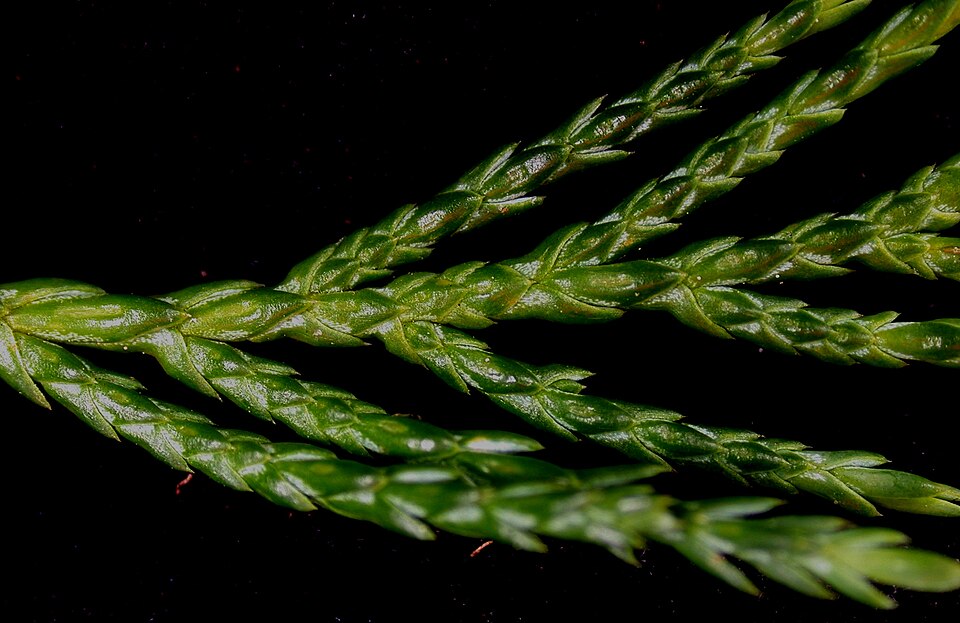
The foliage consists of small, scale-like needles arranged in opposite pairs that overlap like shingles along the stems. These scales are typically 1/16 to 1/8 inch long, closely appressed to the twigs, and give the plant a smooth, cord-like appearance. The color varies from bright blue-green to gray-green during the growing season, often developing attractive purplish-bronze or plum-colored tones in winter, especially in exposed locations.
Young plants and stressed individuals may produce needle-like juvenile foliage — sharp, pointed leaves 1/4 to 1/2 inch long arranged in whorls of three. This juvenile form is less common on mature, healthy plants but may persist on inner or shaded portions of established specimens. The branching pattern is typically irregular and spreading, with secondary branches arising at various angles from the main prostrate stems.
Bark & Stems
The bark on older main stems is thin and fibrous, gray to reddish-brown in color, often exfoliating in thin strips. Younger branches have smooth, gray-green bark that becomes furrowed with age. The stems are flexible and tough, allowing the plant to withstand heavy snow loads and strong winds without breaking.
Cones & Reproduction
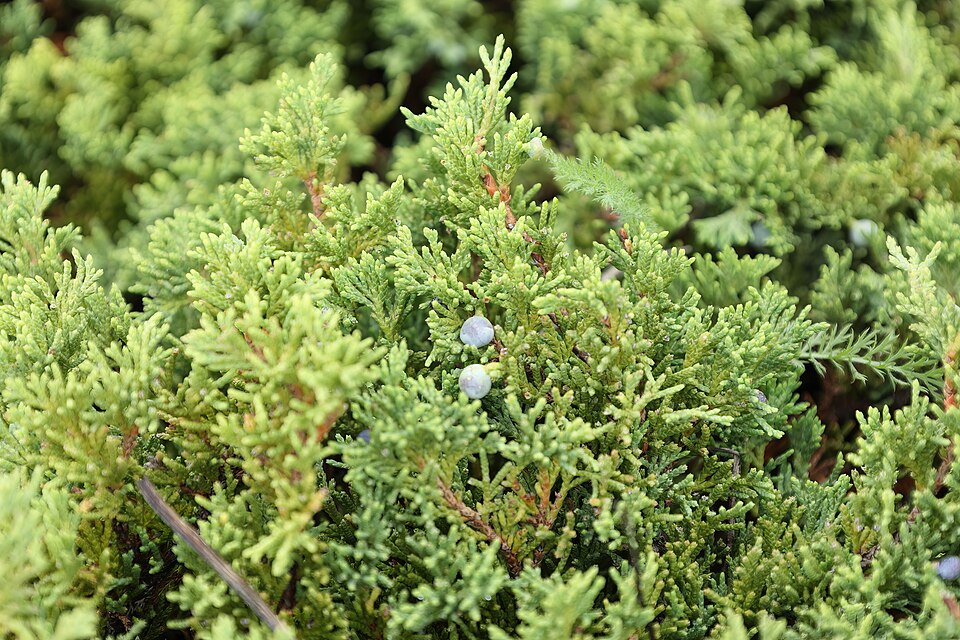
Creeping Juniper is typically dioecious, meaning individual plants are either male or female. Male plants produce small, yellowish pollen cones at branch tips in spring, releasing clouds of pollen that can trigger allergies in sensitive individuals. Female plants develop small, green seed cones that mature over two years into berry-like structures 1/4 to 1/3 inch in diameter.
The mature “berries” (technically small cones with fleshy scales) are blue to blue-black with a waxy bloom, containing 1 to 3 hard seeds. These cones are an important winter food source for birds and mammals, which disperse the seeds throughout the landscape. The berries have a piney, gin-like flavor — related junipers are used to flavor gin — but are generally not consumed by humans.
Quick Facts
| Scientific Name | Juniperus horizontalis |
| Family | Cupressaceae (Cypress) |
| Plant Type | Evergreen Coniferous Shrub |
| Mature Height | 1 ft |
| Sun Exposure | Full Sun |
| Water Needs | Low to Moderate |
| Bloom Time | April – May |
| Flower Color | Yellowish (males), Inconspicuous (females) |
| USDA Hardiness Zones | 2–7 |
Native Range
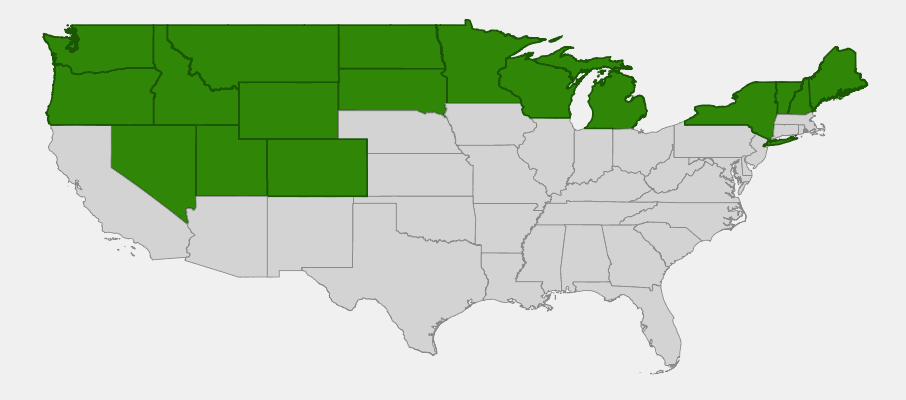
Creeping Juniper has one of the most extensive native ranges of any North American conifer, stretching across the northern tier of the continent from Alaska to Newfoundland and extending southward through the western mountains and Great Lakes region. This remarkable distribution reflects the species’ exceptional adaptability to diverse climatic conditions and its evolutionary success in colonizing harsh, marginal habitats where few other woody plants can survive.
The species reaches its greatest abundance in the northern Great Plains, where it forms extensive colonies on sandy soils, rocky outcrops, and prairie margins. In the western United States, it occurs primarily at higher elevations in mountain regions, often growing on exposed ridges, rocky slopes, and forest clearings above 3,000 feet. Along the Great Lakes and in eastern Canada, Creeping Juniper thrives on sandy lakeshores, dunes, rocky barrens, and other harsh sites with thin soils and extreme exposure.
Throughout its range, Creeping Juniper demonstrates remarkable ecological plasticity, adapting to conditions ranging from arctic tundra to semi-arid grasslands. Its ability to colonize disturbed sites and extreme environments has made it a pioneer species in many ecosystems, often serving as a soil stabilizer and facilitator for other plant establishment in harsh conditions.
📋 Regional plant lists featuring Creeping Juniper: North Dakota, South Dakota & Western Minnesota
Growing & Care Guide
Creeping Juniper is among the most low-maintenance and adaptable native plants available for northern gardens and landscapes. Once established, it requires minimal care and can thrive in conditions that would challenge or kill many other plants. Understanding its preferences and growth habits will help you successfully incorporate this versatile groundcover into your landscape.
Light
Creeping Juniper performs best in full sun, where it develops its most dense, compact growth and best foliage color. While it can tolerate partial shade, plants grown in shadier conditions tend to become more open and leggy, losing some of their attractive mat-forming characteristics. The intense sun tolerance that allows it to thrive on exposed sites also makes it ideal for hot, south-facing slopes and other challenging locations.
Soil & Water
One of Creeping Juniper’s greatest strengths is its ability to thrive in poor, well-drained soils where many plants struggle. It prefers sandy, gravelly, or rocky soils with excellent drainage and can tolerate everything from nearly pure sand to shallow soil over bedrock. The plant is highly drought-tolerant once established, thanks to its deep taproot system, but benefits from occasional watering during extended dry periods in its first growing season.
Avoid heavy clay soils or areas with poor drainage, as standing water can lead to root rot and decline. The plant is extremely tolerant of salt spray and salt-laden soils, making it excellent for coastal conditions or areas where road salt is used. pH tolerance is broad, from acidic to alkaline conditions.
Planting Tips
Plant Creeping Juniper in spring or early fall for best establishment. Space plants 3 to 6 feet apart depending on how quickly you want coverage — closer spacing provides faster coverage but is more expensive. The plant spreads naturally by rooting where branches contact the soil, so individual specimens will eventually form large colonies.
When planting, dig holes no deeper than the root ball but two to three times as wide to encourage lateral root development. Avoid amending the soil unless drainage is poor — Creeping Juniper actually performs better in low-fertility conditions that mimic its native habitat.
Pruning & Maintenance
Creeping Juniper requires virtually no pruning beyond occasional removal of dead or damaged branches. If plants begin to spread beyond desired boundaries, simply cut back wayward branches to a side shoot or main stem. Avoid heavy shearing or pruning, as junipers do not regenerate well from old wood without foliage.
The plant is naturally pest- and disease-resistant, with few serious problems. Occasional issues may include spider mites during hot, dry weather, or juniper scale insects, but these rarely require treatment on healthy plants.
Landscape Uses
Creeping Juniper’s versatility makes it valuable in numerous landscape applications:
- Groundcover for large areas, slopes, and difficult sites
- Erosion control on banks, slopes, and unstable soils
- Rock gardens and naturalistic plantings
- Coastal landscapes where salt tolerance is critical
- Xeriscape gardens and drought-tolerant designs
- Wildlife habitat plantings for birds and small mammals
- Restoration projects on disturbed or marginal sites
- Green roofs and other extensive growing systems
Wildlife & Ecological Value
Creeping Juniper provides exceptional wildlife value throughout the year, offering food, shelter, and nesting habitat for a diverse array of species. Its low-growing, dense structure creates unique habitat niches that are particularly valuable for ground-dwelling and ground-foraging wildlife.
For Birds
The berry-like cones are consumed by over 40 species of birds, including American Robins, Cedar Waxwings, Evening Grosbeaks, Purple Finches, Pine Grosbeaks, and various sparrows. Bohemian Waxwings and other northern species rely heavily on juniper berries during winter migrations. Game birds such as Sharp-tailed Grouse, Sage Grouse, and Ring-necked Pheasants eat both the berries and young shoots.
The dense, low-growing mats provide critical ground-level nesting sites for species like Dark-eyed Juncos, Song Sparrows, and various warbler species. The evergreen foliage offers year-round thermal protection and roosting sites, particularly valuable during harsh winter weather when other shelter may be scarce.
For Mammals
Small mammals including chipmunks, ground squirrels, and various mice species consume the berries and use the dense cover for protection from predators. Deer and elk browse the foliage, particularly during winter when other food sources are limited. The extensive root systems and dense canopy create habitat for voles, shrews, and other small ground-dwelling mammals.
Larger mammals such as bears occasionally consume the berries, though they are not a primary food source. The low-growing structure provides important escape cover for ground-nesting birds and their young, as well as for small mammals avoiding aerial predators.
For Pollinators
While Creeping Juniper is wind-pollinated and does not produce showy flowers, it does support pollinator communities in other ways. The dense structure provides nesting sites and overwintering habitat for native ground-nesting bees and other beneficial insects. The plant’s year-round presence helps maintain habitat continuity in landscapes that might otherwise lack woody structure.
Ecosystem Role
As a pioneer species, Creeping Juniper plays a crucial role in ecological succession, often being among the first woody plants to colonize disturbed or harsh sites. Its deep root system helps stabilize soil and prevent erosion, while its dense canopy moderates soil temperature and moisture, creating favorable microclimates for other plant establishment.
The plant’s ability to fix nitrogen through its association with soil bacteria contributes to soil fertility improvement over time. Its slow decomposition rate means that fallen foliage and branches provide long-lasting organic matter additions to the soil, gradually improving conditions for less hardy species.
Cultural & Historical Uses
Indigenous peoples across Creeping Juniper’s range have utilized this hardy plant for thousands of years, recognizing both its practical value and cultural significance. Many Plains tribes, including the Lakota, Dakota, Cheyenne, and Blackfoot, gathered juniper berries as a food source and flavoring agent. The berries were often ground and mixed with other foods or dried and stored for winter use, providing important vitamin C during months when fresh foods were scarce.
The aromatic foliage and berries held important ceremonial significance for many Indigenous communities. Juniper branches were commonly used as smudging materials for purification rituals, and the smoke was believed to carry prayers to the spirit world. Some tribes wove the flexible branches into baskets, mats, and other useful items, while others used the fibrous bark for tinder and cordage.
Medicinally, various parts of the plant were used to treat everything from kidney problems and arthritis to respiratory ailments and digestive issues. Teas made from the berries or young shoots were used as diuretics and to treat urinary tract infections. However, it’s important to note that juniper preparations can be toxic in large quantities and should not be consumed without proper knowledge and preparation.
European settlers and later commercial interests recognized Creeping Juniper’s value for erosion control and land stabilization. During the Dust Bowl era of the 1930s, the plant was widely recommended and planted for soil conservation projects across the Great Plains. The Civilian Conservation Corps and other government programs established extensive plantings of native junipers to help stabilize damaged farmland and prevent further soil erosion.
In modern times, Creeping Juniper has found renewed appreciation in sustainable landscaping and restoration ecology. Its exceptional drought tolerance and low maintenance requirements make it ideal for xeriscaping and water-wise gardening. The plant is frequently used in green roof applications, restoration projects, and naturalistic landscapes designed to support native wildlife while requiring minimal inputs.
Frequently Asked Questions
How fast does Creeping Juniper spread?
Creeping Juniper is a relatively slow-growing plant, typically spreading 6 to 12 inches per year once established. However, growth rate varies considerably based on growing conditions, with faster growth in favorable sites and slower growth in harsh conditions. Individual plants can eventually spread 8 feet or more in diameter over many years.
Is Creeping Juniper deer resistant?
While deer will browse Creeping Juniper, especially during winter when other food is scarce, it is generally considered deer resistant. The plant’s low growth habit and somewhat prickly foliage make it less appealing than many other landscape plants. Established plants typically recover well from occasional browsing.
Can Creeping Juniper grow in containers?
Yes, Creeping Juniper can be grown in containers, though it performs best when eventually planted in the ground where it can spread naturally. Choose large, well-draining containers and use a lean, fast-draining potting mix. Container plants will need more frequent watering than those in the ground but should still be allowed to dry between waterings.
Does Creeping Juniper produce allergenic pollen?
Male Creeping Juniper plants do produce pollen that can trigger allergies in sensitive individuals, particularly during the spring flowering period. However, the amount of pollen is generally less than that produced by many other wind-pollinated trees and shrubs. If allergies are a concern, consider planting only female plants, which produce berries instead of pollen.
How can I tell male from female plants?
Male and female Creeping Juniper plants can be distinguished during the reproductive season. Males produce small, yellowish pollen cones at branch tips in spring, while females develop small, greenish seed cones that mature into blue berries over two years. Outside of the reproductive period, it can be difficult to distinguish between sexes without flowering/fruiting structures.

Looking for a nursery that carries Creeping Juniper?
Browse our native plant nursery directory: North Dakota · South Dakota · Minnesota