
Culvers Root (Veronicastrum virginicum)
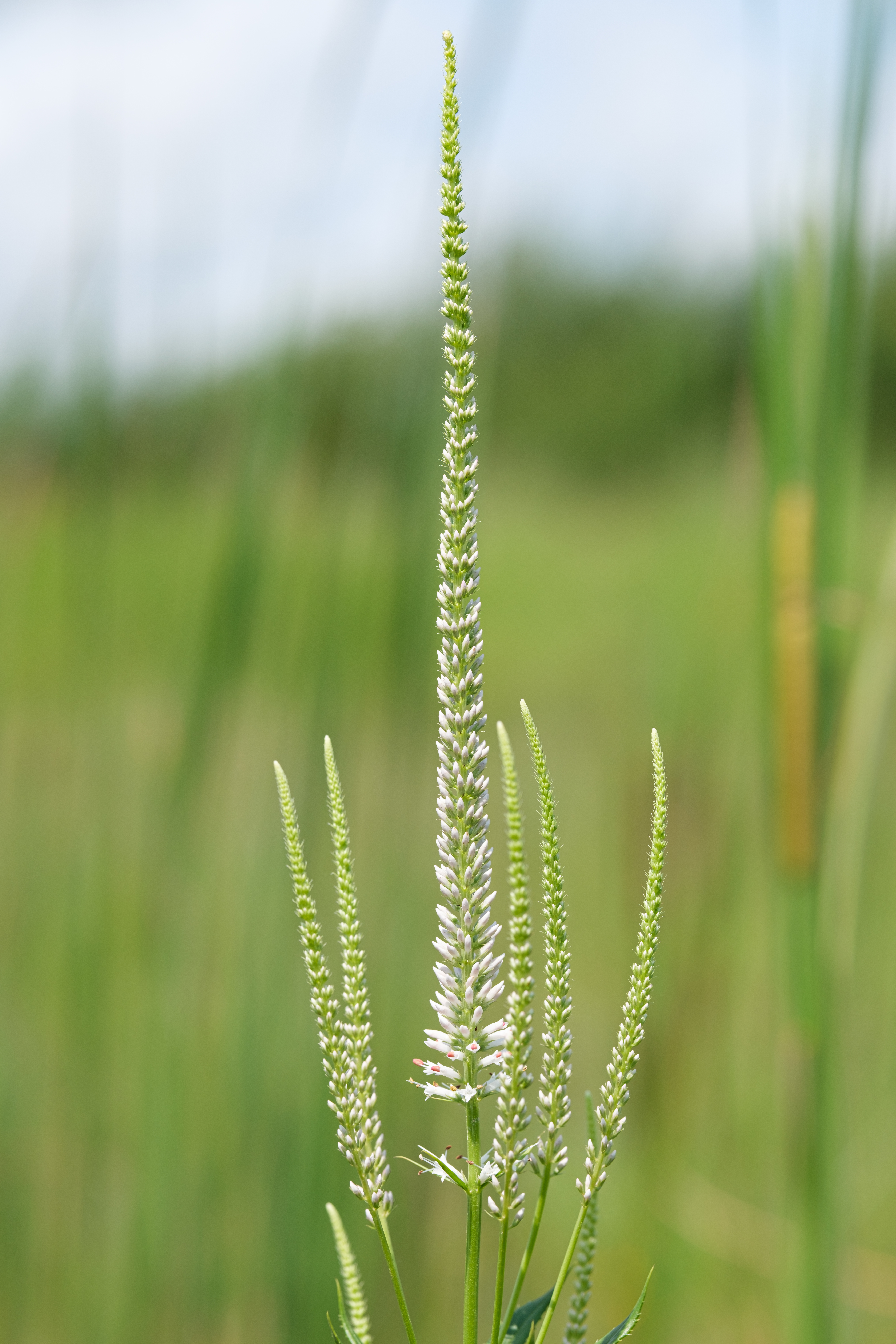
Veronicastrum virginicum, commonly known as Culver’s Root, Culver’s Physic, or Bowman’s Root, is a striking native perennial wildflower that commands attention in any prairie or woodland garden. This member of the Plantaginaceae (plantain) family produces some of the most elegant and architectural flower displays in the North American flora — tall, graceful spikes of tiny white flowers that can reach 6 feet in height, rising like church spires above distinctive whorls of lance-shaped leaves.
Named after Dr. Culver, an 18th-century physician who used the plant medicinally, Culver’s Root has been treasured by Indigenous peoples and early settlers alike for its therapeutic properties. The Menominee, Ojibwe, and other Great Lakes tribes used the dried rhizomes as a gentle but effective laxative and liver tonic. Today, this plant is valued more for its exceptional ornamental qualities and its crucial role in supporting native pollinators and prairie ecosystems.
In the wild, Culver’s Root thrives in moist prairies, open woodlands, and meadows throughout eastern and central North America. Its deep taproot makes it extraordinarily drought-tolerant once established, while its towering flower spikes make it a natural choice for the back of native plant borders or as a dramatic accent in rain gardens and naturalized landscapes. Few plants can match its combination of stately beauty, ecological value, and low-maintenance requirements.
Identification
Culver’s Root is unmistakable when in bloom, producing distinctive candle-like flower spikes that rise well above the foliage. The plant typically reaches 3 to 6 feet tall, though exceptional specimens can grow even taller in ideal conditions. Its growth habit is upright and architectural, making it an excellent structural element in native plant gardens.
Stems & Leaves
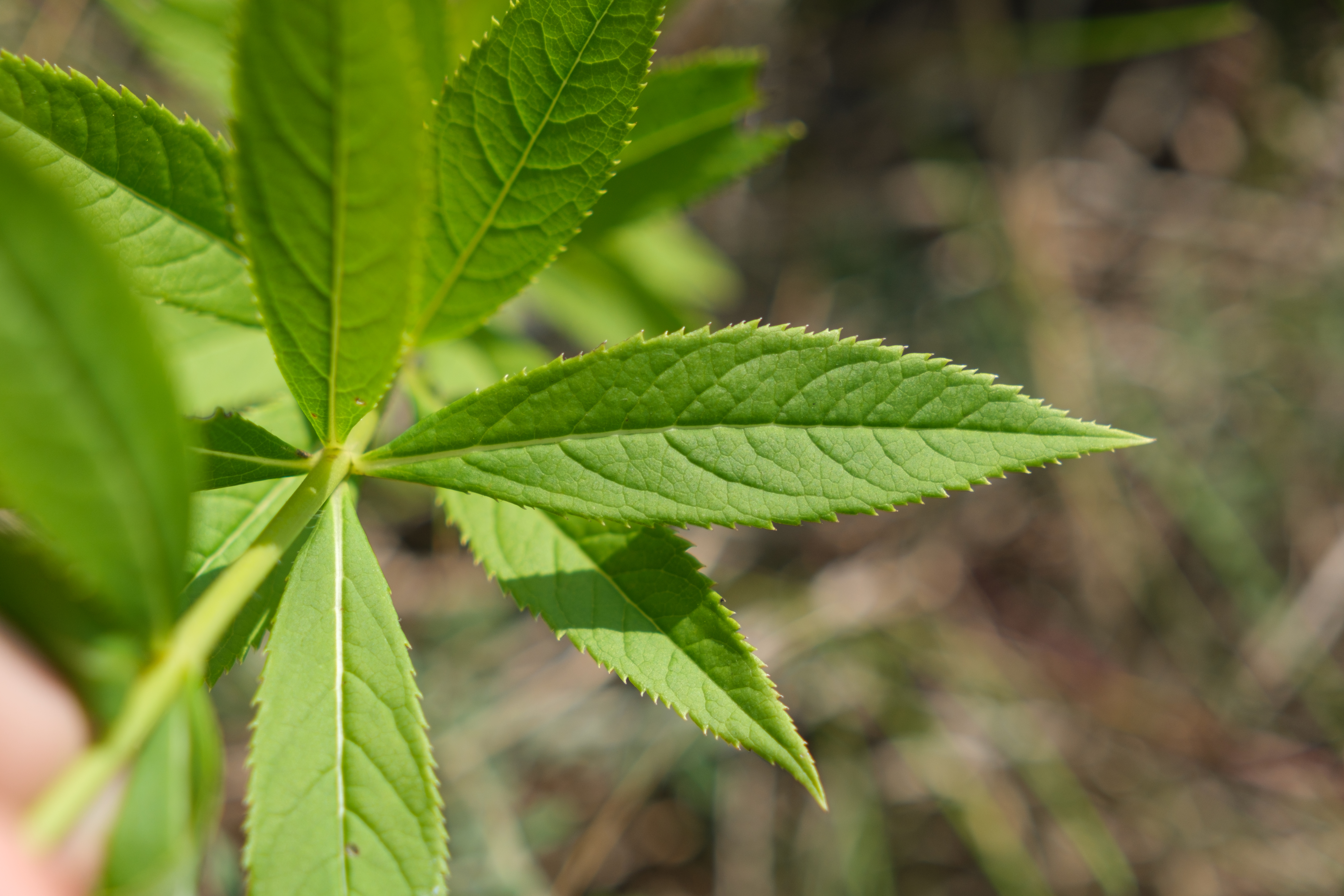
The most distinctive vegetative feature of Culver’s Root is its unique leaf arrangement. The lance-shaped leaves, 3 to 6 inches long and 1 to 1.5 inches wide, are arranged in whorls of 3 to 7 around the stem — a relatively uncommon pattern that makes identification easy even when the plant isn’t flowering. The leaves are sharply serrated along the margins, deep green above, and slightly paler beneath. The sturdy, unbranched stems emerge from a deep, woody rhizome system that can extend several feet into the ground.
Flowers
The flowers are Culver’s Root’s crowning glory — dense, terminal spikes (racemes) of tiny white or occasionally pale pink flowers that bloom from the bottom up over several weeks in mid to late summer. Each individual flower is small, about ¼ inch across, with four petals and conspicuous protruding stamens that give the spikes a delicate, fuzzy appearance. Multiple spikes often emerge from a single plant, creating a spectacular candelabra effect. The blooming period typically lasts 4 to 6 weeks, providing extended color and nectar for pollinators.
Seeds & Fruit
After flowering, small oval capsules develop, each containing numerous tiny brown seeds. The seeds ripen in late summer and early fall, dispersed by wind and gravity. In favorable conditions, Culver’s Root will readily self-sow, gradually forming attractive colonies over time.
Quick Facts
| Scientific Name | Veronicastrum virginicum |
| Family | Plantaginaceae (Plantain) |
| Plant Type | Perennial Wildflower |
| Mature Height | 3–6 ft |
| Sun Exposure | Full Sun to Full Shade |
| Water Needs | Moderate to High |
| Bloom Time | July – September |
| Flower Color | White (occasionally pale pink) |
| USDA Hardiness Zones | 3–8 |
Native Range
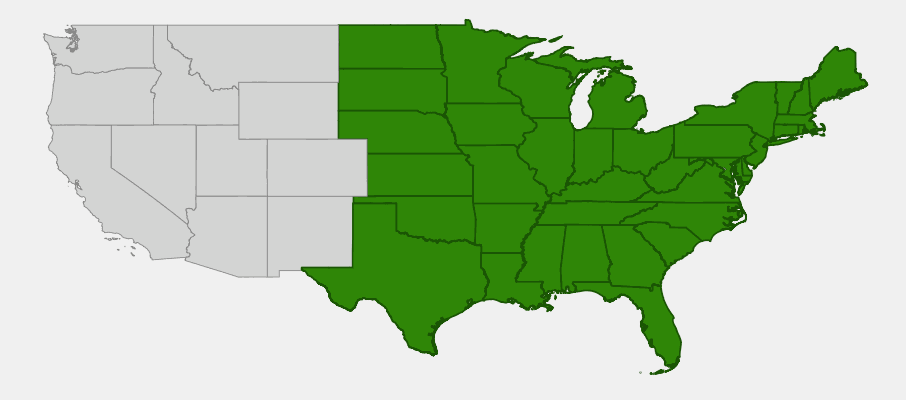
Culver’s Root is native to a broad swath of eastern and central North America, ranging from southeastern Canada south to northern Florida and from the Atlantic coast west to the Great Plains. It is most abundant in the Great Lakes region and the tallgrass prairie states, where it thrives in the deep, rich soils of native prairies and oak savannas.
Historically, this species was much more widespread before European settlement and the conversion of native prairies to agriculture. Today, while still found throughout its range, Culver’s Root has become less common in many areas due to habitat loss. It remains most abundant in remnant prairies, restored grasslands, and the margins of woodlands where fire or other disturbances maintain the open conditions it prefers.
The species shows remarkable adaptability across its range, growing in habitats from moist prairie swales to drier upland sites, and from full sun exposures to partial shade at woodland edges. This adaptability, combined with its deep root system, has helped Culver’s Root survive in habitat fragments where many other prairie species have disappeared.
📋 Regional plant lists featuring Culvers Root: North Dakota, South Dakota & Western Minnesota
Growing & Care Guide
Culver’s Root is one of the most rewarding native perennials to grow, offering spectacular summer blooms with minimal maintenance once established. Its deep taproot system makes it exceptionally drought-tolerant, while its towering flower spikes provide months of architectural interest in the garden.
Light
While Culver’s Root is incredibly adaptable to light conditions, it performs best in full sun to partial shade. In full sun locations, the plants tend to be more compact and produce more flower spikes, while those in partial shade grow taller and may require staking in windy locations. The plant can tolerate quite deep shade, though flowering will be reduced. This versatility makes it excellent for transition zones between sunny and shaded garden areas.
Soil & Water
Culver’s Root is remarkably adaptable to soil conditions but performs best in rich, loamy soil with good drainage. It tolerates clay soils well and can even handle periodic flooding, making it excellent for rain gardens and bioswales. While drought-tolerant once established (thanks to its deep taproot), the plant produces the most impressive flower displays with consistent moisture during the growing season. Mulching helps retain soil moisture and suppresses weeds around young plants.
Planting Tips
Plant nursery-grown containers in spring or fall, spacing them 2 to 3 feet apart to allow for mature spread. Culver’s Root can also be grown from seed, though germination is improved by cold stratification — sow seeds in fall for spring emergence. The plant establishes slowly the first year but builds substantial root systems that support vigorous growth in subsequent seasons. Be patient — second and third-year plants will be dramatically more impressive than first-year specimens.
Pruning & Maintenance
Culver’s Root requires minimal maintenance. Deadhead spent flower spikes to encourage reblooming or leave them standing for winter interest and wildlife value — the seeds feed finches and other birds. The plant can be cut back to 6 inches in late fall or left standing until early spring cleanup. Division is rarely necessary, as established plants continue to perform well for many years without intervention. In fact, Culver’s Root often performs better when left undisturbed.
Landscape Uses
Culver’s Root excels in multiple garden settings:
- Prairie and meadow gardens — provides vertical structure and late-summer color
- Rain gardens and bioswales — tolerates both wet and dry conditions
- Perennial borders — excellent background plant or dramatic accent
- Woodland edges — thrives in the transition between sun and shade
- Wildlife gardens — attracts numerous pollinators and seed-eating birds
- Cut flower gardens — the flower spikes are excellent in fresh or dried arrangements
- Erosion control — deep roots help stabilize slopes and banks
Wildlife & Ecological Value
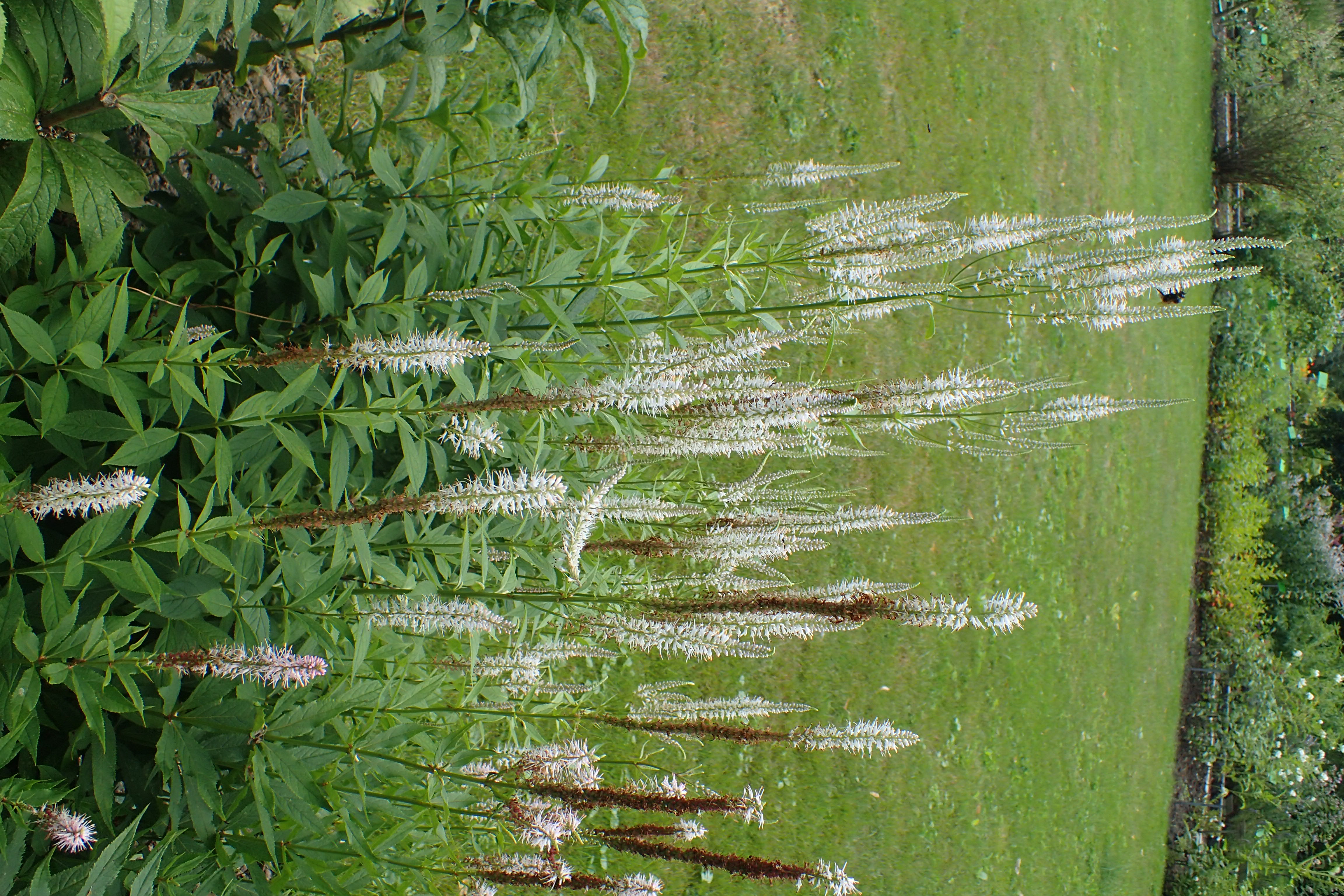
Culver’s Root is a pollinator powerhouse, supporting an exceptional diversity of beneficial insects throughout its extended blooming period. The dense, nectar-rich flower spikes serve as crucial late-summer fuel stations for many species preparing for winter or fall migrations.
For Pollinators
The plant attracts an impressive array of native bees, including bumblebees, sweat bees, leafcutter bees, and specialist prairie bees. Butterflies regularly visit the flowers, with monarchs, fritillaries, skippers, and swallowtails all taking advantage of the abundant nectar. The extended blooming period — often 4 to 6 weeks — provides consistent resources when many other prairie flowers are past their peak. Beneficial wasps, hover flies, and beetles also frequent the flowers, contributing to natural pest control in the garden.
For Birds
Seed-eating birds such as goldfinches, chickadees, and various sparrows feed on the small seeds produced in abundance each fall. The sturdy flower stalks provide perching sites for birds hunting insects or surveying territory. During winter, the standing stems create structure in the landscape that shelters small birds and provides nesting material for the following spring.
For Other Wildlife
The foliage serves as host plant for several moth species, while the dense growth habit of established colonies provides cover for small mammals and ground-nesting birds. The deep root system helps create healthy soil ecosystems that support beneficial mycorrhizae and soil organisms, contributing to overall landscape health.
Ecosystem Role
As a dominant species in many prairie and savanna ecosystems, Culver’s Root plays a crucial role in plant community structure and succession. Its deep roots help break up compacted subsoils, allowing water infiltration and creating channels for other plants’ roots to follow. The plant’s ability to thrive in both wet and dry conditions makes it valuable for habitat restoration projects, particularly in areas prone to flooding or drought stress.
Cultural & Historical Uses
Culver’s Root holds significant importance in the traditional medicine systems of multiple Indigenous tribes across its range. The Menominee people called it “whip root” and used the dried rhizome as a gentle laxative and liver remedy. The Ojibwe (Chippewa) used it similarly, often combining it with other medicinal plants to create comprehensive treatments for digestive disorders.
The Potawatomi tribe used Culver’s Root not only for its medicinal properties but also incorporated it into ceremonial practices. Warriors would use the plant to purify themselves before battle or important ceremonies. The Dakota and other Plains tribes traded for the plant with eastern tribes, valuing its reliable medicinal effects and incorporating it into their own healing traditions.
European settlers quickly adopted the plant after learning of its properties from Indigenous peoples. Dr. Culver, an 18th-century physician for whom the plant is named, was among the first to document its use in European-American medical practice. By the 19th century, Culver’s Root had become an official medicine listed in the U.S. Pharmacopoeia, where it remained until the early 1900s. It was particularly valued as a gentler alternative to harsh purgatives of the era.
The plant was harvested commercially for decades, with dried roots shipped east from prairie states to supply pharmaceutical companies. This commercial harvest, combined with prairie conversion to agriculture, contributed to the plant’s decline in many areas. Today, while some herbalists still use Culver’s Root, it is primarily valued for its ornamental and ecological qualities rather than its medicinal properties. Modern gardeners appreciate both its historical significance and its outstanding performance as a landscape plant that connects us to the rich heritage of North American prairies.
Frequently Asked Questions
How tall does Culver’s Root actually get?
While typically 3–6 feet tall, Culver’s Root can reach impressive heights in ideal conditions. In rich, moist soil with adequate space, specimens often grow 6–8 feet tall, with some exceptional plants reaching 10 feet. The flower spikes add additional height above the foliage.
Does Culver’s Root spread aggressively?
No, Culver’s Root is not aggressive. It spreads slowly by underground rhizomes and self-seeding, gradually forming attractive colonies over many years. The spread is easily controlled, and the plant rarely becomes weedy. Most gardeners find the slow spread desirable for creating natural-looking drifts.
Can I grow Culver’s Root from seed?
Yes, but germination can be tricky. Seeds need cold stratification (3 months of cold, moist conditions) to break dormancy. Sow seeds in fall for spring emergence, or stratify seeds in the refrigerator over winter and plant in spring. Nursery plants provide more reliable and faster results.
Why didn’t my Culver’s Root bloom in its first year?
This is completely normal. Culver’s Root focuses on establishing its root system the first year, with minimal top growth and rarely any flowers. Most plants begin blooming in their second year, with the most impressive displays occurring from the third year onwards. Be patient — the wait is worth it!
Is Culver’s Root deer resistant?
Yes, Culver’s Root is generally avoided by deer, likely due to the bitter compounds in its tissues. While no plant is completely deer-proof, Culver’s Root is rarely browsed even in areas with heavy deer pressure. This makes it excellent for naturalized areas where fencing isn’t practical.

Looking for a nursery that carries Culvers Root?
Browse our native plant nursery directory: North Dakota · South Dakota · Minnesota