Dwarf Azalea (Rhododendron atlanticum)
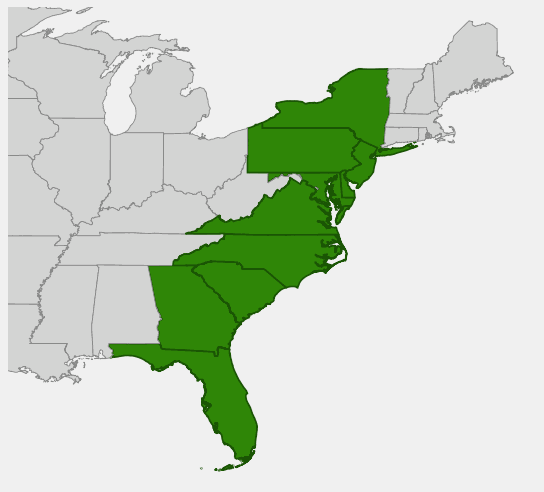
Rhododendron atlanticum, commonly known as Dwarf Azalea, Atlantic Azalea, or Coastal Azalea, is one of the most charming and fragrant native azaleas of the eastern United States. Unlike many other native azaleas that tower above head height, this species typically reaches only 3 to 10 feet tall, spreading into loose, graceful colonies through stolons (underground runners) that extend from the base of the plant. The species name atlanticum refers to its primarily coastal Atlantic distribution, from southern New York south through the Delmarva Peninsula, New Jersey, and the Atlantic Coastal Plain to Georgia.
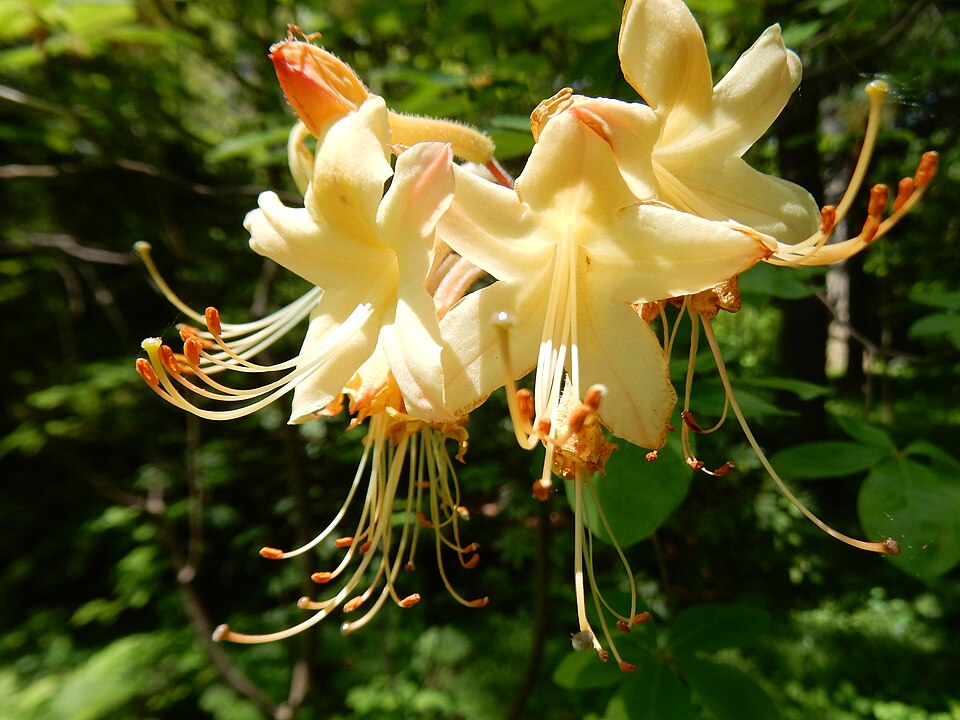
Dwarf Azalea produces some of the most exquisitely fragrant flowers of any native shrub in the mid-Atlantic region. The blooms, appearing in mid-April just as or before the leaves emerge, are white to pale pink, with long, gracefully curving stamens and a rich, sweet-spicy fragrance that carries for considerable distances on the spring breeze. For gardeners seeking spring fragrance in a compact native shrub, Dwarf Azalea is unmatched among regional natives. It is also notable for its stoloniferous spreading habit, forming attractive natural drifts and colonies over time.
In the Delaware, New Jersey, and New York region, Dwarf Azalea is native primarily to the coastal plain and Pine Barrens of New Jersey and the coastal areas of Delaware and Long Island. It thrives in the acidic, sandy, moist soils of these habitats and is an excellent choice for woodland gardens, naturalized coastal landscapes, and any garden with the right acidic, well-drained soil conditions. Its compact size makes it far more manageable in residential gardens than many other native azaleas.
Identification
Dwarf Azalea is a deciduous shrub typically 3 to 6 feet tall (occasionally to 10 feet in optimal conditions), spreading by stolons into loose, open colonies. It is most reliably identified by its combination of compact size, stoloniferous habit, and exceptionally fragrant white to pale pink flowers that appear in mid-April before or with the emerging leaves.
Leaves
The leaves are simple, alternate, and elliptic to obovate (widest near the tip), 1 to 3 inches long and 1/2 to 1 inch wide. They are medium green above with a bluish-green cast, paler below, with a sparse covering of soft hairs on both surfaces. The margins are entire (smooth, untoothed). Leaves are arranged in apparent whorls near the branch tips, as is characteristic of azaleas. In fall, the foliage may turn yellow-orange to reddish before dropping. The plant is deciduous, losing its leaves each winter.
Flowers
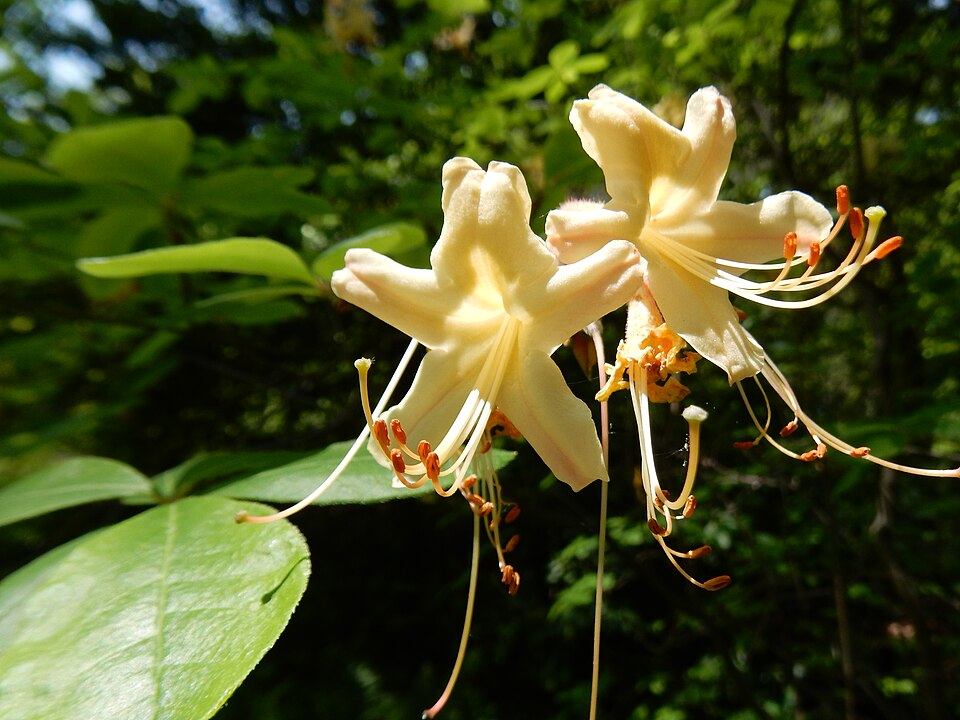
The flowers are the most spectacular feature of Dwarf Azalea and appear in mid-April, clustered in groups of 4 to 9 at the branch tips (before or with the emerging leaves). Each flower is tubular to funnel-shaped, about 1 to 1.5 inches long, with five spreading lobes that are white to pale pink — often with a darker pink blush at the petal tips. The tube is slightly sticky with glandular hairs. Five to ten long, exserted stamens curve gracefully outward. The fragrance is the defining characteristic: exceptionally sweet and spicy, one of the most powerful and beautiful of any native plant in the region.
Habit & Stems
Dwarf Azalea spreads by slender stolons (horizontal underground stems) that give rise to new shoots, creating loose, open colonies rather than the tight clumps of many shrubs. Young stems are green to reddish, with scattered flat hairs; older stems develop gray to brownish bark. The overall form is open and somewhat irregular, with branches angled in various directions. Plants rarely grow into a perfectly symmetrical form, giving them a natural, informal character well-suited to woodland gardens.
Quick Facts
| Scientific Name | Rhododendron atlanticum |
| Family | Ericaceae (Heath) |
| Plant Type | Deciduous Shrub (stoloniferous) |
| Mature Height | 3–10 ft |
| Sun Exposure | Full Sun to Part Shade |
| Water Needs | Moderate |
| Bloom Time | Mid-April (before or with leaves) |
| Flower Color | White to pale pink (fragrant) |
| Fall Color | Yellow to orange-red |
| USDA Hardiness Zones | 5–9 |
Native Range
Dwarf Azalea has a coastal Atlantic distribution in the eastern United States, ranging from southern New York (Long Island) and New Jersey south through Delaware, Maryland, Virginia, North Carolina, South Carolina, and Georgia, primarily on the Atlantic Coastal Plain. It is most abundant in the New Jersey Pine Barrens and the Delmarva Peninsula, where it commonly occurs in moist pine-oak woodland understories, wet savannas, and Atlantic white cedar bogs.
In New Jersey, Dwarf Azalea is one of the most characteristic shrubs of the Pine Barrens, growing alongside other acid-loving species such as Leatherleaf (Chamaedaphne calyculata), Sheep Laurel (Kalmia angustifolia), and various blueberries (Vaccinium spp.). In Delaware, it is found primarily in Sussex County in sandy, moist coastal plain habitats. The species hybridizes naturally with other native azaleas where their ranges overlap, most notably with Pinxterbloom Azalea (Rhododendron periclymenoides), making identification of boundary populations sometimes difficult.
The species is considered a Coastal Plain endemic — strongly associated with the sandy, acidic, seasonally moist soils of the Atlantic Coastal Plain. It is absent from the more calcareous (limestone) soils of the Appalachian region and rarely found far from the influence of the coastal climate. This restricted distribution makes it a regionally distinctive species with significant conservation interest as coastal plain habitats face increasing development pressure.
📋 Regional plant lists featuring Dwarf Azalea: Delaware, New Jersey & New York
Growing & Care Guide
Dwarf Azalea is a rewarding garden plant for those who can meet its specific soil requirements. Like all members of the Ericaceae family, it absolutely requires acidic, well-drained, moist soil with high organic matter — and will decline or fail in alkaline, clay-heavy, or poorly drained soils. When properly sited, it requires minimal care and rewards gardeners with spectacular spring fragrance and an attractive spreading form year-round.
Light
Dwarf Azalea grows well in full sun to part shade. In its native pine barren habitat, it typically grows in dappled light beneath an open pine canopy. In the garden, a site with morning sun and afternoon shade — or the filtered light beneath high-canopied trees — produces the best combination of flowering and foliage health. Full shade reduces flowering significantly; full sun is acceptable if moisture is adequate. In open, sandy soils of the coastal plain, it can tolerate considerable sun exposure.
Soil & Water
Soil requirements are non-negotiable: Dwarf Azalea needs acidic (pH 4.5–5.5), well-drained but consistently moist soil rich in organic matter. Sandy loam with generous incorporation of leaf mold, pine bark, or peat is ideal. Never plant in alkaline soils — yellowing of leaves (chlorosis) is an immediate symptom of pH problems. Mulch heavily with pine bark, pine needles, or shredded oak leaves to maintain acidity, moisture, and soil temperature. Water consistently through the growing season, especially during summer drought; the plant cannot tolerate prolonged dry spells.
Planting Tips
Plant in fall or early spring. Prepare the soil by incorporating 4–6 inches of acidic organic matter before planting. Set the rootball at the same depth it grew in the container — planting too deeply can cause crown rot. Space plants 4–6 feet apart to allow for the stoloniferous spread that creates natural-looking colonies. Avoid fertilizing with standard fertilizers; use an acidifying fertilizer formulated for azaleas and rhododendrons in spring, after flowering.
Pruning & Maintenance
Minimal pruning is needed. Remove dead wood in spring. If shaping is desired, prune lightly immediately after flowering — pruning in summer or fall will remove next year’s flower buds. Do not cut back heavily; Dwarf Azalea has a naturally open, informal habit that should be respected. Remove spent flower clusters if desired to improve appearance, though this is not necessary for plant health. Mulch annually with 2–3 inches of acidic organic material.
Landscape Uses
- Fragrance garden — among the most fragrant native shrubs for the mid-Atlantic region
- Woodland garden understory beneath pines and oaks
- Naturalized coastal plain plantings on sandy, acidic soils
- Mass planting for a stunning spring display
- Native plant garden companion to blueberries, leucothoe, and mountain laurel
- Edge planting along wooded areas and streams
Wildlife & Ecological Value
Dwarf Azalea provides important early-season resources for pollinators and is a component of the biodiversity-rich pine barren ecosystem that supports numerous specialized and endemic wildlife species.
For Birds
Though Dwarf Azalea does not produce significant quantities of fruit, it contributes to bird habitat through its dense branching structure, which provides nesting sites and thermal cover for a variety of songbirds including White-throated Sparrows, Rufous-sided Towhees, and Yellow-breasted Chats. The insects attracted to the flowers provide food for insectivorous birds during the breeding season. The plant is an integral component of the Pine Barrens shrub layer that supports a specialized bird community.
For Mammals
White-tailed Deer may browse Dwarf Azalea foliage, though the plant is not heavily preferred. The dense, low branching provides cover habitat for small mammals including Meadow Voles, White-footed Mice, and Eastern Cottontails in its native pine barren habitat.
For Pollinators
The early April flowers are critically important for spring pollinators, providing nectar and pollen before most other woody plants have opened their flowers. Bumblebees (Bombus spp.) are primary pollinators, particularly queen bumblebees emerging from overwintering in early spring. The long floral tubes are specifically adapted for the long tongues of bumblebees and certain hawk moths (Hemaris spp.) that also visit the flowers in the evening. The fragrance acts as a long-range attractant for both day-flying and night-flying pollinators.
Ecosystem Role
Dwarf Azalea is a characteristic species of the globally rare Atlantic coastal plain pine barren ecosystem — one of the most biodiverse and threatened ecosystems in North America. The New Jersey Pine Barrens, where Dwarf Azalea is abundant, contains more rare plant species per square mile than any other area in the northeastern United States. By including Dwarf Azalea in gardens on appropriate soils, gardeners help support the full web of life associated with this ecosystem, including many specialist insects that depend on Ericaceae plants.
Cultural & Historical Uses
Like other native azaleas, Dwarf Azalea was known and used by Indigenous peoples of the mid-Atlantic coastal plain. The Nanticoke and other Algonquian peoples of the Delmarva Peninsula were familiar with the plant and its habitats, though documented specific uses of this particular species are limited compared to more widespread species. As a member of the Ericaceae family, which includes many important food plants (blueberries, cranberries), the plant was part of the broader ecological knowledge of coastal plain peoples.
European colonists noted the beauty and fragrance of the native azaleas of the Atlantic coast from the earliest botanical explorations of the region. William Bartram, the naturalist explorer who traversed the southeastern United States in 1773–1777, described native azaleas with rapturous enthusiasm, comparing them favorably to the finest ornamental plants of Europe. The cultivation of native azaleas in American gardens dates to the late 18th century, and Dwarf Azalea has been appreciated in horticulture for its compact size and exceptional fragrance since the early 19th century.
Today, Dwarf Azalea is prized in native plant horticulture as one of the best small native flowering shrubs for the mid-Atlantic garden. It has also been used in the development of hybrid azalea cultivars, contributing its fragrance and compact habit to breeding programs. Conservation of its native pine barren habitat is a priority for native plant advocates, as the Atlantic Coastal Plain continues to face development pressure and habitat fragmentation.
Frequently Asked Questions
How is Dwarf Azalea different from Pinxterbloom Azalea?
Both are fragrant native azaleas blooming before or with the leaves, but Dwarf Azalea (R. atlanticum) is generally shorter (3–6 ft vs. 4–8 ft), spreads by stolons, has a more bluish-green leaf color, and is primarily a coastal plain species. Pinxterbloom (R. periclymenoides) is more widespread inland. The two hybridize where their ranges overlap, producing plants with intermediate characteristics.
Are Dwarf Azalea flowers edible?
No. Like all rhododendrons and azaleas, Dwarf Azalea contains grayanotoxins that are toxic to humans and many animals. Do not consume any part of this plant. Even honey made by bees foraging on azalea flowers can cause illness.
How quickly does Dwarf Azalea spread?
It spreads slowly to moderately via stolons, typically expanding 6–12 inches per year under ideal conditions. Over many years it forms attractive, naturalistic colonies. This is a desirable trait in woodland garden settings and is easily managed by removing stolon growth if spread needs to be limited.
Why isn’t my Dwarf Azalea flowering?
Common causes are: too much shade (needs some direct sun), alkaline soil (pH above 6 causes decline), root disturbance, or pruning at the wrong time (azaleas set flower buds in summer for the following spring — prune only immediately after flowering). A soil test is the best first step for troubleshooting.
Does Dwarf Azalea grow in New York City area?
Yes, it is native to Long Island and can be grown successfully in suitable acidic, sandy soils throughout the New York metro area. The key is providing consistently acidic, well-drained but moist soil and protection from alkaline conditions (avoid near concrete foundations and lime-treated soils).

Looking for a nursery that carries Dwarf Azalea?
Browse our native plant nursery directory: Delaware · New Jersey