
Eastern Cottonwood (Populus deltoides)
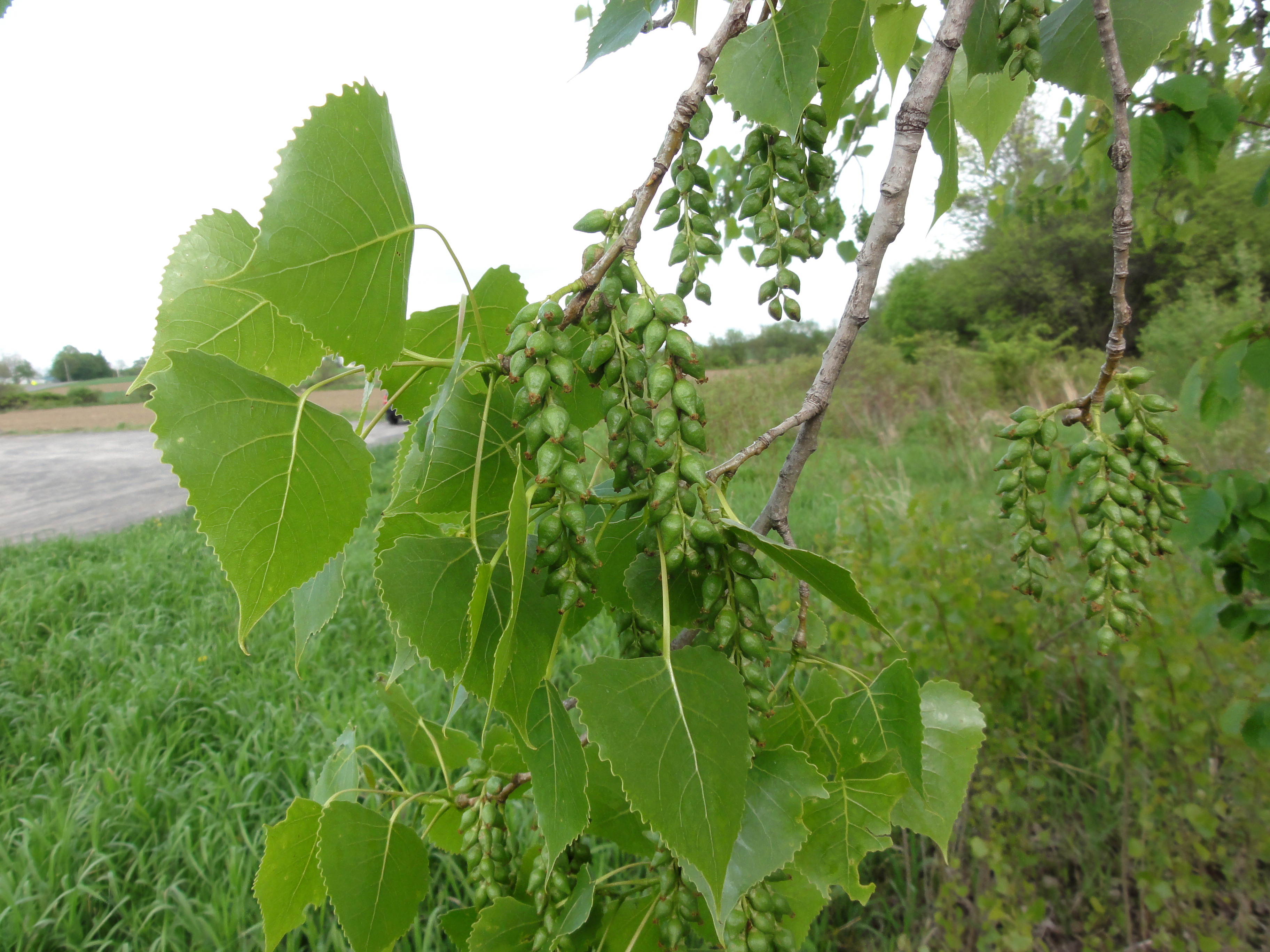
Populus deltoides, commonly known as Eastern Cottonwood, is one of North America’s most impressive native deciduous trees and the fastest-growing tree species on the continent. This towering member of the willow family (Salicaceae) can reach extraordinary heights of 100 feet or more, with massive trunks that may exceed 6 feet in diameter. The common name “cottonwood” comes from the fluffy, cotton-like seeds that drift on the wind in late spring, creating brief but memorable “snowstorms” of white that blanket the ground beneath mature female trees.
Found naturally along rivers, streams, and floodplains throughout much of the United States, Eastern Cottonwood is a pioneer species that quickly colonizes disturbed or newly available ground. Its rapid growth rate — often 4 to 6 feet per year under ideal conditions — makes it invaluable for erosion control, windbreaks, and fast shade. While the species has gained a reputation for being “messy” due to its dropping branches and abundant seed production, these characteristics are simply expressions of its ecological role as a dynamic, fast-growing riparian species.
Despite its grand stature and ecological importance, Eastern Cottonwood remains underappreciated in landscaping. The tree’s massive size, impressive fall color ranging from bright yellow to golden, and crucial habitat value for wildlife make it an excellent choice for large properties, parks, and restoration projects where space allows its full development.
Identification
Eastern Cottonwood is unmistakable once you know its key features. It typically grows as a large, fast-growing tree with a broad, open crown that spreads widely as the tree matures. Young trees have a more pyramidal shape that transitions to the characteristic wide-spreading form with age.
Bark
The bark is perhaps the most distinctive feature of mature Eastern Cottonwood. Young trees have smooth, yellowish-green to gray bark, but as trees age, the bark becomes deeply furrowed with thick, corky ridges that form a distinctive diamond or rectangular pattern. On very old trees, the bark can be 2–3 inches thick and deeply grooved, providing excellent identification even from a distance. The inner bark has historically been used as food in times of scarcity.
Leaves
The leaves are simple, alternate, and broadly triangular to deltoid (delta-shaped), which is reflected in the scientific name “deltoides.” Each leaf is 3–6 inches long and wide, with a glossy green upper surface and paler underside. The leaf margins are coarsely toothed, and the petiole (leaf stem) is flattened, allowing the leaves to flutter and tremble in even the slightest breeze — a characteristic shared with other aspens and poplars. This movement creates the distinctive rustling sound that cottonwoods are known for.
Flowers & Seeds
Eastern Cottonwood is dioecious, meaning individual trees are either male or female. The flowers appear in drooping catkins before the leaves emerge in early spring. Male catkins are 2–4 inches long and reddish, while female catkins are longer and green. After pollination, female trees produce the famous “cotton” — small seeds each attached to a tuft of white, silky hairs that help them disperse on the wind. This occurs in late spring to early summer, and a single large tree can produce millions of seeds.
Size & Growth
Eastern Cottonwood is among the tallest deciduous trees in North America. Mature trees commonly reach 75–100 feet in height, with exceptional specimens growing even taller. The trunk can exceed 6 feet in diameter, and the crown may spread 50–75 feet wide. The growth rate is extraordinary — young trees can grow 4–6 feet per year under favorable conditions, making this one of the fastest-growing native trees.
Quick Facts
| Scientific Name | Populus deltoides |
| Family | Salicaceae (Willow) |
| Plant Type | Deciduous Tree |
| Mature Height | 100 ft |
| Growth Rate | Very Fast (4–6 ft/year) |
| Sun Exposure | Full Sun |
| Water Needs | Moderate to High |
| Soil Type | Moist, well-drained to wet; tolerates flooding |
| Soil pH | 5.0–8.0 (acidic to alkaline) |
| Bloom Time | March – April |
| Flower Color | Reddish (male), Green (female) |
| Fall Color | Bright Yellow to Golden |
| USDA Hardiness Zones | 2–9 |
Native Range
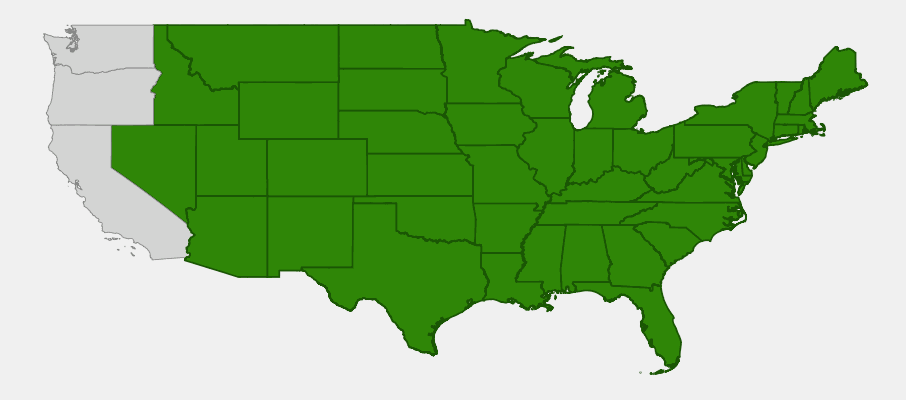
Eastern Cottonwood has one of the most extensive native ranges of any North American tree, naturally occurring from southern Canada to the Gulf of Mexico and from the Atlantic seaboard west to the Rocky Mountains. This impressive distribution reflects the species’ remarkable adaptability to diverse climates and growing conditions, from the cold winters of North Dakota to the humid subtropics of Florida.
Throughout this vast range, Eastern Cottonwood is characteristically found along rivers, streams, floodplains, and other wetland margins where periodic flooding and rich, moist soils create ideal growing conditions. The species is particularly abundant in the Great Plains, where it forms extensive riparian forests along major river systems like the Missouri, Mississippi, Arkansas, and Platte rivers. These cottonwood galleries provide crucial habitat corridors for wildlife in otherwise grassland-dominated landscapes.
While Eastern Cottonwood tolerates a wide range of conditions, it reaches its greatest size and ecological importance in areas with reliable water access and nutrient-rich alluvial soils. Climate change and river management practices have affected some populations, but the species’ rapid growth and prolific reproduction help maintain stable populations across most of its historic range.
📋 Regional plant lists featuring Eastern Cottonwood: North Dakota, South Dakota & Western Minnesota
Growing & Care Guide
Eastern Cottonwood is surprisingly easy to grow if you understand its needs and have adequate space for its impressive mature size. This is not a tree for small yards, but for those with room, few species provide such rapid growth, massive presence, and ecological value.
Light & Space Requirements
Eastern Cottonwood absolutely requires full sun and plenty of space. The tree develops a massive crown that can spread 50–75 feet wide, so plant at least 30–40 feet from buildings, power lines, and other trees. Young trees may look small, but they grow with startling speed — plan for the mature size from the beginning.
Soil & Water
While adaptable to a wide range of soil types, Eastern Cottonwood performs best in deep, moist, fertile soils similar to the rich alluvial soils of its native floodplain habitat. The tree tolerates both acidic and alkaline conditions (pH 5.0–8.0) and can handle periodic flooding, making it excellent for low-lying or occasionally wet areas where other large trees struggle. However, it also tolerates moderate drought once established, though growth will be slower in dry conditions.
Planting & Establishment
Plant Eastern Cottonwood in early spring or fall. Choose the largest planting site available, keeping in mind the tree’s eventual massive size. Water deeply and regularly during the first few years to encourage the rapid root development that supports the tree’s fast top growth. Mulching with 2–3 inches of organic matter helps retain moisture and suppress weeds.
Pruning & Maintenance
Minimal pruning is needed, and heavy pruning can actually weaken the tree by encouraging weak, water sprout growth. Remove dead, damaged, or crossing branches in late winter. The tree naturally drops small branches (“self-pruning”), which is normal behavior, not a sign of poor health. This characteristic makes cottonwood unsuitable for formal landscapes but perfect for naturalized settings.
Landscape Uses
Eastern Cottonwood serves multiple functions in the landscape:
- Fast shade and screening — unmatched for rapid results on large properties
- Windbreaks — excellent protection for buildings, livestock, and crops
- Erosion control — extensive root system stabilizes slopes and streambanks
- Wetland restoration — pioneer species for restoring riparian corridors
- Wildlife habitat — crucial food and nesting sites for numerous species
- Parkland and large estates — specimen trees for expansive settings
Potential Drawbacks
Eastern Cottonwood’s vigorous growth comes with trade-offs. The tree produces abundant “cotton” from female trees in late spring, which some find messy. Branches may drop in storms, and the large size requires significant space. The extensive root system can interfere with septic systems or pavement if planted too close. These characteristics make it unsuitable for small urban lots but ideal for rural properties and naturalized landscapes.
Wildlife & Ecological Value
Few native trees rival Eastern Cottonwood for sheer wildlife value. The massive size, rapid growth, and long lifespan create habitat structure that supports an extraordinary diversity of species throughout the tree’s 70–100 year lifespan.
For Birds
Eastern Cottonwood is a keystone species for birds. The large trunk and branches provide nesting cavities for woodpeckers, which in turn create homes for secondary cavity nesters like bluebirds, chickadees, and nuthatches. Raptors including Bald Eagles, Red-tailed Hawks, and Great Horned Owls commonly nest in the massive crowns. The tree’s seeds feed numerous songbirds, while the early-leafing branches attract insects that support migrating warblers and other insectivorous species during spring migration.
For Mammals
Beavers preferentially cut cottonwood for dam construction and winter food storage, making the tree crucial for beaver populations throughout much of North America. White-tailed deer and elk browse young twigs and bark, while squirrels and other small mammals nest in tree cavities. The extensive root system and streambank location make cottonwood groves important habitat for muskrats and other semi-aquatic species.
For Pollinators
Eastern Cottonwood’s early spring flowers provide crucial nectar and pollen for native bees and other pollinators when few other food sources are available. Honeybees also collect significant amounts of propolis (tree resin) from cottonwood buds, which they use to seal their hives and provides antimicrobial properties.
Ecosystem Services
Beyond direct wildlife support, Eastern Cottonwood provides critical ecosystem services. The extensive root system prevents soil erosion along waterways, while the large leaves and rapid growth make cottonwood excellent for carbon sequestration. During floods, cottonwood groves slow water flow and trap sediment, helping protect downstream areas. The tree’s pioneering nature allows it to stabilize disturbed sites and begin forest succession.
Cultural & Historical Uses
Eastern Cottonwood holds deep significance in North American cultural history, serving as both a practical resource and spiritual symbol for Indigenous peoples and later European settlers. Many Plains tribes considered cottonwood groves sacred, often establishing villages near these oasis-like forests in the otherwise treeless grasslands. The Lakota name for cottonwood translates to “the tree that talks,” referring to the distinctive rustling of the flattened leaves in the wind.
Traditional uses were extensive and ingenious. The inner bark, rich in sugars and vitamins, served as emergency food during harsh winters — it could be dried, ground into flour, or eaten fresh. Indigenous peoples used the wood for drums, bowls, and shelter construction, while the hollow trunks of large trees were crafted into dugout canoes. The resinous buds provided medicine for wounds, burns, and respiratory ailments, and were used to waterproof containers and tools.
European settlers quickly recognized cottonwood’s value for rapid construction timber, fence posts, and fuel wood. Despite being relatively soft wood, cottonwood was crucial to frontier settlement because of its fast growth and wide availability. The species played a vital role in the “Great American Desert” settlement period, providing the only reliable timber resource across vast areas of the Great Plains. Today, cottonwood pulp is used in paper manufacturing, and the wood serves various purposes including crates, pallets, and core stock for furniture.
In modern times, Eastern Cottonwood has become symbolic of prairie restoration and riparian conservation efforts. Environmental organizations often use cottonwood groves as flagship habitats for fundraising and education, recognizing that protecting these riparian forests preserves entire ecosystems. The sight of a cottonwood grove’s golden fall color across the prairie landscape remains one of the most iconic images of the American West.
Frequently Asked Questions
How fast does Eastern Cottonwood really grow?
Eastern Cottonwood is among the fastest-growing trees in North America. Under ideal conditions (full sun, moist soil, adequate space), young trees commonly grow 4–6 feet per year. Some specimens have been documented growing even faster, particularly in rich bottomland soils. This exceptional growth rate means you can have significant shade and screening in just a few years.
Are female cottonwood trees really that messy with their “cotton”?
The cotton production occurs for only 1–2 weeks per year in late spring, and while it can be noticeable, it’s often exaggerated. If the cottony seeds are a concern, plant male trees (which don’t produce cotton) or consider the short duration versus the year-round benefits. Many people actually enjoy the brief “summer snow” effect, and the seeds indicate a healthy, mature tree.
How close can I plant Eastern Cottonwood to my house?
Plant at least 40–50 feet from structures, keeping in mind that mature trees can have crowns 75 feet wide and extensive root systems. The roots are not typically invasive to foundations, but the tree’s size demands respect. For septic systems, maintain even greater distance as the roots naturally seek water and nutrients.
Will Eastern Cottonwood survive in my climate?
Eastern Cottonwood has one of the widest climate tolerances of any North American tree, thriving in USDA zones 2–9. It handles both extreme cold (to -40°F) and considerable heat, but requires adequate water during dry periods. If you’re within its native range and can provide space and occasional water, it will likely succeed.
Is Eastern Cottonwood good for firewood?
While cottonwood burns, it’s not considered premium firewood due to its relatively low BTU output and tendency to burn quickly. However, it splits easily and lights readily, making it useful for kindling or shoulder-season burning. For many rural properties, the tree’s other benefits far outweigh its modest value as fuel wood.

Looking for a nursery that carries Eastern Cottonwood?
Browse our native plant nursery directory: North Dakota · South Dakota · Minnesota