False Indigo Bush (Amorpha fruticosa)
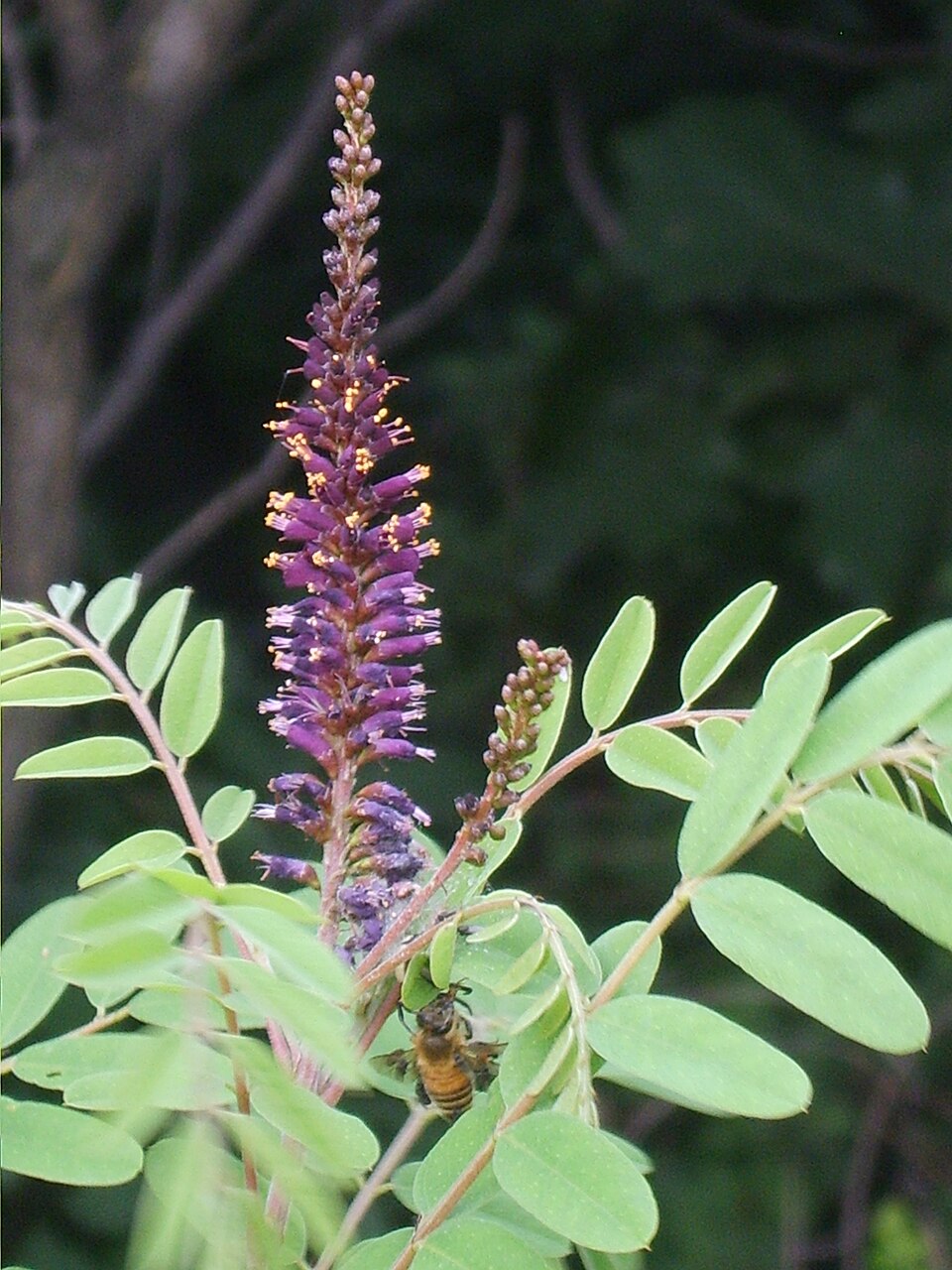
Amorpha fruticosa, commonly known as False Indigo Bush, Desert False Indigo, or Lead Plant, is a large, vigorous native shrub with remarkable ecological value and one of the most distinctive flowering displays of any native shrub in North America. Each late spring, this deciduous shrub produces dense, erect spikes of dark purple-violet flowers accented with brilliant orange anthers — an unusual and striking combination that makes it immediately recognizable and visually stunning in the landscape. The genus name Amorpha means “without form” — a reference to the single-petaled flower structure, which lacks the typical five-petaled form of the pea family.
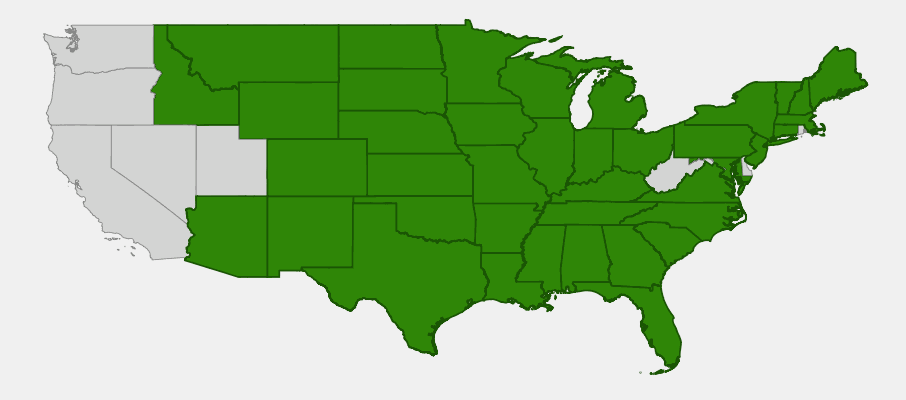
False Indigo Bush is one of the most ecologically versatile native shrubs in North America, with a native range spanning virtually the entire eastern and central United States from the Gulf Coast to Canada. It grows 6–10 feet tall and wide, often forming dense, multi-stemmed thickets along stream banks, flood plains, and disturbed moist sites. This adaptability has made it a favorite for erosion control, riparian restoration, wildlife habitat creation, and naturalistic landscaping across a vast geographic range — including the desert Southwest where it grows along desert waterways and riparian corridors.
From an ecological standpoint, False Indigo Bush is extraordinarily valuable: it hosts 36+ butterfly and moth caterpillar species, produces abundant seeds consumed by numerous birds and mammals, provides dense cover for nesting and sheltering wildlife, and fixes nitrogen in the soil — improving soil fertility while supporting its plant community neighbors. For gardeners, restoration ecologists, and conservation managers across a wide swath of North America, False Indigo Bush is an exceptional multi-purpose native plant deserving far wider use.
Identification
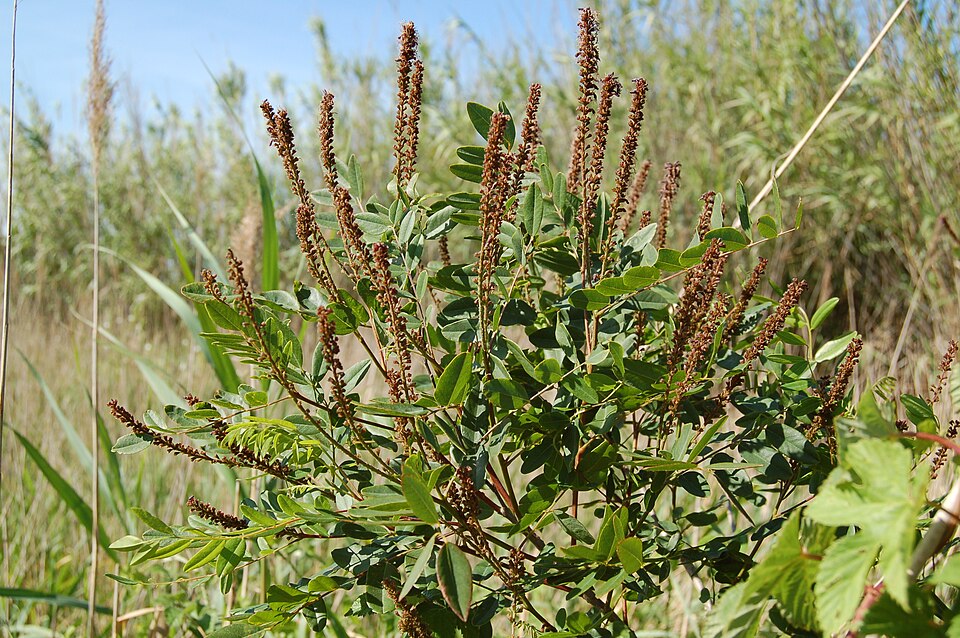
False Indigo Bush is a large, multi-stemmed deciduous shrub that typically grows 6–10 feet tall and nearly as wide, forming dense thickets in suitable conditions. The overall growth form is arching and somewhat open, with graceful compound leaves giving it a tropical or mimosa-like appearance when in leaf. The plant spreads by root suckers, gradually forming colonies in ideal conditions.
Bark & Stems
Young stems are greenish and somewhat hairy, becoming grayish-brown and smooth with age. The stems are moderately stout and arching. The plant produces abundant root suckers that spread outward from the main clump, creating colony-forming thickets ideal for erosion control on stream banks. The wood is relatively soft and brittle.
Leaves
The leaves are pinnately compound, 4–12 inches long, with 11–25 (sometimes more) oval leaflets, each about 1 inch long. The leaflets are dark green above and paler below, with small, gland-dotted surfaces. The compound leaves give the plant a lush, ferny appearance that provides dappled shade beneath the canopy. Foliage appears relatively late in spring and drops early in fall, with minimal fall color. Small glands on the leaves produce a distinctive aromatic scent when crushed.
Flowers & Fruit
The flowers are among the most distinctive of any native shrub. They appear in May–June in dense, spike-like racemes 3–6 inches long at the branch tips. Each individual flower has a single dark purple-violet petal (the standard) wrapped around a cluster of orange-tipped stamens — creating a striking bi-color display of deep violet and bright orange. The spikes are produced in abundance, covering the shrub in a remarkable floral show. After flowering, the plant produces small, gland-dotted, one-seeded pods about ½ inch long that persist on the plant into winter.
Quick Facts
| Scientific Name | Amorpha fruticosa |
| Family | Fabaceae (Pea / Legume Family) |
| Plant Type | Deciduous Shrub |
| Mature Height | 6–10 ft |
| Sun Exposure | Full Sun |
| Water Needs | Moderate |
| Bloom Time | May – June |
| Flower Color | Dark Purple-Violet with Orange Anthers |
| USDA Hardiness Zones | 4–9 |
Native Range
False Indigo Bush is one of the most widely distributed native shrubs in North America. Its native range spans much of the eastern and central United States, from the Great Plains east to the Atlantic Coast, and from the Gulf of Mexico north into Canada. It naturally occurs in virtually every state east of the Rocky Mountains, plus parts of the desert Southwest along riparian corridors. This extraordinary breadth reflects its adaptability to a wide range of climatic conditions and soil types.
In the desert Southwest, including Arizona and New Mexico, False Indigo Bush grows primarily along rivers, streams, irrigation canals, and other riparian corridors where moisture is more abundant than in surrounding desert. In the eastern and central states, it is most common on stream banks, flood plains, lake shores, moist roadsides, and disturbed moist areas. It tolerates periodic flooding and temporary inundation, making it especially valuable for streambank stabilization and riparian restoration.
False Indigo Bush has been widely introduced outside its native range and is now considered invasive in parts of Europe and Asia, where it spreads aggressively along waterways. In its native North American range, however, it is a valuable and appropriate choice for ecological restoration, erosion control, and wildlife habitat creation. When planting, be aware of its suckering habit and allow adequate space for it to spread naturally.
📋 Regional plant lists featuring False Indigo Bush: Arizona
Growing & Care Guide
False Indigo Bush is a tough, adaptable shrub that grows vigorously once established, providing dramatic flowering and exceptional wildlife value with minimal care. Its main requirement is adequate moisture, especially during establishment.
Light
False Indigo Bush performs best in full sun, where it produces the most abundant flowering and densest growth. It will tolerate partial shade but may become leggy and produce fewer flowers. For best results, site it where it receives at least 6 hours of direct sun daily. In hot desert climates, light afternoon shade may help in the hottest months.
Soil & Water
False Indigo Bush is very adaptable to soil type, thriving in clay, loam, sandy, and even gravelly soils. It tolerates periodic flooding and temporary wet conditions — one of its great strengths for riparian plantings. Moderate moisture is ideal; the plant can tolerate drought once established but looks its best with consistent moisture. In the desert Southwest, plant it where it can access water from a seasonal stream, irrigation runoff, or regular supplemental watering.
Planting Tips
Plant in fall or early spring. Space plants 6–8 feet apart to allow for the mature suckering spread. Control the spread by mowing or cutting suckers as needed if you want to restrict the colony. For erosion control applications, allow the colony to expand freely — the suckering habit is its greatest asset for stabilizing stream banks and slopes. This plant transplants easily from container stock and also grows well from hardwood cuttings.
Pruning & Maintenance
Cut back to 6–12 inches in early spring to rejuvenate old plants and promote dense, vigorous new growth. This hard pruning also improves flower production. Alternatively, selectively remove the oldest stems at the base each spring, maintaining a mix of old and new stems for a more natural look. Remove unwanted suckers to control spread. No fertilization needed — as a legume, False Indigo Bush fixes its own nitrogen.
Landscape Uses
- Streambank and riparian stabilization — excellent erosion control along waterways
- Wildlife thicket planting — provides outstanding cover and food for birds and mammals
- Rain garden and bioswale plantings — tolerates periodic flooding
- Naturalistic screening — dense growth provides visual and wildlife screen
- Prairie and savanna restoration — historically abundant on floodplains
- Butterfly garden — larval host for 36+ butterfly and moth species
Wildlife & Ecological Value
Few native shrubs in North America match False Indigo Bush for sheer ecological value. It is a cornerstone plant for wildlife across most of its range.
For Birds
The dense thickets of False Indigo Bush provide exceptional nesting and roosting cover for many bird species, including Yellow Warblers, Common Yellowthroats, and Willow Flycatchers, which nest in the stems near water. The persistent seed pods are consumed by bobwhite quail, wild turkey, and numerous songbirds. The thick, multi-stemmed growth provides important winter thermal cover and escape cover for birds in cold climates.
For Mammals
False Indigo Bush is excellent cover for rabbits, foxes, deer, and small mammals. White-tailed deer browse the foliage and stems. Beaver and muskrat eat the stems and roots where the plant grows near water. The thickets provide critical escape and denning cover for foxes, rabbits, and other medium-sized mammals. The seeds are eaten by white-footed mice and other small rodents.
For Pollinators
The flowers are visited by a wide variety of native bees, bumblebees, and specialist bees that have evolved to collect pollen from legume flowers. The dense flower spikes provide abundant nectar and pollen during the late spring bloom period. False Indigo Bush is also an important larval host plant for 36+ species of native butterflies and moths, including the Silver-spotted Skipper, Wild Indigo Duskywing, and numerous moth species whose caterpillars feed on the foliage.
Ecosystem Role
As a nitrogen-fixing legume, False Indigo Bush plays a vital soil-enrichment role in its plant community. Root nodules harbor nitrogen-fixing bacteria (Rhizobium) that convert atmospheric nitrogen into plant-available forms, benefiting neighboring plants and improving overall soil fertility. The plant’s extensive root system is exceptional at stabilizing stream banks and preventing soil erosion — making it invaluable for riparian restoration projects where bank erosion is a primary concern.
Cultural & Historical Uses
False Indigo Bush has a rich history of use by Indigenous peoples across its range. The most significant use was as a source of blue dye — the common name “False Indigo” reflects that the plant was used as a substitute for true indigo (Indigofera tinctoria), producing a similar blue dye from its leaves and stems. Various tribes throughout the eastern and central United States extracted blue and purple dyes from False Indigo Bush for dyeing clothing, baskets, and ceremonial items.
The Comanche, Lakota, Omaha, and other Plains peoples used False Indigo Bush medicinally for a range of conditions. The bark was used as an insecticide and fish poison — the plant contains compounds (rotenone and related chemicals) with natural insecticidal properties. Some tribes used leaf preparations as a treatment for skin conditions, wounds, and fever. The seeds and pods were also used in various ways, including as a source of dye material and in traditional plant medicine.
Early European settlers learned from Indigenous peoples to use the plant as a dye source, and False Indigo Bush was cultivated in colonial gardens partly for this purpose. In the 19th century, botanists and horticulturists recognized its exceptional value as an ornamental plant and erosion control species, and it was widely planted in windbreaks, stream bank plantings, and naturalistic gardens. Today it is used extensively in ecological restoration projects, rain garden design, and native plant landscaping across most of North America.
Frequently Asked Questions
Will False Indigo Bush take over my garden?
False Indigo Bush spreads by underground suckers and can form a colony over time. In a naturalistic planting or along a streambank, this spreading habit is highly desirable. In a more formal garden, control the spread by mowing or cutting suckers annually. With management, it is easily kept in bounds.
How do I prune False Indigo Bush?
Cut the entire plant back to 6–12 inches in late winter or early spring (before new growth). This hard pruning rejuvenates the plant, prevents it from becoming too tall and leggy, and encourages abundant new growth and better flowering. Alternatively, remove one-third of the oldest stems at the base each year to maintain a natural form.
Does False Indigo Bush fix nitrogen?
Yes — as a member of the legume family (Fabaceae), False Indigo Bush forms root nodules with nitrogen-fixing bacteria. These bacteria convert atmospheric nitrogen into plant-available forms, enriching the soil and reducing or eliminating the need for fertilization. This nitrogen-fixing ability is one of the reasons False Indigo Bush is so valuable in restoration plantings.
Is False Indigo Bush invasive?
False Indigo Bush is native across most of the eastern and central United States and is not invasive in its native range. However, it has been introduced to Europe and Asia where it is considered invasive along waterways. In North America, always plant locally sourced plants within the species’ native range.
How quickly does False Indigo Bush grow?
False Indigo Bush is a fast-growing shrub, typically adding 2–3 feet per year under good conditions. It can reach its full 6–10 foot height within 3–5 years of planting. The plant blooms best starting in its second or third year after planting.

Looking for a nursery that carries False Indigo Bush?
Browse our native plant nursery directory: Arizona