Gowen Cypress (Cupressus goveniana)
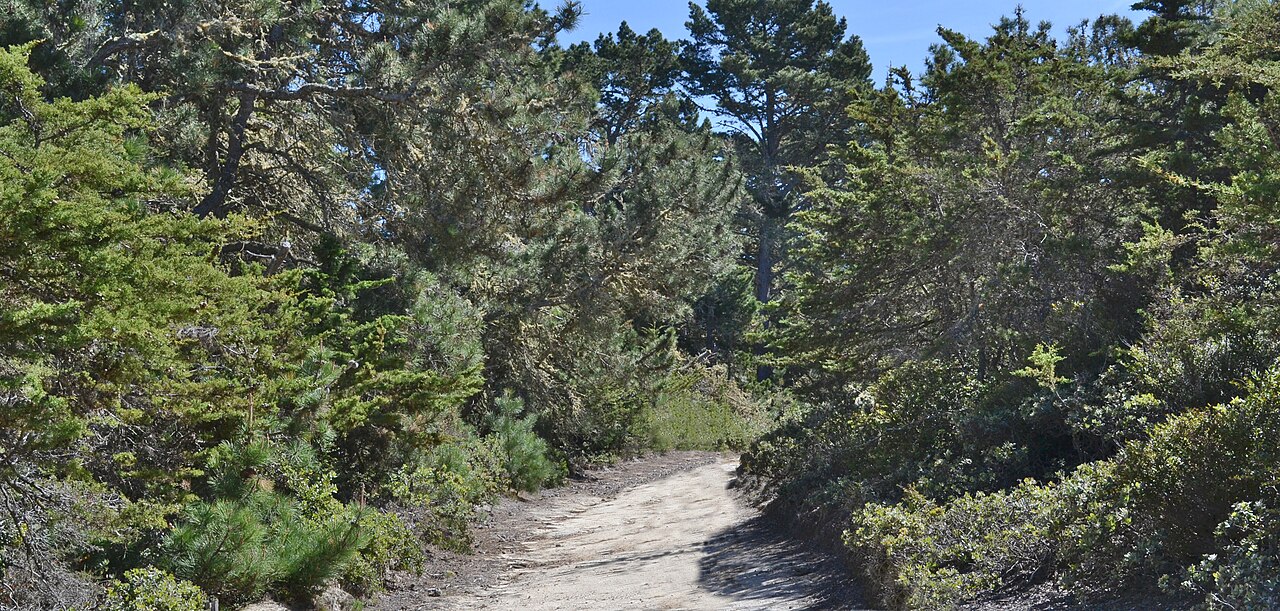
Hesperocyparis goveniana (long known as Cupressus goveniana), the Gowen cypress, is one of California’s rarest conifers, confined in the wild to a sliver of the Monterey Peninsula. It grows as a dwarfed, often shrubby tree where it roots in thin, acidic “pygmy forest” soil, and as a somewhat taller, more open tree where conditions are better. Either way, it is unmistakably a true cypress: scale-like, yellow-green to grey-green foliage pressed tight against the twigs, and small, hard, globe-shaped cones that often cling to the branches for years.
Gowen cypress is federally listed as a threatened species, and the California Native Plant Society ranks it 1B — rare, threatened, or endangered in California and elsewhere. Its entire native range amounts to a few scattered stands on the Monterey Peninsula, most within the Del Monte Forest and the SFB Morse Botanical Reserve on Huckleberry Hill, with some occurrences logged as a disjunct population near Mendocino that is now usually treated as the separate species Hesperocyparis pygmaea (Mendocino cypress). Because its habitat is so small and so easily disturbed by development, trail cutting, or fire suppression, Gowen cypress is not a plant anyone should dig, collect, or propagate from wild material.
For California gardeners outside its native pygmy forest, nursery-grown Gowen cypress can still be a distinctive, slow-growing conifer for a dry, sunny spot, valued for its fine texture and tidy, upright form rather than for size. It is best treated as a specialty or restoration planting rather than an everyday landscape tree, and it is not available or appropriate to plant outside California.
Identification
Where it grows in the stunted Monterey pygmy forest, on shallow, acidic, poorly drained sandy soil, Gowen cypress is often little more than a sprawling shrub 3 to 10 feet tall. On the better, deeper soils nearby — including much of the Del Monte Forest and SFB Morse Reserve population — it becomes a small, upright to pyramidal tree, typically 15 to 30 feet tall, occasionally more.
Bark & Stems
Young bark is smooth and grey-brown; with age it becomes shallowly furrowed and fibrous, greyish to reddish-brown, similar in texture to other western cypresses. Branches are slender and often somewhat drooping at the tips, giving older trees an irregular, windswept look even away from the immediate coast.
Leaves
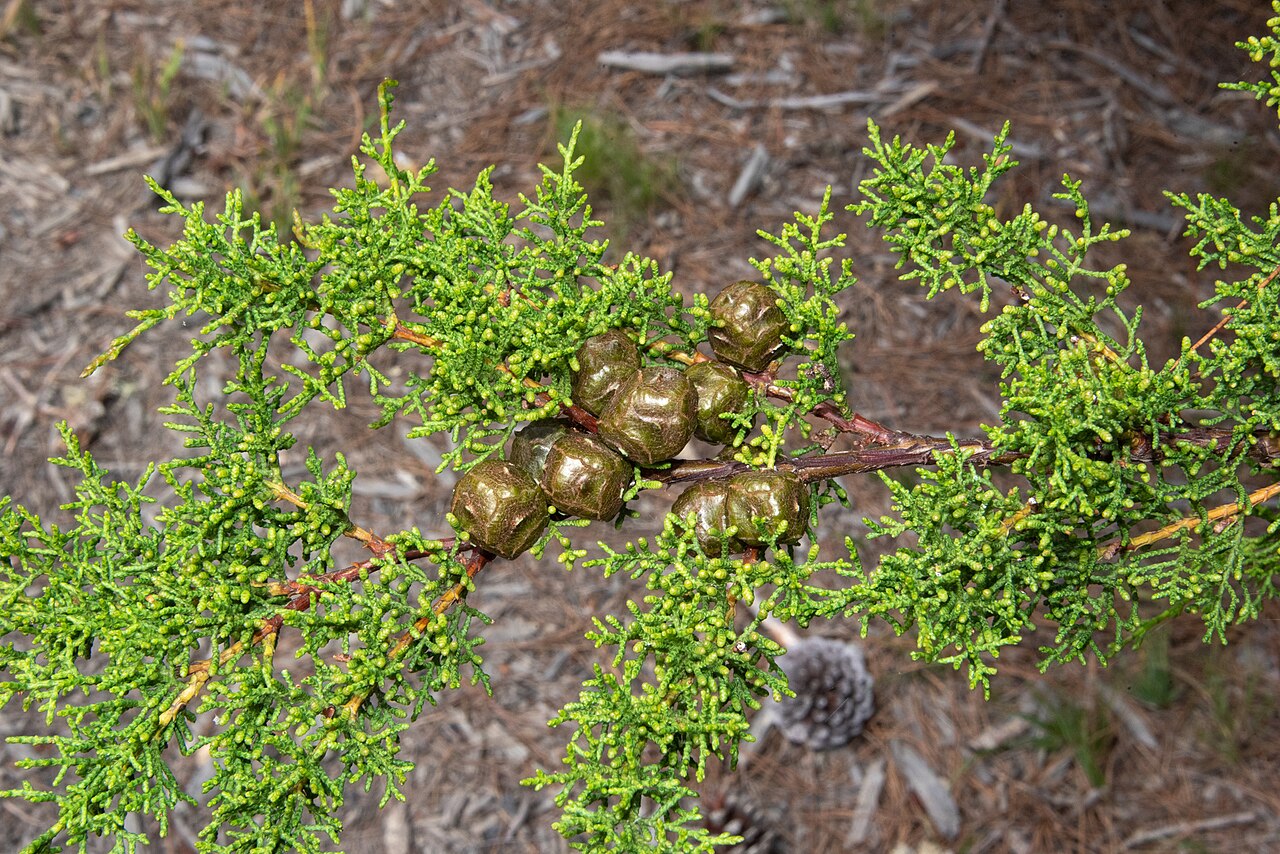
The foliage is made up of tiny, scale-like leaves pressed closely against slender, rounded branchlets, typical of the cypress family. Color ranges from light yellow-green to a duller grey-green, and crushed foliage releases a resinous, slightly pungent cypress scent. The foliage of Gowen cypress is notably finer and lighter-colored than the dark, heavier foliage of its larger coastal relative, Monterey cypress.
Flowers & Fruit
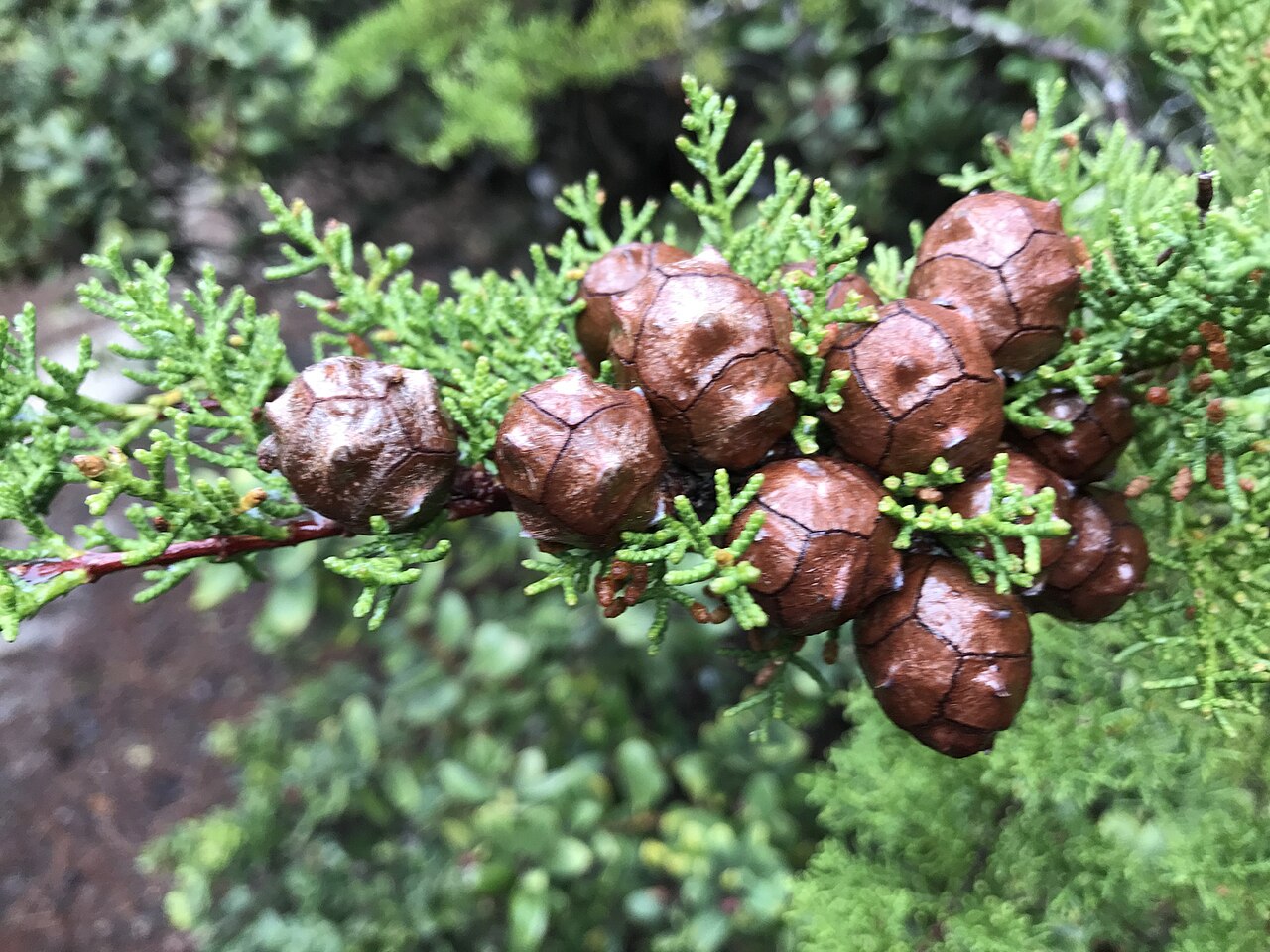
Like all cypresses, Gowen cypress has no true flowers; it bears small, inconspicuous pollen cones in late winter and separate seed cones that develop on the same tree. The seed cones are woody, roughly globe-shaped, about ½ to ¾ inch across, with a pebbled, button-like pattern of scales. They mature from green to a dull brown and often stay closed and attached to the branches for several years, a fire-adapted trait shared with other closed-cone cypresses and pines of the California coast — the resinous seal is broken open by the heat of fire, which releases the seed onto a freshly burned, sunlit seedbed.
Quick Facts
| Scientific Name | Hesperocyparis goveniana (syn. Cupressus goveniana) |
| Family | Cupressaceae (Cypress) |
| Plant Type | Evergreen conifer; dwarf shrub in pygmy forest, small tree elsewhere |
| Mature Height | 3–10 ft as a pygmy-forest shrub; 15–30 ft as a tree on better soil |
| Mature Spread | 8–20 ft, variable with form |
| Growth Rate | Slow |
| Sun Exposure | Full Sun |
| Water Needs | Low once established; drought tolerant |
| Soil Type | Sandy, shallow, well-drained; tolerates poor, acidic soils |
| Soil pH | Acidic (naturally grows on strongly acidic podsol soils) |
| Bloom Time | Pollen cones in winter; no showy flowers |
| Flower Color | Not applicable (conifer) |
| Fall Color | None (evergreen) |
| Fruit | Small woody seed cones, ½–¾ in, often closed for years |
| Deer Resistant | Yes |
| USDA Hardiness Zones | 8–10 |
Native Range
Gowen cypress is native only to California, and within California only to a small area of the Monterey Peninsula in Monterey County. It is not native anywhere else in the United States, and it should not be confused with the much more widely planted Monterey cypress, which shares the same peninsula but is an entirely different, more widely cultivated species.
The core population grows in and around the Del Monte Forest and the SFB Morse Botanical Reserve on Huckleberry Hill, where it forms a distinctive “pygmy forest” on old, acidic, poorly drained marine terrace soils, often stunted into dense, almost impenetrable thickets alongside bishop pine and shrubby manzanitas. A separate, historically related population once treated as part of this species grows far to the north near Mendocino on similar pygmy-forest soils; it is now classified as its own species, Mendocino cypress (Hesperocyparis pygmaea), and is not covered by this page.
Because the entire range of Gowen cypress is so small, a single wildfire, housing development, or disease outbreak could seriously affect the species. Ongoing protection of the Del Monte Forest and the SFB Morse Reserve is central to its survival, which is part of why the species carries federal threatened status.
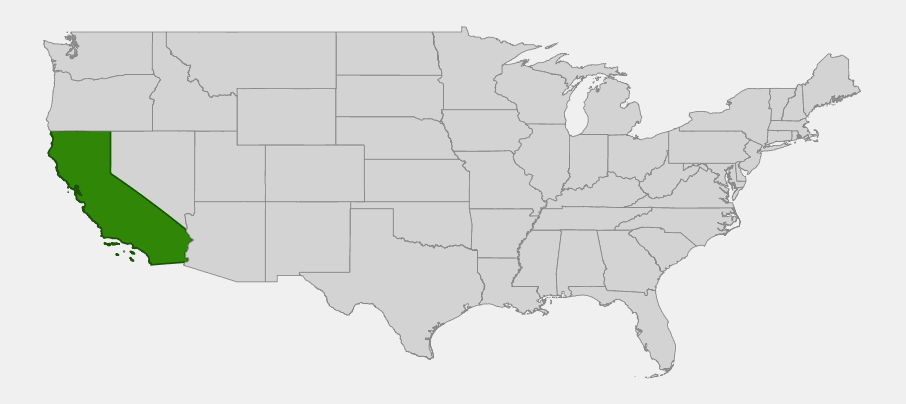
📋 Gowen Cypress’s native range is limited to a sliver of the California coast, which is not yet covered by one of our regional plant lists.
Growing & Care Guide
Gowen cypress is rarely offered in the nursery trade, and because it is so rare and so narrowly adapted in the wild, we encourage planting it only from reputable, nursery-propagated California native stock — never from wild-collected seed or cuttings. Grown well outside its tiny native range, it is a tough, low-water conifer for full sun, but it is not a mainstream landscape plant and is best reserved for native plant gardens, restoration plantings, and collectors.
Light
Give Gowen cypress full sun. In the wild it grows in open, exposed pygmy forest and closed-cone woodland with little overhead shade, and it does not perform well in shaded garden situations.
Soil & Water
This species is adapted to thin, sandy, acidic soils with poor fertility, and it does not want rich garden soil or regular irrigation. Plant it in fast-draining, lean soil and water only to establish the root system; mature plants are drought tolerant and can suffer from root rot in heavy or frequently wet soils.
Planting Tips
Plant container-grown stock in fall, so winter rain can help roots establish before the dry season. Choose an open, sunny site with excellent drainage, and avoid low spots where water collects. Because wild populations are so limited and legally protected, only plant nursery-propagated material, and check with your nursery that it was grown from cultivated, not wild-collected, seed.
Pruning & Maintenance
Little pruning is needed beyond removing dead wood. Avoid heavy shearing, which spoils the plant’s naturally irregular, picturesque form. Established plants need essentially no supplemental care.
Propagation
Gowen cypress is propagated from seed extracted from mature cones; because the cones are serotinous (fire-adapted and slow to open), growers typically use mild heat treatment to coax seed release, as is done with other closed-cone cypresses and pines. Seed should come from cultivated, legally sourced parent plants, not wild populations.
Landscape Uses
- California native plant gardens as a textural, drought-tolerant specialty conifer
- Habitat restoration projects on the Monterey Peninsula using locally sourced, nursery-propagated stock
- Dry, sunny slopes in coastal California gardens, paired with bishop pine and native manzanitas
- Conifer collections, where its rarity and fine, light-colored foliage are of particular interest
Wildlife & Ecological Value
Within its small range, Gowen cypress is a structurally important part of a globally rare plant community, the Monterey pygmy forest and closed-cone cypress woodland.
For Pollinators
As a wind-pollinated conifer, Gowen cypress offers little in the way of nectar or showy flowers, but its dense thickets provide shelter for insects that in turn support birds and other wildlife in the pygmy forest community.
For Birds
The dense, often stunted growth of Gowen cypress provides nesting and roosting cover for small birds that use the closed-cone woodland, and its seeds, released after fire, contribute to the broader seed resources of the habitat.
For Mammals
Small mammals use the dense, low cover of pygmy forest stands of Gowen cypress for shelter from predators and weather, particularly where the fog-shrouded habitat stays cool and humid.
Ecosystem Role
Gowen cypress is one of a small set of closed-cone conifers — along with bishop pine and, nearby, Monterey pine and Monterey cypress — that define the rare, fire-dependent plant communities of the central California coast. Its fire-sealed cones tie its reproduction directly to periodic fire, and maintaining appropriate fire regimes is part of managing its habitat for long-term survival.
Cultural & Historical Uses
Gowen cypress has little recorded history of traditional use, in large part because its range is so restricted and its wood so limited in quantity. It was named for James Gowen, a 19th-century Scottish patron of botany, after specimens from the Monterey Peninsula reached botanists and horticulturists in Britain during the Victorian plant-collecting era that also introduced Monterey cypress and Monterey pine to wider cultivation.
Today its significance is almost entirely conservation-related. Along with Monterey cypress, Monterey pine, and bishop pine, Gowen cypress is one of the signature rarities of the Monterey Peninsula’s closed-cone conifer forests, and protecting the Del Monte Forest and SFB Morse Botanical Reserve populations is a recognized conservation priority in California.
Frequently Asked Questions
Is Gowen cypress endangered?
Gowen cypress is listed as federally threatened in the United States and ranked 1B (rare, threatened, or endangered) by the California Native Plant Society. Its entire wild range is limited to a small part of the Monterey Peninsula, so it should never be collected from the wild.
Can I plant Gowen cypress in my garden outside California?
Gowen cypress is native only to California and is not a species we recommend planting outside the state. Even within California, it is a specialty plant for native gardens and restoration work rather than a common landscape tree.
How is Gowen cypress different from Monterey cypress?
Both grow on the Monterey Peninsula, but Monterey cypress is a larger, darker-foliaged tree historically limited to just two coastal groves, while Gowen cypress is usually smaller, with lighter yellow-green foliage, and grows mainly in the inland pygmy forest and closed-cone woodland on Huckleberry Hill.
Why does Gowen cypress sometimes look like a shrub instead of a tree?
On the thin, acidic, poorly drained soils of the pygmy forest, nutrient and moisture stress keeps many conifers, including Gowen cypress, naturally stunted into shrubby thickets. Where soils are deeper and better drained, the same species grows into a proper small tree.
Does Gowen cypress need fire to reproduce?
Not strictly, but fire helps. Its cones are of the closed, fire-adapted type common in California’s cypress and pine forests, and heat from fire helps release seed onto open, sunlit ground, which favors regeneration after a burn.

Looking for a nursery that carries Gowen Cypress?
Browse our native plant nursery directory: California