
Gray Birch (Betula populifolia)
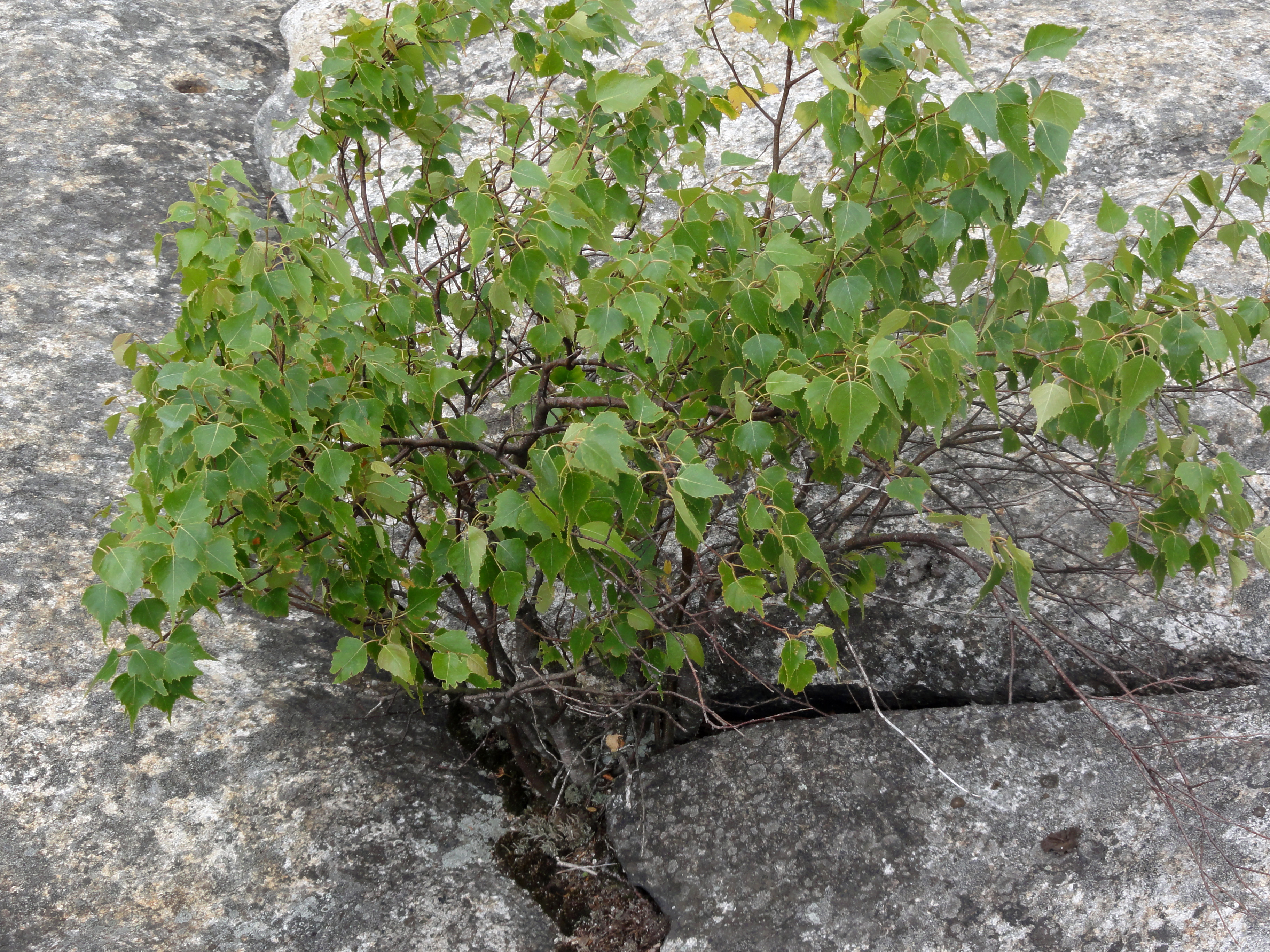
Betula populifolia, the Gray Birch, is a small, fast-growing native deciduous tree of northeastern North America — a consummate pioneer species that rapidly colonizes abandoned fields, roadsides, burned areas, and other disturbed ground across the New England and Mid-Atlantic states. Unlike the closely related Paper Birch (B. papyrifera), Gray Birch has chalk-white to grayish-white bark that does not peel in large sheets, dark triangular patches at branch bases, and a distinctly slender, often multi-stemmed growth form that bends gracefully in the wind. It is a tough, adaptable species that thrives in poor, sandy, gravelly, or rocky soils where more demanding trees cannot establish.
Gray Birch typically reaches 20–40 feet in height with a slender trunk and open, airy canopy of triangular leaves that tremble and flutter in the slightest breeze — hence the species epithet populifolia, meaning “poplar-leaved.” The foliage turns a rich golden yellow in autumn, making it a standout in the fall landscape. Though relatively short-lived compared to other hardwoods (40–50 years is typical), Gray Birch grows rapidly and provides fast results, making it an excellent choice for naturalizing open areas and providing quick ecological structure while longer-lived trees establish.
As a wildlife plant, Gray Birch is exceptionally productive. It produces millions of tiny winged seeds annually, consumed by dozens of bird and small mammal species. As a host plant, it supports over 400 Lepidoptera caterpillar species. Its seeds, catkins, and buds feed chickadees, redpolls, siskins, and goldfinches through winter, and its bark and twigs are consumed by deer, moose, beaver, and rabbits. For naturalistic landscaping in the Northeast, Gray Birch is one of the most ecologically valuable fast-establishing trees available.
Identification
Gray Birch is a small to medium-sized deciduous tree, typically 20–40 feet tall with a trunk 4–10 inches in diameter. It commonly grows in clumps of 2–5 stems from a single root system and often leans somewhat, particularly in exposed situations. The overall impression is of a graceful, slender, airy tree that sways readily in the wind. The crown is open and pyramidal to irregular, with drooping branch tips reminiscent of a weeping form.
Bark
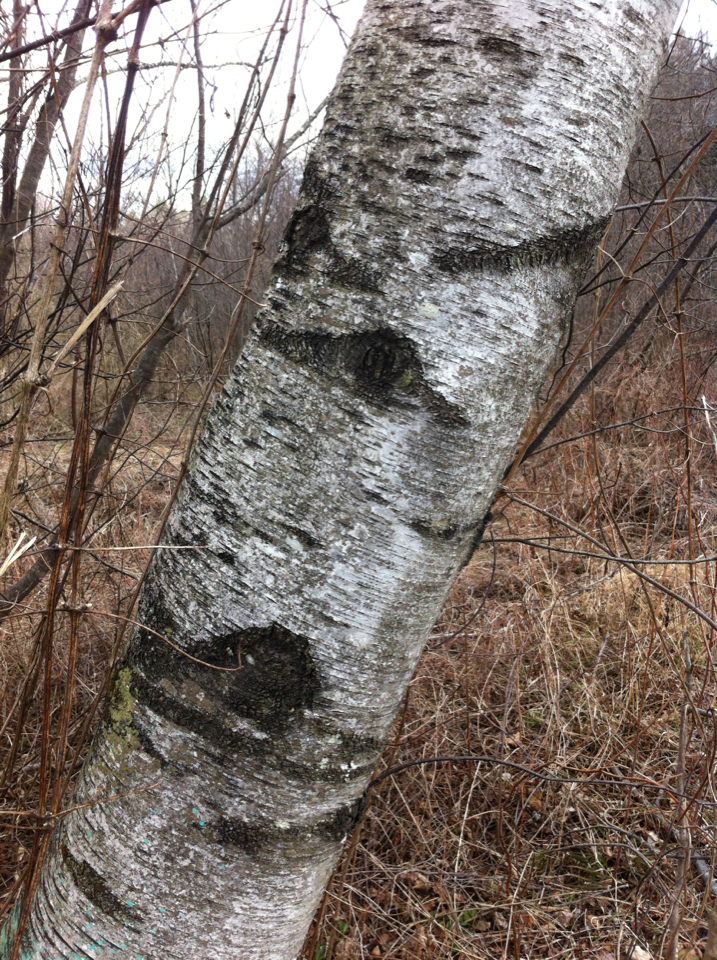
The bark is the most immediately recognizable feature: chalk-white to gray-white, with a dull, matte texture (not lustrous like Paper Birch). The bark does not peel in sheets like Paper Birch — instead it peels in thin, papery curls or flakes minimally, retaining a somewhat chalky texture. The bark is marked by dark triangular or wedge-shaped patches where branches meet the trunk (a key field mark for distinguishing Gray from Paper Birch), and by irregular dark horizontal lenticels. The bark on the lower trunk of older trees becomes darker gray and may develop irregular furrows.
Leaves
The leaves are simple, alternate, and distinctively shaped: broadly triangular (ovate-deltoid) with a long-tapered, sharply pointed tip and a nearly flat or slightly heart-shaped base — more sharply pointed than either Paper or River Birch. They are 2–3.5 inches long, dark shiny green above, pale below, with doubly serrate (finely toothed) margins. The leaves are attached to long, slender petioles, causing them to flutter in the slightest breeze — creating the characteristic shimmering effect of birch foliage. Fall color is a clear, bright golden yellow.
Flowers & Fruit
Gray Birch is monoecious — male and female flowers appear on the same tree. Male catkins form in fall and overwinter as short, plump structures, elongating dramatically to 1–3 inches in early spring (March–April) before the leaves emerge, releasing abundant yellow pollen. Female catkins are smaller, upright, and develop into cylindrical fruiting strobiles about 1 inch long. These disintegrate at maturity (September–October) to release thousands of tiny winged seeds (samaras), which are dispersed by wind over considerable distances.
Quick Facts
| Scientific Name | Betula populifolia |
| Family | Betulaceae (Birch) |
| Plant Type | Deciduous Tree |
| Mature Height | 40 ft |
| Sun Exposure | Full Sun |
| Water Needs | Moderate |
| Bloom Time | March – April |
| Flower Color | Yellowish (catkins) |
| USDA Hardiness Zones | 3–6 |
Native Range
Gray Birch is native to northeastern North America, with a range centered on New England and the Mid-Atlantic states. Its natural range extends from Nova Scotia and Prince Edward Island west through Quebec, Ontario, and New Brunswick, south through New England (Maine, New Hampshire, Vermont, Massachusetts, Rhode Island, Connecticut), New York, New Jersey, Pennsylvania, and the northern portions of Delaware and Maryland. It barely reaches West Virginia and Virginia in isolated highland populations. The species is largely absent from most of the Midwest and Southeast.
Within this range, Gray Birch is strongly associated with disturbed habitats: recently burned areas, old fields, cleared lands, roadsides, abandoned mines, gravelly soils, and any site where mineral soil has been exposed and competition from established plants reduced. It is a classic pioneer species, typically among the first woody plants to appear in areas cleared by fire, logging, or agriculture. On the coastal plain of New Jersey, it is a characteristic early-successional tree of the Pine Barrens, growing on sandy, acidic soils in association with Pitch Pine, Scrub Oak, and Atlantic White Cedar.
Gray Birch is less cold-hardy than Paper Birch and more heat-tolerant, giving it a competitive advantage in the warmer portions of the northeastern region. It is also more tolerant of dry, poor-quality soils than most other birches — a trait that makes it particularly useful for restoration planting on degraded or disturbed sites. As forests mature and canopy closes, Gray Birch is typically replaced by longer-lived species and rarely persists in closed-canopy mature forest.
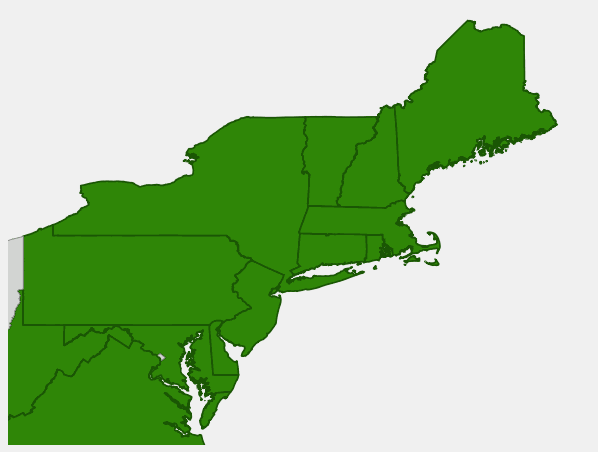
📋 Regional plant lists featuring Gray Birch: New York, Pennsylvania & New Jersey
Growing & Care Guide
Gray Birch is one of the easiest native trees to establish and one of the most forgiving of poor soil conditions. Its rapid growth and tolerance of infertile, dry, acidic soils make it ideal for naturalistic plantings, field naturalization, and restoration of disturbed sites where quick ecological cover is needed.
Light
Gray Birch is a sun-loving tree that requires full sun for best growth and natural form. In partial shade it becomes thin and weedy-looking, and in heavy shade it will not survive as a vigorous specimen. It is perfectly suited for open fields, meadow edges, south-facing slopes, and any site with 6+ hours of direct sunlight daily.
Soil & Water
Gray Birch’s greatest advantage is its tolerance of poor soils. It thrives in sandy, gravelly, dry, or infertile soils where other trees fail — and does not require the rich, moist soils that many trees need. It tolerates moderately acidic soils (pH 4.5–6.5) typical of the northeastern region. It can handle moderate drought once established, though it grows fastest with adequate moisture. Avoid heavy clay or waterlogged sites. Birch roots are shallow and wide-spreading; do not compact the soil beneath the canopy.
Planting Tips
Plant Gray Birch in fall or early spring from container or balled-and-burlapped stock. Avoid disturbing roots during planting. For naturalistic effects, plant in clusters of 3–5 trees, which mimics the multi-stemmed clumping habit of natural populations. Mulch generously to keep roots cool and moist. Gray Birch is a great choice for naturalizing meadow edges, abandoned fields, and other open areas where you want quick tree cover.
Pruning & Maintenance
Gray Birch requires minimal pruning. Remove dead or damaged branches as needed. The tree is susceptible to Bronze Birch Borer (Agrilus anxius), a beetle whose larvae tunnel under the bark and can kill stressed or declining trees — healthy, vigorous trees are much more resistant. Keep the tree growing vigorously with adequate water during summer drought. Gray Birch is also a host for Eastern Tent Caterpillar (Malacosoma americanum) — these are native insects and populations are usually controlled by natural predators without intervention.
Landscape Uses
- Naturalization of old fields and open disturbed areas
- Fast-establishing tree cover while slower trees establish
- Winter interest — white bark is striking against dark soil or snow
- Four-season interest — spring catkins, summer shimmer, fall gold, winter white
- Ecological restoration on degraded, sandy, or gravelly soils
- Wildlife garden — exceptional year-round food value for birds
Wildlife & Ecological Value
Gray Birch is an ecological powerhouse despite its modest stature and short lifespan. Its seeds, catkins, and buds provide critical winter and early spring food for wildlife, and as a Lepidoptera host plant it supports exceptional insect diversity, which cascades upward to support birds and other wildlife throughout the food web.
For Birds
Birches are among the most important winter bird food plants in northeastern North America. Gray Birch seeds are consumed by American Goldfinches, Pine Siskins, Common and Hoary Redpolls, Pine Warblers, and many sparrow species. Black-capped Chickadees feed on birch buds and catkins throughout winter. Yellow Warblers, Yellow-rumped Warblers, and other insectivorous species forage intensively in birch foliage during summer, feeding on the abundant caterpillars. Woodpeckers excavate nest cavities in dead birch snags.
For Mammals
White-tailed deer browse Gray Birch twigs and foliage, and Moose (in the northern part of the range) feed heavily on birch twigs in winter. Beavers fell birch trees for food and dam construction. Snowshoe Hares gnaw birch bark in winter when other food is scarce. Squirrels and chipmunks consume the seeds and catkins.
For Pollinators
Gray Birch is wind-pollinated and does not produce nectar-rich flowers. However, the abundant pollen from spring catkins is collected by native bees as a protein source when few other plants are blooming. Its greatest pollinator value is as a host plant — caterpillars of over 400 moth and butterfly species feed on birch foliage, providing the insect biomass that breeding birds depend on to raise their young.
Ecosystem Role
As a primary pioneer species, Gray Birch initiates forest succession on disturbed sites, improving soil conditions, providing shade that allows shade-tolerant species to establish beneath it, and building organic matter as its leaves decompose. Its short lifespan (40–50 years) is not a weakness but an ecological strategy: the tree lives fast, produces prodigious quantities of seeds and insect habitat, and then yields to longer-lived successional species — a critical ecological role that most long-lived trees cannot fulfill.
Cultural & Historical Uses
Gray Birch has been used by Indigenous peoples of the northeast for thousands of years, though less extensively than the more prized Paper Birch. Its bark, while not as thick or easily peeled as Paper Birch, was used for small containers, kindling, and limited canoe-building in areas where Paper Birch was unavailable. The Ojibwe, Abenaki, and other northeastern nations used birch bark medicinally — bark preparations were applied to skin conditions, and bark tea was used to treat fevers and urinary complaints.
The wood of Gray Birch is light but relatively hard for its weight, and was historically used for small woodenware items, thread spools, shoe pegs, and fuel. It was an important firewood species in rural New England — burning hot and relatively cleanly. The pulpwood industry used Gray Birch extensively for paper production in the early 20th century, and stands of Gray Birch were often harvested on 20–30 year rotations for pulpwood in the Northeast.
Today, Gray Birch is valued primarily as an ornamental and ecological tree. Landscape designers appreciate its multi-stemmed clumping habit, graceful form, and attractive winter bark for naturalistic plantings. Its tolerance of poor soils makes it particularly useful for restoration planting on degraded sites — strip mine reclamation, highway right-of-way revegetation, and landfill capping projects have all employed Gray Birch as a pioneer species. Its ecological role as a wildlife support tree and caterpillar host plant is increasingly recognized and valued by bird-focused gardeners following the “Native Plant, Straight Species” movement.
Frequently Asked Questions
How is Gray Birch different from Paper Birch?
Gray Birch has duller, chalky-white bark that does not peel in sheets (Paper Birch bark peels in large, papery layers). Gray Birch has dark triangular patches at branch bases (Paper Birch does not), and its leaves are more sharply triangular. Gray Birch is shorter-lived, grows further south, and tolerates drier, poorer soils. Paper Birch grows larger and further north.
How long does Gray Birch live?
Gray Birch is a relatively short-lived tree — 30–50 years is typical. This is by evolutionary design: it’s a pioneer species that grows fast, reproduces prolifically, and then yields to longer-lived successional species. Plan for replacement trees (sugar maple, oaks, beech) to establish beneath or around your birch planting.
Is Gray Birch susceptible to Bronze Birch Borer?
Yes, though healthy trees resist Bronze Birch Borer far better than stressed ones. Avoid planting in full shade, compacted soil, or drought-stressed locations. Keep the tree vigorous with adequate moisture and by protecting the root zone from compaction. Avoid wounding the bark. Stressed trees with crown dieback should be inspected for borer activity.
Can Gray Birch grow in wet soils?
Gray Birch prefers well-drained soils and is not a wetland species. It tolerates moderate moisture variation but does not thrive in persistently saturated or flooded soil. For wet sites, River Birch (Betula nigra) is the better native choice.
Does Gray Birch produce good fall color?
Yes — Gray Birch produces a clear, bright golden yellow fall color that is quite showy, especially when a grove of multi-stemmed trees is backlit by autumn sun. The yellow contrasts attractively with the white bark. Fall color typically occurs in September to early October throughout most of its range.

Looking for a nursery that carries Gray Birch?
Browse our native plant nursery directory: New York · Pennsylvania