Green Alder (Alnus crispa)
Alnus crispa (syn. Alnus alnobetula subsp. crispa), commonly known as Green Alder, Mountain Alder, or Sitka Alder, is a vigorous deciduous shrub native to boreal and subarctic regions of North America and northern Europe. The species name crispa refers to its distinctively crinkled or wavy leaf margins — a reliable field identification feature. In Alaska, Green Alder is one of the most ecologically important native shrubs, forming dense thickets along stream banks, avalanche slopes, subalpine meadow margins, and recently deglaciated terrain where it plays a pivotal role in ecosystem succession and nitrogen fixation.
Green Alder is a nitrogen-fixing shrub, hosting Frankia bacterial symbionts in root nodules that convert atmospheric nitrogen into plant-available forms. This makes it a critical “soil builder” — it enriches impoverished soils, enabling other plant species to establish after it has prepared the ground. In the wake of retreating glaciers across Alaska, Green Alder is often among the first woody plants to colonize bare mineral substrates, initiating the successional process that eventually leads to mature boreal forest. This ecological service is invaluable in a landscape where soils are young and nutrient-poor.
Despite forming dense, sometimes impenetrable thickets that can be challenging to navigate in the Alaskan backcountry, Green Alder is a cherished native plant for wildlife gardeners and restoration practitioners. Its catkins and cones provide food for numerous bird species, its dense growth shelters ground-nesting birds and small mammals, and its roots stabilize stream banks and prevent erosion. For those establishing native plantings in Alaska, Green Alder is an unsung hero — fast-growing, nitrogen-fixing, wildlife-supporting, and perfectly adapted to the harsh conditions of the north.
Identification
Green Alder is a multi-stemmed deciduous shrub, typically reaching 6 to 10 feet (1.8–3 m) tall, occasionally taller in sheltered lowland sites. It spreads aggressively by root sprouts and layers, forming dense clonal thickets. The young twigs are slender, often reddish-brown, and covered with fine hairs or glands. The overall form is spreading and bushy, rarely developing into a tree-like single trunk.
Leaves
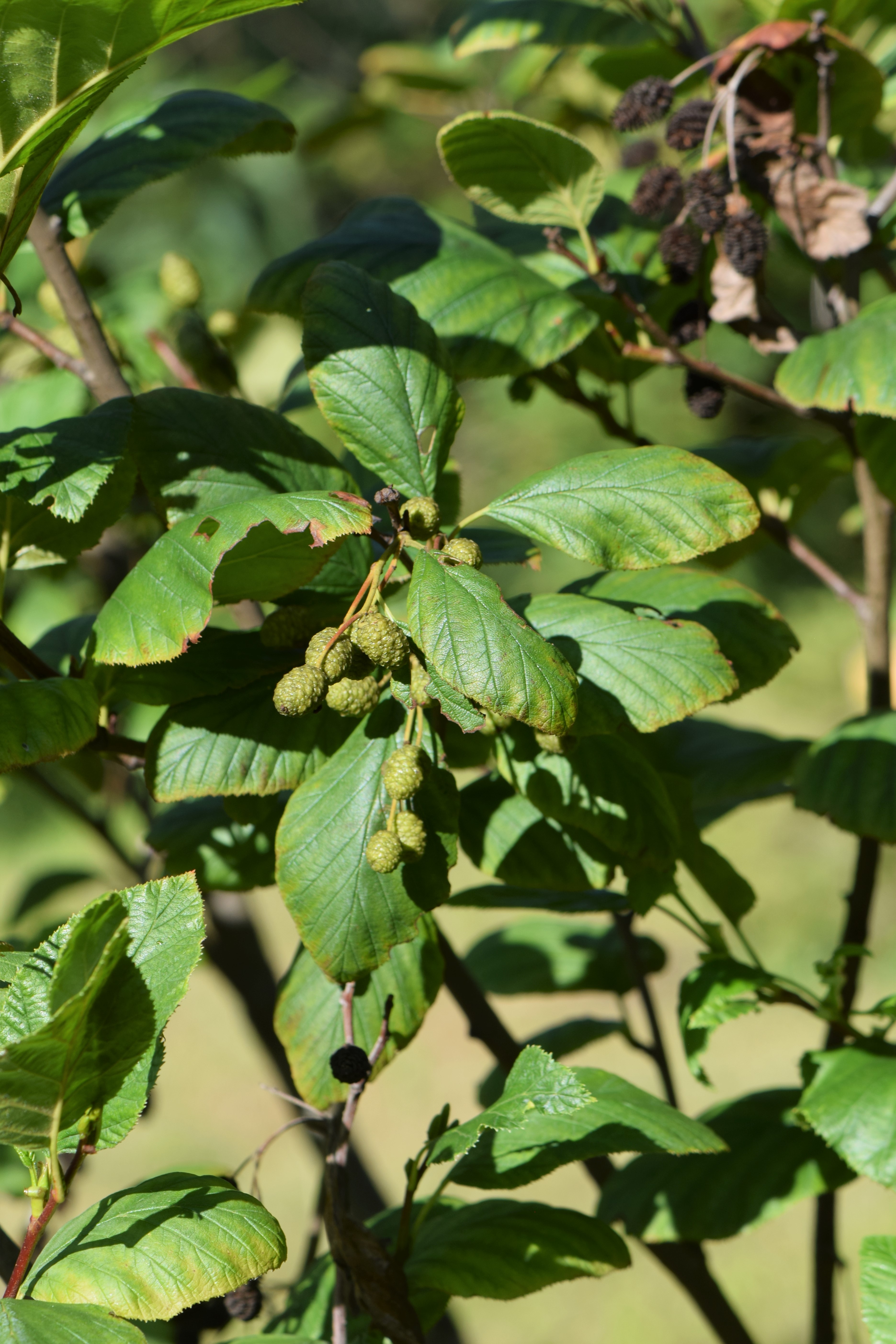
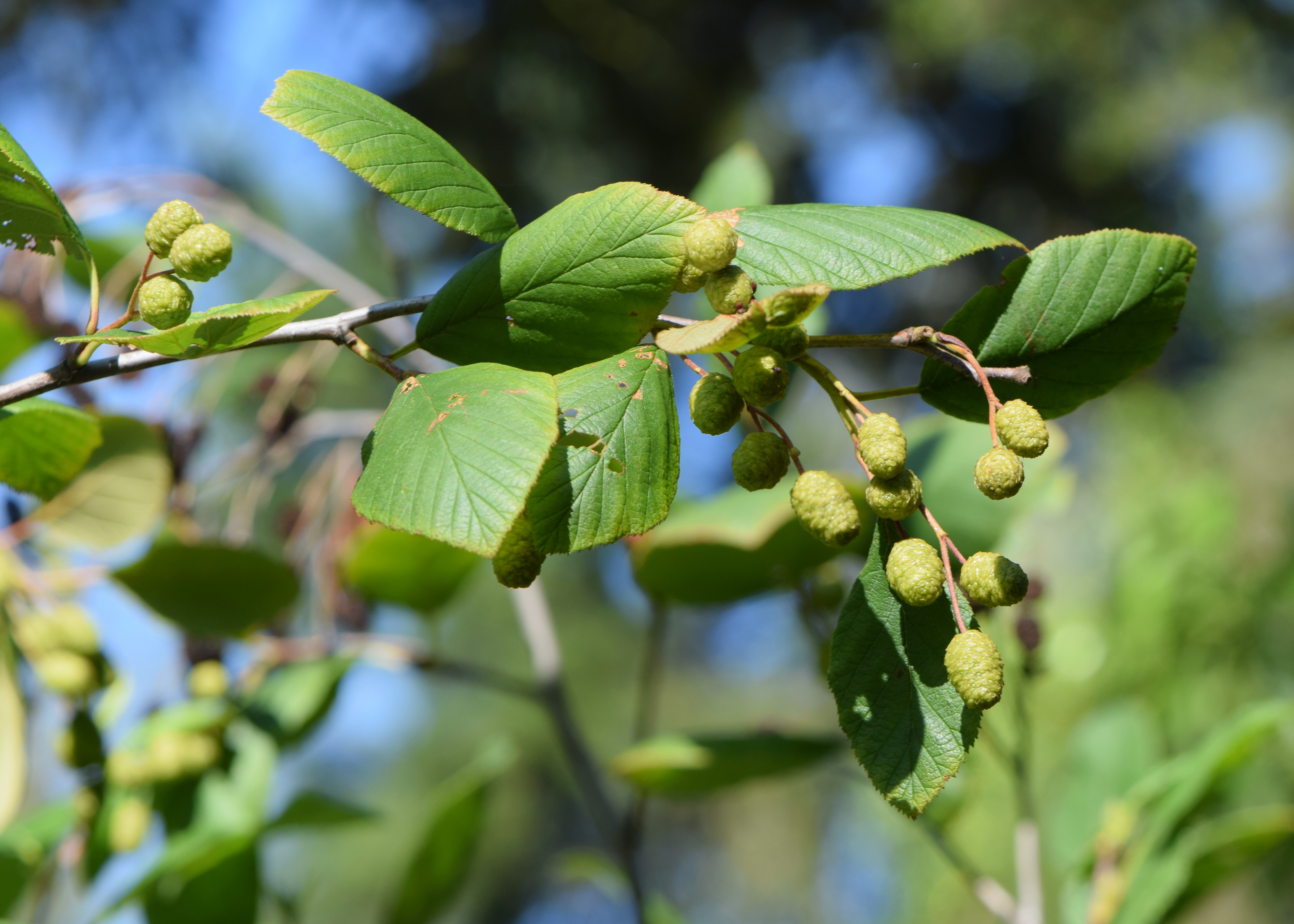
The leaves are the most distinctive identification feature. They are oval to broadly elliptic, 1.5 to 3.5 inches (4–9 cm) long and 1 to 2.5 inches (2.5–6 cm) wide, with a distinctly crinkled (crisped) or wavy margin bearing fine, sharp teeth. The upper surface is bright, shiny green and glabrous (hairless); the underside is paler and may be slightly hairy along the veins. Leaves are arranged alternately on the stems. The leaf bases are rounded to broadly wedge-shaped, and the apex is acute. In autumn, leaves typically turn dull yellow before dropping — not showy, but honest.
Flowers & Catkins
Like all alders, Green Alder is monoecious — male and female flowers on the same plant. Male catkins are elongated, pendulous, 1 to 3 inches (2.5–8 cm) long, reddish-brown, and develop in the previous growing season’s buds, often becoming visible overwinter. They release pollen in early spring before the leaves unfurl. Female catkins are shorter, erect, and egg-shaped, developing into persistent woody cones (strobiles) about ½ inch (1–1.5 cm) long. These small, dark brown cones remain on the branches through winter, an excellent identification feature in the leafless season.
Bark & Stem
The bark of young stems is smooth, gray-brown, and lenticellate (dotted with light-colored pores). On older stems, the bark may become slightly roughened. Unlike some alders, Green Alder rarely develops a distinct trunk and bark pattern — it remains fundamentally a multi-stemmed shrub throughout its life. The root system features distinctive nodules housing nitrogen-fixing Frankia bacteria — pale yellow to reddish, grape-like clusters attached to fine roots.
Quick Facts
| Scientific Name | Alnus crispa (syn. Alnus alnobetula subsp. crispa) |
| Family | Betulaceae (Birch family) |
| Plant Type | Deciduous Shrub (thicket-forming) |
| Mature Height | 10 ft (3 m) |
| Sun Exposure | Full Sun |
| Water Needs | High |
| Nitrogen Fixer | Yes (Frankia root nodule symbiosis) |
| Bloom Time | April – May (before leaves emerge) |
| Flower Color | Reddish-brown (male catkins) |
| Fruit | Small woody cones (strobiles), persistent overwinter |
| USDA Hardiness Zones | 2–6 (cold-hardy boreal species) |
Native Range
Green Alder (Alnus crispa) is a circumpolar species with a vast distribution across boreal and subarctic North America and northern Eurasia. In North America, it ranges from Alaska east across Canada to Labrador and Newfoundland, extending south into the higher elevations of the northern Appalachians and the Great Lakes region. It is particularly abundant and ecologically prominent in Alaska, where it occurs throughout the state from the Pacific coast to the interior, from sea level to timberline.
In Alaska, Green Alder thrives in a wide range of habitats — stream banks, avalanche tracks, recently deglaciated terrain, subalpine slopes, and the margins of wetlands and bogs. It is especially characteristic of riparian corridors and disturbed areas where moist, high-nutrient conditions prevail. Its nitrogen-fixing ability gives it a significant advantage in colonizing the nutrient-poor, glacially derived soils so common in Alaska, making it one of the most important pioneer shrubs in post-glacial succession across the region.
The species is also well-represented in the upper elevations of the northern Rocky Mountains, the Great Lakes states, and the Canadian Shield, where it occupies similar ecological roles along stream banks, in forest clearings, and on subalpine slopes. Taxonomically, Green Alder is closely related to European Green Alder (Alnus alnobetula), and modern treatments often combine the two as subspecies — a reflection of their ecological and morphological similarity across the circumpolar zone.
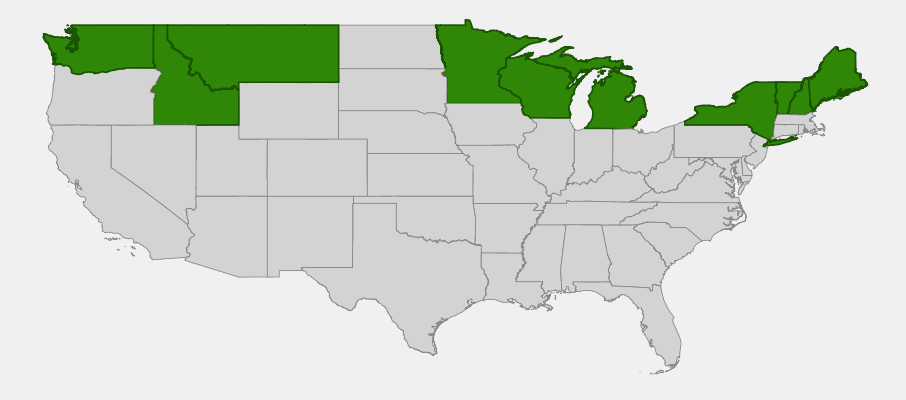
📋 Regional plant lists featuring Green Alder: Alaska
Growing & Care Guide
Green Alder is a fast-growing, adaptable shrub that excels in moist, full-sun conditions. Its nitrogen-fixing ability makes it particularly valuable in restoration projects where soil enrichment is needed. It requires minimal care once established and spreads naturally to form productive wildlife thickets.
Light
Green Alder grows best in full sun — it thrives in open riparian corridors, clearings, and slopes where light is abundant. While it tolerates partial shade (particularly as a young plant), full sun conditions promote the most vigorous growth, heaviest catkin and cone production, and most beneficial effects from its nitrogen-fixing root system. In dense shade, growth becomes leggy and the plant is less productive.
Soil & Water
High moisture is essential for Green Alder — this is not a drought-tolerant plant. It naturally occurs along stream banks, in riparian corridors, wetland margins, and moist upland slopes where soil moisture is consistently high. Plant it in wet to moist, well-drained to moderately poorly-drained soils. It tolerates periodic flooding and performs excellently in rain gardens and bioswales. Soil quality matters less than moisture — thanks to its nitrogen-fixing ability, Green Alder grows well in nutrient-poor, gravelly, or glacially derived soils.
Planting Tips
Plant in spring after frost danger has passed, or in early fall. Container-grown stock establishes readily. Space plants 5–8 feet apart for dense thicket restoration or 8–12 feet for looser natural groupings. Green Alder spreads by root sprouting and will expand its footprint over time — plan for this. Mulch lightly around the base to retain moisture. No fertilizer is needed; the plant manufactures its own nitrogen supply.
Pruning & Maintenance
Green Alder is very low-maintenance. It can be coppiced (cut to the ground) every few years to rejuvenate the shrub and maintain a smaller, denser form. This coppicing practice also stimulates root nodule development, which enhances nitrogen fixation. Left unpruned, it spreads into dense thickets — desirable for wildlife habitat but potentially problematic if you want to contain it. No significant pest or disease issues in its native range.
Landscape Uses
- Riparian and streambank restoration — erosion control and bank stabilization
- Rain gardens and bioswales tolerating wet soils and flooding
- Wildlife thickets providing dense cover and food for birds and mammals
- Soil enrichment — plant ahead of other native species to build soil nitrogen
- Naturalized plantings along pond edges, drainage areas, and wet meadow margins
- Slope stabilization on moist, disturbed, or recently exposed mineral soil
Wildlife & Ecological Value
Green Alder is one of the most ecologically productive shrubs in the Alaskan landscape, providing essential food, cover, and habitat structure for a wide array of wildlife species.
For Birds
The small seeds released from Green Alder’s persistent cones are an important winter food source for Common Redpolls, Pine Siskins, American Goldfinches, and other small seed-eating birds. The dense thickets provide outstanding nesting habitat for ground-nesting birds such as White-crowned Sparrows, Lincoln’s Sparrows, and various warblers. In spring, catkins attract early-season insects that insectivorous birds depend on. The structural complexity of alder thickets supports higher bird diversity than many other shrub communities in Alaska.
For Mammals
Moose and deer browse Green Alder foliage and twigs extensively throughout the year, and it is one of the most important browse species for moose in Alaska. Snowshoe Hares clip young stems in winter, particularly in high-population years. Beavers use alder in food caches and for dam construction. Voles, shrews, and other small mammals use dense alder thickets for cover and forage on seeds and invertebrates within them. Bears browse catkins in early spring before other food becomes available.
For Pollinators
Green Alder is wind-pollinated, but the pollen released in early spring is an early-season food source for pollen-collecting bees. The catkins bloom before most other native plants in Alaska, providing critical early-season resources for native bees emerging from winter. The leaves also support numerous native moth and butterfly larvae, increasing insect diversity in alder thicket communities.
Ecosystem Role
Green Alder’s nitrogen-fixing ability is its most important ecological contribution. By converting atmospheric nitrogen into plant-available forms, it enriches surrounding soils and enables a succession of other species to establish. In post-glacial terrain, Green Alder thickets can increase soil nitrogen by 50–100 kg per hectare per year — dramatically accelerating the development of productive ecosystems. Its dense root systems stabilize stream banks and slopes, preventing erosion. Fallen alder leaves decompose rapidly, enriching the soil food web and supporting the invertebrate communities that fuel aquatic and terrestrial food chains.
Cultural & Historical Uses
Green Alder has been used by Alaska Native peoples for centuries, most notably by Athabascan, Tlingit, and other interior and coastal groups. The wood, while not large enough for major timber uses, burns slowly and produces relatively little smoke — making it valuable as a fuel for smoking fish and game meats. Smoked salmon and other alder-smoked foods remain culturally important in Alaska today, and commercial smoked fish producers frequently use alder for the distinctive flavor it imparts. The wood ash was used by some groups as a tooth-cleaning abrasive and as a food preservative.
Medicinally, alder bark contains salicylates and tannins. Indigenous peoples prepared bark infusions and poultices to treat skin rashes, insect bites, bleeding, and inflammation. A tea made from the bark was used for fever reduction and as an analgesic. The inner bark was applied to infected wounds and used as a topical treatment for poison ivy-like reactions. Alder catkins were boiled and the resulting liquid used as a hair rinse and skin tonic by some northern groups.
Ecologically, Indigenous peoples understood Green Alder’s role in enriching soils and used this knowledge in land management. Areas with dense alder growth were recognized as indicators of moist, fertile soil — valuable information for locating productive berry patches, garden sites, and fishing grounds downstream. Today, Green Alder is increasingly valued in ecological restoration work across Alaska, where its rapid establishment and nitrogen-fixing ability make it a cornerstone species for revegetating disturbed terrain, mine reclamation sites, and post-fire landscapes.
Frequently Asked Questions
Does Green Alder really fix nitrogen?
Yes — and it is one of the most productive nitrogen-fixers among woody plants. Specialized bacteria (Frankia spp.) inhabit nodules on Green Alder roots and convert atmospheric nitrogen gas into ammonium, which the plant uses for growth and also releases into the soil. Research shows that mature alder stands can fix 50–100+ kg of nitrogen per hectare per year, significantly enriching surrounding soils over time.
Will Green Alder take over my garden?
It can spread aggressively by root sprouts and is best used in naturalized or restoration settings where its thicket-forming habit is an asset. In more formal gardens, regular coppicing (cutting to the ground every few years) keeps it under control. Plant it where its spreading nature is welcome — along stream banks, in wildlife habitat gardens, or in large naturalistic plantings.
Can Green Alder grow in standing water?
It tolerates periodic flooding and grows naturally along stream banks that experience seasonal inundation, but it prefers well-aerated moist soil rather than permanently waterlogged conditions. For permanently wet sites, consider Sitka Alder or Red Alder, which are slightly more flood-tolerant.
How fast does Green Alder grow?
Very fast — one of the fastest-growing native shrubs in Alaska. Under good conditions (full sun, moist soil), it can add 2–4 feet of growth per year and reach mature size in 3–5 years. This rapid growth rate makes it excellent for quick establishment of erosion control and wildlife habitat plantings.
What’s the difference between Green Alder and Sitka Alder?
Both are common in Alaska. Green Alder (Alnus crispa) has distinctly crinkled leaf margins, occurs broadly across Alaska from coast to interior, and prefers slightly drier, higher-elevation sites. Sitka Alder (Alnus sinuata) has broader, more coarsely toothed leaves without the distinctive crinkled margin and is most common in the coastal Pacific Northwest and Southeast Alaska. The two species frequently co-occur in transitional habitats.

Looking for a nursery that carries Green Alder?
Browse our native plant nursery directory: Alaska