
Meadowsweet (Spiraea alba)
Spiraea alba, commonly known as Meadowsweet, White Meadowsweet, or Narrowleaf Spiraea, is a graceful native deciduous shrub that brings summer elegance to wetlands, prairies, and garden landscapes throughout the northern United States and southern Canada. This member of the Rosaceae (rose) family produces spectacular displays of white, fluffy flower clusters that bloom for weeks during June and July, creating a striking visual impact that has made it a beloved choice for naturalistic gardens and restoration projects.
Growing naturally in moist to wet soils along stream banks, prairie swales, and marsh edges, Meadowsweet typically reaches 3 to 4 feet tall, forming dense colonies through underground rhizomes that make it excellent for erosion control and habitat creation. The narrow, finely-toothed leaves provide attractive green foliage throughout the growing season, while the abundant white flowers attract numerous pollinators including native bees, butterflies, and beneficial insects, making this shrub a cornerstone species for wildlife-friendly landscapes.
Despite being commonly called “Meadowsweet,” Spiraea alba should not be confused with European Meadowsweet (Filipendula ulmaria), an entirely different plant despite sharing the common name. True American Meadowsweet has evolved specifically for North American conditions, offering superior cold hardiness, drought tolerance once established, and exceptional value for native wildlife throughout its extensive range across the northern tier of states.
Identification
Meadowsweet is a multi-stemmed deciduous shrub that typically grows 2 to 4 feet tall and spreads via underground rhizomes to form colonies 4 to 6 feet wide. The upright, often reddish-brown stems emerge from the ground in clusters, creating a naturally rounded, somewhat open growth form that becomes quite dense during the flowering period when covered with abundant white blooms.
Leaves
The leaves are simple, alternate, and lance-shaped to elliptical, measuring 2 to 4 inches long and ½ to 1 inch wide. They are dark green above and paler beneath, with prominent veining and finely serrated margins that give the leaf edges a delicate, saw-toothed appearance. The leaves taper to a sharp point at the tip and have short petioles. In autumn, the foliage turns attractive shades of yellow to orange-red before dropping.
Flowers & Fruit
The most striking feature of Meadowsweet is its profuse white flowers, which appear in dense, pyramidal terminal clusters (panicles) 3 to 6 inches long and 2 to 4 inches wide. Each tiny individual flower is about ⅛ inch across with five white petals and numerous prominent stamens that give the flower clusters their characteristic fluffy, feathery appearance. The bloom period extends from June through July, with flowers having a light, sweet fragrance that attracts pollinators from considerable distances.
After flowering, small brown follicles (dry pods) develop in clusters, splitting open when ripe to release tiny seeds. The seed heads can be attractive in winter, though many gardeners prefer to deadhead spent flowers to encourage additional blooming and maintain a tidier appearance.
Growth Habit
Meadowsweet spreads by underground rhizomes, gradually forming loose colonies that can expand several feet annually under favorable conditions. This spreading habit makes it excellent for naturalizing large areas, though it can be managed in smaller gardens by occasional division or root barriers. The plant is deciduous, dying back to the ground in harsh winters but reliably returning from its root system each spring.
Quick Facts
| Scientific Name | Spiraea alba |
| Family | Rosaceae (Rose) |
| Plant Type | Deciduous Shrub |
| Mature Height | 4 ft |
| Sun Exposure | Full Sun |
| Water Needs | Moderate to High |
| Bloom Time | June – July |
| Flower Color | White |
| USDA Hardiness Zones | 3–7 |
Native Range
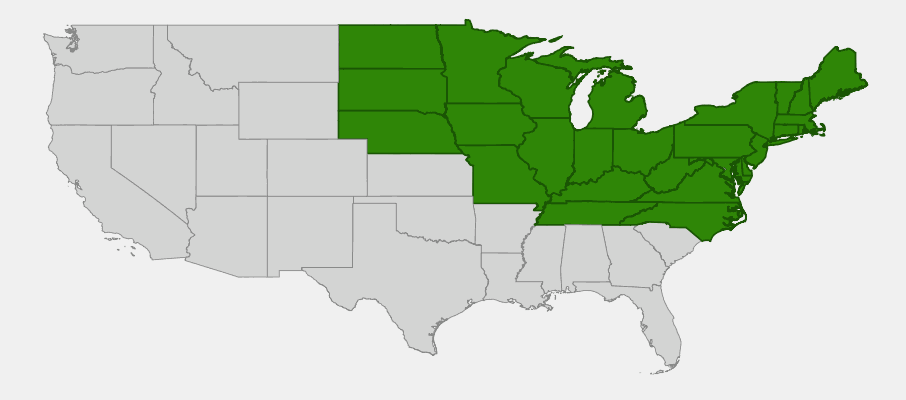
Meadowsweet has one of the most extensive native ranges of any North American shrub, naturally occurring across much of the northern United States and southern Canada. Its distribution stretches from the Atlantic coast west to the Great Plains, encompassing the entire Great Lakes region, New England, and extending south along the Appalachian Mountains to North Carolina and Tennessee.
This wide distribution reflects the species’ remarkable adaptability to varied climatic conditions, from the humid continental climates of the Upper Midwest to the cooler maritime influences of New England. Meadowsweet thrives in areas with cold winters and warm summers, making it particularly valuable for northern tier landscapes where many flowering shrubs struggle with harsh winter conditions.
Throughout its range, Meadowsweet typically grows in wet to moist soils in full sun to light shade. It is commonly found along streambanks, in prairie swales, wet meadows, marsh edges, and occasionally in moist woodland openings. The species often forms extensive colonies in ideal habitat, creating spectacular displays during the summer flowering period.
📋 Regional plant lists featuring Meadowsweet: North Dakota, South Dakota & Western Minnesota
Growing & Care Guide
Meadowsweet is one of the most rewarding native shrubs to grow, offering spectacular summer blooms with minimal maintenance requirements once established. Its natural preference for moist conditions makes it ideal for rain gardens, bioswales, and other sustainable landscaping applications.
Light
Meadowsweet performs best in full sun, where it produces the most abundant flowering and develops the most compact, attractive form. It will tolerate partial shade, particularly in hot summer climates, but may become somewhat leggy and produce fewer flowers. For the best display, choose a site that receives at least 6 hours of direct sunlight daily.
Soil & Water
This species thrives in consistently moist to wet soils and is particularly valuable for sites that stay wet longer than most plants can tolerate. Meadowsweet grows well in clay, loam, or sandy soils as long as adequate moisture is present. It prefers slightly acidic to neutral pH (6.0-7.0) but adapts to a wide range of soil conditions. Once established, plants can tolerate brief periods of drought but perform best with consistent moisture throughout the growing season.
Planting Tips
Plant Meadowsweet in spring after danger of frost has passed, or in early fall to allow establishment before winter. Space plants 3-4 feet apart for mass plantings or erosion control, or use as single specimens with adequate room to spread. The species transplants easily from container stock and establishes quickly in suitable sites.
Pruning & Maintenance
Meadowsweet requires minimal pruning. Remove spent flower heads to encourage additional blooming, or leave them for winter interest and wildlife value. In late winter or very early spring, cut the entire plant back to 6-12 inches from the ground to promote vigorous new growth and maximum flowering. Older clumps can be divided every 3-4 years to prevent overcrowding and maintain plant vigor.
Landscape Uses
Meadowsweet’s versatility makes it valuable in many garden settings:
- Rain gardens and bioswales — excellent for stormwater management
- Streamside plantings — provides erosion control and habitat
- Native plant borders — creates seasonal structure and color
- Pollinator gardens — supports numerous beneficial insects
- Mass plantings — spectacular summer display in large areas
- Wetland restoration — helps establish native plant communities
- Prairie gardens — adds vertical structure to grassland plantings
Wildlife & Ecological Value
Meadowsweet is exceptional for supporting diverse wildlife communities throughout its range, providing both nectar resources during its extended blooming period and habitat structure for numerous species.
For Birds
Many songbird species utilize Meadowsweet colonies for nesting, including Red-winged Blackbirds, Song Sparrows, and various warbler species that prefer the dense cover provided by established stands. The seeds, while small, are consumed by finches and sparrows, particularly during fall migration. The shrub’s growth habit creates ideal microhabitat for ground-foraging species and provides important escape cover near wetland edges.
For Mammals
White-tailed Deer browse Meadowsweet foliage, particularly during spring when new growth is tender. Small mammals like voles and mice utilize the dense root systems and winter cover, while larger mammals such as moose and elk will consume the twigs and leaves where ranges overlap. The extensive root systems help stabilize soil along waterways, creating better habitat for muskrats and other semi-aquatic species.
For Pollinators
Meadowsweet is outstanding for supporting pollinators, with its abundant white flowers attracting numerous native bee species, including sweat bees, leafcutter bees, and various Bombus species. The extended blooming period provides consistent nectar availability during the peak summer months when many prairie and wetland plants have finished flowering. Butterflies, particularly skippers and smaller species, are frequent visitors, along with beneficial wasps and hoverflies that help control garden pests.
Ecosystem Role
As a rhizomatous species, Meadowsweet plays a crucial role in preventing soil erosion along waterways and in wet prairie areas. The dense root systems help filter runoff and reduce nutrient loading in aquatic systems. The plant’s ability to form stable colonies makes it valuable for habitat restoration, providing structure that supports the establishment of other native wetland and prairie species.
Cultural & Historical Uses
Meadowsweet has a rich history of traditional use among Indigenous peoples throughout its range. Many tribal nations, including the Ojibwe, Potawatomi, and Dakota, utilized various parts of the plant for medicinal purposes. The inner bark and root were commonly prepared as teas to treat digestive ailments, while poultices made from the leaves were applied to cuts and wounds for their astringent properties.
The plant’s common name “Meadowsweet” reflects its preference for moist meadow habitats and the sweet fragrance of its flowers, though this should not be confused with the European Meadowsweet (Filipendula ulmaria) that was the original source of salicin, the precursor to aspirin. While Spiraea alba does contain some similar compounds, it was not historically used as a significant source of pain relief medicine.
During the 19th and early 20th centuries, Meadowsweet became popular in American landscaping, particularly for naturalizing wet areas around estates and public parks. The species was valued for its reliability, spectacular summer display, and ability to thrive in challenging wet soils where many other ornamental shrubs failed. Today, it remains an important component of ecological restoration projects throughout the Great Lakes region and northeastern United States, helping to reestablish native plant communities in degraded wetland and prairie habitats.
Traditional ecological knowledge also recognized Meadowsweet as an indicator species for high-quality wetland habitats. The presence of thriving Meadowsweet colonies often indicated healthy hydrology and good water quality, making it a useful species for early conservation assessments.
Frequently Asked Questions
How fast does Meadowsweet spread?
Meadowsweet spreads at a moderate rate through underground rhizomes, typically expanding 1-2 feet per year under ideal conditions. The rate of spread depends heavily on soil moisture, sunlight, and soil fertility. In very favorable wet conditions, it can spread more aggressively.
Is Meadowsweet invasive?
No, Meadowsweet is a native species throughout its range and is not considered invasive. While it can form colonies through rhizomatous spread, this is its natural growth habit and it rarely displaces other native species. In garden settings, it can be managed through periodic division if spreading becomes a concern.
Can Meadowsweet grow in dry conditions?
While Meadowsweet prefers consistently moist soil, established plants can tolerate periods of moderate drought. However, prolonged dry conditions will stress the plant, reduce flowering, and may cause it to go dormant early. For best performance, provide supplemental watering during dry spells.
When is the best time to divide Meadowsweet?
The best time to divide Meadowsweet is in early spring before new growth begins, or in fall after the plants have gone dormant. Division is easy — simply dig up portions of the colony and replant them at the desired spacing. This also helps prevent overcrowding and maintains plant vigor.
Do I need to deadhead the flowers?
Deadheading spent flowers will encourage additional blooming and keep the plant looking tidy, but it’s not necessary for plant health. Many gardeners prefer to leave some seed heads for winter interest and wildlife value, deadheading only the most prominent spent blooms to maintain appearance while preserving some seeds for birds.

Looking for a nursery that carries Meadowsweet?
Browse our native plant nursery directory: North Dakota · South Dakota · Minnesota