
Monkeyflower (Mimulus guttatus)
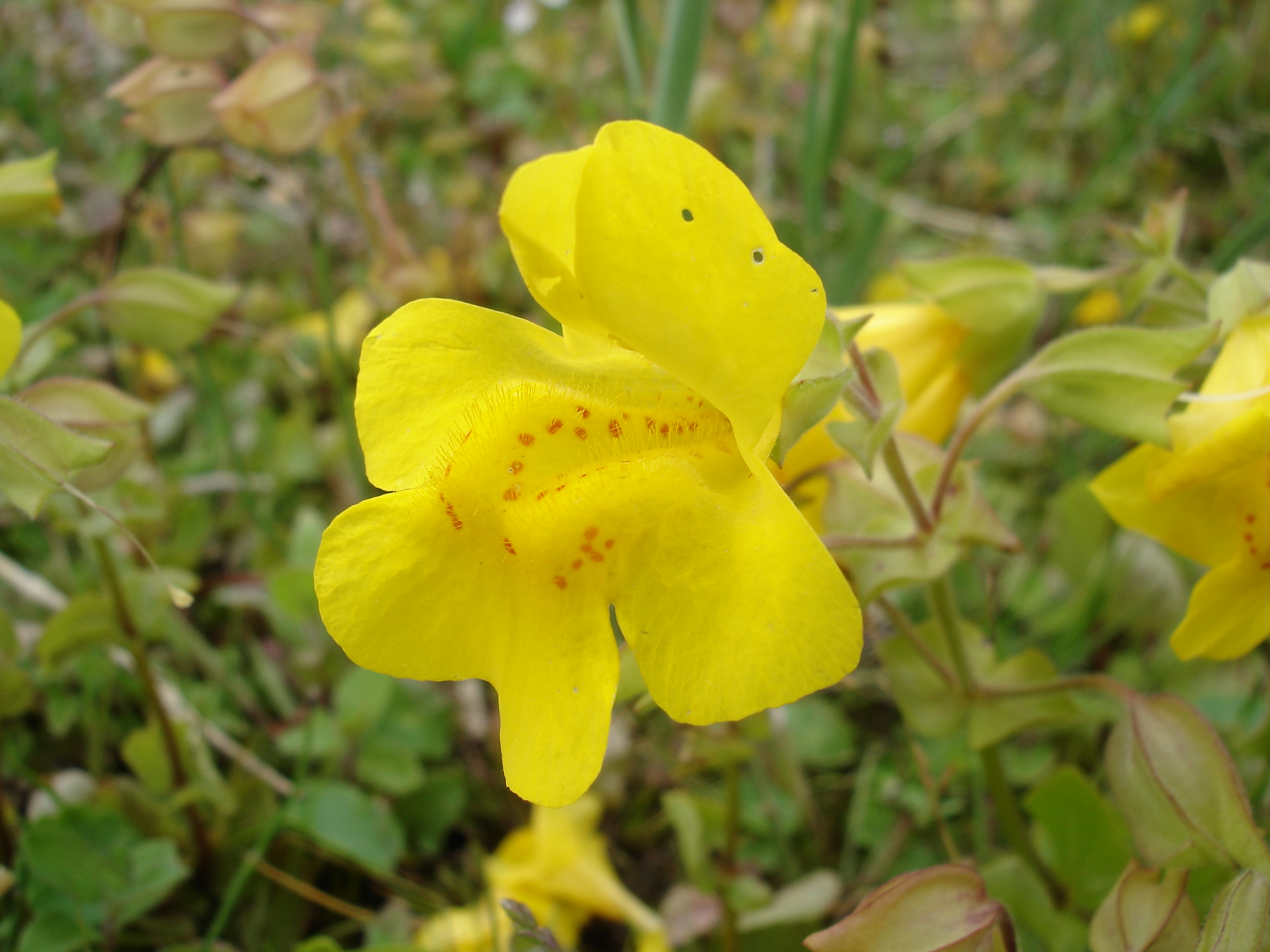
Mimulus guttatus (now often placed in Erythranthe guttata), commonly known as Monkeyflower, Common Monkeyflower, or Yellow Monkeyflower, is one of the most widespread and visually distinctive native wildflowers of western North America. A member of the Phrymaceae (lopseed) family, this exuberant perennial produces large, snapdragon-like yellow flowers adorned with characteristic red or maroon spots in the throat — a pattern that, to early botanists, suggested a grinning simian face (hence “monkeyflower”). Its ability to grow with extraordinary abundance along streams, seeps, wet meadows, and roadside ditches from sea level to alpine elevations makes it one of the most widely encountered native wildflowers in Alaska and the Pacific Northwest.
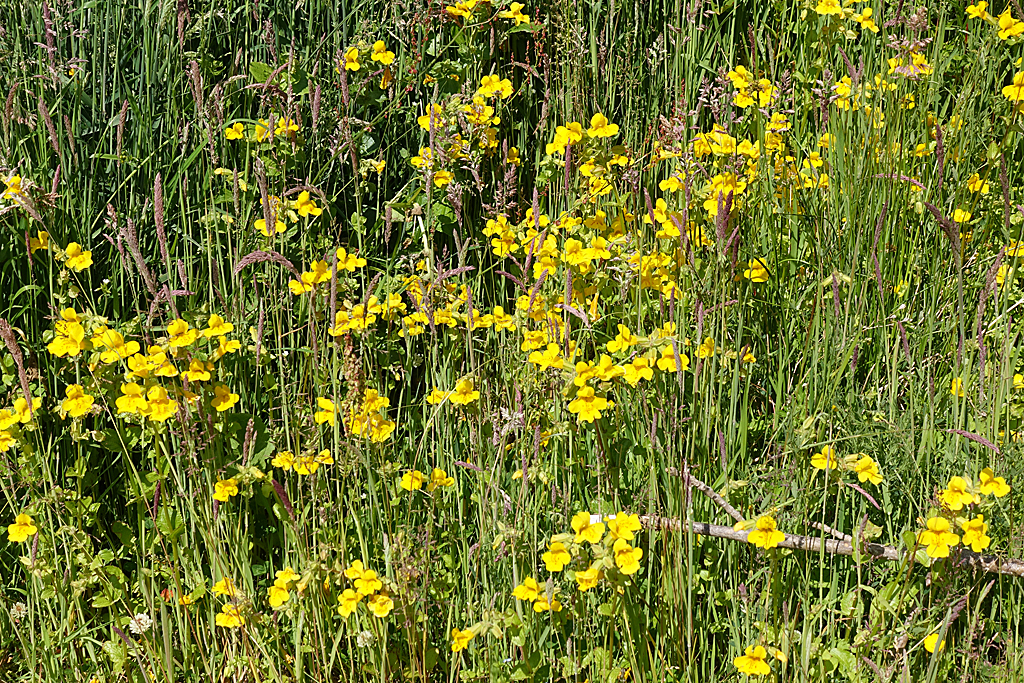
Monkeyflower is a plant of wet places — it virtually requires its roots to be in or very near water, and it thrives along the margins of cold, clear streams and springs where many other wildflowers cannot survive. In Alaska, it is found along streams throughout much of the state, blooming in dense golden masses that line the banks of fast-moving waters from June through September. The brilliant yellow of a Monkeyflower-lined creek in full summer bloom is one of the characteristic wildflower sights of the Alaskan interior and Pacific coast regions.
Beyond its beauty, Monkeyflower is a fascinating plant from a scientific perspective. It is one of the most well-studied species in evolutionary biology and genetics, having been used in landmark studies of plant adaptation, speciation, and the genetic basis of floral evolution. The diversity of Monkeyflower forms and the ease with which different populations can be hybridized and studied in the laboratory have made it a model organism for understanding how new plant species evolve in the wild — making it one of the more scientifically famous wildflowers in North America.
Identification
Monkeyflower grows as an upright to sprawling annual or perennial herb, typically 8 to 36 inches (20–90 cm) tall, with hollow, succulent stems that may root at nodes where they touch moist soil. The plant is highly variable in size, with plants growing in fast-moving, cold streams often remaining small and compact, while those in warm, nutrient-rich seeps or roadside ditches can become quite large and lush. The overall appearance is lush and green, with large, bright flowers that command attention even from a distance.
Leaves
The leaves are opposite, broadly oval to kidney-shaped, with prominent teeth along the margins. They are bright green, slightly sticky-hairy, and have a distinctive clasping base that wraps partly around the stem — a characteristic feature that helps distinguish Monkeyflower from similar plants. Upper leaves tend to clasp the stem more completely than lower ones. Leaf size ranges from ½ to 3 inches (1–8 cm) long, with larger leaves near the base. The texture is somewhat fleshy, reflecting the plant’s wet habitat preferences.
Flowers
The flowers are the defining feature — large (¾ to 1½ inches / 2–4 cm long), two-lipped (bilabiate), and bright golden yellow with characteristic red or maroon spots in the throat and on the lower lip. The upper lip has two lobes; the lower lip has three lobes and bears the “monkey face” pattern of spots that gives the plant its common name. The calyx (green outer whorl) is prominent, with five sharply pointed teeth. Flowers are produced in leafy, raceme-like clusters at stem tips. Blooming occurs from May through September in Alaska, depending on elevation and latitude.
Distinguishing Features
Key identifying features: clasping stem leaves, hollow stems rooting at nodes, large yellow snapdragon-like flowers with red spots in throat, wet or aquatic habitat. The closely related Muskflower (Mimulus moschatus) has smaller, paler flowers and a musky scent. No other common Alaskan streamside wildflower combines large yellow bilabiate flowers with a distinctive spotted throat.
Quick Facts
| Scientific Name | Mimulus guttatus (syn. Erythranthe guttata) |
| Family | Phrymaceae (Lopseed) |
| Plant Type | Annual or Perennial Wildflower / Aquatic Herb |
| Mature Height | 2–3 ft |
| Sun Exposure | Full Sun to Part Shade |
| Water Needs | Moderate to High |
| Bloom Time | May – September |
| Flower Color | Bright yellow with red-spotted throat |
| USDA Hardiness Zones | 3–9 |
Native Range
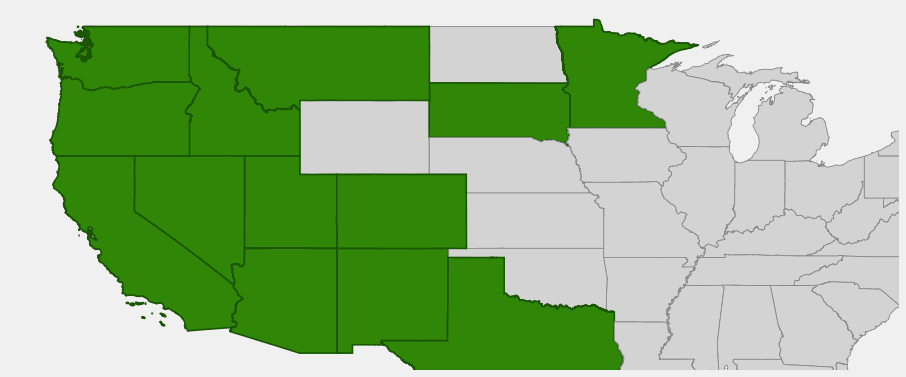
Monkeyflower is native across a vast swath of western North America, from Alaska and the Yukon south through British Columbia, all Pacific states and territories, the Intermountain West, and portions of the northern Great Plains. It is one of the most widely distributed native wildflowers in the western United States, occurring in every western state and extending east to Minnesota, Nebraska, and Kansas in historically glaciated areas. In Alaska, it is found throughout most of the state wherever suitable stream habitats occur.
The species shows remarkable ecological plasticity — it occurs from sea level coastal streams to alpine seeps above 10,000 feet (3,000 m), adapting its growth form and life history to an extraordinary range of conditions. Lowland populations tend to be taller, longer-lived perennials; high-elevation populations are often small, annual, or biennial, completing their life cycle rapidly during the brief mountain summer. This variation in life history strategy across elevational gradients is one of the features that has made Monkeyflower such a valuable subject of evolutionary research.
Monkeyflower has also been widely introduced outside its native range — it now grows as a naturalized plant across much of Europe, Australia, New Zealand, and parts of South America. In the UK especially, it has become thoroughly naturalized along streams and roadside ditches, where it is now considered a naturalized wildflower rather than a problematic invasive. This global spread reflects the plant’s adaptability and the long history of its cultivation as an ornamental in temperate horticulture.
📋 Regional plant lists featuring Monkeyflower: Alaska
Growing & Care Guide
Monkeyflower is one of the easiest and most rewarding native wildflowers to grow in wet or waterside garden settings. Its constant, colorful bloom over a long season and its tolerance of wet conditions make it invaluable for rain gardens, pond margins, bog gardens, and streamside plantings.
Light
Monkeyflower grows well in full sun to partial shade. It performs best with morning sun and some afternoon shade in warmer climates, but in the cool summers of Alaska and the Pacific Northwest, full sun is ideal. In deep shade, it produces fewer flowers and becomes straggly. Along stream corridors, it naturally grows in the partially shaded zone beneath streamside alders and willows — conditions that can be replicated in the garden by positioning it near deciduous shrubs or trees that provide dappled light.
Soil & Water
Monkeyflower’s primary requirement is consistent moisture — ideally with roots at or very near the water table. It grows best in constantly moist to wet soils including clay, sandy loam, or rocky soils, as long as water availability is high and reliable. It is an excellent choice for pond margins, rain garden overflow zones, boggy depressions, and anywhere that tends to stay wet throughout the growing season. Conversely, it will not survive in dry or well-drained garden soils without supplemental irrigation at very high frequency.
Planting Tips
Plant Monkeyflower from seed or container plants in spring after frost danger has passed. Seeds germinate readily at 65–70°F (18–21°C) with good light. Plants establish quickly in moist soil and can be set at the water’s edge with roots actually submerged a few inches in slow-moving water. Space plants 12–18 inches apart for rapid coverage of streambanks and wet zones. Division of established clumps every 2–3 years keeps plants vigorous. Monkeyflower self-seeds freely in wet areas and can naturalize to form large colonies over time.
Pruning & Maintenance
Cut back Monkeyflower in midsummer after the first flush of bloom to encourage a second flush of flowering later in the season. Remove spent stems at the end of fall, or leave them as winter structure and seed source for birds. The plant may behave as an annual in very cold areas, reseeding itself for the following year. Monkeyflower has few pest or disease problems in cool, moist environments; powdery mildew can affect plants in warm, dry conditions.
Landscape Uses
- Streambank and riparian restoration — one of the best native options
- Rain gardens and bioswales — thrives in wet, intermittently flooded zones
- Pond and water feature margins — can grow with roots submerged
- Bog and wet meadow gardens — creates brilliant color in moist areas
- Native wildflower meadows in wet lowlands and stream corridors
- Hummingbird gardens — the tubular yellow flowers are eagerly visited
Wildlife & Ecological Value
Monkeyflower is a critical native wildflower for the ecological web of Alaska’s stream and wetland communities, supporting pollinators, hummingbirds, and aquatic invertebrates across its long bloom season.
For Birds
Rufous Hummingbirds and Anna’s Hummingbirds visit Monkeyflower flowers extensively during migration through the Pacific Northwest, and Rufous Hummingbirds also visit them in their Alaska breeding range. The flowers’ tubular shape and yellow color are well-suited to hummingbird pollination. Various sparrows and finches consume the tiny seeds produced in abundance through the long summer bloom season. Dense streamside colonies provide excellent nesting cover for Wilson’s Warblers, MacGillivray’s Warblers, and other riparian nesting birds.
For Pollinators
Monkeyflower is an important pollinator resource in stream and wetland habitats, attracting bumblebees, mason bees, sweat bees, and hover flies. The red spots in the flower throat serve as nectar guides — visual cues that direct pollinators to the nectar source and ensure contact with the anthers and stigma during foraging visits. Bumblebees are the primary pollinators in Alaska and mountain habitats, often “buzzing” the flowers to release pollen through a behavior called buzz pollination or sonication.
For Aquatic Life
The roots and stems of Monkeyflower plants growing in and adjacent to streams provide habitat structure and attachment sites for aquatic invertebrates including stoneflies, caddisflies, and midges — insects that are in turn critical food sources for fish, particularly salmon and trout. The dense streamside vegetation that Monkeyflower helps establish also shades streams, keeping water temperatures cool enough for cold-water fish species like Dolly Varden, Sockeye Salmon, and Rainbow Trout.
Ecosystem Role
As one of the most abundant and widespread riparian wildflowers in Alaska, Monkeyflower plays a significant role in bank stabilization, particularly on actively eroding streambanks where its spreading stems and fibrous roots bind loose soils. Dense Monkeyflower colonies reduce erosive water flow at stream margins and help maintain the vegetated buffer zones that protect water quality by filtering agricultural runoff, sediment, and nutrients before they reach stream channels.
Cultural & Historical Uses
Monkeyflower has a long history of use by Indigenous peoples throughout its range. The Ohlone, Sierra Miwok, and various other California tribes ate young Monkeyflower plants as a salad green — the leaves have a mildly salty or bitter flavor that was used to complement other foods. Among some Pacific Northwest peoples, the leaves were occasionally used in poultices for minor wounds and skin conditions. The Cherokee used related eastern Mimulus species medicinally, suggesting a pan-North American awareness of the genus as medicinally useful.
In Alaska, Monkeyflower was less prominently featured in traditional use than some other stream-margin plants, but it was known and observed by Alaska Native peoples as a reliable indicator of freshwater — streams lined with Monkeyflower were reliable sources of drinking water. The plant’s predictable association with clean, fast-moving water made it a useful landscape indicator in the pre-map era of Alaska Native travel and subsistence. In streams and rivers used for salmon fishing, Monkeyflower-lined banks were recognized as productive fishing areas where cool, oxygenated water conditions favored salmon congregation.
In contemporary science, Monkeyflower has become famous as one of the premier model organisms for studying plant evolution and speciation. A remarkable body of research using Monkeyflower has elucidated how new species form through pollinator shifts — showing, for example, how the transition from bee pollination to hummingbird pollination involves just a handful of genes with large effects on flower color, shape, and nectar production. This research, conducted primarily by evolutionary biologist David Lowry and others at University of California institutions, has fundamentally advanced our understanding of how ecological adaptation drives the origin of new species.
Frequently Asked Questions
Can Monkeyflower grow in a regular garden bed without a stream?
Monkeyflower can grow in a regular garden bed if it receives consistent, frequent irrigation — it needs to remain moist at all times. However, it truly thrives only with constant soil moisture and is much more easily grown in rain gardens, pond margins, bog gardens, or other reliably wet locations. In a conventional well-drained garden bed without regular watering, it will dry out and fail. It is best treated as a plant for wet specialty gardens rather than a general-purpose perennial.
Is Monkeyflower good for attracting hummingbirds?
Yes — Monkeyflower is an excellent hummingbird plant, particularly for Rufous Hummingbirds in Alaska and the Pacific Northwest. The large yellow flowers with their tubular form provide abundant nectar, and hummingbirds are efficient pollinators of the plant. Plant Monkeyflower near a water feature or moist area visible from a window or patio for best hummingbird-watching opportunities.
Why is Monkeyflower scientifically famous?
Monkeyflower (Mimulus guttatus and its relatives) has become one of the most important model organisms in evolutionary biology, used to study adaptation, speciation, hybridization, and the genetics of ecological divergence. Key discoveries include identifying the genes responsible for flower color changes that shift pollinator preference from bees to hummingbirds, and demonstrating rapid local adaptation of wild populations to different soil types, climates, and elevations. This research has been published in top scientific journals and has influenced textbooks worldwide.
Is Monkeyflower the same as the plant in laboratory evolution experiments?
Yes — when evolutionary biologists refer to “Mimulus” research, they are usually referring to Mimulus guttatus (Monkeyflower) or its close relatives. The plant is easy to grow in the laboratory, has a short generation time (can flower in 8–10 weeks), produces abundant offspring, and has a sequenced genome — all qualities that make it ideal for experimental evolutionary research. The wild plant you see along Alaskan streams is the same species being studied in genetics laboratories around the world.
Can Monkeyflower be grown in containers?
Yes — Monkeyflower can be grown in containers that are kept consistently moist, such as large pots sitting in a tray of water or water garden containers. Use a moisture-retentive potting mix and never allow the container to dry out completely. The plant performs beautifully in water garden containers alongside aquatic plants, where its roots can reach the moist, nutrient-rich substrate near the water.

Looking for a nursery that carries Monkeyflower?
Browse our native plant nursery directory: Alaska