
Northern Goldenrod (Solidago multiradiata)
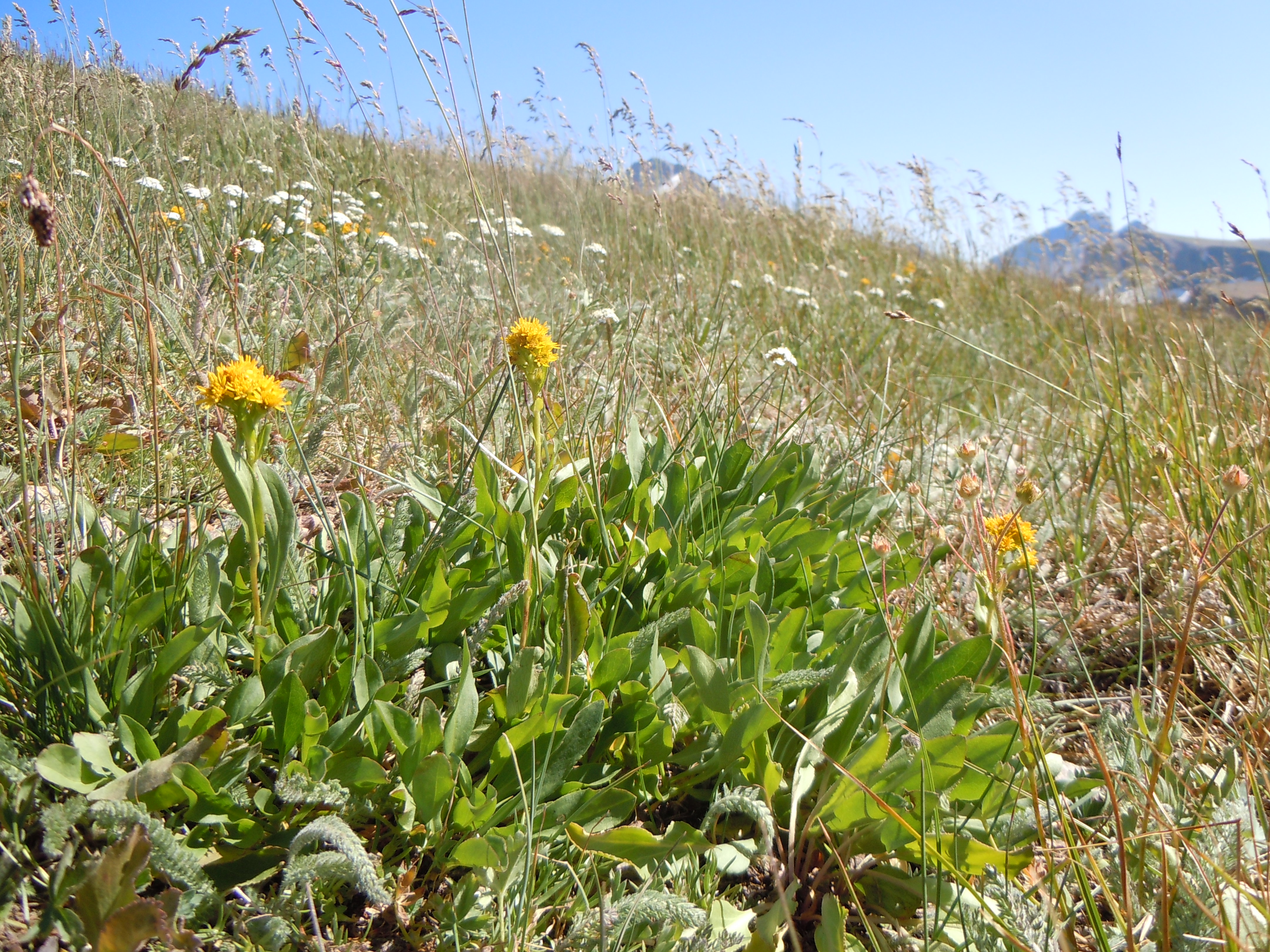
Solidago multiradiata, commonly known as Northern Goldenrod, Rocky Mountain Goldenrod, or Alpine Goldenrod, is the signature goldenrod of Alaska and the high mountains of western North America. A member of the Asteraceae (daisy) family, this compact, tough perennial produces clustered heads of bright golden-yellow flowers on stout, leafy stems in late summer — bringing vivid warmth to the cool meadows, rocky ridges, and subalpine slopes of the North. Unlike many of its taller goldenrod relatives that dominate eastern meadows, Northern Goldenrod is a plant of exposed, challenging environments: it grows where wind is constant, soils are thin and rocky, and the growing season is measured in weeks rather than months.
Northern Goldenrod forms tight, compact rosettes and clumps of elliptical, finely toothed leaves, typically growing 1 to 2 feet (30–60 cm) tall with sturdy stems bearing flat-topped to slightly arching clusters of flower heads at their tips. The flower clusters consist of numerous small composite heads, each with a small ring of yellow ray florets surrounding a central disc — creating the characteristic “goldenrod” texture of dense, textured golden bloom. In Alaska, Northern Goldenrod blooms from July through September depending on elevation, providing critical late-season nectar for pollinators preparing for winter and an important pollen source when most other wildflowers have finished.
For Alaska native plant gardeners and restorationists, Northern Goldenrod is one of the most valuable and underappreciated wildflowers available. Its extraordinary cold hardiness (to Zone 2), tolerance of poor, rocky, dry to moist soils, and its late-season ecological value make it a cornerstone species for any northern wildflower planting. It requires almost no maintenance once established and rewards gardeners with one of the most intensely golden wildflower displays available for cold-climate gardens.
Identification
Northern Goldenrod grows as a compact, clump-forming perennial, typically 8 to 24 inches (20–60 cm) tall with stout, erect stems that are covered in short hairs and bear numerous leaves from base to tip. The overall growth habit is more compact and tidier than many other goldenrod species, with proportionally larger flower heads relative to the plant’s size — a feature that distinguishes it from taller, looser-blooming relatives. Plants spread slowly by short rhizomes to form gradually enlarging clumps.
Leaves
The leaves are elliptical to narrowly oval, 1 to 4 inches (2.5–10 cm) long, and finely to coarsely toothed along the margins. Basal and lower stem leaves are the largest, with well-defined petioles (stalks); upper stem leaves become progressively smaller and sessile (stalkless). The surface is slightly hairy and has three prominent parallel veins — a distinctive feature of Solidago multiradiata that helps separate it from similar species. The leaves have a somewhat leathery texture reflecting the plant’s adaptation to exposed, often dry alpine conditions.
Flowers
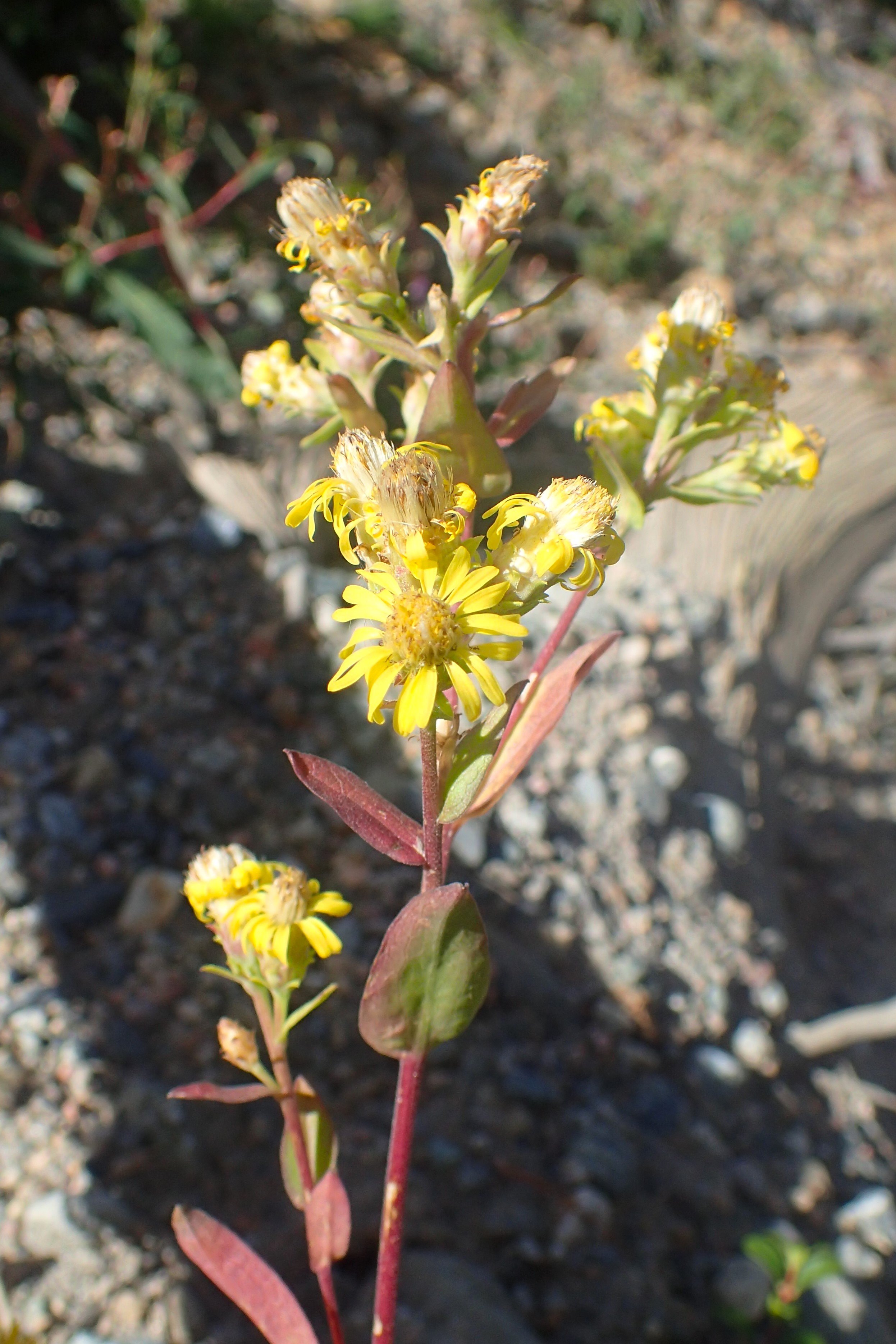
The flower heads are small individually but produced in dense, flat-topped to slightly rounded clusters (corymbs) at the tops of stems. Each head has 8 to 18 bright yellow ray florets (multiradiata means “many-rayed”) surrounding a central disc of yellow tubular florets. The involucre (ring of bracts) is distinctive, with stiff, pointed, yellowish-green bracts. The overall effect of the flower clusters is a dense, textured mass of intense golden yellow. Blooming typically peaks from late July through early September in Alaska.
Seeds
Seeds are small achenes topped with a white pappus that enables wind dispersal. Seed release in late summer produces attractive, feathery white seed heads that persist into winter, providing visual interest and winter food for seed-eating birds.
Quick Facts
| Scientific Name | Solidago multiradiata |
| Family | Asteraceae (Daisy / Composite) |
| Plant Type | Perennial Wildflower / Clump-forming Herb |
| Mature Height | 1–2 ft |
| Sun Exposure | Part Shade to Full Sun |
| Water Needs | Low to Moderate |
| Bloom Time | July – September |
| Flower Color | Bright golden yellow |
| USDA Hardiness Zones | 2–8 |
Native Range
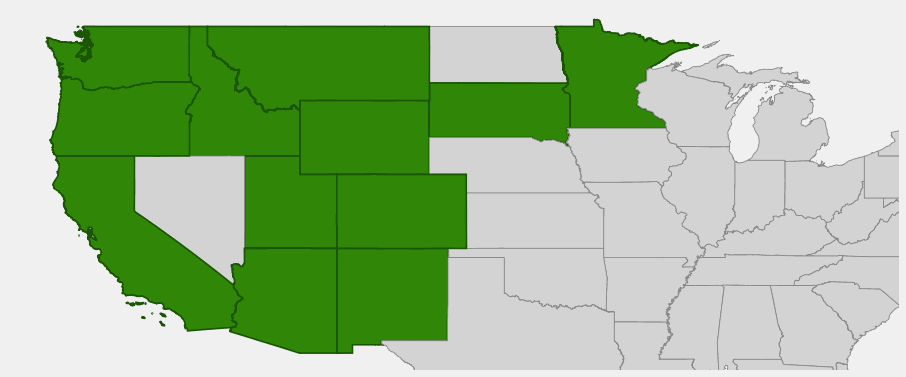
Northern Goldenrod is native across a broad swath of northern and montane North America, ranging from Alaska and the Yukon east across Canada to Quebec and Labrador, and south through the Rocky Mountains to Arizona and New Mexico. In the western United States, it is primarily a mountain species, found at high elevations from the Cascades and Sierra Nevada east through the Rockies. In Alaska, it occurs throughout most of the state — from coastal areas through the interior and north to the Brooks Range foothills.
The species is adapted to a wide range of rocky, open habitats at higher elevations and latitudes: alpine meadows and fell-fields, subalpine ridges, rocky tundra, open forest edges, rocky slopes, and gravelly or sandy disturbed substrates. It is particularly common in the open, wind-swept habitats of Alaska’s interior mountain ranges, where it often forms the dominant forb (broad-leaved herb) in short-grass alpine meadow communities. At lower elevations in Alaska, it also grows in open spruce and birch forest margins and along roadsides where soil disturbance has created suitable open conditions.
The wide range of Northern Goldenrod across very different climatic zones — from the mild, wet coastal environment of southeastern Alaska to the extreme continental cold of interior Alaska and the Yukon — reflects remarkable genetic and physiological flexibility. Populations from different parts of its range are adapted to their local conditions and may differ in dormancy timing, cold hardiness, and drought tolerance, making proper provenance selection important when using Northern Goldenrod in restoration plantings.
📋 Regional plant lists featuring Northern Goldenrod: Alaska
Growing & Care Guide
Northern Goldenrod is one of the easiest and most adaptable native wildflowers for cold-climate gardens. Once established, it requires virtually no care, thrives in poor soils, tolerates drought and cold, and provides exceptional late-season color when most other garden plants have finished blooming.
Light
Northern Goldenrod grows best in full sun to partial shade. It produces the most compact growth and the most abundant flowers in full sun. In partial shade, it may become slightly taller and flower less profusely, but it remains a reliable performer. Unlike many goldenrod species that tend to flop in shade, Northern Goldenrod’s naturally compact stature helps it maintain an upright habit even in less-than-optimal light conditions.
Soil & Water
One of Northern Goldenrod’s greatest strengths is its tolerance of poor, low-nutrient soils. It is most at home in gravelly, sandy, or rocky soils with low to moderate fertility — the same conditions found in its native alpine and subalpine habitats. Rich, fertilized garden soils can cause the plant to become leggy. Water needs are low to moderate; established plants are drought-tolerant and do not require irrigation in most of Alaska and the northern United States. They will also perform well in moderately moist conditions, making them adaptable to a wide range of garden sites.
Planting Tips
Plant Northern Goldenrod in spring or fall in a sunny, well-drained location. Seeds can be direct-sown in fall or sown in containers with cold stratification in winter for spring germination. Container-grown plants establish readily and may bloom in their first year. Space plants 18–24 inches apart — they spread slowly but steadily by rhizomes and will gradually form attractive colonies. Northern Goldenrod is an excellent companion for other native alpine and subalpine wildflowers including Yarrow, Arnica, Alpine Aster, and native grasses.
Pruning & Maintenance
Cut stems back to ground level in early spring to maintain tidiness, or leave the attractive seed heads standing through winter for wildlife value and winter interest. Division every 3–5 years keeps clumps vigorous. Northern Goldenrod is virtually pest- and disease-free in appropriate growing conditions. It does not require staking, fertilizing, or pest control — it is a true low-maintenance native perennial designed by evolution for challenging conditions.
Landscape Uses
- Native wildflower meadows — outstanding for late-season color
- Rock gardens and alpine plantings — perfect for dry, rocky sites
- Pollinator gardens — critical late-season nectar source
- Roadside and slope stabilization — drought-tolerant and persistent
- Cottage garden perennial border — compact enough for formal beds
- Wildlife gardens — attracts monarchs, native bees, and seed-eating birds
Wildlife & Ecological Value
Northern Goldenrod is one of the ecologically richest native wildflowers in Alaska, supporting a disproportionate diversity of insects, birds, and other wildlife relative to its modest size — and providing this support at a critical time of year when other flowers have finished and wildlife is preparing for winter.
For Birds
The persistent seed heads of Northern Goldenrod are consumed by numerous finches and sparrows through fall and winter, including redpolls, Pine Siskins, American Goldfinches, and White-crowned Sparrows. The dense foliage provides cover and foraging habitat for warblers and sparrows during migration. The plant’s upright dried stems provide valuable perches and singing posts in open meadow habitats.
For Pollinators
Northern Goldenrod is a critical late-season nectar and pollen source for bumblebees, native bees, and butterflies that need to build energy reserves before winter. In alpine and subalpine Alaska, where the window for pollinator activity is extremely short, Northern Goldenrod’s late-summer blooming provides nectar at exactly the time when other flowers are finishing — making it an essential component of complete pollinator habitat in high-elevation settings. The plant supports over 100 species of insects globally in the genus Solidago, including many specialist goldenrod bees and flies.
For Mammals
Pikas collect Northern Goldenrod stems and leaves for their hay piles — the stores of dried vegetation that sustain them through winter in their rocky talus habitats. Hoary Marmots graze on Northern Goldenrod foliage during summer. In interior Alaska, Ground Squirrels consume the seeds and store plant material in their burrow chambers. The plant’s tolerance of grazing pressure is high enough that established clumps persist even in areas with regular browsing by caribou and moose.
Ecosystem Role
In alpine ecosystems with few plant species and a brief growing season, generalist wildflowers that support many different insects and provide resources across multiple seasons are disproportionately valuable. Northern Goldenrod fills this role in Alaska’s tundra and alpine communities — providing both early-season pollen (supplementing the earliest blooming plants) and late-season nectar (extending the season for pollinators) while also producing seeds that carry the plant through winter and produce a visible structural element in the otherwise wind-scoured alpine landscape.
Cultural & Historical Uses
Members of the genus Solidago (goldenrods) have been used medicinally across North America for thousands of years. Among various Alaska Native peoples and northern First Nations, goldenrod species including Northern Goldenrod were used as medicinal herbs — primarily for treating inflammatory conditions, kidney and urinary complaints, and respiratory ailments. The dried flowers and leaves were brewed as a tea with astringent and anti-inflammatory properties. Northern peoples recognized goldenrod’s effectiveness as a wound herb, applying crushed leaves or poultices to cuts and bruises to reduce swelling and promote healing.
The Blackfoot people of the northern Great Plains — within whose territory Northern Goldenrod also occurs at prairie edges and foothills — used goldenrod extensively in ceremony and medicine. The yellow flowers were used as a dye for textiles and basketry materials, producing a warm golden to green-yellow color. Smoke from burned goldenrod was used in purification rituals. These uses reflect the plant’s deep integration into the material and spiritual culture of peoples across its range, from the Arctic foothills of Alaska to the Rocky Mountain foothills of Montana and Wyoming.
In contemporary Western herbalism, goldenrod species (primarily European Solidago virgaurea and North American S. canadensis) are well-established medicinal herbs used for urinary tract health, anti-inflammatory effects, and respiratory support. Northern Goldenrod (S. multiradiata) has similar chemical properties and has been used in the same ways by northern peoples, though it has not been as extensively studied in modern pharmacological research as its more southerly and more abundant relatives. Contrary to popular belief, goldenrod does not cause hay fever — its heavy, insect-carried pollen is not the same as the wind-carried pollen of ragweed, which blooms at the same time and is the actual cause of most late-summer allergies.
Frequently Asked Questions
Does goldenrod cause hay fever?
No — this is one of the most persistent botanical myths. Goldenrod blooms at the same time as ragweed and has conspicuous yellow flowers, leading people to blame it for hay fever. However, goldenrod’s pollen is heavy and sticky, designed to be carried by insects, not wind. It cannot travel through the air in significant quantities. Ragweed (Ambrosia spp.), which blooms simultaneously but has tiny, wind-borne pollen and inconspicuous flowers, is the actual cause of most late-summer hay fever. Goldenrod is entirely safe for hay fever sufferers and is actually beneficial for allergic conditions in some traditional medicine traditions.
How is Northern Goldenrod different from common goldenrod?
Northern Goldenrod (Solidago multiradiata) is smaller, more compact (1–2 ft vs. 3–5 ft), and has proportionally larger flower heads compared to common goldenrod (S. canadensis). It is adapted to alpine, arctic, and subarctic environments and has superior cold hardiness. The leaves have three prominent veins, while common goldenrod leaves typically have a single prominent midvein. Northern Goldenrod also tends to form tidier, more compact clumps without the aggressive spreading tendency of some common goldenrod populations.
Can goldenrod be grown from seed?
Yes — goldenrod is relatively easy to grow from seed. Collect seed when the white, fluffy seed heads are fully developed but before they disperse. Cold stratification (4–6 weeks at 35–40°F / 2–4°C) improves germination rates. Surface-sow seeds in late fall directly in the garden, or start indoors in late winter for spring transplanting. Seeds are tiny and should not be covered — they need light to germinate. Seedlings grow quickly and typically flower in their second year.
Is Northern Goldenrod aggressive or invasive?
Northern Goldenrod is not considered invasive. It spreads slowly by short rhizomes and self-seeds modestly, forming gradually expanding but manageable clumps. Unlike some goldenrod species (particularly tall S. canadensis) that can spread aggressively in rich, moist soils, Northern Goldenrod is a compact, well-behaved species suited to garden use. Deadheading spent flower heads prevents excessive self-seeding if spread control is desired.
What animals eat goldenrod?
Goldenrod is consumed by a remarkable diversity of wildlife. Over 100 species of insects depend on goldenrod for nectar, pollen, or as host plants. Birds including finches and sparrows eat the seeds. Deer and elk browse the foliage. In Alaska, pikas collect goldenrod for their winter hay piles, and ground squirrels eat the seeds. The goldenrod gall fly (Eurosta solidaginis) forms distinctive round stem galls that are themselves food for Downy Woodpeckers probing for the larvae inside — a food web within a single plant.
Looking for a nursery that carries Northern Goldenrod?
Browse our native plant nursery directory: Alaska