Possumhaw Viburnum (Viburnum nudum)
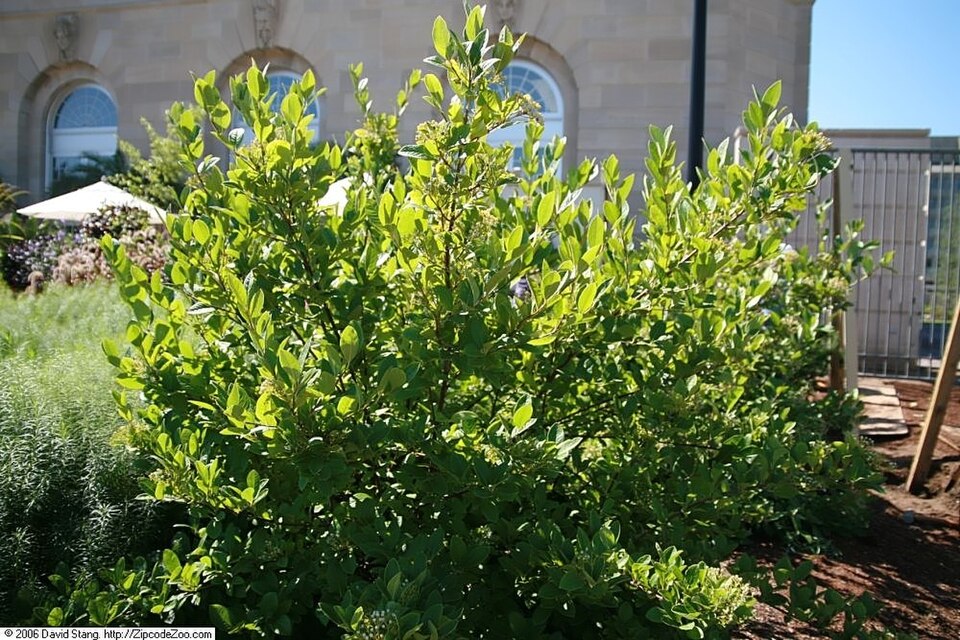
Viburnum nudum, commonly known as Possumhaw Viburnum, Witherod Viburnum, or Smooth Witherod, is one of the most ecologically valuable and ornamentally spectacular native shrubs of the eastern United States. This large, multi-season native viburnum earns its place in the landscape through an extraordinary sequence of ornamental features: glossy, lustrous evergreen (or semi-evergreen) foliage; flat-topped clusters of small white flowers in late spring; and most impressively, an autumn fruit display in which berries on a single cluster ripen through a dazzling progression of pink, rose, blue, and finally lustrous black — sometimes all four colors present simultaneously on one branch.
Growing 5 to 20 feet tall (depending on variety and conditions) with a rounded, multi-stemmed habit, Possumhaw Viburnum is particularly valuable for wet sites — one of the few large, ornamental native shrubs that genuinely thrives in moist to wet soils in partial shade. In its natural habitat along stream banks, pond margins, and in shrub swamps, it forms dense, wildlife-supporting thickets that provide nesting cover, winter food, and thermal shelter for a remarkable diversity of birds and mammals. The berries, which persist well into winter, are consumed by more than 35 species of birds.
For Mid-Atlantic gardeners dealing with wet, shaded sites that need structure and year-round interest, Possumhaw Viburnum is a premier choice. Its combination of shade tolerance, wet-soil performance, outstanding wildlife value, and genuinely dramatic multi-season ornamental features makes it one of the most recommended native shrubs by ecologists, naturalists, and horticulturalists throughout its range.
Identification
Possumhaw Viburnum is a large, upright to arching, multi-stemmed deciduous to semi-evergreen shrub. Plants in the Mid-Atlantic region typically grow 5 to 12 feet tall with an equivalent or greater spread; southern populations in milder climates may approach 20 feet. The growth habit is loosely rounded with arching branches that create a somewhat open, graceful structure. Stems are slender and smooth — the species name "nudum" means "naked" or smooth, referring to the hairless nature of the plant compared to other viburnums.
Bark & Stems
Young stems are smooth, greenish-gray to reddish-brown, and glossy. Older stems develop a gray to grayish-brown bark with a slightly scaly or corky texture. The stems are notable for their scurfy (finely scaling) surface on older growth. Winter buds are elongated, pointed, and covered with two papery scales — a useful field mark in winter identification. The overall winter silhouette of arching stems with persistent clusters of dark berries is distinctive and attractive.
Leaves
The leaves are simple, opposite, and broadly elliptical to oblong — 2 to 5 inches long and 1 to 3 inches wide, with a rounded to slightly wedge-shaped base and blunt to shortly pointed tip. The margins are finely toothed (crenulate-serrulate) or sometimes nearly entire. The upper surface is dark, lustrous green and somewhat leathery in texture; the lower surface is paler with tiny dots (punctate). In the southern part of the range and in warmer winters, the foliage is essentially evergreen; in colder regions, it is semi-evergreen to deciduous, with leaves turning attractive shades of burgundy-red to deep purple-red in autumn before dropping. The lustrous leaf surface is one of Possumhaw Viburnum's most distinctive ornamental features throughout the growing season.
Flowers & Fruit
The flowers are small, white, and 5-petaled — arranged in flat-topped or slightly domed cymes (clusters) 2 to 4 inches across, held at the tips of short side branches. All florets in the cluster are fertile (unlike some viburnums that have sterile ray florets around the outer edge). Flowering occurs in late spring to early summer (May through July in the Mid-Atlantic), with a pleasant, mild fragrance that attracts numerous pollinators. The flat-topped flower clusters are reminiscent of lace-cap hydrangea in form and are quite attractive, though not as showy as some other viburnum species.
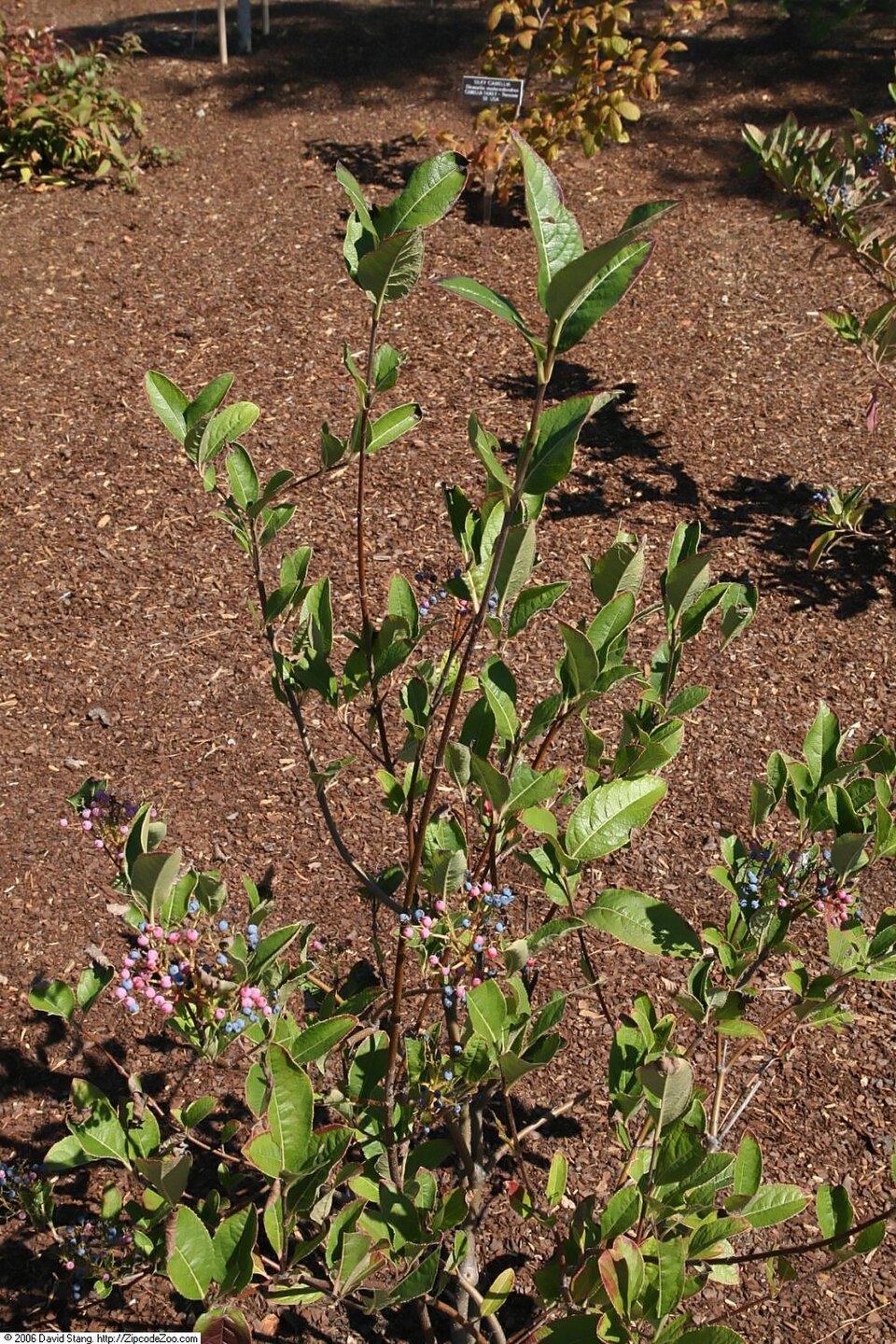
The fruit is the plant's crowning ornamental feature. Berries develop from green through a sequence of colors — pink to rose, then blue to blue-black, finally ripening to glossy black — with fruits in different stages of ripeness present simultaneously in a single cluster from August through October. This multi-colored effect, with pink, rose, blue, and black berries on a single branch, is among the most extraordinary fruit displays in the native shrub palette. The berries are oval, about ⅄ inch long, and contain a single flat seed. They are avidly consumed by birds as they ripen, with the most striking color display occurring in September.
Quick Facts
| Scientific Name | Viburnum nudum |
| Family | Adoxaceae (Elderberry) |
| Plant Type | Deciduous to Semi-evergreen Shrub |
| Mature Height | 5–20 ft |
| Sun Exposure | Part Shade to Full Shade |
| Water Needs | High |
| Soil Type | Moist to wet; tolerates flooding; acidic preferred |
| Soil pH | 4.5–6.5 (acidic to slightly acidic) |
| Bloom Time | May – July |
| Flower Color | White |
| Fruit Color | Pink to rose to blue to glossy black (multi-colored) |
| Fall Color | Burgundy-red to deep purple-red |
| Deer Resistant | Moderate (sometimes browsed in winter) |
| USDA Hardiness Zones | 5–9 |
Native Range
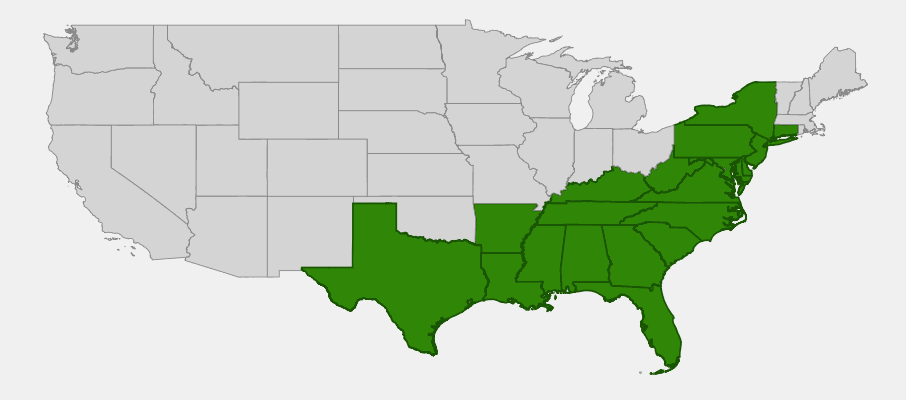
Possumhaw Viburnum is native to the eastern United States, ranging from Connecticut and New York south through the Mid-Atlantic states to Florida, and west along the Gulf Coast to Texas, with inland populations extending north through the Appalachian foothills into Kentucky and Tennessee. The species shows a strong affinity for the coastal plain and lower Piedmont throughout its range, occurring primarily in wetland and moist woodland habitats.
In Maryland, Virginia, and West Virginia, Possumhaw Viburnum is found throughout the coastal plain and Piedmont, typically growing in shrub swamps, wet woods, stream margins, and the edges of ponds and lakes. It is somewhat less common in the mountains, though it does occur along stream corridors and in moist coves in the lower mountain ranges. The species is particularly well-represented in the Chesapeake Bay watershed, where it forms dense, wildlife-rich shrub communities along tidal and non-tidal wetland margins.
Two varieties of Viburnum nudum are recognized by some botanists: var. nudum (Possumhaw Viburnum), which is primarily coastal plain in distribution, and var. cassinoides (Witherod Viburnum or Wild Raisin), which tends more to Piedmont and mountain habitats and is more deciduous in character. The cultivar 'Winterthur,' selected from a wild plant at the Winterthur garden in Delaware, is one of the most commonly available in the nursery trade and provides outstanding berry display and reliable performance in the Mid-Atlantic region.
📋 Regional plant lists featuring Possumhaw Viburnum: Maryland, Virginia & West Virginia
Growing & Care Guide
Possumhaw Viburnum is a large, vigorous native shrub that thrives with minimal care when sited correctly. Its main requirements are adequate moisture, light shade or part sun, and acidic soil — conditions it will reward with exceptional ornamental display and outstanding wildlife value year after year.
Light
Possumhaw Viburnum performs best in part shade to full shade, making it one of the most valuable large native shrubs for shaded, moist sites. It grows naturally in the understory and margins of wet forests and swamps, where it receives dappled light or morning sun. In full shade, the shrub remains healthy but berry production may be reduced. For maximum flower and fruit production, site in part shade — morning sun with afternoon shade, or open dappled light beneath high-branching trees. In the northern part of its range, some afternoon sun is tolerated and may improve berry color and abundance.
Soil & Water
Possumhaw Viburnum requires consistently moist to wet soils — this is one of its defining ecological requirements and its most important landscape attribute. It tolerates prolonged flooding and thrives in the saturated soils along stream margins, pond edges, and in shrub swamps. The preferred soil pH is acidic (4.5–6.5); avoid alkaline soils. Established plants are remarkably drought-tolerant once the root system is established, but optimal performance requires reliable moisture. Do not plant in dry, sandy, or poorly watered sites.
Planting Tips
Plant Possumhaw Viburnum in early spring or fall for best establishment. Container-grown plants transplant readily. Important: for berry production, plant at least two genetically different plants — Possumhaw Viburnum requires cross-pollination for fruit set. Two different seedling-grown plants, or one plant plus the cultivar 'Winterthur,' will produce far more berries than a single plant. Space plants 6–10 feet apart for naturalistic groupings or screening. Mulch heavily with organic material to retain moisture and maintain soil acidity.
Pruning & Maintenance
Possumhaw Viburnum requires very little pruning. Remove dead or crossing branches in late winter. To maintain a more compact form, selectively remove the oldest stems at the base every few years — this rejuvenates the shrub and maintains vigor. Avoid shearing, which destroys the graceful natural form and reduces flowering. The shrub is essentially pest and disease free in its native range, though viburnum leaf beetle (Pyrrhalta viburni) can cause defoliation if present in the area; monitor for egg masses on stems in late season and remove infested stem tips.
Landscape Uses
Possumhaw Viburnum's multi-season ornamental value and wet-site tolerance make it indispensable for challenging landscapes:
- Stream and pond margins — thrives in the wet conditions along water features
- Rain gardens — handles periodic inundation while adding dramatic ornamental interest
- Shrub borders in shade — outstanding foliage and berry display in semi-shaded settings
- Wildlife habitat plantings — one of the top bird-berry shrubs in the eastern US
- Naturalistic screening — dense, large habit provides excellent year-round privacy
- Wetland restoration — an important component of shrub swamp and riparian communities
- Fall garden focal point — the multi-colored berry display is one of the most spectacular in the native plant palette
Wildlife & Ecological Value
Possumhaw Viburnum is consistently ranked among the top native shrubs for wildlife value in the eastern United States. Its berries, flowers, dense cover, and nesting habitat support an extraordinary diversity of animal species across all seasons.
For Birds
The berries of Possumhaw Viburnum are consumed by more than 35 species of birds, including American Robin, Cedar Waxwing, Gray Catbird, Northern Mockingbird, Eastern Bluebird, Brown Thrasher, Hermit Thrush, Swainson's Thrush, and many migrating warblers and sparrows. The multi-colored fruit display — with fruits ripening in sequence through late summer and fall — extends the feeding window for birds over a longer period than shrubs that ripen all at once. The dense, multi-stemmed structure provides excellent nesting sites for Yellow Warbler, Song Sparrow, Common Yellowthroat, and other shrubland nesters, as well as critical winter cover for year-round resident species.
For Mammals
White-tailed deer browse the foliage, particularly in winter when other food is scarce. Black bears consume the berries. Raccoons and foxes eat fallen fruits. The dense thicket created by multi-stemmed Possumhaw Viburnum is important thermal cover and refuge habitat for rabbits, foxes, and other small to medium-sized mammals. The shrub's wet-site habitat associates it with river otter, mink, beaver, and other semi-aquatic mammals that use riparian shrub communities.
For Pollinators
The spring flower clusters of Possumhaw Viburnum are visited by a wide variety of native bees, including bumble bees, mason bees, and sweat bees, as well as hoverflies, beetles, and butterflies. Viburnum flowers are particularly important for several specialist bees that collect viburnum pollen exclusively or preferentially. The spring bloom — May through July — provides a substantial nectar and pollen source during the critical early-summer period when many other native shrubs have finished flowering.
Ecosystem Role
In riparian and wetland communities, Possumhaw Viburnum plays an important structural role as a dominant mid-layer shrub species that provides canopy cover over water, helps stabilize stream and pond banks, and contributes leaf litter that supports aquatic invertebrate communities. In shrub swamp communities, multi-stemmed Viburnum stands create the kind of structural complexity that maximizes biodiversity — multiple layers of vegetation at different heights, interlocking stems that prevent predator entry, and a mosaic of sun and shade that benefits a wide range of wildlife.
Cultural & Historical Uses
Possumhaw Viburnum's berries have been used as a food source by several Indigenous peoples of the eastern United States. The Creek and Cherokee peoples gathered the berries for food, particularly after frost had softened them and reduced their astringency. The berries could be eaten fresh, dried, or cooked, and were occasionally made into a fermented beverage. The common name "possumhaw" reflects the observation that opossums eagerly consume the berries — a wildlife-food observation that was presumably also noted by Indigenous peoples who would have been well-acquainted with opossum behavior.
In traditional medicine, preparations from Viburnum bark — shared across multiple Viburnum species — were used for a variety of ailments including cramps, respiratory conditions, and as a mild sedative. The bark of several Viburnum species contains compounds with documented antispasmodic properties, and Viburnum bark preparations (particularly from V. opulus, the European Guelder Rose) were used in European and American herbal medicine through the 19th and early 20th centuries under the name "Cramp Bark." Whether Possumhaw Viburnum specifically was used in this way is less well-documented, though the chemical profiles of related species suggest similar properties.
In contemporary horticulture, Possumhaw Viburnum has gained significant recognition as an outstanding native ornamental. The cultivar 'Winterthur,' selected at the famous Winterthur estate and garden in Delaware in the mid-20th century, has become one of the most widely planted native viburnums in the Mid-Atlantic. It is compact (typically 5–6 feet), reliably floriferous, and produces an exceptional berry display when cross-pollinated. 'Bulk' and other cultivars have also been introduced, expanding the options for gardeners seeking a native viburnum with spectacular fall interest.
Frequently Asked Questions
Why aren't my Possumhaw Viburnum plants fruiting?
Possumhaw Viburnum requires cross-pollination from a genetically distinct plant to produce fruit. A single isolated plant or multiple plants that are clones of the same individual (e.g., multiple 'Winterthur' cultivars) will produce little or no fruit. Plant at least two different genetic individuals — either two different cultivars, or one cultivar plus a seedling-grown plant — within 30 feet for reliable berry production.
How tall will Possumhaw Viburnum get in my garden?
In typical garden conditions with part shade and consistent moisture, most garden forms reach 8–12 feet tall. The popular 'Winterthur' cultivar tends to be more compact, typically 5–7 feet. In ideal conditions with full sun and wet soil, some forms can approach 15–20 feet. Regular selective pruning of the oldest stems can maintain any desired height.
Is Possumhaw Viburnum evergreen?
In the southern part of its range (Zones 7–9), the foliage is largely evergreen through mild winters. In the Mid-Atlantic (Zones 5–7), it is typically semi-evergreen to deciduous — leaves may persist through mild winters and color attractively before dropping, or may drop after the first hard freeze. This variability is normal and not a sign of plant stress.
What is the difference between Possumhaw Viburnum and Witherod Viburnum?
These common names refer to the same species, Viburnum nudum, and are used interchangeably. Some botanists recognize two varieties: var. nudum (Possumhaw) from coastal plain habitats, and var. cassinoides (Witherod or Wild Raisin) from more upland and northern habitats — but many authorities treat these as a single variable species.
Can Possumhaw Viburnum grow in a rain garden?
Yes — Possumhaw Viburnum is an excellent choice for rain gardens. Its high water needs and tolerance of periodic flooding make it ideal for the wet zone at the bottom of rain garden depressions. In a rain garden context, it pairs well with Cardinal Flower, Swamp Milkweed, Buttonbush, and other native wet-site plants.

Looking for a nursery that carries Possumhaw Viburnum?
Browse our native plant nursery directory: Maryland · Virginia · West Virginia