Purple Threeawn (Aristida purpurea)
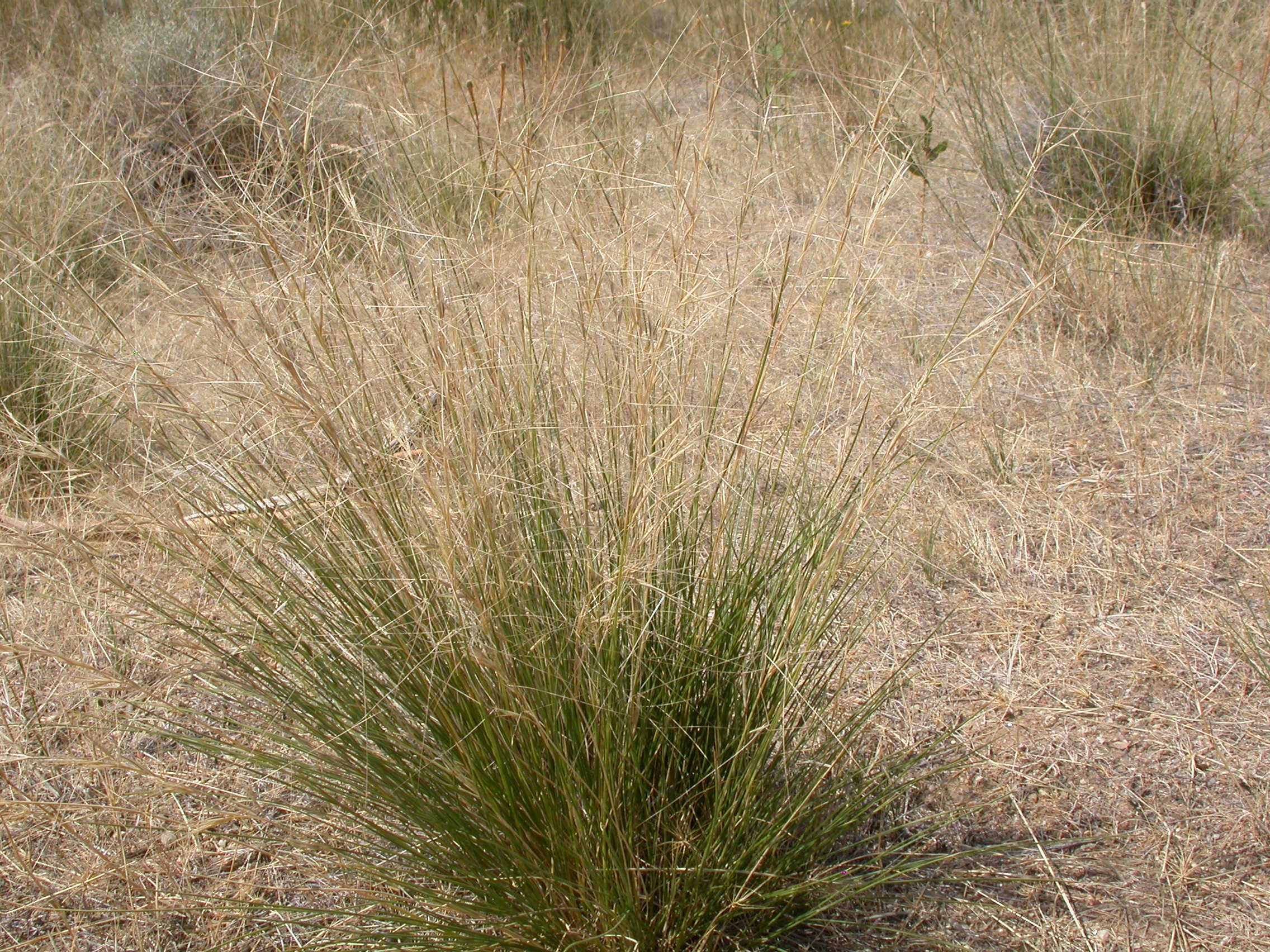
Aristida purpurea, commonly known as Purple Threeawn, is a short, perennial warm-season bunchgrass native across an enormous range of North America, from the desert Southwest to the Great Plains and from Mexico to the Canadian prairies. One of the most recognizable and abundant native grasses in disturbed and degraded grassland habitats, Purple Threeawn is distinguished by its attractive purplish-hued seed heads and the three distinctive needle-like awns that radiate from each seed — the “threeawns” that give the entire genus Aristida its common name.
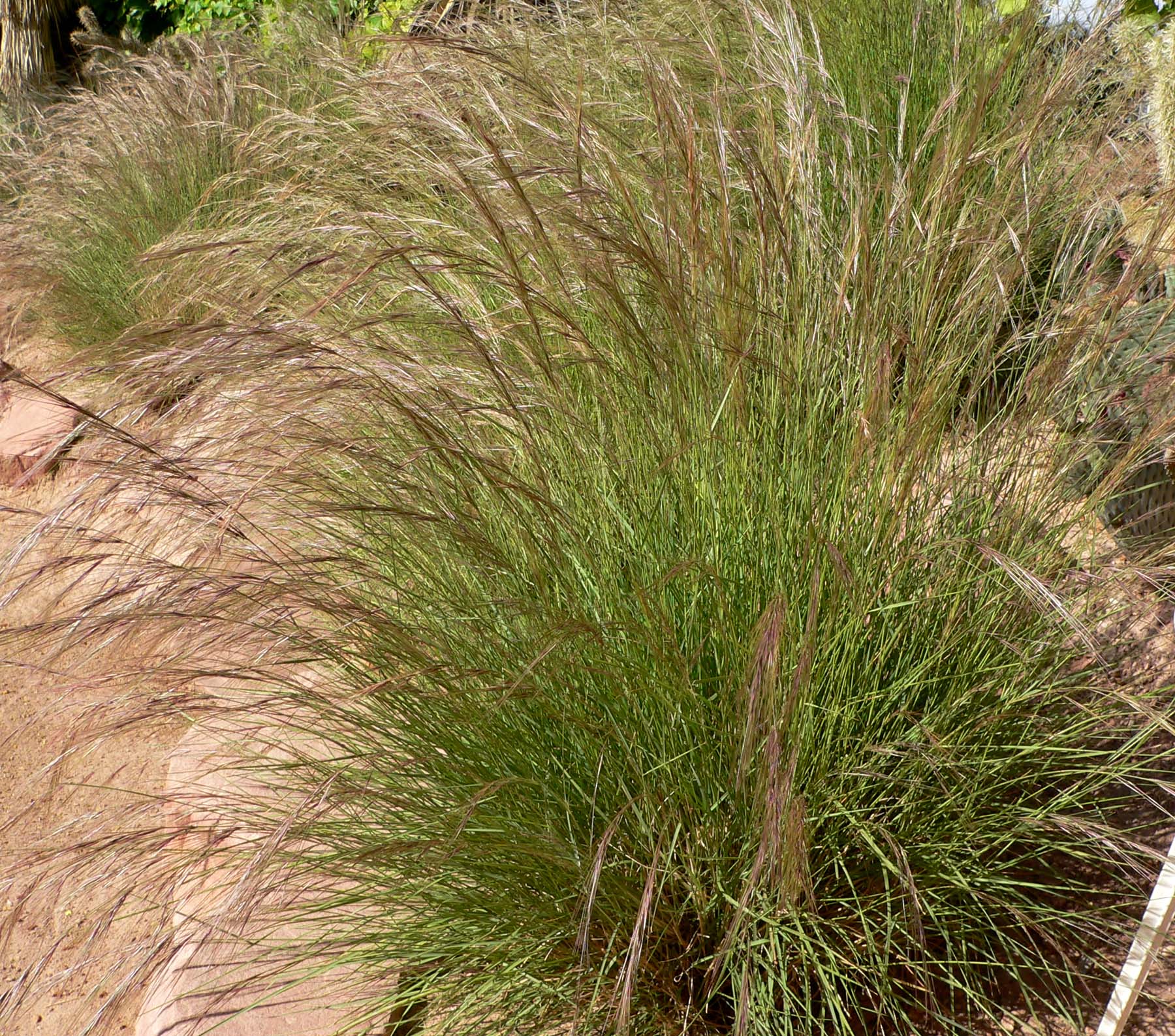
Growing to about 1 foot tall (occasionally taller), Purple Threeawn forms small, compact bunchgrass clumps with fine, narrow leaves that often curl and twist attractively. In late spring through fall, the plants produce airy, open panicles of seeds bearing those characteristic three awns, colored in shades of purple to reddish-brown that create a hazy, colored effect across open plains and disturbed areas when viewed en masse. The purplish hue is most vivid at flowering time in spring and early summer, then fades to a warm buff-tan through fall and winter.
While Purple Threeawn is ecologically important as a fill-in grass in disturbed habitats, it is also a native species with genuine value in appropriate settings. As noted in the native plant list, it serves well as a “fill-in grass” — a role it plays naturally in desert and grassland communities across the continent. Its ability to establish quickly from seed and tolerate poor, compacted, and disturbed soils makes it valuable for revegetation of difficult sites where other native grasses struggle to establish.
Identification
Purple Threeawn is a small, compact bunchgrass best identified by the combination of its tiny size (typically about 1 foot tall), purplish-colored seed heads at flowering time, and the distinctive triple-awned seeds. It is one of several Aristida species in the Southwest, but the purplish coloration and its abundance in disturbed habitats make A. purpurea the most commonly encountered.
Leaves
The leaf blades are very narrow — typically 1–2 mm wide — and often curl inward to form a thread-like structure. They are 4–12 inches long, rough-textured on the upper surface, and blue-green to grayish-green in color. The leaves arise from a small basal clump and give the plant a fine, delicate texture. In dry conditions, the leaves curl further and take on a silvery appearance. The ligule (junction between leaf blade and sheath) is a fringe of short hairs — a useful microscopic identification feature.
Flowers & Seed Heads
The flowering panicles emerge in late spring through early summer (April–July) and are narrow to open, 4–12 inches long, bearing spikelets with three distinctive awns. Each awn is 0.5–2 inches long, giving the seed head a bristly, starburst appearance. The awns and the body of the spikelet are colored purple to reddish-purple at maturity, creating the distinctive purplish haze visible across entire stands. The seeds are wind-dispersed, aided by the awns. After dispersal, the awns can tangle in animal fur and clothing, aiding further dispersal and causing minor irritation.
Growth Habit
Purple Threeawn forms small, compact clumps that spread slowly by seed. Unlike some invasive grasses, it does not spread vegetatively by rhizomes or stolons, maintaining a distinct bunchgrass form. It is a warm-season grass, most active from spring through fall, and may partially or fully senesce in winter. The plant is often most visible during its flowering period when the purplish seed heads are conspicuous, and again when the dried tan seed heads persist through winter.
Quick Facts
| Scientific Name | Aristida purpurea |
| Family | Poaceae (Grass) |
| Plant Type | Perennial Warm-Season Bunchgrass |
| Mature Height | 1 ft |
| Sun Exposure | Part Shade |
| Water Needs | Low (Drought Tolerant) |
| Bloom Time | April – July |
| Flower Color | Purple to reddish-purple |
| USDA Hardiness Zones | 5–10 |
Native Range
Purple Threeawn has one of the broadest ranges of any grass in North America, occurring from sea level to over 7,000 feet elevation across 14+ states in the U.S. and extending well into Mexico and marginally into Canada. In the U.S., it occurs from California east to the Atlantic coast and from Montana and the Dakotas south through all of the desert Southwest and Great Plains states to the Gulf Coast.
Within this vast range, Purple Threeawn is most characteristic of disturbed sites, overgrazed areas, roadsides, and degraded grasslands, where it often becomes a dominant grass after disturbance has reduced competing vegetation. It is particularly abundant in the desert Southwest and Great Plains regions. Despite its association with disturbance, it also occurs in undisturbed native grasslands as a minor component of diverse grass communities. In Arizona, New Mexico, and Texas, it is a characteristic species of desert grassland and upper desert communities.
Purple Threeawn tolerates an exceptional range of soil types, from sandy to rocky to clay, and from strongly alkaline to slightly acidic. This edaphic flexibility, combined with its drought tolerance and ability to establish quickly from seed, accounts for its enormous range and abundance. Within its core Southwestern range, it commonly grows with black grama, blue grama, sideoats grama, tobosa, and various desert shrubs.
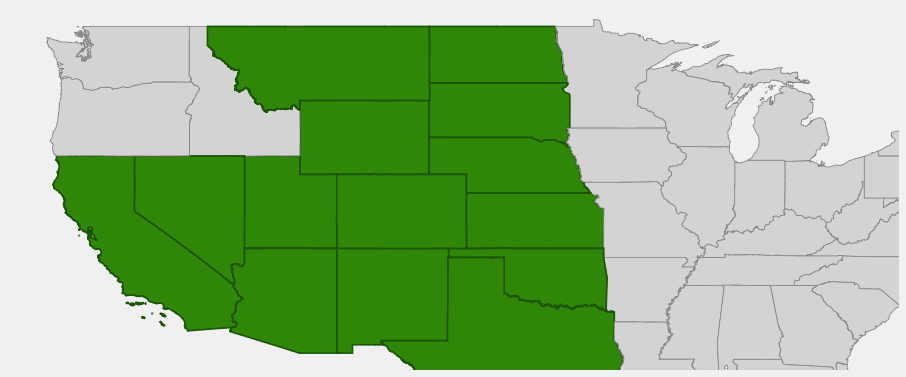
📋 Regional plant lists featuring Purple Threeawn: Arizona
Growing & Care Guide
Purple Threeawn is perhaps the easiest native grass to establish in disturbed or challenging desert and grassland sites. Its tolerance of poor soils, drought, heat, and disturbance makes it an excellent choice for revegetation, erosion control, and as a fill-in grass in native gardens where a tough, low-maintenance species is needed.
Light
Purple Threeawn tolerates a wide range of light conditions — while the batch data notes it as a part-shade species, it equally thrives in full sun in most desert settings. The part-shade tolerance makes it useful under the canopy of desert shrubs and along the shaded edges of washes and canyon walls. In full sun on flat desert terrain, it is equally vigorous and may be even more abundant.
Soil & Water
Purple Threeawn is adapted to virtually any well-drained soil type, from sandy desert soils to rocky caliche to gravelly plains. It tolerates strongly alkaline conditions common in Southwestern soils. Once established, it requires no supplemental irrigation — it is among the most drought-tolerant of all native grasses. In native desert grassland settings, it survives on 6–12 inches of annual rainfall. For garden use, plant once and forget — this is a self-reliant species.
Planting Tips
Purple Threeawn is most easily established by broadcasting seed in fall over lightly disturbed, weed-free soil. Good seed-to-soil contact is essential — roller packing after seeding improves germination rates. In container plantings, transplant in fall or early spring. Space plants 12–18 inches apart for a naturalistic fill-in effect. The grass self-sows readily and will colonize open areas naturally if seed is available nearby.
Pruning & Maintenance
Purple Threeawn requires essentially no maintenance. Old seed heads can be removed in late winter if desired, though they provide winter interest and wildlife food. The plants naturally remain attractive through most of the year. In gardens where the self-seeding habit could be a concern, remove seed heads before they mature to limit volunteer seedlings. In restoration and naturalistic settings, allowing seeds to disperse is desirable.
Landscape Uses
- Erosion control — rapid establishment from seed makes it excellent for disturbed slope stabilization
- Fill-in grass — fills gaps between larger native plants in naturalistic desert gardens
- Revegetation — often used as a component of native seed mixes for disturbed area restoration
- Desert meadow effect — mass plantings create a beautiful purplish haze at flowering time
- Under-planting beneath desert shrubs and cacti
- Roadside and median planting — extremely tough and self-sustaining
Wildlife & Ecological Value
Despite its relatively small size, Purple Threeawn provides valuable ecological services throughout its enormous North American range, supporting birds, small mammals, and a diverse insect community.
For Birds
The seeds of Purple Threeawn are consumed by sparrows, juncos, buntings, and other seed-eating birds. In areas where Purple Threeawn is abundant, it can be an important seed source for ground-feeding birds, particularly during winter. The compact clump structure provides nesting habitat and cover for ground-nesting sparrows and other grassland birds.
For Mammals
While Purple Threeawn has relatively low forage value compared to grama grasses — the awns can be irritating in large quantities — it is still grazed by pronghorn, deer, and jackrabbits. Small mammals including kangaroo rats, deer mice, and prairie dogs harvest and cache the seeds. The low bunchgrass structure provides escape cover for these small mammals from aerial predators.
For Pollinators
As a wind-pollinated grass, Purple Threeawn does not provide significant nectar or pollen resources for pollinators. However, its structural complexity contributes to invertebrate habitat diversity in desert and grassland communities, and the clump structure provides shelter for ground-nesting bees.
Ecosystem Role
Purple Threeawn’s ecological role is primarily as a pioneer and stabilizer in disturbed habitats. By colonizing bare or disturbed soils quickly, it prevents erosion and creates the structural cover that allows other, more sensitive native species to establish. In many degraded desert grassland areas, Purple Threeawn is the first native grass to return after livestock removal or other disturbance reduction. Its success as a colonizer allows it to set the stage for the gradual return of other native grassland species.
Cultural & Historical Uses
Purple Threeawn and other Aristida species were less used by Indigenous peoples of the Southwest than the more nutritious grama grasses, but they played a role in the broader grassland ecosystem that supported human life across the region. Various Pueblo peoples recognized the seasonal appearance of Purple Threeawn as a phenological indicator — its blooming marking the beginning of summer planting or other seasonal activities tied to the grassland cycle.
In the ranching history of the Southwest and Great Plains, Purple Threeawn has a more complicated story. The grass’s abundance in heavily overgrazed areas made it a symbol of rangeland degradation — its dominance in a pasture was often taken as evidence of overuse. The sharp, triple awns of the seeds can work their way through animal fur and into sheep’s wool, reducing fleece quality, and can occasionally cause minor skin irritation in cattle and horses. These characteristics led to Purple Threeawn being viewed negatively by some ranchers, even though the grass is a native species doing exactly what native colonizers are supposed to do.
In more recent ecological thinking, Purple Threeawn has been rehabilitated somewhat. It is now recognized as a valuable component of a diverse native grassland that, while not the highest-quality forage, serves important erosion-control and habitat functions. Native seed producers increasingly include it in restoration seed mixes for its rapid establishment and its role in protecting disturbed soils while slower-establishing species gain a foothold.
Frequently Asked Questions
Why is it called “threeawn”?
The common name refers to the three distinctive awns (bristle-like extensions) that extend from each seed. In the genus Aristida, these three awns are a defining characteristic. In Purple Threeawn, the awns are particularly well-developed and conspicuous, giving the seed heads their distinctive bristly appearance.
Is Purple Threeawn invasive?
No — Purple Threeawn is a native North American grass, not an invasive species. While it is opportunistic and quick to colonize disturbed soil, this is the ecological role of a native pioneer species. Its abundance in overgrazed areas is a symptom of disturbance, not a cause. Managing the disturbance (reducing overgrazing, restoring soil cover) allows other native species to return and Purple Threeawn to assume its natural role as a minor component of diverse grassland.
Can Purple Threeawn awns harm livestock?
The awns can occasionally cause problems for sheep, where they may work into the fleece and skin. In horses and cattle, awns can rarely cause irritation if consumed in very large quantities. For most livestock in typical grazing situations, Purple Threeawn is consumed without difficulty. The awns are much less problematic for wildlife than for domestic animals.
Does Purple Threeawn grow in full sun or shade?
Purple Threeawn tolerates a remarkably wide light range. While it is listed as “part shade” in the regional plant list, it grows equally well in full sun in most settings. It naturally occurs beneath desert shrubs (part shade) and in open grasslands (full sun) across its range. This light flexibility makes it useful in many different garden and restoration situations.
How do I use Purple Threeawn in a desert restoration project?
Purple Threeawn is best seeded rather than transplanted for restoration purposes. Broadcast seed at about 2–4 lbs of pure live seed per acre in early fall (October–November) after soil preparation. Lightly compact after seeding. Germination occurs in spring with warm temperatures and moisture. It is often mixed with blue grama, sideoats grama, and other native grasses to create a diverse ground cover mix.

Looking for a nursery that carries Purple Threeawn?
Browse our native plant nursery directory: Arizona