Royal Fern (Osmunda regalis)
Osmunda regalis, commonly known as Royal Fern, King Fern, or Flowering Fern, is one of North America’s most magnificent and distinctive native ferns, renowned for its imposing size, elegant form, and unique reproductive structures. This member of the Osmundaceae (royal fern) family can reach 2 to 6 feet in height, forming spectacular clumps of large, bi-pinnate fronds that are often mistaken for the leaves of honey locust trees due to their similar appearance and size.
Royal Fern stands apart from other ferns through its distinctive bi-pinnate fronds, which are divided twice—first into major segments called pinnae, and then further subdivided into smaller leaflets called pinnules. This creates an unusually open, airy appearance that is both graceful and architectural. The fern’s common names reflect its regal bearing and the unique golden-brown fertile fronds that appear at the tips of some fronds in summer, resembling flowers and giving it the alternative name “Flowering Fern.”
As one of the largest and most robust ferns in eastern North America, Royal Fern thrives in consistently moist to wet soils in partial shade, making it invaluable for rain gardens, bog gardens, streamside plantings, and naturalized woodland areas. Its tolerance for both acidic and alkaline conditions, combined with its spectacular foliage and ability to form impressive colonies over time, makes Royal Fern an excellent choice for challenging wet sites where few other plants can match its dramatic presence and ecological value.
Identification
Royal Fern is easily distinguished from other ferns by its large size, distinctive twice-divided fronds, and robust growth habit. The plant forms impressive clumps that can spread 4 to 6 feet across, with individual fronds reaching 2 to 6 feet in height, making it one of the most imposing ferns in the eastern flora.
Frond Structure
The fronds are bi-pinnate, meaning they are divided twice: first into 6 to 9 pairs of pinnae (major divisions), which are then further divided into 7 to 13 pairs of oblong pinnules (leaflets). This creates an unusually open, lacy appearance quite different from most ferns. The pinnules are 1 to 2 inches long, oblong with rounded tips, and have smooth or very finely serrated margins. The overall effect resembles the compound leaves of honey locust or other leguminous trees.
Fertile Fronds
Royal Fern’s most distinctive feature is its method of reproduction. Instead of producing spores on the undersides of normal fronds like most ferns, Royal Fern produces specialized fertile pinnae at the tips of some fronds. These fertile segments are greatly modified, appearing as clusters of golden-brown, bead-like sporangia that give the fern its “flowering” appearance. These fertile fronds appear in early summer and persist into fall.
Stipes & Rachis
The stipes (stems) are stout, smooth, and green to straw-colored, often with a slight pinkish or reddish tinge at the base. They emerge directly from a thick, creeping rhizome and can be 1 to 2 feet long. The rachis (main axis of the frond) is also robust and smooth, maintaining the frond’s substantial appearance.
Growth Habit
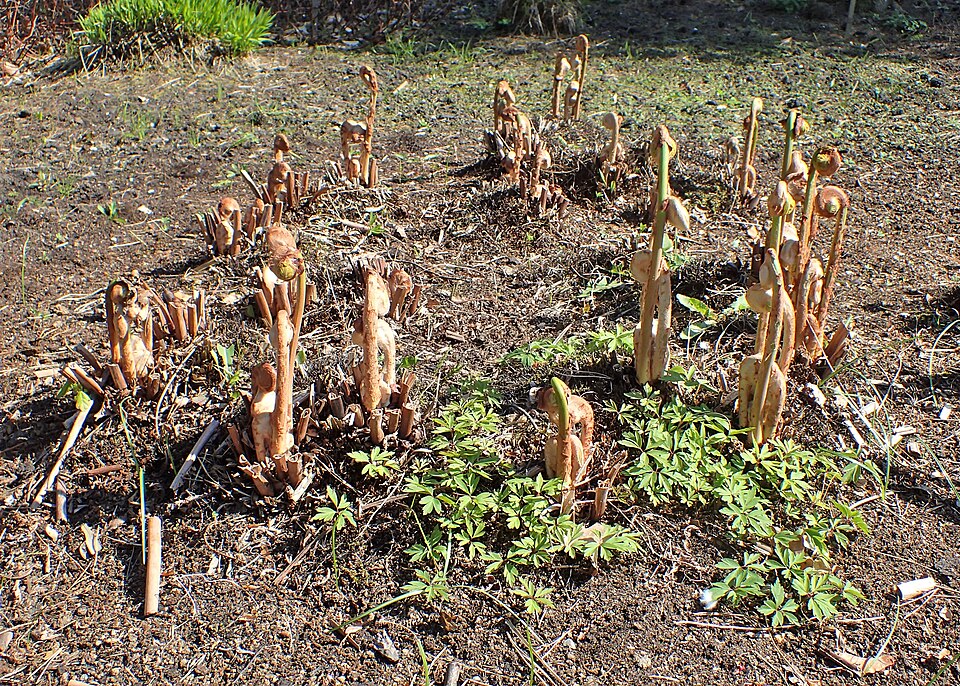
Royal Fern grows from thick, branching rhizomes that spread slowly but steadily, eventually forming large colonies in suitable habitats. The fronds emerge in a typical fiddlehead fashion in spring, unfurling into their full glory by early summer. The plant is deciduous, with fronds dying back to the ground each winter.
Quick Facts
| Scientific Name | Osmunda regalis |
| Family | Osmundaceae (Royal Fern) |
| Plant Type | Deciduous Fern |
| Mature Height | 2–6 ft |
| Sun Exposure | Part Shade |
| Water Needs | Moderate to High |
| Spore Season | June – August |
| Fertile Color | Golden-brown |
| USDA Hardiness Zones | 3–10 |
Native Range
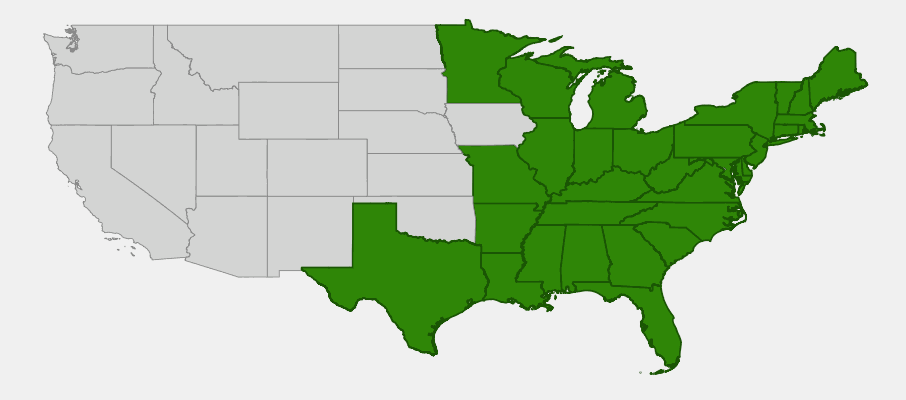
Royal Fern has one of the most extensive native ranges of any fern species, occurring not only throughout much of North America but also in Europe, Asia, and Africa—making it one of the most cosmopolitan fern species in the world. In North America, it ranges from Newfoundland and Nova Scotia south to Florida and west to Saskatchewan, Minnesota, Missouri, and eastern Texas.
The species thrives in consistently moist to wet habitats including swamps, bogs, marshes, streambanks, wet meadows, and the margins of ponds and lakes. It shows remarkable adaptability to different soil types and pH levels, growing equally well in acidic bog soils and alkaline wetlands. Royal Fern is particularly common in areas where groundwater is near the surface or where seasonal flooding occurs.
Throughout its range, Royal Fern serves as an indicator species for healthy wetland ecosystems. Its presence often signals stable hydrology and good water quality, making it valuable for wetland assessment and restoration projects. The fern’s ability to form extensive colonies in suitable habitats contributes to erosion control and habitat structure in riparian and wetland areas.
📋 Regional plant lists featuring Royal Fern: North Carolina & South Carolina
Growing & Care Guide
Royal Fern is relatively easy to grow when its basic requirements for consistent moisture and partial shade are met. Once established, it forms impressive colonies that provide years of dramatic foliage with minimal maintenance.
Light
Royal Fern performs best in partial shade, receiving 2-4 hours of direct sunlight daily, ideally morning sun with afternoon shade. It can tolerate deeper shade but may be less robust. In consistently moist conditions, it can handle more sun exposure than most other ferns.
Soil & Water
The key to success with Royal Fern is consistent soil moisture. It thrives in moist to wet soils and can tolerate periodic flooding. The soil should be rich in organic matter and well-drained but never allowed to dry out completely. Royal Fern is remarkably adaptable to soil pH, growing well in both acidic and alkaline conditions.
Planting Tips
Plant in spring when soil temperatures warm up. Choose a naturally moist site or one where supplemental irrigation can maintain consistent soil moisture. Space plants 3-4 feet apart to allow for their spreading habit. Mulching with organic matter helps retain soil moisture and suppress weeds.
Maintenance
Royal Fern requires minimal maintenance beyond ensuring adequate moisture. Remove old fronds in late winter or early spring before new growth emerges. The fern may self-sow in suitable conditions, and excess plants can be divided and relocated.
Landscape Uses
Excellent for rain gardens, bog gardens, pond margins, streamside plantings, and naturalized wet areas. The dramatic size and distinctive foliage make it suitable as a specimen plant or for mass plantings in large landscapes.
Wildlife & Ecological Value
Royal Fern provides valuable ecological benefits in wetland and riparian ecosystems, supporting wildlife through both its structure and its role in habitat stability.
For Wildlife Habitat
The large fronds and colonial growth habit create important cover and nesting habitat for amphibians, reptiles, and ground-dwelling birds. The consistent moisture around Royal Fern colonies supports populations of frogs, salamanders, and other moisture-dependent wildlife.
For Insects
While Royal Fern doesn’t support as many specialized insects as flowering plants, it does provide habitat for various arthropods that live in moist environments. These, in turn, serve as food for birds and other wildlife.
Ecosystem Services
Royal Fern colonies help stabilize soil along waterways, reducing erosion and improving water quality. The extensive rhizome system creates a matrix that holds soil in place during flood events. The fern also contributes organic matter to wetland soils as fronds decompose each fall.
Indicator Species
Royal Fern serves as an indicator of wetland health and stable hydrology. Its presence suggests good water quality and appropriate moisture regimes for wetland ecosystems.
Cultural & Historical Uses
Royal Fern has been valued by humans across many cultures throughout history. The species’ wide global distribution meant that it was known to peoples on multiple continents, each developing their own uses and folklore around this impressive plant.
Native American tribes used Royal Fern medicinally, particularly for treating various skin conditions and wounds. The mucilaginous properties of the rhizomes made them useful as poultices for burns and cuts. Some tribes also used the plant as a charm or in ceremonial contexts, possibly due to its regal appearance and impressive size.
In Europe, Royal Fern was known as the “King of Ferns” due to its majestic size and distinctive appearance. Medieval herbalists valued it for treating various ailments, and it became associated with protection and magical properties in folklore. The plant was sometimes called “Osmund the Waterman” in English tradition, after a Saxon deity associated with water and protection.
The fibrous roots of Royal Fern, known as “osmunda fiber,” became highly prized by orchid growers in the 19th and early 20th centuries as a growing medium for epiphytic orchids. This led to extensive harvesting of wild populations, particularly in Japan, where the practice was regulated to prevent over-exploitation.
In modern times, Royal Fern has gained appreciation as a garden plant, particularly in water gardens and naturalized landscapes. Horticulturists have developed several cultivars selected for specific traits such as particularly golden fertile fronds or compact growth habits.
Frequently Asked Questions
Why is Royal Fern called the “Flowering Fern”?
Royal Fern gets this name from its distinctive fertile fronds, which appear at the tips of some fronds as clusters of golden-brown, bead-like structures that resemble flowers. These are actually sporangia containing spores, not true flowers, but their appearance is quite flower-like compared to typical fern reproduction.
Can Royal Fern grow in regular garden soil?
Royal Fern requires consistently moist soil and struggles in typical well-drained garden conditions. It’s best suited for naturally wet sites, rain gardens, or areas where supplemental irrigation can maintain constant soil moisture. It will not tolerate drought conditions.
How do I propagate Royal Fern?
Royal Fern can be propagated by division of established clumps in early spring or by spores. Division is easier for home gardeners – simply dig up a section of the rhizome with attached fronds and replant in suitable conditions. Spore propagation requires more specialized techniques.
Is Royal Fern invasive?
No, Royal Fern is not considered invasive. While it can spread to form large colonies over time, it does so slowly and only in very specific habitat conditions. It’s well-behaved in garden settings and contributes positively to wetland ecosystems.
What’s the difference between Royal Fern and Cinnamon Fern?
While both are large Osmunda species, Royal Fern has bi-pinnate fronds (twice divided) that resemble locust leaves, while Cinnamon Fern has once-pinnate fronds. Royal Fern’s fertile structures appear at frond tips; Cinnamon Fern produces separate, cinnamon-colored fertile fronds in the center of the clump.

Looking for a nursery that carries Royal Fern?
Browse our native plant nursery directory: North Carolina · South Carolina