
Tussock Sedge (Carex stricta)
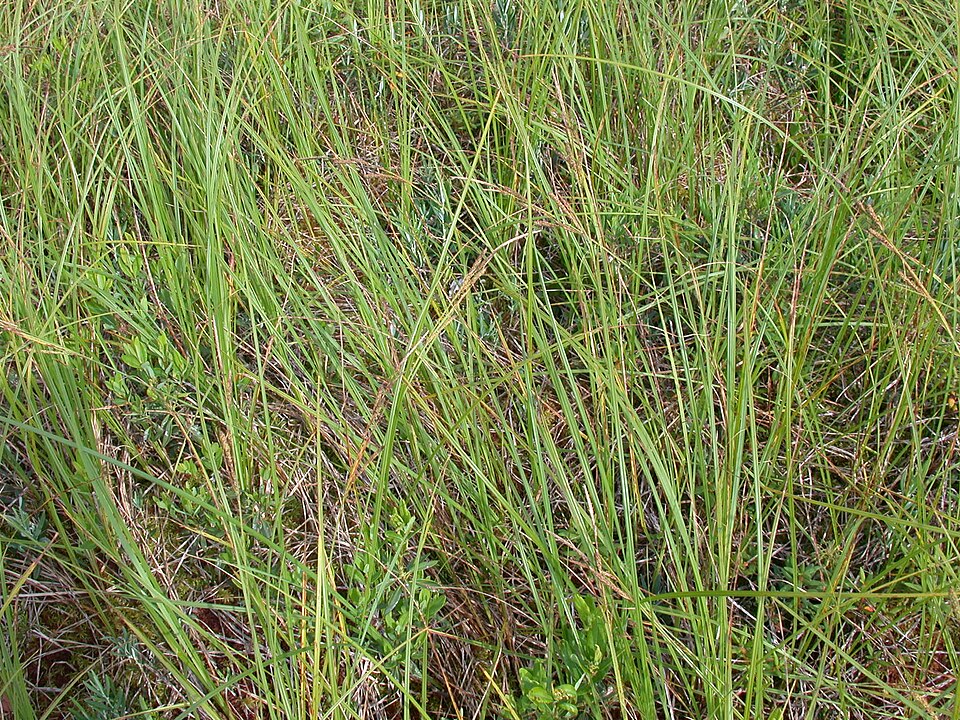
Carex stricta, commonly known as Tussock Sedge, is one of the most structurally distinctive and ecologically important native sedges of eastern North America. A member of the Cyperaceae (sedge) family, Tussock Sedge is best recognized by its ability to form elevated, dome-shaped tussocks — dense, raised mounds of compacted root material and old stems that can grow to over 2 feet tall and 3 feet across over many years. These tussocks are among the most iconic features of eastern freshwater marshes, wet meadows, and forested swamps, creating a characteristic hummocky landscape structure that supports a remarkable diversity of wildlife.
Tussock Sedge produces long (2–3 foot), narrow, arching evergreen leaves that emerge from the tussock crown and cascade gracefully over the sides, creating a distinctive fountain-like appearance. In early spring, it produces small but numerous blue-tinged flower spikes that quickly fade — referenced in the batch description “blue flowers disappear quickly.” The plant’s preference for consistently moist to wet soils makes it an ideal choice for rain gardens, bioswales, restored wetlands, and wet-site landscaping where conventional plants struggle.
Beyond its striking tussock form, Carex stricta plays an outsized ecological role in wetland ecosystems. The elevated tussock mounds create a mosaic of microhabitats — providing elevated dry nesting sites above water level for birds and small mammals, refugia for invertebrates, and structural heterogeneity that increases overall wetland biodiversity. The plant is a foundation species for many eastern wetland communities, and restoring Tussock Sedge to degraded wetlands is one of the most impactful actions for wetland ecosystem recovery.
Identification
Tussock Sedge is a clump-forming, rhizomatous perennial sedge typically 2 to 3 feet (60–90 cm) tall. The most distinctive identification feature is the elevated tussock mound — a raised pedestal of tightly interlocked old stem bases, roots, and organic matter — from which the current season’s leaves and flowering stems arise. In old, established plants, tussocks can reach 18 to 24 inches in height and 2 to 3 feet in diameter, resembling large inverted witch’s hats or elongated haystack forms rising above surrounding water or saturated soil.
Leaves
The leaves are long, narrow, and arching — typically 1 to 3 feet (30–90 cm) long and only ⅛ inch (2–4 mm) wide. They are bright green, flat to V-shaped in cross-section, with rough (scabrous) margins that can cause skin cuts if grasped and pulled — a characteristic of many sedges. The leaves are evergreen in mild climates, though they may show winter damage in the northern part of the range. Looking at a cross-section at the base, sedges have the classic triangular stem characteristic (“sedges have edges”). Leaves cluster densely at the tussock crown, cascading outward in a fountain pattern.
Flowers & Seeds
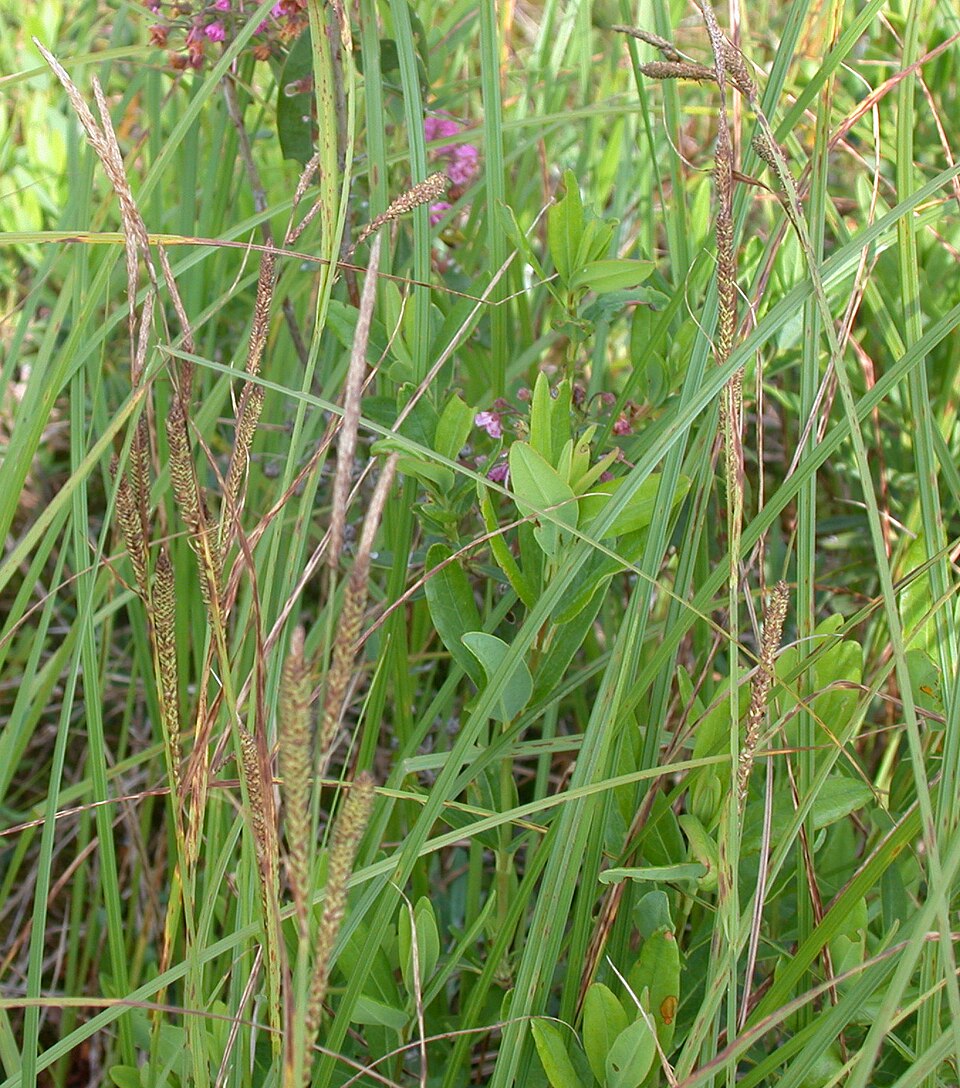
Tussock Sedge flowers in mid-spring (April to May across most of its range). The inflorescences consist of 2 to 5 cylindrical spikes 1 to 2 inches long: the upper 1–2 are male (staminate, narrow), and the lower 2–3 are female (pistillate, thicker). The male spikes are initially a distinctive blue-purple to brownish color when pollen is being released — the “blue flowers” referenced in common descriptions — but fade quickly to brown as pollen is shed. After pollination, the female spikes elongate and ripen into achenes (nutlets enclosed in perigynium sacs), which are dispersed by water and sometimes by birds. The seed heads are not particularly ornamental but are an important food source for waterfowl.
Quick Facts
| Scientific Name | Carex stricta |
| Family | Cyperaceae (Sedge) |
| Plant Type | Perennial Sedge (tussock-forming) |
| Mature Height | 2–3 ft |
| Sun Exposure | Full Sun to Part Shade |
| Water Needs | Moderate to High |
| Distinctive Feature | Forms elevated tussock mounds; evergreen arching leaves |
| Bloom Time | April – May |
| Flower Color | Blue to purple-brown (brief pollen phase, disappears quickly) |
| USDA Hardiness Zones | 3–8 |
Native Range
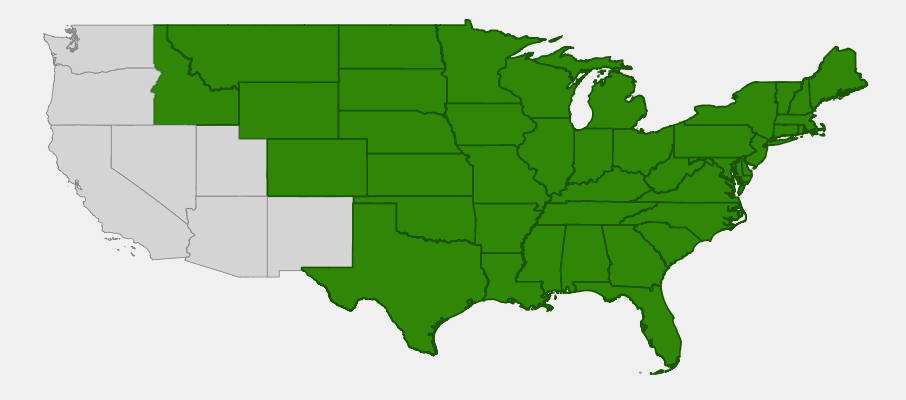
Tussock Sedge (Carex stricta) is native across a broad range of eastern North America, from the Atlantic Coast westward to the Great Plains, and from southern Canada south through the eastern United States to the Gulf Coast. It occurs in virtually every eastern state and province with suitable wetland habitat, making it one of the most widely distributed native sedges in the region. Its range extends from Maine and the Maritime provinces south through New England, the Mid-Atlantic, and the Southeast to Florida, and westward through the Midwest to Kansas, Nebraska, and the Dakotas.
Within its range, Tussock Sedge is a specialist of freshwater wetlands — it occurs in marshes, wet meadows, sedge fens, forested swamps, stream and river floodplains, and the margins of lakes and ponds. It is most abundant in areas with fluctuating water levels, where seasonal flooding alternates with periods of exposed, saturated soil. The tussock growth form is thought to be an adaptation to these fluctuating conditions, elevating the growing crown above water level even during flood events. Tussock Sedge can grow in standing water up to several inches deep during wet periods.
The plant’s inclusion in the Hawaii regional plant list (rpl-hi) alongside mainland species suggests its potential use in planted wetland habitats in Hawaii, where Tussock Sedge can serve ecological roles in constructed or restored freshwater wetlands. In its primary eastern North American range, Tussock Sedge is a foundational species of wetland plant communities — forming monoculture stands or mixed communities with other sedges, rushes, and wetland grasses that provide critical habitat for a wide range of wildlife.
📋 Regional plant lists featuring Tussock Sedge: Hawaii · Maryland / Virginia / West Virginia
Growing & Care Guide
Tussock Sedge is one of the most rewarding plants for wet, difficult garden sites — it thrives where most ornamentals would drown, provides year-round evergreen structure, and develops its spectacular tussock form over time. It is increasingly popular in rain gardens, bioswales, wetland margins, and naturalistic landscape design.
Light
Tussock Sedge performs best in full sun, where it grows most vigorously and develops the most compact, attractive tussock form. It tolerates part shade well — particularly the dappled light of floodplain forests and swamp margins. In deep shade, growth becomes more open and the tussock form less pronounced. The batch notes confirm it “likes full sun” despite tolerating partial shade conditions.
Soil & Water
Tussock Sedge is a wetland plant requiring consistently moist to wet soil conditions. It grows best in soils that are saturated or seasonally flooded — in standing water up to 4–6 inches deep during wet periods. It tolerates fluctuating water levels, which is actually characteristic of its natural habitat. Soil texture matters less than consistent moisture: clay, loam, sandy loam, or organic soils all work if kept moist. It does not tolerate prolonged drought. For rain garden applications, plant Tussock Sedge in the lowest, most-saturated zones.
Planting Tips
Plant Tussock Sedge from container stock or bare-root divisions in spring or early fall. Bare-root divisions transplant readily if kept moist. Space plants 2–3 feet apart; the clumps will slowly expand but are not aggressively spreading. For naturalistic wetland plantings, mass plantings of 5–10 or more plants create the most impactful tussock landscape effect. Tussock Sedge establishes readily in suitable wet conditions and begins developing its characteristic tussock form within 3–5 years.
Pruning & Maintenance
Tussock Sedge is low-maintenance once established. The leaves are evergreen in mild climates; in colder areas they may turn brown in winter but remain on the plant (do not cut back in fall — the old leaves protect the crown through winter). Cut back any significantly damaged foliage in late winter before new growth emerges. The developing tussock mound should never be disturbed or removed — it is the most valuable structural feature of the plant and takes years to develop. Remove invasive weeds from around young plants until established.
Landscape Uses
- Rain gardens and bioswales — ideal for wet zones that collect stormwater
- Wetland margins — plant at the water’s edge for tussock structure
- Stream and pond banks — excellent erosion control in wet conditions
- Wet meadow restoration — native alternative to invasive Phragmites in disturbed wetlands
- Wildlife garden — seeds feed waterfowl; structure shelters many species
- Naturalistic landscape design — distinctive tussock form is architecturally striking
- Floodplain planting — tolerates periodic flooding and saturated soils
Wildlife & Ecological Value
Tussock Sedge is one of the most ecologically valuable native plants for freshwater wetland wildlife in eastern North America. Its tussock structure, seed production, and dense leaf mass support an extraordinary diversity of animals across all taxonomic groups.
For Birds
The seeds of Tussock Sedge are consumed by numerous waterfowl and marsh birds, including Mallards, Black Ducks, Teal, Canada Geese, and various other ducks and geese. Marsh wrens, Red-winged Blackbirds, Swamp Sparrows, and Common Yellowthroats nest within Tussock Sedge colonies, using the elevated tussock crowns and dense vegetation as nest sites above water level. The Sedge Wren is closely associated with Tussock Sedge habitat throughout its breeding range. Great Blue Herons and Great Egrets hunt the invertebrate-rich edges of Tussock Sedge stands.
For Mammals
Muskrats use Tussock Sedge heavily — eating the rhizomes and using the plants for lodge construction. Beaver incorporate Tussock Sedge in dam and lodge construction. Meadow voles, bog lemmings, and short-tailed shrews nest within tussock crowns and tunnel through Tussock Sedge stands. White-tailed deer browse the leaves in winter when other food is scarce. The tussock mounds themselves are used as dry perching and resting platforms by many small mammals during flooding events.
For Pollinators & Invertebrates
Tussock Sedge supports a remarkable diversity of invertebrates — including numerous native moth and skipper butterfly caterpillars, aquatic insects, beetles, and spiders — that collectively form a critical component of wetland food webs. The tussock crown provides dry refugia for ground beetles and other invertebrates during flood events. Sedge-specialist Lepidoptera (moths and butterflies) depend on sedge species including Carex stricta as their larval food plants.
Ecosystem Role
Tussock Sedge is a foundation species for eastern freshwater wetland ecosystems. The tussock mound structure increases habitat heterogeneity dramatically — creating elevated dry islands within otherwise wet habitats that are colonized by mosses, shrubs, and other plants as the tussock ages. Tussock Sedge also plays an important role in wetland hydrology — its dense root mass slows water flow, increases water retention, and reduces erosion. As a carbon-sequestering plant in waterlogged soils, Tussock Sedge communities are significant carbon sinks. Restoring Tussock Sedge to degraded wetlands is among the most ecologically impactful native plant restoration actions available.
Cultural & Historical Uses
Native American peoples who lived in proximity to freshwater wetlands throughout eastern North America made extensive use of sedges, including Tussock Sedge. The long, flexible leaves of wetland sedges were woven into baskets, mats, and cordage by numerous Indigenous nations across the sedge’s range. The Iroquois, Ojibwe, and other Great Lakes nations used sedge leaves in basketry and mat-weaving, and the elevated tussock mounds of Carex stricta were used as navigational landmarks and resting places in wetland travel.
In early American agricultural and land management practice, Tussock Sedge meadows — known as “tussock marshes” — were both valued and cursed. They provided late-season hay for livestock in areas where conventional hay meadows were not available, and the dried tussock mounds were sometimes used as fuel. However, the uneven, hummocky terrain of tussock marshes was also an obstacle to drainage and cultivation, leading to the systematic destruction of Tussock Sedge wetlands through the 18th and 19th centuries as agriculture expanded across eastern North America.
Today, Tussock Sedge has experienced something of a landscape design renaissance. Wetland ecologists, restoration practitioners, and naturalistic landscape designers have recognized the plant’s extraordinary ecological value and structural beauty, and it is now widely used in rain garden design, wetland mitigation planting, and naturalistic landscape architecture. The dramatic tussock form — especially impressive in winter when the arching evergreen leaves contrast with snow and ice — has made Tussock Sedge a sought-after ornamental for sustainable landscape projects.
Frequently Asked Questions
How long does it take for Tussock Sedge to form a tussock?
Visible tussock formation typically begins within 3–5 years of planting in optimal conditions. The tussock grows slowly as old stem bases accumulate and compact beneath the living crown — adding perhaps an inch or two in height per year. Well-established tussocks 10–15 years old can reach 18–24 inches in height. Very old tussocks in undisturbed wetlands can exceed 2 feet in height and represent decades of slow growth.
Can Tussock Sedge grow in standing water?
Yes — Tussock Sedge is adapted to periodic or seasonal standing water up to 4–6 inches deep. It actually thrives in conditions with fluctuating water levels, which mimic its natural wetland habitat. The tussock growth form is an adaptation that elevates the growing crown above standing water during flood events. For best results, plant where water levels fluctuate between standing water and saturated soil through the year.
Is Tussock Sedge aggressive or invasive?
No — Tussock Sedge is a well-behaved, clump-forming plant that spreads slowly from its tussock base. It does not spread aggressively by rhizome or by seed in typical garden settings. Over many years it will enlarge its tussock, but it does not colonize new areas rapidly. In wetland restorations, multiple plants may eventually merge into continuous Tussock Sedge stands, but this is a desirable outcome rather than an invasive problem.
What animals nest in Tussock Sedge?
Tussock Sedge supports nesting by Marsh Wrens, Swamp Sparrows, Red-winged Blackbirds, Common Yellowthroats, and occasionally Virginia Rails and other marsh birds. The elevated tussock crowns provide nest sites above seasonal flood levels. Small mammals including meadow voles and muskrats also nest within tussock mounds, and the dense vegetation provides cover for a wide variety of wetland-associated animals.
Can Tussock Sedge be used in a rain garden?
Absolutely — Tussock Sedge is one of the best plants for the lowest, wettest zones of a rain garden where water may stand for extended periods after rain events. Its tolerance of intermittent flooding, combined with its adaptability to full sun and attractive evergreen foliage, make it a top-choice native sedge for bioretention areas and stormwater management plantings. Pair it with Blue Flag Iris (Iris versicolor), Swamp Milkweed (Asclepias incarnata), and native rushes for a rich, diverse rain garden community.

Looking for a nursery that carries Tussock Sedge?
Browse our native plant nursery directory: Hawaii