
Wild Strawberry (Fragaria virginiana)
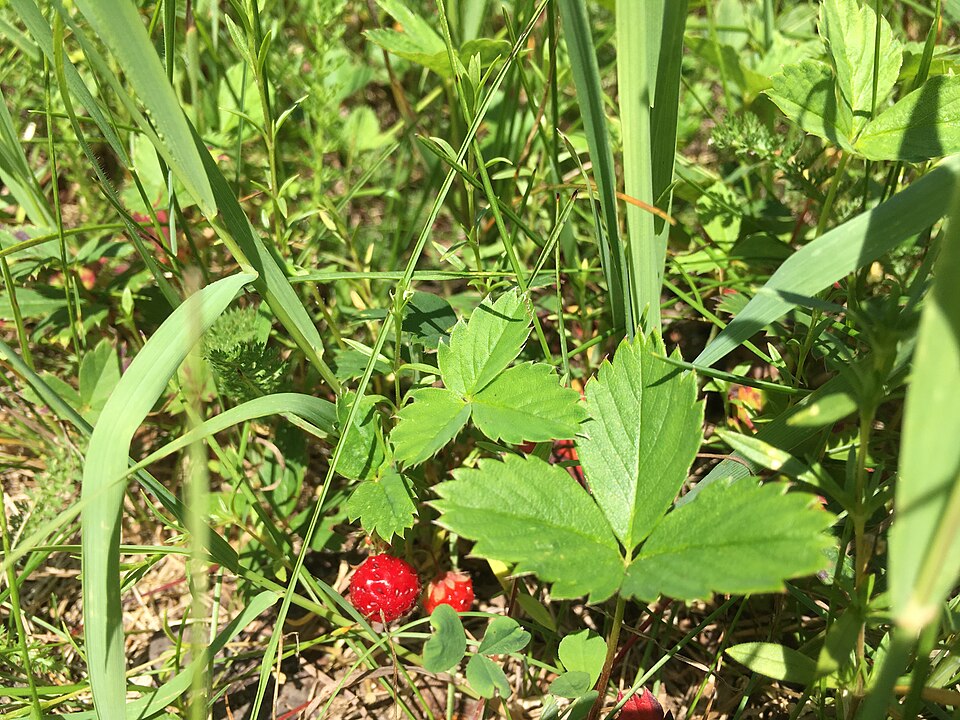
Fragaria virginiana, commonly known as Wild Strawberry, Virginia Strawberry, or Common Strawberry, is a delightful native perennial herb that serves as both an attractive ground cover and a valuable food source for wildlife and humans alike. This member of the Rosaceae (rose) family creates extensive low-growing mats through spreading runners, producing the familiar three-leaflet leaves, pristine white flowers, and bright red berries that have made strawberries beloved worldwide.
Despite its diminutive stature — typically growing only 3 to 6 inches tall — Wild Strawberry plays an outsized role in North American ecosystems. The plant spreads by runners (stolons) to form dense colonies that provide ground-level habitat and food resources throughout the growing season. The white flowers, which appear in spring, give way to small but intensely flavorful red berries that are eagerly consumed by birds, mammals, and humans. These berries are the ancestors of all modern cultivated strawberries, though they remain much smaller and more intensely flavored than their domesticated descendants.
Ecologically, Wild Strawberry serves as an important early-season nectar source when few other plants are flowering, while its dense mat-forming growth provides crucial ground cover that prevents soil erosion and creates habitat for small wildlife. The plant’s ability to thrive in both full sun and partial shade, combined with its tolerance for various soil conditions, makes it an excellent choice for naturalistic gardens, woodland edges, and areas where a low-maintenance, wildlife-friendly ground cover is desired.
Identification
Wild Strawberry is easily identified by its characteristic three-leaflet leaves, white five-petaled flowers, and distinctive red berries. The plant forms low-growing colonies through spreading runners, creating extensive mats that rarely exceed 6 inches in height.
Growth Form & Stems
Wild Strawberry is a low-growing perennial herb that spreads by runners (stolons) to form dense ground-covering colonies. Individual plants consist of a central crown from which leaves and flowers arise directly, along with long, thin runners that extend outward to establish new plants. The plant rarely exceeds 3-6 inches in height, making it an excellent ground cover. The runners are typically reddish and may extend 1-2 feet from the parent plant before rooting to form new crowns.
Leaves
The leaves are compound with three leaflets (trifoliate), similar to clover but easily distinguished by their serrated margins and different overall shape. Each leaflet is oval to obovate, ½ to 2 inches long, with prominent teeth along the margins and a slightly hairy surface. The terminal (middle) leaflet is typically larger than the two side leaflets. The leaves arise directly from the crown on long petioles (leaf stalks) that may be 2-6 inches long. Foliage is bright green in spring and summer, often turning reddish or bronze-red in fall, and may remain evergreen in mild climates.
Flowers
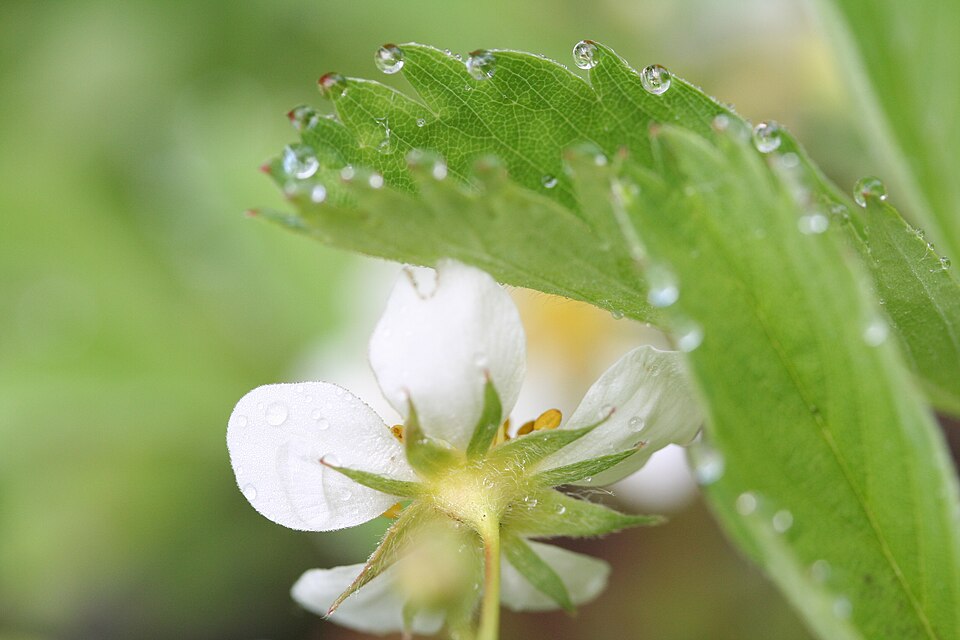
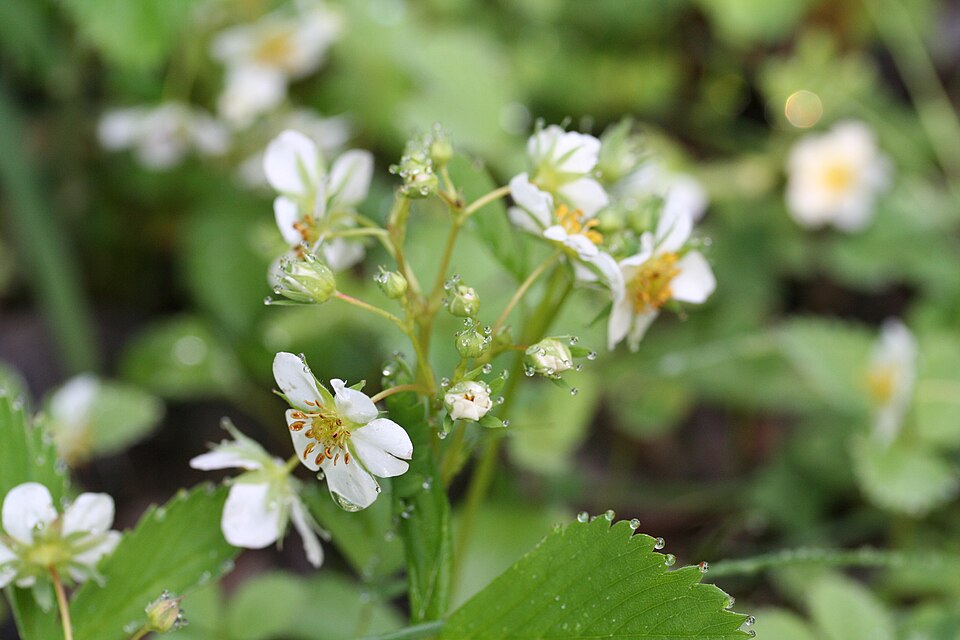
The flowers are white with five rounded petals and a typical rose family appearance, about ½ to ¾ inch across. They appear in small clusters of 3-5 flowers on short stalks that arise directly from the plant crown, typically appearing at or slightly above the level of the leaves. Each flower has numerous yellow stamens in the center, giving it a bright appearance. Flowering occurs primarily in spring (April-June), though some flowers may appear sporadically throughout the growing season. The flowers are perfect (having both male and female parts) and are primarily pollinated by small bees and flies.
Fruit
The fruit is the characteristic red strawberry — technically an aggregate accessory fruit where the fleshy part develops from the flower receptacle rather than the ovaries. Wild strawberries are much smaller than cultivated varieties, typically ¼ to ½ inch long, but they are extraordinarily flavorful and aromatic. The surface is covered with tiny seeds (actually individual fruits called achenes) embedded in shallow pits. The berries ripen in early to mid-summer, typically turning from white to red over a period of several days.
Quick Facts
| Scientific Name | Fragaria virginiana |
| Family | Rosaceae (Rose) |
| Plant Type | Perennial Ground Cover Herb |
| Mature Height | 3–6 ft |
| Sun Exposure | Full Sun to Part Shade |
| Water Needs | Low to Moderate |
| Bloom Time | April – June |
| Flower Color | White |
| USDA Hardiness Zones | 2–9 |
Note: While listed at 3–6 ft in regional plant data, Wild Strawberry is actually a low-growing ground cover that typically reaches only 3–6 inches in height, spreading by runners to form extensive mats.
Native Range
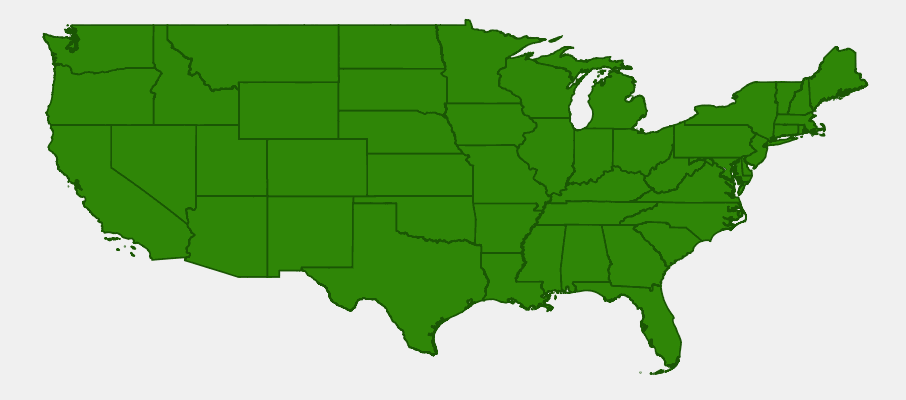
Wild Strawberry has one of the most extensive native ranges of any North American plant, naturally occurring across virtually the entire continent from Alaska and northern Canada south to Georgia and California. This remarkable distribution reflects the species’ exceptional adaptability to diverse climatic conditions, soil types, and habitats — from boreal forests to temperate woodlands to mountain meadows.
The species is particularly common in the eastern deciduous forests, where it often serves as an understory ground cover in oak-hickory and maple-beech forests. In western regions, it thrives in montane forests and meadows, often growing alongside aspens and conifers at elevations up to 10,000 feet. Throughout the Great Lakes region and northern forests, Wild Strawberry is a dominant ground cover species, forming extensive colonies in forest clearings and along woodland edges.
Wild Strawberry demonstrates remarkable ecological flexibility, thriving in habitats ranging from moist woodland floors to dry, sunny slopes. It commonly grows in forest edges, clearings, meadows, prairies, and disturbed areas, and has proven adaptable to human-modified landscapes including parks, gardens, and naturalized areas. This widespread adaptability has helped the species maintain stable populations across most of its range, though intensive development and habitat fragmentation have reduced populations in some heavily urbanized areas.
📋 Regional plant lists featuring Wild Strawberry: North Dakota, South Dakota & Western Minnesota
Growing & Care Guide
Wild Strawberry is one of the easiest native plants to grow, requiring minimal care once established. Its adaptability and spreading habit make it an excellent choice for naturalizing large areas or creating wildlife-friendly ground cover.
Light
Wild Strawberry demonstrates excellent flexibility in light requirements, thriving in everything from full sun to partial shade. In full sun, plants tend to be more compact and produce more flowers and fruit, but may need supplemental watering during hot, dry periods. In partial shade, plants develop larger leaves and spread more vigorously, making them excellent for woodland gardens. The species can even tolerate fairly dense shade, though flowering and fruiting will be reduced. This adaptability makes it valuable for challenging sites where other ground covers struggle.
Soil & Water
Wild Strawberry adapts to a wide range of soil conditions, from sandy to clayey, and tolerates pH levels from slightly acidic to neutral (5.5-7.0). The plant prefers well-drained soils but can tolerate periodic flooding and seasonal moisture variations. While established plants show good drought tolerance, they perform best with consistent moisture, especially during the flowering and fruiting period. Adding organic matter such as compost or leaf mold will improve performance in poor soils and help retain moisture.
Planting Tips
Start from nursery plants, runners from existing colonies, or seeds (though seed germination can be slow and variable). Plant in spring or fall, spacing plants 12-18 inches apart if establishing a ground cover. The plants will fill in gaps through runner production within 1-2 growing seasons. Wild Strawberry can also be established by transplanting naturally occurring runners with their roots intact. For large-area establishment, plant in staggered rows to encourage natural spreading.
Pruning & Maintenance
Wild Strawberry requires very little maintenance. Remove old, dead foliage in early spring if desired, though this isn’t necessary for plant health. To prevent spreading into unwanted areas, simply cut runners at the desired boundaries — the severed runner segments can be transplanted elsewhere. In mild climates where foliage remains evergreen, a light raking in spring will remove any winter-damaged leaves and encourage fresh growth.
Landscape Uses
Wild Strawberry’s low growth habit and spreading nature make it ideal for many landscape applications:
- Ground cover — excellent for large areas, slopes, and difficult sites
- Woodland gardens — naturalizes beautifully under trees and shrubs
- Edible landscapes — provides delicious fruit for humans and wildlife
- Children’s gardens — safe, edible berries that kids love to discover
- Erosion control — dense mat prevents soil erosion on slopes
- Wildlife habitat gardens — early flowers and berries support diverse wildlife
- Naturalized areas — requires no maintenance once established
Wildlife & Ecological Value
Wild Strawberry provides exceptional wildlife value throughout the year, serving as both an important food source and ground-level habitat for numerous species. Its early flowering and fruiting periods fill crucial ecological niches when few other food sources are available.
For Birds
The bright red berries are eagerly consumed by dozens of bird species, particularly ground-feeding birds such as American Robins, Wood Thrushes, various sparrows, and Wild Turkeys. Ruffed Grouse and other game birds consume both berries and foliage. The dense, low-growing mats provide important ground-level nesting sites and cover for species such as Ovenbirds, various warblers, and juncos. The early flowering also supports insectivorous birds by attracting the flies and small bees that many birds depend on for feeding their young.
For Mammals
Wild Strawberry berries are a favorite food of numerous mammals, from tiny shrews and mice to large bears and deer. Black Bears, in particular, are known to seek out strawberry patches and can consume large quantities of the berries. White-tailed Deer, Cottontail Rabbits, and various small mammals browse both the berries and the nutritious foliage. Chipmunks and squirrels cache the berries for later consumption. The dense ground cover also provides crucial hiding places and runways for small mammals moving through forest understories.
For Pollinators
The early spring flowers provide vital nectar and pollen resources when few other plants are blooming. Native bees, including various sweat bees and mining bees, are the primary pollinators, along with syrphid flies and other beneficial insects. This early-season resource is particularly important for queen bumblebees and other pollinators emerging from winter dormancy. The accessible flower structure makes nectar and pollen available to a wide range of pollinator sizes and feeding behaviors.
Ecosystem Role
As a ground cover species, Wild Strawberry plays important ecological roles in preventing soil erosion, moderating soil temperature, and creating habitat heterogeneity at the forest floor level. The dense mats trap leaf litter and organic matter, contributing to soil building and nutrient cycling. The plant also serves as a nurse species, providing protected microsites where tree and shrub seedlings can establish. In disturbed areas, Wild Strawberry often serves as an early colonizer, helping to stabilize soil and begin the process of ecological succession.
Cultural & Historical Uses
Wild Strawberry holds profound cultural significance across numerous Indigenous cultures throughout North America, who have valued the plant for both its nutritional and medicinal properties for thousands of years. The berries were widely consumed fresh during the brief summer season and often dried for winter storage, mixed with other ingredients to create pemmican and other preserved foods. Many tribes, including the Ojibwe, Cherokee, and Iroquois, developed sophisticated techniques for harvesting and processing wild strawberries, often designating specific family groups or individuals as responsible for tending productive patches.
Beyond nutrition, Wild Strawberry held important medicinal and ceremonial roles in Indigenous cultures. The leaves were commonly used to make teas for treating digestive ailments, diarrhea, and urinary problems. Many tribes used leaf preparations as washes for cuts and wounds, taking advantage of the plant’s astringent properties. The Cherokee and other southeastern tribes incorporated strawberry leaves into postpartum care, while Plains tribes sometimes used the plant in ceremonies celebrating the renewal of spring and the first foods of the season.
European colonists quickly adopted Wild Strawberry as both food and medicine, often learning harvesting and preparation techniques from Indigenous peoples. The small but intensely flavorful berries were prized for their superior taste compared to European strawberry species. Early American botanists and horticulturists recognized Wild Strawberry’s potential, and it became one of the parent species for all modern cultivated strawberries. The first successful strawberry breeding programs in the 18th and 19th centuries crossed Wild Strawberry with the larger Chilean strawberry (Fragaria chiloensis) to create the garden strawberry (Fragaria × ananassa) that forms the basis of today’s commercial production.
In modern times, Wild Strawberry has gained renewed appreciation as both a native landscape plant and a source of extraordinary flavor. Gourmet chefs and food enthusiasts often seek out wild strawberries for their intense, complex flavor that far surpasses commercial varieties. The plant has also become important in ecological restoration efforts, valued both for its wildlife benefits and its role as a native ground cover species. Conservation organizations promote Wild Strawberry as an example of how native plants can provide both ecological and human benefits, supporting efforts to restore natural landscapes while providing food and habitat resources.
Frequently Asked Questions
Are wild strawberries safe to eat?
Yes! Wild Strawberry (Fragaria virginiana) berries are completely safe and delicious. They’re much smaller than store-bought strawberries but have incredibly intense, sweet flavor. However, always be absolutely certain of identification — there are some plants with similar-looking berries that are not safe to eat. Wild Strawberry has the characteristic three-leaflet leaves, white five-petaled flowers, and seeds on the outside of the red fruit, just like commercial strawberries.
How do wild strawberries compare to store-bought strawberries?
Wild strawberries are the ancestors of cultivated varieties but remain much smaller (¼ to ½ inch vs. 1-2 inches for cultivated ones). However, their flavor is generally considered far superior — more intense, complex, and aromatic. The trade-off for better flavor is smaller size and lower yield per plant. Wild strawberries also ripen over a longer period rather than all at once, providing extended harvest opportunities.
Will Wild Strawberry take over my garden?
Wild Strawberry spreads by runners and will naturalize to form colonies, but it’s not aggressively invasive. The spread is generally gradual and manageable — simply cut unwanted runners to control expansion. In cultivated garden beds with rich soil and regular disturbance, it’s actually quite easy to manage. The dense, low growth rarely competes significantly with taller plants and can serve as an attractive living mulch.
What’s the difference between Wild Strawberry and Mock Strawberry?
Mock Strawberry (Potentilla indica) is a non-native look-alike with yellow flowers (vs. white), berries with seeds raised above the surface (vs. sunken), and tasteless fruit. Mock Strawberry also has three-leaflet leaves but they’re often more pointed. If you see yellow flowers, it’s definitely Mock Strawberry, not the native Wild Strawberry. The native species always has white flowers and much better-tasting berries.
When do wild strawberries ripen?
Wild strawberries typically ripen in early to mid-summer, usually June through July depending on location and weather. Unlike cultivated strawberries that may produce fruit over extended periods, wild strawberries have a relatively short but intense fruiting season. The berries ripen gradually over several weeks, turning from white to light pink to deep red. Check patches regularly during the season as berries are quickly consumed by wildlife.

Looking for a nursery that carries Wild Strawberry?
Browse our native plant nursery directory: North Dakota · South Dakota · Minnesota