
Yellow Sedum (Sedum sp.)
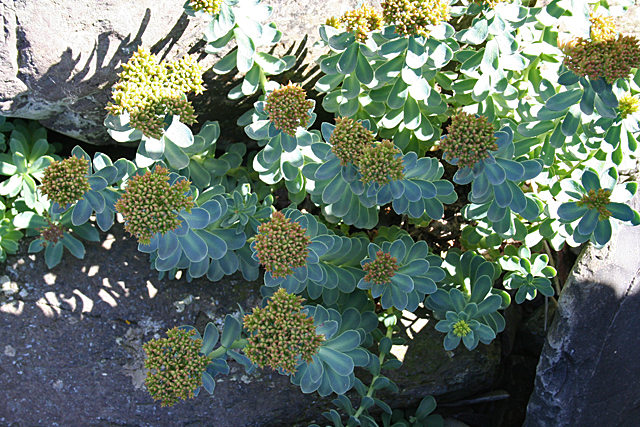
Sedum spp. (Yellow Stonecrop / Yellow Sedum) refers to the group of native yellow-flowered stonecrops found growing wild in Alaska, primarily including Sedum rosea (Roseroot Stonecrop), Rhodiola integrifolia (Ledge Stonecrop), and Sedum lanceolatum (Lance-leaf Stonecrop). These low-growing, succulent-leaved perennial herbs of the Crassulaceae (stonecrop) family are among the most drought-tolerant and cold-hardy native plants in Alaska — thriving in rocky outcrops, cliff ledges, gravelly tundra, and alpine fellfields where most plants cannot survive. Their fleshy, water-storing leaves, bright yellow flowers, and mat-forming growth habit make them outstanding native ground covers for rock gardens, green roofs, and challenging dry garden sites.
Alaskan yellow sedums are true extreme environment specialists: their succulent leaves store water against the desiccating winds and intermittent drought of rocky alpine and arctic habitats; their shallow but extensive root systems grip and colonize bare rock surfaces where soil depth is measured in millimeters; and their compact, low-growing form reduces wind exposure and heat loss. The plants typically grow just 2 to 8 inches (5–20 cm) tall, forming dense, attractive mats that cover rocky surfaces with a carpet of blue-green to gray-green rosettes, punctuated in summer by clusters of bright yellow, star-shaped flowers that attract bees and butterflies to some of the most inhospitable terrain in the state.
For gardeners working with challenging dry, rocky, or infertile sites in Alaska and the northern United States, native yellow sedums offer unmatched adaptability. They are literally designed to thrive where other plants fail — in gravelly, rocky, nutrient-poor soils with minimal water. Whether used in rock gardens, slope stabilization plantings, native wildflower meadows on dry sites, or as living mulch under larger plants, yellow sedums bring four-season interest, wildlife value, and the particular satisfaction of working with plants that are perfectly at home in the most austere conditions Alaska can offer.
Identification
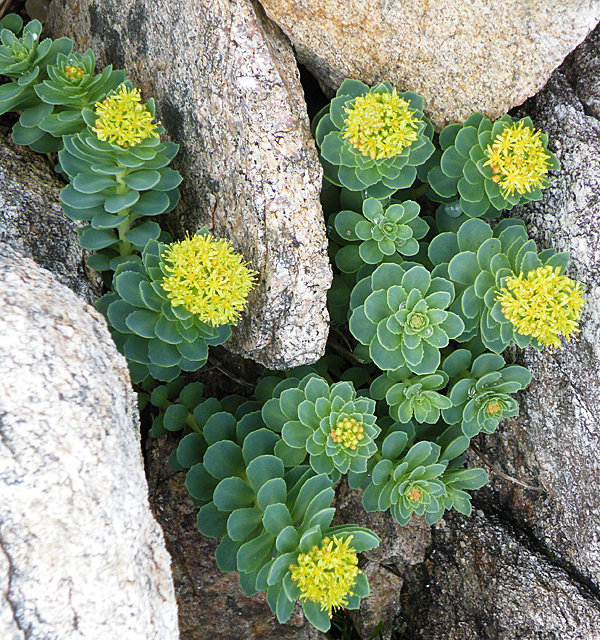
Alaskan yellow sedums grow as mat-forming or clump-forming succulent perennial herbs, typically just 2 to 8 inches (5–20 cm) tall. The defining characteristics of the group are the thick, fleshy leaves that store water; the compact, often ground-hugging growth form; and the bright yellow, five-petaled star-shaped flowers produced in summer. Several species occur in Alaska with slightly different characteristics, but all share the essential succulent “sedum look” that makes them immediately recognizable to anyone familiar with stonecrops worldwide.
Leaves
The leaves of Alaskan yellow sedums are distinctly succulent — thick, fleshy, and somewhat translucent, with a smooth to slightly waxy surface that reflects the water-storing adaptations that enable growth in dry rocky habitats. Leaf shape varies by species from nearly round and spoon-shaped in Sedum rosea to narrowly lance-shaped in S. lanceolatum. Colors range from bright green to blue-green to gray-green; some species develop attractive reddish or bronze tints in high light or drought stress. Leaves are arranged alternately along the stems, often forming dense rosettes at stem tips that overwinter as the primary green structure.
Flowers
The flowers are small, star-shaped, and produced in flattened or slightly rounded terminal clusters (cymes). Each individual flower has five spreading yellow petals, five sepals, and ten prominent stamens — creating a delicate but intensely yellow display that contrasts beautifully with the blue-green succulent foliage. The flowers typically open from late June through August in Alaska, with exact timing depending on elevation and species. Flower color ranges from pale yellow to rich golden-yellow across different species. The blooms attract a variety of pollinators including native bees, flies, and small butterflies.
Growth Habit
Most Alaskan yellow sedums form low, spreading mats or cushions via horizontal stems (stolons or rhizomes) that root where they contact moist soil. This mat-forming habit is ideally suited to colonizing rock surfaces, cliff ledges, and gravelly soils where competition from taller plants is minimal. Established mats can spread slowly over many years, filling gaps in rocky ground and creating a dense, weed-suppressing ground cover layer.
Quick Facts
| Scientific Name | Sedum spp. (incl. S. rosea, Rhodiola integrifolia) |
| Family | Crassulaceae (Stonecrop) |
| Plant Type | Perennial Succulent / Ground Cover |
| Mature Height | 2–8 in (5–20 cm) |
| Sun Exposure | Full Sun to Part Shade |
| Water Needs | Low (Drought Tolerant) |
| Bloom Time | Late June – August |
| Flower Color | Yellow to golden-yellow |
| USDA Hardiness Zones | 2–9 |
Native Range
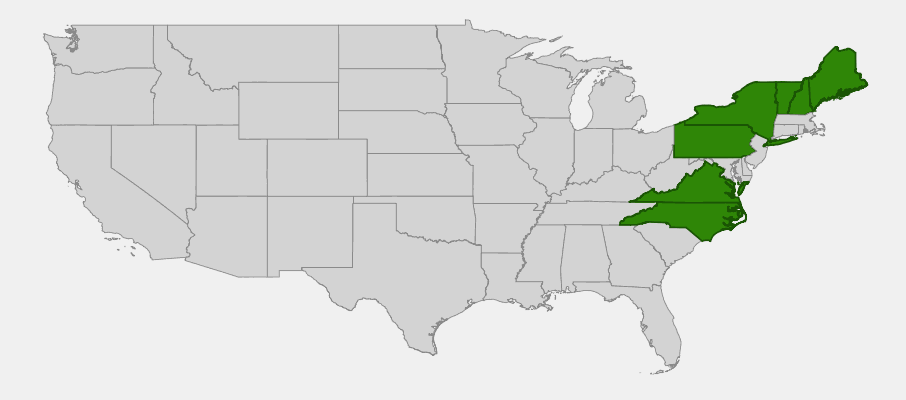
Native yellow-flowered sedums occur across Alaska in a variety of rocky and alpine habitats, with different species occupying different ecological niches. Sedum rosea (Roseroot) is widely distributed in Alaska from the Aleutian Islands through southeastern Alaska and the coastal mountains; it also occurs as a disjunct population in the northeastern United States (Maine, New Hampshire, Vermont, New York, Pennsylvania) and across the circumpolar Arctic and subarctic. Rhodiola integrifolia (Ledge Stonecrop) is found primarily in subalpine and alpine habitats across Alaska and the Yukon. Sedum lanceolatum is found in drier, rocky habitats across Alaska and the western mountains.
In Alaska, yellow sedums are found throughout the state in rocky, exposed habitats: coastal cliffs and headlands, mountain ridges and fell-fields, rocky tundra, scree slopes, and gravelly stream terraces. They are characteristic plants of the bare rock microhabitat — colonizing ledges, crevices, and rock faces where nutrient availability and soil depth are minimal. In the coastal mountains of southeastern Alaska and the Kenai Peninsula, they are common on exposed rocky outcrops at all elevations from sea level to alpine. In the interior, they occur primarily at higher elevations on rocky ridges and talus fields.
The global distribution of the sedum/stonecrop family reflects their extraordinary drought and cold tolerance — stonecrops occur on every continent except Antarctica, and they are among the few flowering plants that grow on substrates as extreme as bare granite bedrock and volcanic ash. The Alaskan yellow sedums represent the northern extreme of this globally successful plant group, adapted over millions of years to the most challenging growing conditions in the high-latitude and high-altitude environments of the Pacific Rim.
📋 Regional plant lists featuring Yellow Sedum: Alaska
Growing & Care Guide
Yellow Sedum is one of the easiest native plants to grow, requiring minimal care and thriving in conditions that would kill most garden plants. Its principal requirements are excellent drainage, adequate sun, and freedom from competition with taller, more aggressive plants.
Light
Yellow Sedum grows best in full sun to partial shade. In full sun, the plants develop the most compact, colorful growth and produce the most flowers. Partial shade is tolerated well — particularly in warmer climates where afternoon shade helps prevent heat stress. In deep shade, the succulent stems become elongated and etiolated, losing the compact, attractive form that makes sedums valuable as ground covers. For the most ornamental display, choose a sunny to lightly shaded site with good air circulation.
Soil & Water
Yellow Sedum’s greatest asset is its drought tolerance — it evolved for rocky, nutrient-poor, exceptionally well-drained soils and is at its best in exactly these conditions. Excessive moisture, particularly in winter, is the most common cause of sedum death in gardens; the plants are far more likely to rot than to dry out. In heavy clay or chronically wet soils, sedums fail. The ideal substrate is sandy, gravelly, or rocky with a near-neutral pH (6.0–7.5). Amend clay soils heavily with grit and gravel before planting, or use raised beds. Once established, most yellow sedums require no supplemental irrigation in Alaska and will thrive on natural rainfall alone.
Planting Tips
Plant yellow sedums in spring or early summer in well-drained, gritty soil. Seeds can be surface-sown on sandy mix with cold stratification for spring germination, but the easiest propagation method is stem cuttings or division of established mats. Simply break off a rosette-tipped stem, allow it to dry for a day, and press it lightly into moist, gritty growing mix — it will root readily within 2–4 weeks. Space plants 6–12 inches apart for ground cover use; they will spread to fill gaps over 2–3 growing seasons.
Pruning & Maintenance
Yellow sedums require virtually no maintenance. Remove any dead or winter-damaged foliage in early spring. Divide clumps every 3–5 years if they become crowded or lose vigor at the center. The spent flower stems can be removed after blooming or left for winter interest — many sedums develop attractive rust-red to bronze seed heads that provide visual interest and winter structure. Yellow sedums are essentially pest- and disease-free when grown in appropriate well-drained conditions.
Landscape Uses
- Rock gardens and alpine gardens — ideal among rocks and gravel
- Green roofs — among the best native plants for extensive green roof substrates
- Dry slope stabilization — spreading mats bind and protect rocky slopes
- Xeriscaping — outstanding in drought-tolerant native plant gardens
- Container gardens — thrives in shallow, free-draining containers
- Pathway edging and steps planting between flagstones or paving
- Pollinator plantings — the yellow flowers attract many native bees and butterflies
Wildlife & Ecological Value
Despite their small stature, yellow sedums support a surprising amount of wildlife in the sparse, rocky habitats where they grow — particularly pollinators and invertebrates that have specialized to exploit the resources available in challenging alpine and arctic terrain.
For Pollinators
The open, star-shaped flowers of yellow sedums are accessible to a wide variety of small pollinators, including native sweat bees (Halictus spp.), mining bees (Andrena spp.), hover flies, small butterflies, and various bee flies. In the high-alpine environments where these plants grow — where large, specialized flowers are rare — the abundant, accessible pollen and nectar of sedum flowers plays an outsized role in the local pollinator community. Bumblebees also visit sedum flowers regularly and are important pollinators in their alpine range.
For Birds
While yellow sedums are not a primary food source for birds, the seeds are consumed by redpolls, rosy-finches, and pipits that forage in alpine and rocky tundra habitats. More importantly, the dense mats of sedum vegetation — even where only a few centimeters tall — provide crucial thermal cover for ptarmigan, rock sandpipers, and other ground-nesting birds in the exposed tundra and fell-field habitats where these plants grow. The insect life associated with sedum mats is also a food source for small passerine birds foraging in rocky terrain.
For Insects
Sedum mats support specialized communities of invertebrates that live beneath and within the dense leaf litter of established mats — springtails, mites, tiny spiders, and other minute arthropods that find shelter and food in the humid microhabitat created by the dense, low-growing leaves. These invertebrates are in turn food for insectivorous birds and small mammals foraging in alpine habitats. In rock garden settings, similar communities develop, making sedum mats valuable habitat elements even in cultivated garden settings.
Ecosystem Role
In rocky and alpine habitats, yellow sedums play a pioneer role — colonizing bare rock surfaces and gravelly substrates where other plants cannot establish. By capturing windblown organic material in their rosette centers and contributing leaf litter to crevices and depressions, they initiate soil development processes that eventually allow other plant species to establish. In this way, sedum mats are among the first steps in the long successional pathway from bare rock to complex plant communities — an ecological function of disproportionate importance in the challenging environments where these plants grow.
Cultural & Historical Uses
Members of the stonecrop family have been used by Indigenous peoples across the northern world for thousands of years. In Alaska, Sedum rosea (Roseroot) has been particularly important to Arctic and Subarctic peoples. The thick rootstock of Roseroot has a distinctive rose-like fragrance when cut and was used as a fragrant medicine by Yupik, Inupiat, and other Alaska Native peoples. The young leaves and shoots were eaten as a spring vegetable — raw, fermented, or cooked — providing a vitamin-rich food source during the late spring months before other fresh greens became available.
The broader category of Rhodiola rosea (Roseroot, closely related to Alaskan Sedum rosea) has an extensive history of use in Scandinavian, Siberian, and Mongolian traditional medicine as an adaptogen — a substance believed to increase resistance to stress and improve endurance. It was used by Vikings to increase physical endurance and by Tibetan healers for altitude adaptation. Modern pharmacological research on Rhodiola extracts has confirmed anti-stress and cognitive-enhancing properties, and Rhodiola supplements are now widely marketed in North America and Europe — driving renewed interest in the plant’s wild populations and sustainable cultivation. Wild harvesting of Alaskan Roseroot for the supplement trade has become a conservation concern in some areas.
The wax-coated, water-repellent leaves of various stonecrops were occasionally used to line containers and as natural waterproofing material by northern peoples. The thick, fleshy leaves, when bruised and applied to skin, have mild cooling and anti-inflammatory properties that were used to treat minor burns, insect bites, and skin irritations across multiple Indigenous cultures throughout the circumboreal region. The ornamental qualities of stonecrops — their attractive form, year-round presence on rocky surfaces, and vivid summer flowers — were appreciated aesthetically by northern peoples who encountered them in some of the most austere landscapes in the world.
Frequently Asked Questions
What is the difference between Sedum and Rhodiola?
Rhodiola (formerly included in Sedum) is now treated as a separate genus by most botanists. The main differences are: Rhodiola plants are typically taller and have a thick rootstock with a rose-like fragrance; they have separate male and female plants (dioecious) rather than perfect flowers; and their flowers are usually small and clustered into tight heads. Traditional Sedum species have perfect flowers and are typically lower-growing with flatter, more open flower clusters. Many plants formerly called “sedum” in Alaska are now reclassified as Rhodiola, but the common names “stonecrop” and “sedum” persist for both groups.
Can I grow Alaska sedum in a warmer climate?
Yes — many arctic and alpine sedums and rhodiolas adapt surprisingly well to temperate gardens, provided they have excellent drainage. The critical factor is avoiding wet, poorly drained soils especially in winter. In climates with mild, wet winters (e.g., Pacific coastal areas south of their natural range), they may struggle with root rot. In continental climates with cold, dry winters and good summer heat, they often thrive with minimal care. Most Alaskan sedums are rated to USDA Zone 2 or 3, making them appropriate for gardens anywhere in North America.
Is Rhodiola rosea the same as Alaskan Yellow Sedum?
Rhodiola rosea is closely related to Alaskan Sedum rosea (often treated as the same species in older literature). The plant sold as “Rhodiola” in supplement stores is primarily derived from European and Siberian populations, but the Alaskan plant has essentially the same properties. If you find Roseroot growing in Alaska, it should be left undisturbed — wild populations are facing pressure from over-harvesting for the supplement market, and the plants are slow-growing and slow to recover from disturbance.
Is Yellow Sedum good for a green roof?
Yes — sedums are among the best plants in the world for extensive green roofs (shallow-substrate, low-maintenance vegetated roofs). Their low weight, shallow root system, drought tolerance, and ability to survive on minimal soil depth (as little as 2–4 inches / 5–10 cm) make them ideal for green roof applications. Native Alaska sedums are particularly appropriate for green roofs in cold climates, where their cold hardiness outperforms most commercial sedum cultivars derived from European or Asian species.
How do I tell if my sedum is native to Alaska?
To determine if a sedum is native to Alaska, compare it against the descriptions of Sedum rosea, Rhodiola integrifolia, and Sedum lanceolatum in the Flora of Alaska or using herbarium records at the University of Alaska Museum of the North. Key identification features include leaf shape (oval vs. lance-shaped), flower color (yellow vs. pinkish-red), rootstock fragrance (rose-scented in S. rosea), and habitat (coastal vs. alpine vs. subalpine). The Alaska Native Plants Society can assist with identification of specimens collected in the state.

Looking for a nursery that carries Yellow Sedum?
Browse our native plant nursery directory: Alaska