
Top 5 Garden Compost Starter Kits for Beginners in 2026
We independently select all products and services. If you click through links we provide, Plant Native may earn a commission with no extra cost to you.
Last updated: November 8, 2026
Composting is a fantastic way to recycle organic waste and create nutrient-rich soil for your garden.
Garden compost starter kits make this process accessible to beginners and experienced gardeners alike. These kits typically include essential tools, containers, and sometimes even beneficial microorganisms to jumpstart the decomposition process.
Creating compost at home reduces waste sent to landfills and provides a sustainable source of fertilizer for plants.
Compost starter kits come in various sizes and styles, from small countertop bins for kitchen scraps to larger outdoor tumblers for yard waste. They often feature design elements that help maintain proper moisture levels and aeration, which are crucial for efficient composting.
When choosing a compost starter kit, consider factors like size, material durability, and ease of use.
The ideal kit should match your available space and the amount of organic waste you generate.
We evaluated numerous compost starter kits to find the best options for different needs and preferences.
Top 5 Garden Compost Starter Kits
We’ve researched and tested numerous options to bring you the best garden compost starter kits available. These kits provide essential tools and ingredients to kickstart your composting journey, helping you create nutrient-rich soil for your garden. Our top picks offer quality, convenience, and effectiveness for both beginners and experienced gardeners alike.
Our top pick

- Takes meat, small bones and dairy that regular compost piles can’t
- Spigot lets you draw off nutrient-rich compost tea
- Compact enough for a counter or under the sink, and works year-round
Cons
- Bokashi ferments scraps; the result still needs burying or a compost pile to finish
- You’ll need to rebuy bokashi bran to keep going
It is particularly useful for composting items that typically can’t go in traditional compost piles, like meat trimmings and cheese rinds. The tight-sealing lid keeps odor down between additions, though expect a sour, pickled smell when you open it. All things considered, it’s the standout choice in this category.
Best for indoors
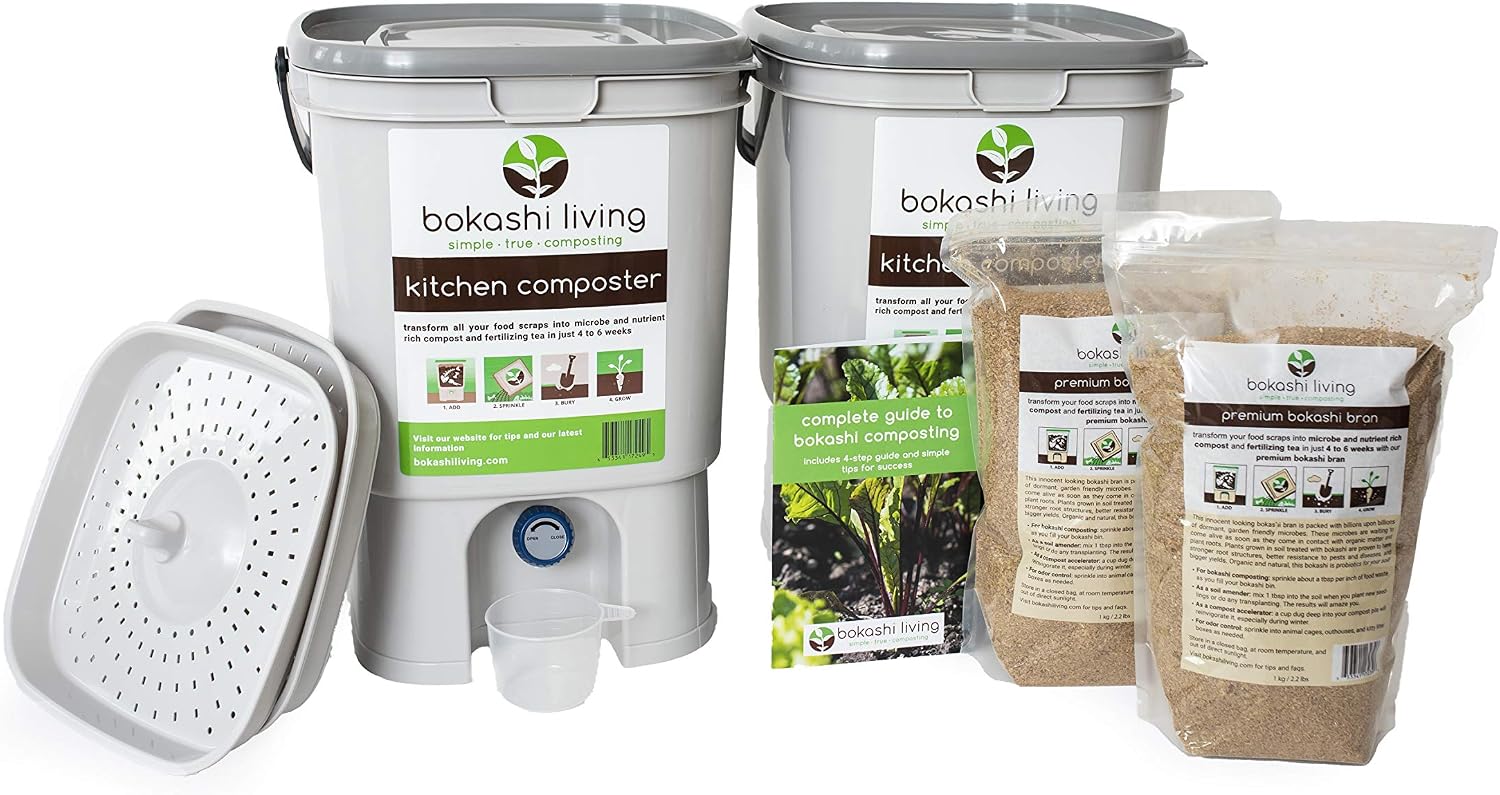
- Two bins allow continuous collection and fermentation
- 4.4 lbs of bran included to get started
- Spigots drain liquid for use as plant food
Cons
- Higher price than single-bin kits
- Two bins take up more counter or cupboard space
Setup is straightforward, so you can start composting kitchen scraps right away, and the bins are sized for a counter or cupboard. The bokashi method ferments scraps before they go into the soil, and the two-bin setup keeps the process continuous.
Best for composting

- Complete kit with tools, bedding and a soil meter
- Ventilated stacking trays help control odor
- Compact enough for a balcony, garage or kitchen
Cons
- Worms are not included
- Needs regular feeding and moisture checks to keep worms healthy
The complete kit means you only need to add worms to get started. Air holes in each tray are designed for odor control, and the included soil meter lets you monitor moisture and pH to keep conditions right for the worms.
Best from Espoma
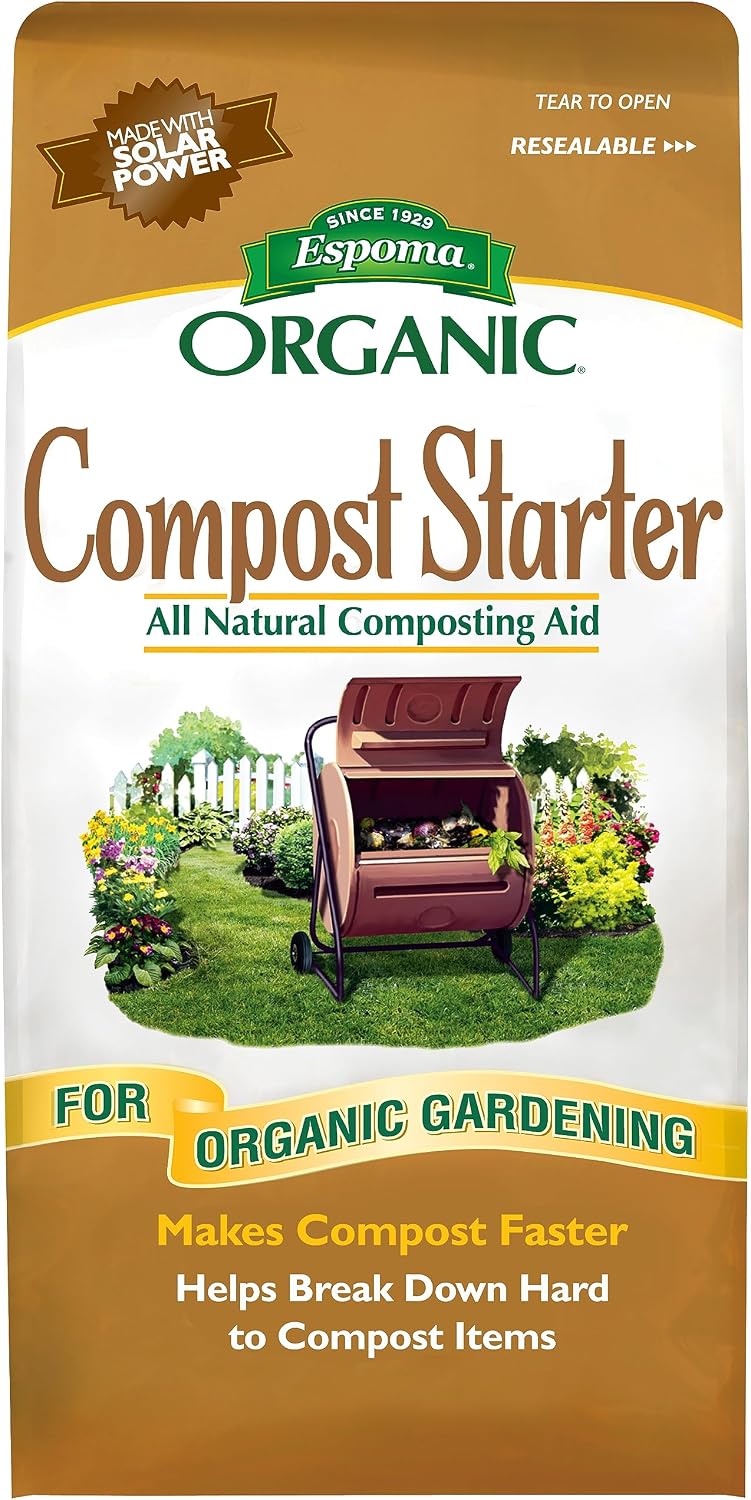
- Helps break down tough organic matter faster
- Natural ingredients with no synthetic chemicals
- Inexpensive, and a little goes a long way
Cons
- Only an additive: no bin or tools included
- Works best in an active outdoor pile or tumbler, not a sealed kitchen bin
This is the simplest way to get a stalled or brand-new pile going: sprinkle it in as you add kitchen scraps and yard waste. The cultured microbes and balancers are designed to speed decomposition and turn materials into nutrient-rich compost more quickly.
Best for large areas
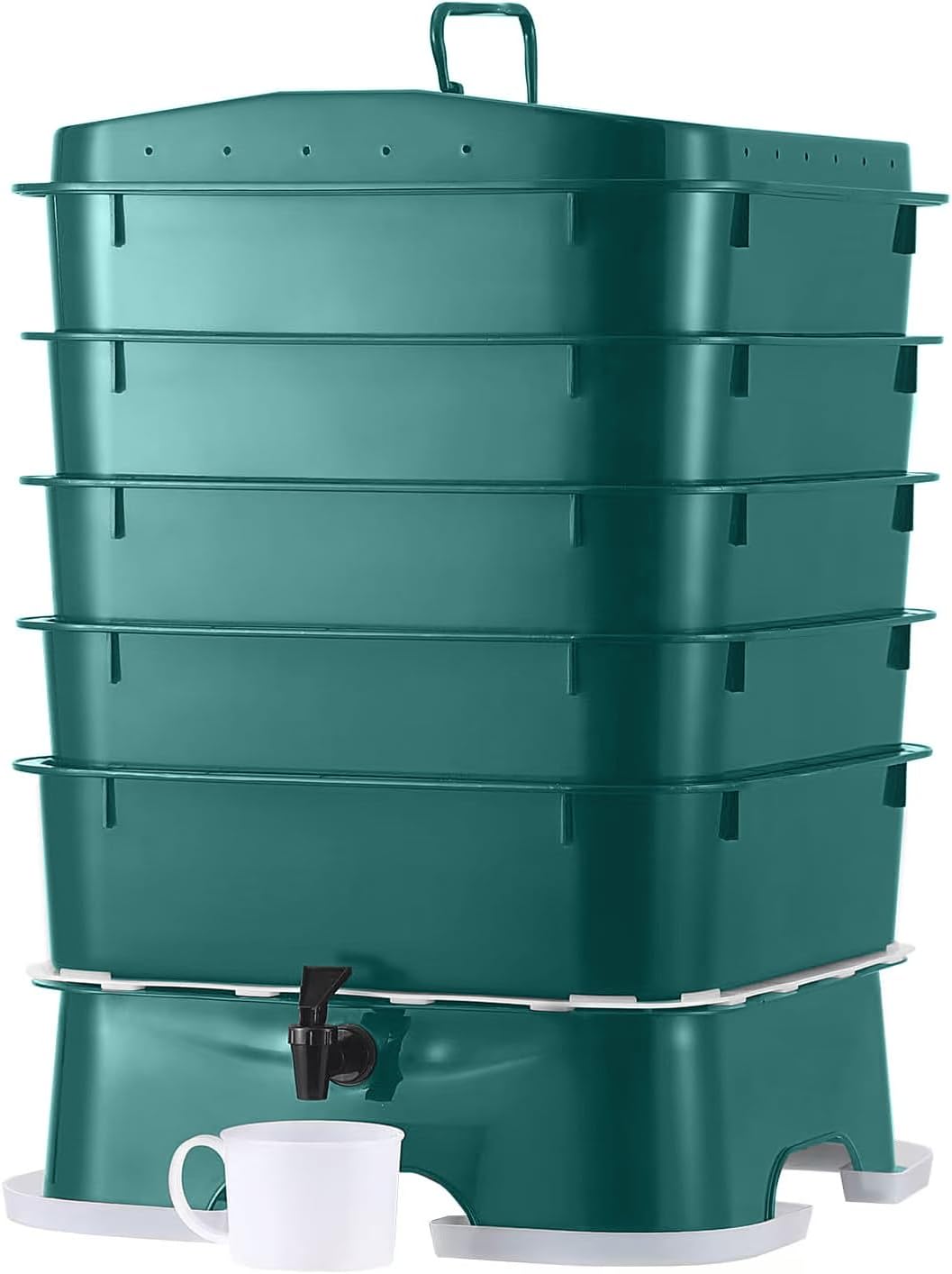
- Five trays for continuous, high-volume vermicomposting
- Worm saver tray keeps worms out of the liquid base
- Ant-deterring feet for indoor or outdoor use
Cons
- Worms are not included
- Takes a few weeks for worms to settle in and move between trays
The stackable design makes it simple to add new layers as needed, and the integrated base and spigot make collecting worm tea easy. Bigger gardens demand more, and this delivers without complaint.
Buying Guide
When selecting a garden compost starter kit, there are several key factors to consider. We’ve compiled this guide to help you make an informed decision.
Size and Capacity
The size of the compost bin is crucial. Consider the amount of organic waste your household produces and the available space in your garden.
Material and Durability
Look for bins made from sturdy, weather-resistant materials like recycled plastic or galvanized steel. These will withstand outdoor conditions and last longer.
Aeration and Ventilation
Proper air circulation is essential for efficient composting. Choose a bin with adequate ventilation holes or a design that allows for easy turning of the compost.
Ease of Use
Consider features that make the composting process more convenient:
- Removable lids for easy filling
- Access doors for harvesting compost
- Turning mechanisms for mixing
Pest Resistance
To keep unwanted critters out, opt for bins with tight-fitting lids and small ventilation holes.
Temperature Retention
Good insulation helps maintain the ideal composting temperature. Some bins come with double-walled construction for better heat retention.
Included Accessories
Many starter kits come with useful tools. Look for sets that include:
- Compost thermometer
- Mixing tool
- Gloves
- Starter bacteria or activator
We independently select all products and services. If you click through links we provide, Plant Native may earn a commission with no extra cost to you. As an Amazon Associate I earn from qualifying purchases.

small countertop bins for kitchen scraps look useful for beginners, though I’d still want good soil prep for the finished compost.
You’re right that soil prep is crucial — we should probably expand on that. Thanks for the feedback! -Plant Native Team