
5 Best Essential Rotary Tiller for Sustainable Farms: Top Picks for Efficient Soil Management
We independently select all products and services. If you click through links we provide, Plant Native may earn a commission with no extra cost to you. As an Amazon Associate I earn from qualifying purchases.
Last updated: August 20, 2026
Rotary tillers are essential for prepping soil efficiently and sustainably on farms. They break up compacted earth, mix in organic matter, and help create a solid seedbed for planting.
For sustainable farms, rotary tillers help maintain soil health while cutting down on heavy machinery that might cause erosion or soil damage. They’re just more gentle on the land.
Unlike basic tillers, essential rotary tillers combine power and precision. You get better control over depth and speed, which is handy for different soil types and farming styles that focus on sustainability.
Their design makes it easier to incorporate cover crops and organic amendments. That’s a big win for long-term soil fertility.
When picking a rotary tiller, it’s smart to look at things like tine material, tilling width, engine power, and maneuverability. Durability matters, especially if your land’s bumpy or full of leftover debris.
Ease of maintenance and fuel efficiency also come into play if you want to keep your farm’s environmental impact low.
We tried out a bunch of rotary tillers with these factors in mind and narrowed it down to the five best options for sustainable farming.
Best Essential Rotary Tillers for Sustainable Farms
We dove into research and hands-on testing to find rotary tillers that really work for sustainable farms. Our picks balance performance, durability, and eco-friendly operation.
These machines can help improve soil health and support sustainable agriculture.
Our top pick

- Solid steel construction feels durable during heavy use
- Self-sharpening C-shaped blades cut through soil efficiently
- Adjustable tilling depth allows for flexibility in different soil conditions
Cons
- Heavy weight makes attachment and transport less convenient
- 3-point hitch compatibility can cause issues with some quick hitch systems
- Performance can be limited on very rocky or uneven ground
We found the Heavy Duty 75″ Rotary Tiller handled firm, consistent tilling across garden plots. If your land is rocky or uneven, this tiller might struggle more than lighter models. It checks every box we care about, making it the easiest recommendation we can give.
Best heavy-duty option

- Strong steel construction offers good durability
- Self-sharpening blades reduce maintenance time
- Adjustable tilling depth adapts to various soil conditions
Cons
- Assembly may be complicated with some bent parts on delivery
- Actual tilling width is slightly less than advertised
- Heavier weight makes maneuvering harder without a powerful tractor
Once we got the tiller assembled, the thick steel frame and side plates handled rough soil consistently. Blades held up to extended use, and the self-sharpening feature worked well, so we didn’t have to stop and sharpen as often. Still, it’s a capable tool for demanding farm work once you get it set up right.
Best for small spaces
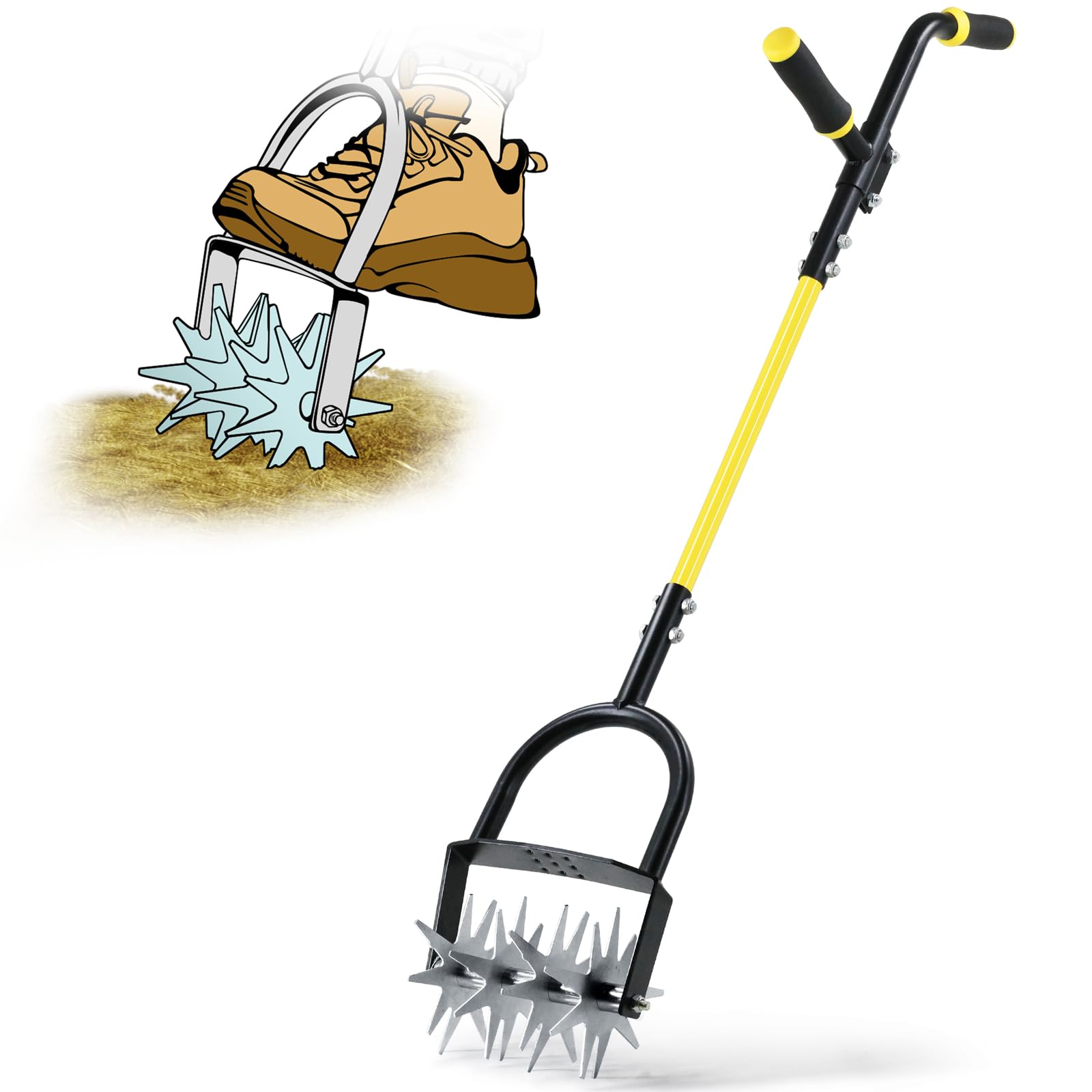
- Provides strong downward force for deeper soil cultivation
- Sturdy all-steel build holds up well over time
- Ergonomic adjustable handle reduces arm fatigue
Cons
- Not ideal for large-scale tilling jobs
- Blades can struggle in rocky or thick sod soil
- Assembly is required before first use
We found the Jardineer tiller effective for breaking up compacted earth and aerating small areas. This tool is best suited for garden beds, reseeding patches , and light soil mixing. It’s a handy tool for targeted farm work.
Best for beginners
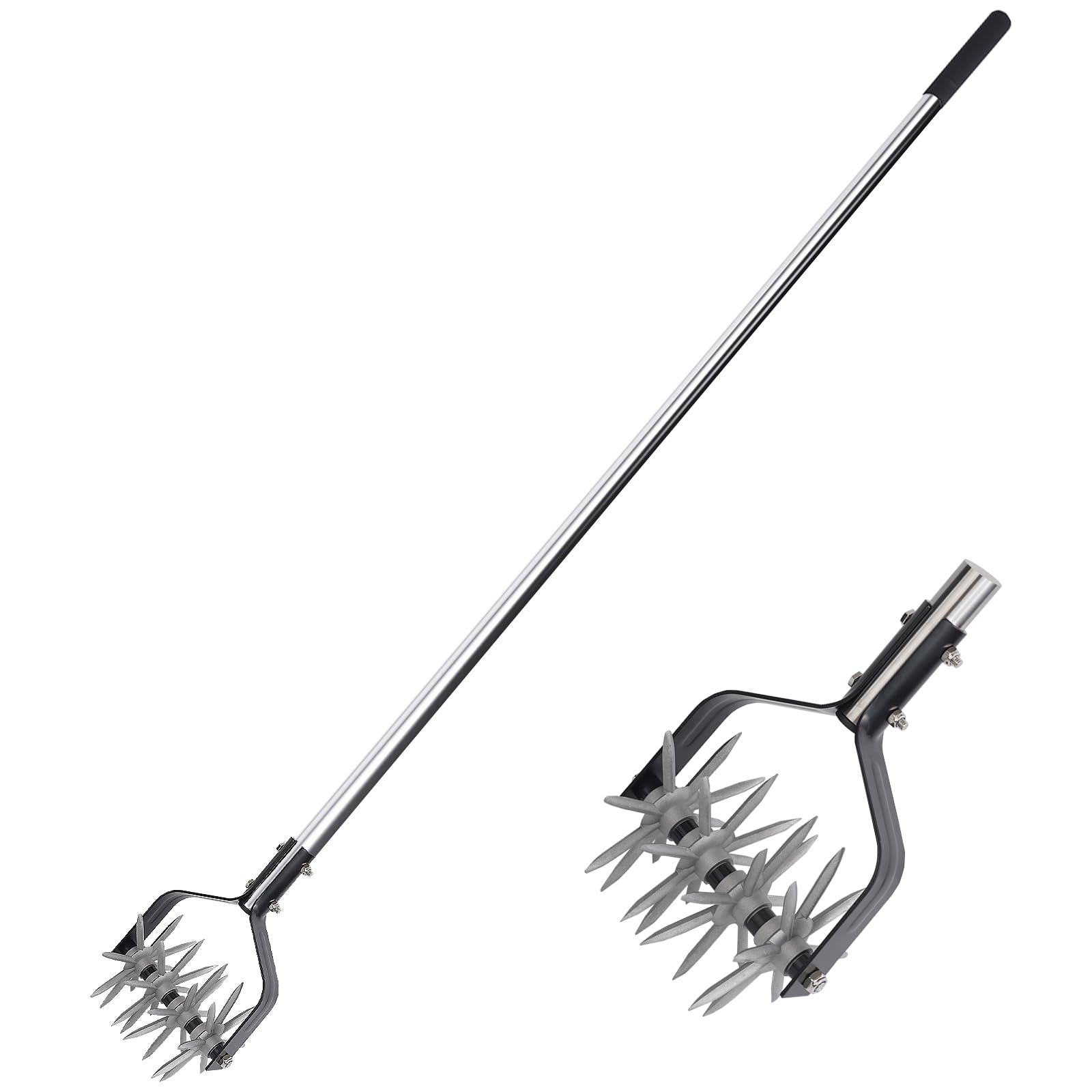
- Adjustable handle length for comfortable use
- Durable stainless steel with aluminum wheels
- Effective in aerating and loosening soil
Cons
- Requires extra effort in compacted or dry soil
- Limited to small-scale or light tilling tasks
- Assembly can feel stiff initially
We liked how easy the BARAYSTUS tiller was to handle, especially with the adjustable long handle. The star-shaped head and four wheels made it simple to crush and aerate soil without straining your back. For managing small plots without power tools, this hand tiller’s practical and sturdy.
Also great

- Powerful motor with fast digging speed
- Adjustable wheels for varied soil depth control
- Low maintenance—no gas or oil needed
Cons
- Limited to lighter garden soil, struggles with very dense clay
- Corded design restricts mobility
- Only suitable for smaller plots, not large-scale farming
We found the MZK tiller great for prepping garden beds without heavy labor. If you’re working larger or rocky fields, you’ll want something beefier. Here’s a quick summary table of the essentials: It fills its role beautifully and won’t leave you second-guessing your purchase.
Buying Guide
When you’re picking out an essential rotary tiller for a sustainable farm, there are a handful of features that really make a difference. Adjusting the tilling depth and width? That’s huge if you want to match different soil types or crops.
Power source comes next. It’s worth pausing to think: does a gas, electric, or battery-powered tiller fit your farm size and your sustainability goals?
Fuel efficiency and emissions should fit with your environmental practices. It’s not always easy, but these choices add up.
Durability can’t be ignored, either. I always look for strong materials, straightforward maintenance, and solid construction—nobody wants extra downtime.
Ease of use is a big deal. Comfortable handles, controls that make sense, and a weight you can actually manage will save your back and boost productivity.
Here’s a quick summary table of the essentials:
| Feature | What to Look For | Why It Matters |
|---|---|---|
| Tilling Capacity | Adjustable depth and width | Adaptability to various soils |
| Power Source | Gas, electric, or battery options | Efficiency and environmental impact |
| Build Quality | Sturdy frame and quality blades | Longevity and reduced repairs |
| Usability | Ergonomic design, easy controls | Operator comfort and ease |
| Maintenance | Accessible parts, robust components | Less downtime and cost savings |
Some of this might be region-specific. What works in the south doesn’t always apply up north.
Fair point, Jerry. Every garden is different and results can definitely vary by region. Thanks for sharing your experience! -Plant Native Team
Interesting. My experience has been a little different but every garden is unique I guess.
Fair point, Mary. Every garden is different and results can definitely vary by region. Thanks for sharing your experience! -Plant Native Team