5 Best Lawn Aerators for Healthier Grass in 2026: Top Picks for Lawn Care Enthusiasts
We independently select all products and services. If you click through links we provide, Plant Native may earn a commission with no extra cost to you. As an Amazon Associate I earn from qualifying purchases.
Last updated: August 17, 2026
Lawn aeration is a crucial practice for maintaining a healthy, vibrant lawn. By creating small holes in the soil, aeration allows air, water, and nutrients to penetrate deep into the root zone. This process reduces soil compaction, improves drainage, and promotes stronger root growth. A well-aerated lawn is more resistant to disease, drought, and weed invasion.
While manual aeration tools like spike shoes or hand aerators can be effective for small areas, larger lawns benefit from dedicated lawn aerators. These machines come in various types, including spike aerators, plug aerators, and liquid aerators. Plug aerators, which remove small cores of soil, are generally considered the most effective for most lawns.
When choosing a lawn aerator, consider factors such as the size of your lawn, the type of soil, and your physical capabilities.
The width of the aerator, the depth of penetration, and the ease of use are important features to evaluate.
We researched and tested numerous lawn aerators to identify the best options for different lawn sizes and user needs.
Best Lawn Aerators for Healthier Grass
We’ve carefully selected the top lawn aerators to help you achieve a lush, healthy lawn in 2026. These tools effectively loosen compacted soil, allowing air, water, and nutrients to reach grass roots more easily. Our list includes options for various lawn sizes and budgets.
Our top pick
- Reduces soil compaction to improve water and nutrient penetration
- Promotes healthier root growth for a thicker, greener lawn
- Easy to operate with minimal learning curve for homeowners
Cons
- Best results require aeration at specific times of year
- Manual models demand significant physical effort on larger lawns
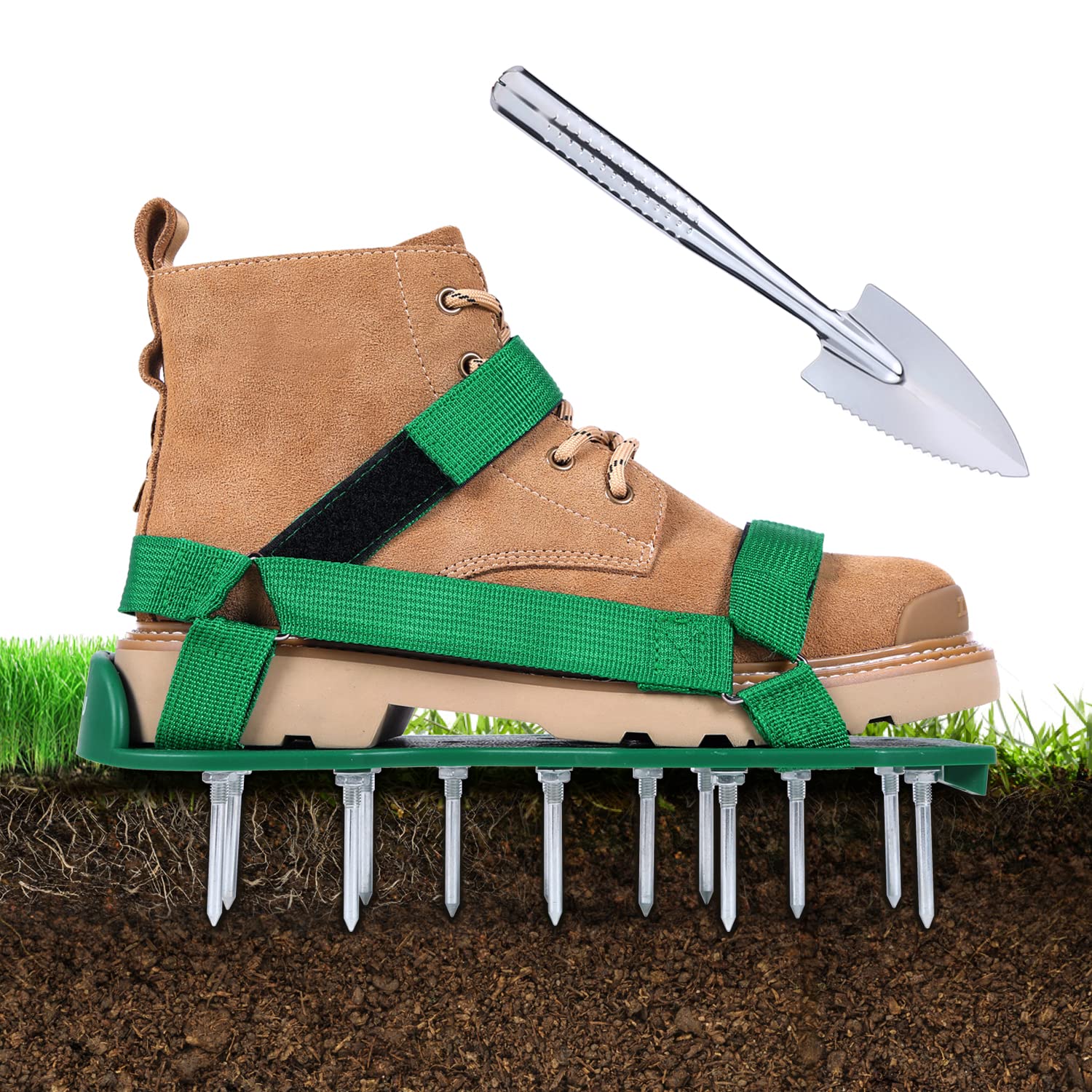
The Ohuhu Lawn Aerator Sandals offer a simple approach to lawn aeration. We found the hook-and-loop fasteners much easier to use than traditional buckle straps. For most people, this is the one to get.
Most versatile
- Reduces soil compaction to improve water and nutrient penetration
- Promotes healthier root growth for a thicker, greener lawn
- Easy to operate with minimal learning curve for homeowners
Cons
- Best results require aeration at specific times of year
- Manual models demand significant physical effort on larger lawns
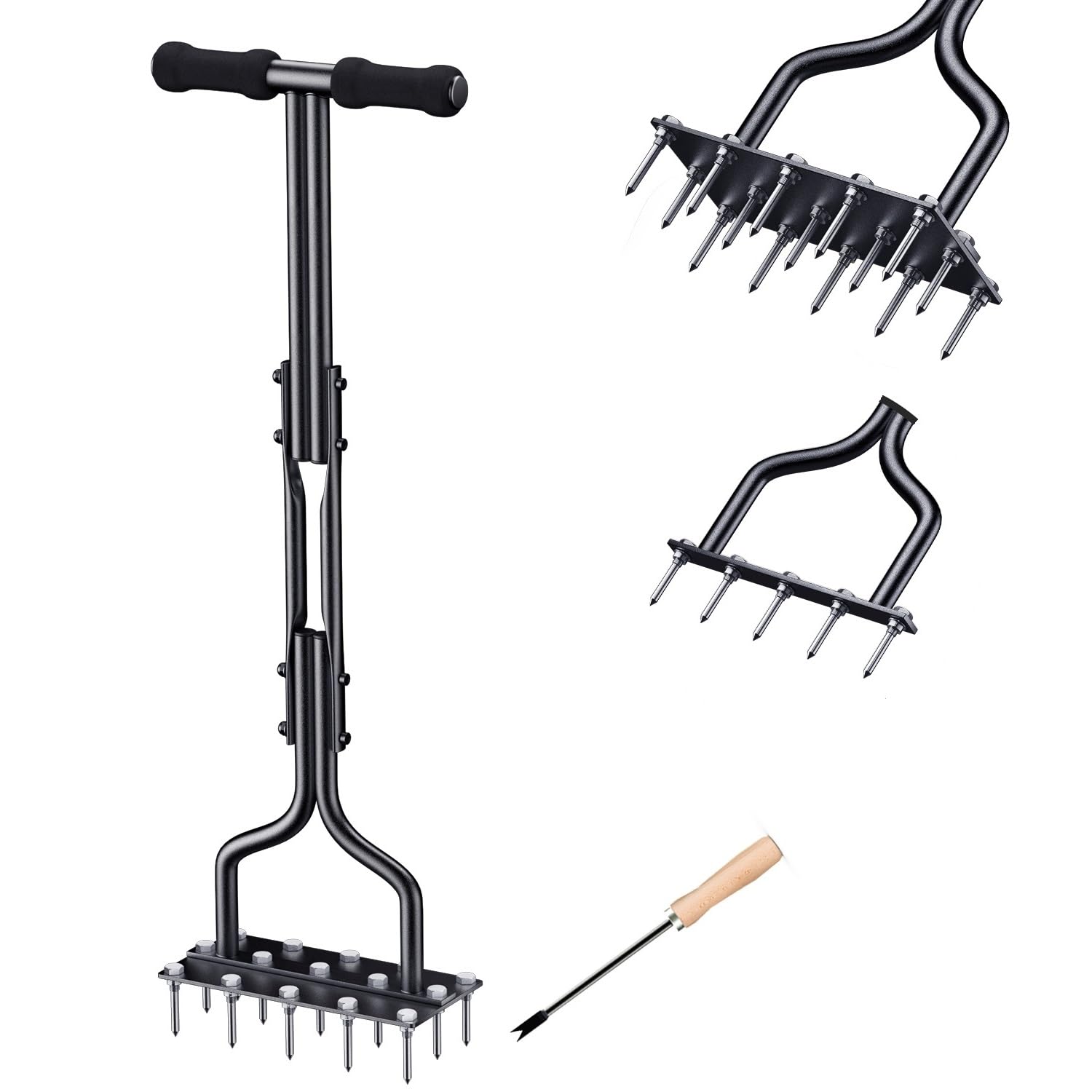
We appreciated the option to use it as a compact 5-spike aerator or expand it to a more efficient 15-spike version by attaching the foot pad. We found the 96cm long handle comfortable to use, reducing back strain during extended aeration sessions. For best results, we recommend watering your lawn before use, especially if the soil is particularly dry or hard.
Best heavy-duty option
- Reduces soil compaction to improve water and nutrient penetration
- Promotes healthier root growth for a thicker, greener lawn
- Easy to operate with minimal learning curve for homeowners
Cons
- Best results require aeration at specific times of year
- Manual models demand significant physical effort on larger lawns
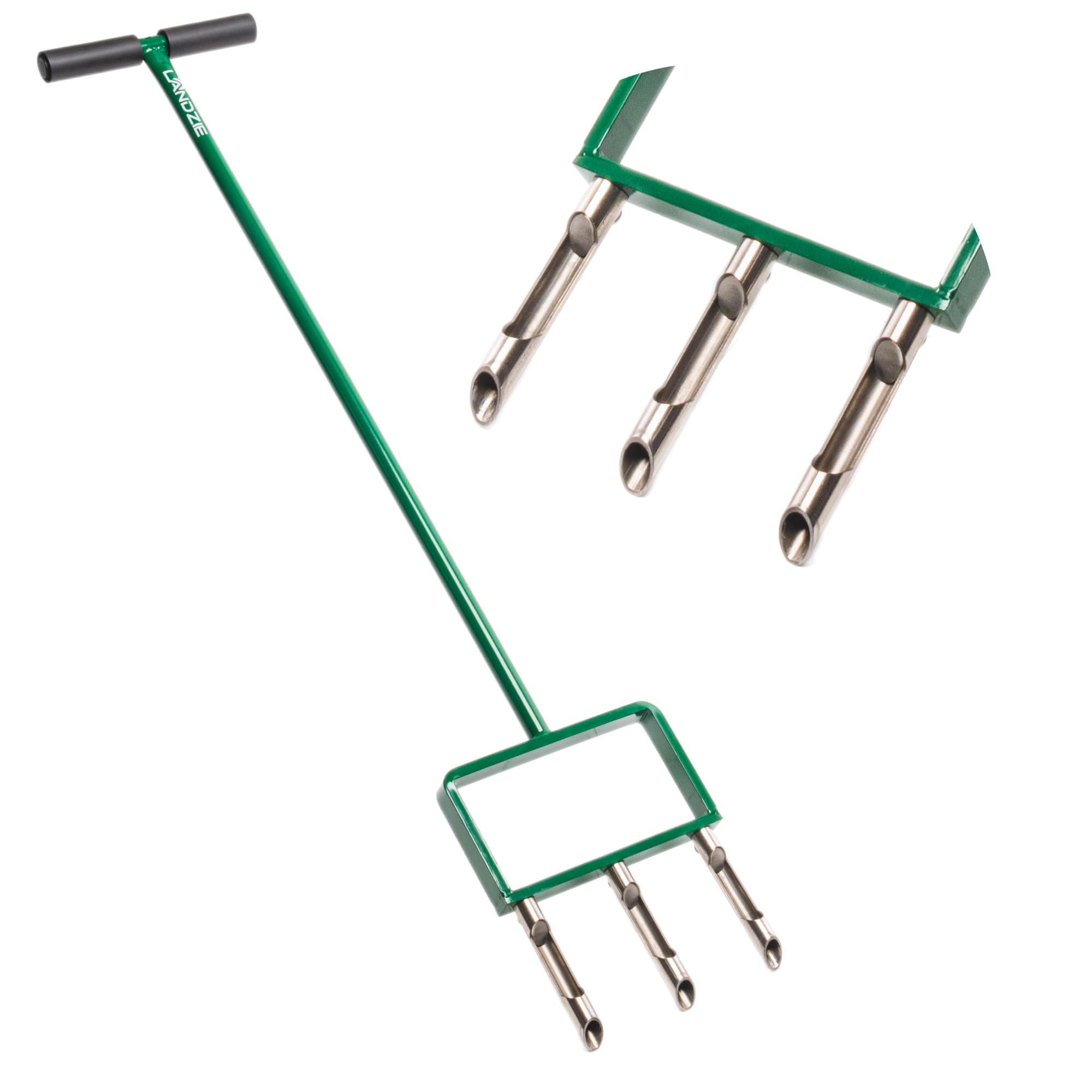
We found this process significantly improved our lawn’s health over time. For smaller yards, though, we appreciated the precise control and storage-friendly size compared to motorized alternatives. For professional-grade demands, it more than holds its own.
Best value set
- Reduces soil compaction to improve water and nutrient penetration
- Promotes healthier root growth for a thicker, greener lawn
- Easy to operate with minimal learning curve for homeowners
Cons
- Best results require aeration at specific times of year
- Manual models demand significant physical effort on larger lawns
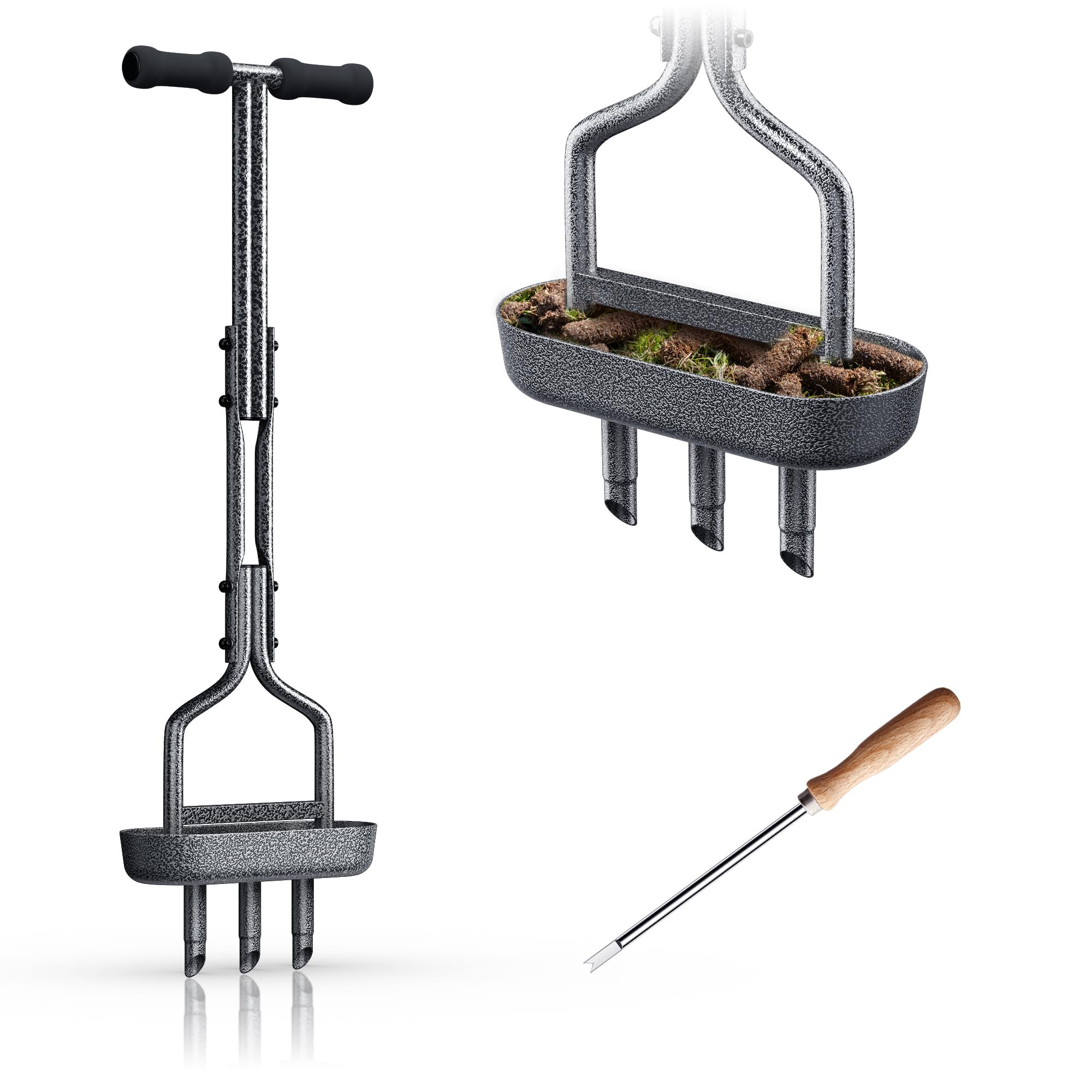
We appreciated the padded T-bar handles, which provided comfort during extended use. We noticed the upgraded stainless steel tines effortlessly penetrated the soil, creating clean cores for optimal aeration. The oval soil core storage tray is a standout feature, collecting soil plugs as you work.
Best for lawns
- Reduces soil compaction to improve water and nutrient penetration
- Promotes healthier root growth for a thicker, greener lawn
- Easy to operate with minimal learning curve for homeowners
Cons
- Best results require aeration at specific times of year
- Manual models demand significant physical effort on larger lawns
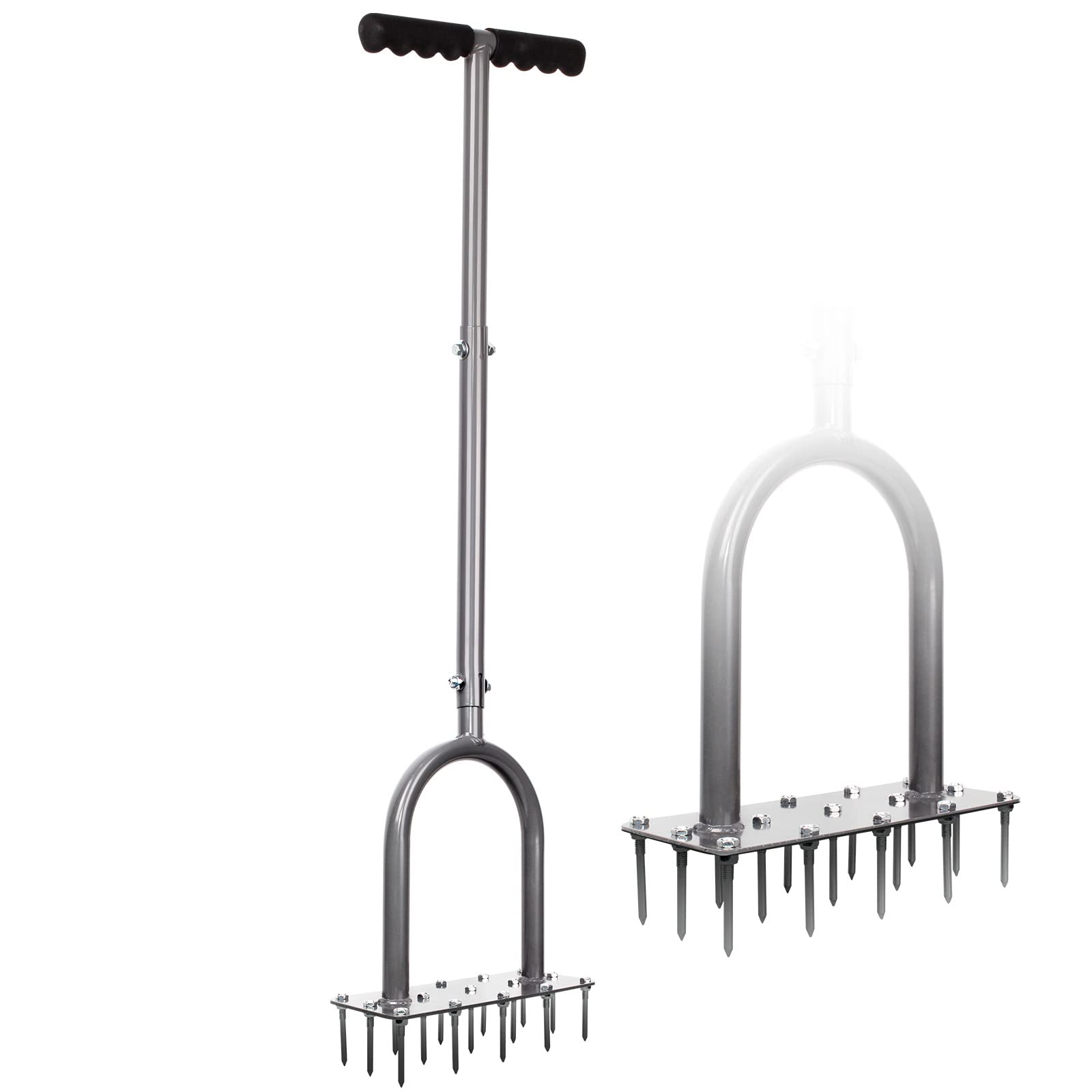
We found that it penetrates the soil effectively, creating pathways for air, water, and nutrients to reach the roots. Manual options work well for small areas, while motorized units are better suited for larger lawns. When choosing a lawn aerator, we recommend considering several key factors to ensure you select the best option for your needs.
Buying Guide
When choosing a lawn aerator, we recommend considering several key factors to ensure you select the best option for your needs.
Type of Aerator
There are three main types of aerators:
- Spike aerators
- Plug aerators (core aerators)
- Liquid aerators
Plug aerators are generally most effective for reducing soil compaction and promoting healthy grass growth.
Tine Size and Spacing
For plug aerators, look for:
- Tine length: 2-4 inches
- Tine diameter: 0.5-0.75 inches
- Tine spacing: 3-4 inches apart
Larger tines and wider spacing typically provide more effective aeration.
Coverage Area
Consider the size of your lawn when selecting an aerator. Manual options work well for small areas, while motorized units are better suited for larger lawns.
Ease of Use
We suggest evaluating:
- Weight and maneuverability
- Storage requirements
- Assembly process
Durability
Look for aerators made with high-quality materials like steel tines and sturdy frames to ensure longevity.
Additional Features
Some helpful features to consider include:
- Adjustable tine depth
- Removable tines for easy cleaning
- Transport wheels for convenient movement
By carefully weighing these factors, we can choose an aerator that will effectively improve our lawn’s health and appearance.
Key Takeaways
- Core aerators (plug aerators) are significantly more effective than spike aerators at relieving compaction
- Aerate cool-season grasses in fall; warm-season grasses in late spring/early summer
- Soil should be moist but not waterlogged before aerating for best core extraction
- Overseed immediately after aerating — the holes provide excellent seed-to-soil contact
- Most lawns benefit from annual aeration; heavily compacted or high-traffic lawns may need twice-yearly treatment
Frequently Asked Questions
What is the best time to aerate a lawn?
Timing depends on your grass type. Cool-season grasses (Kentucky Bluegrass, Tall Fescue, Ryegrass) are best aerated in fall (August-October) when the grass is actively growing and can recover quickly. Warm-season grasses (Bermuda, Zoysia, St. Augustine) should be aerated in late spring through early summer (May-June) when they’re in their most vigorous growth phase. Avoid aerating dormant lawns or during summer heat stress for cool-season grasses — recovery is slow and the grass may not fill in the holes before fall.
How deep should lawn aeration cores be?
Effective core aerators extract plugs 2-3 inches deep. Shallow plugs (under 1.5 inches) don’t adequately address compaction in the root zone. Most rental core aerators and quality push aerators achieve 2-3 inches in normal soil. In extremely compacted soil, a second pass at a perpendicular angle helps. The plugs left on the surface should be left to break down naturally — they return nutrients and microorganisms to the lawn. They typically disappear within 1-2 weeks with rainfall and mowing.
Should I overseed after aerating?
Yes — aeration creates the ideal condition for overseeding. The open cores provide excellent seed-to-soil contact, protect seeds from birds, and improve germination rates significantly compared to overseeding into existing dense turf. Apply seed immediately after aerating; apply a starter fertilizer (high phosphorus) at the same time to support seedling root development. Keep the seeded area consistently moist for 2-3 weeks until seeds germinate and establish. This combination of aerating + overseeding is the most effective lawn renovation approach for most homeowners.
More lawn and garden care guides: lawn mower troubleshooting, best soil testing kits, and coffee grounds in compost.