5 Standout Essential Watering System for Big Acreage Efficient Irrigation Solutions Explained
We independently select all products and services. If you click through links we provide, Plant Native may earn a commission with no extra cost to you.
Last updated: November 7, 2026
Watering systems for large acreage are a lifeline for farmers, landscapers, and anyone managing a lot of land. These systems automate irrigation, making it possible to keep vast areas watered without endless manual work.
Efficient watering keeps crops healthy, preserves soil, and is key for water conservation.
Several types of large-scale watering systems exist—drip irrigation, sprinkler setups, and traveling sprinklers, to name a few. Each one fits different needs, depending on your terrain, plants, or how much water you can actually get.
Picking the right system affects not just water use but also how productive your land can be. You don’t want to skimp on this decision.
When you’re choosing a watering system for big acreage, a few things matter most: does it work with your water source, how much ground can it cover, how tough is it, and is it a pain to maintain? Scalability matters, too—you want something that won’t lose pressure or reliability as you expand.
Best Essential Watering Systems for Large Acreage
We researched a bunch of watering systems for big properties, trying out several to see what actually works. Here are five products that stood out for reliability, efficient water spread, and just making life easier for big acreage irrigation.
Our top pick
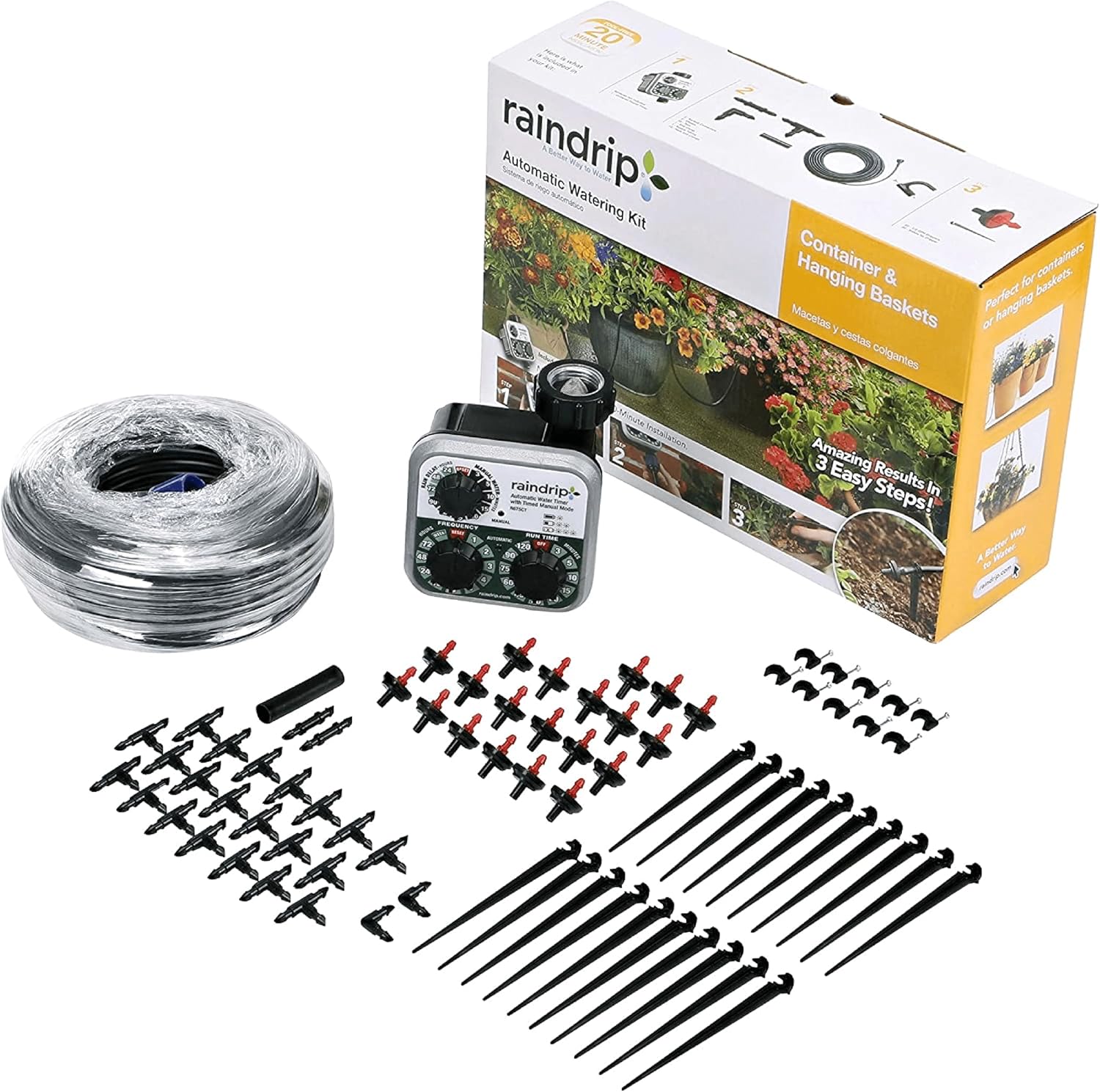
- Includes a water timer, so watering runs on a schedule
- Everything needed for 20 drippers is in the box
- Installs in three steps from a standard hose faucet
- Well-established kit with thousands of ratings
Cons
- Sized for up to 20 plants, so larger plots need extra tubing and drippers
- 1/4-inch supply tubing limits how far a single run can reach
The easiest way here to put a section of garden on automatic watering. For bigger properties, treat it as one zone and add kits or tubing as you expand.
Best runner-up

- Emitters adjust from off to micro-drip to spray
- Durable brass splitter resists rust and controls each line separately
- Push-in fittings and an installation video make setup simple
- Low price
Cons
- 50 ft of tubing and 12 emitters cover only a small area
- No timer included
A low-cost starter kit for small gardens, patios, raised beds and greenhouses. On larger ground it works best as one zone of a bigger system.
Most coverage
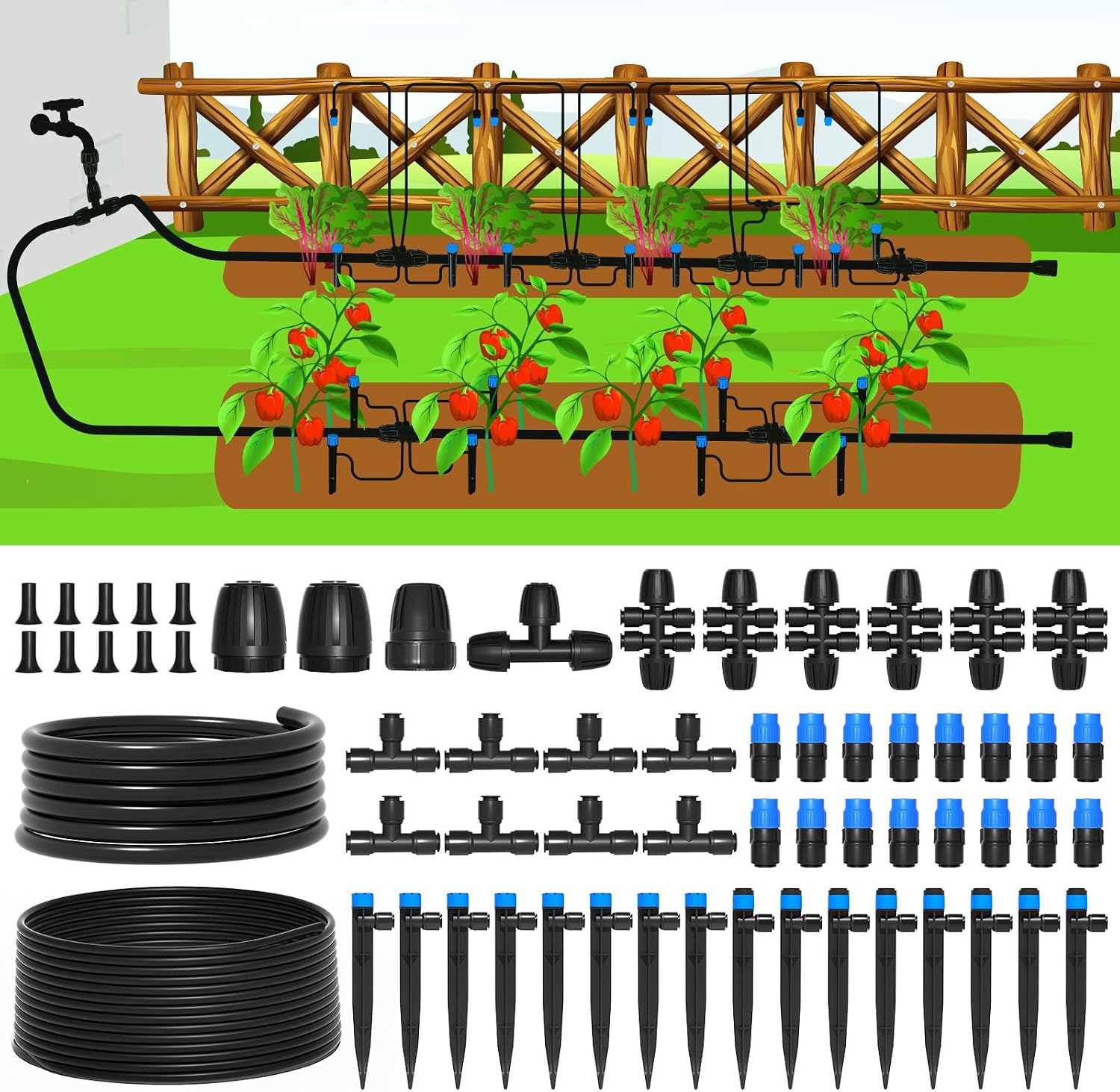
- 230 ft of tubing with a 1/2-inch mainline for longer runs
- Quick-connect fittings push together without leaks
- Three emitter types, each individually adjustable
- Good tubing length for the price
Cons
- No timer included
- 32 emitters may still be too few for very large plots
The best pick here if you need to reach several beds or rows from one faucet. The 1/2-inch mainline carries water farther than kits that use 1/4-inch tubing alone.
Best premium choice
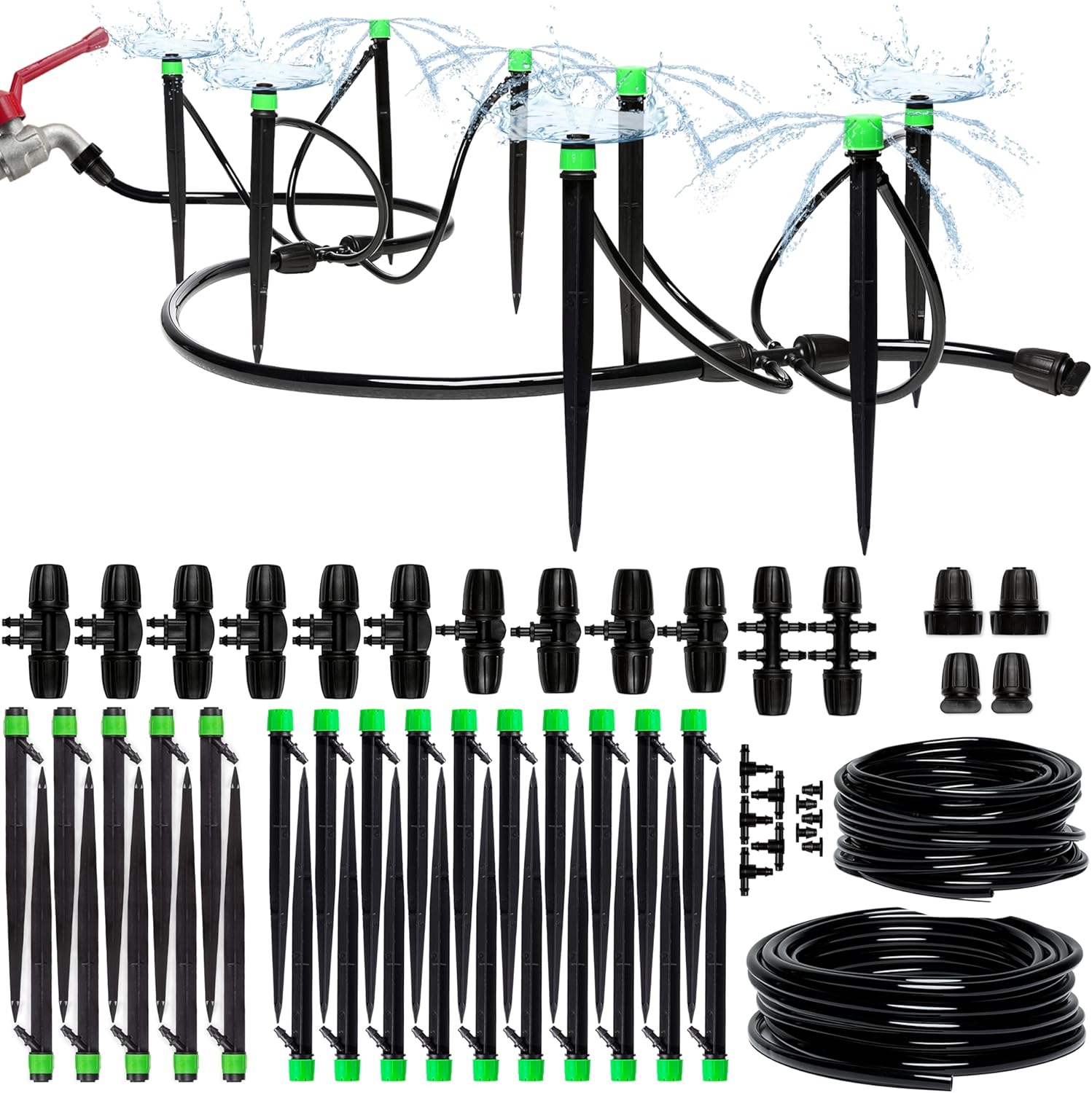
- UV-resistant tubing can run above or below ground
- Adjustable emitters on long 7.5-inch stakes stay put in loose soil
- Detachable emitter heads are easy to clean
- Clear sizing guidance for up to 30 emitters
Cons
- Higher price than similar-length kits
- No timer included
A well-made, complete kit for a few raised beds or a large container collection. It costs more than basic kits but comes with sturdier stakes, more fittings and UV-resistant tubing.
Also great
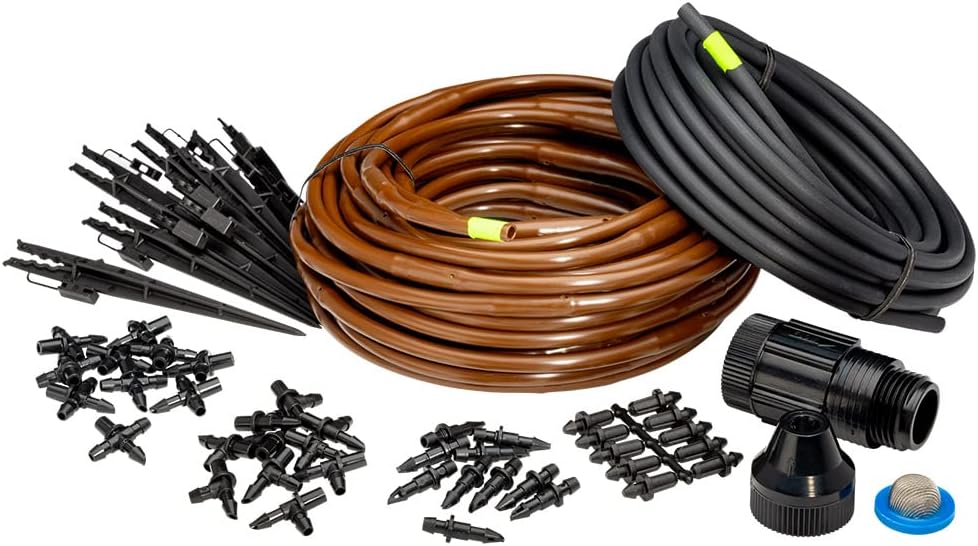
- Pressure-compensating emitters water evenly along the bed
- Built-in emitters every 6 inches suit dense vegetable plantings
- Professional-grade Rain Bird components
- Illustrated manual with several layout options
Cons
- Covers one 4 x 8 ft bed per kit
- Pricier than generic kits
A durable, even-watering choice for raised vegetable beds. For larger areas, use one kit per bed or extend it with more Rain Bird emitter tubing.
Buying Guide
When we’re picking out a watering system for big acreage, coverage capacity jumps right to the top of the list. The system should handle your entire area without leaving dead spots or making you constantly tweak things.
Check the flow rates and spray distance—do they actually fit your land size? If not, you’ll end up frustrated.
Efficiency and water conservation matter too. Adjustable timers and moisture sensors can save water, which honestly helps with the bills and just feels responsible.
Durability can’t be ignored. We look for weather-resistant materials that hold up outside, especially if corrosion is a concern. Nobody wants a system that falls apart after one season.
Maintenance should be easy. If you can clean or fix things without too much hassle, that’s a win.
Installation and scalability play a part as well. A system that’s simple to install saves time, and if it can grow with your acreage, even better.
| Feature | What to Look For | Why It Matters |
|---|---|---|
| Coverage Capacity | Flow rate, spray radius | Ensure complete land coverage |
| Water Efficiency | Timers, sensors | Reduce water waste |
| Durability | Weather-resistant materials | Long-lasting performance |
| Installation | Ease of setup, modular design | Saves time, allows expansion |
Compatibility with your current irrigation or power setup can make or break your decision. Flexible power sources or automatic controls just make life easier, especially on a big farm.
In the end, we want a watering system that fits our acreage, makes good use of water, and doesn’t add unnecessary headaches.
We independently select all products and services. If you click through links we provide, Plant Native may earn a commission with no extra cost to you. As an Amazon Associate I earn from qualifying purchases.