
Top Eco-Friendly Weed Barriers for Garden Beds: 5 Sustainable Options for 2025
We independently select all products and services. If you click through links we provide, Plant Native may earn a commission with no extra cost to you.
Last updated: November 7, 2026
Weed barriers are essential tools for maintaining healthy garden beds. They prevent unwanted plants from competing with cultivated crops for nutrients, water, and sunlight.
Eco-friendly weed barriers offer an environmentally conscious solution, allowing gardeners to control weeds without resorting to harmful chemicals or synthetic materials.
Natural weed barriers come in various forms, from biodegradable fabrics to organic mulches. These options not only suppress weeds but also contribute to soil health by decomposing over time.
Many eco-friendly barriers are made from renewable resources, reducing their environmental impact compared to traditional plastic alternatives.
When choosing an eco-friendly weed barrier, consider its durability, permeability, and ease of installation.
The material should be strong enough to last through a growing season but break down naturally afterward.
It’s crucial to select a barrier that allows water and air to reach plant roots while blocking sunlight from weed seeds.
We tested numerous eco-friendly weed barriers to find the best options for various garden types and climates.
Top Eco-Friendly Weed Barriers for Garden Beds
We’ve researched and tested numerous options to bring you the best eco-friendly weed barriers for garden beds. Our selections prioritize sustainable materials and effective weed control, helping you maintain a thriving garden while minimizing environmental impact.
These top picks offer durability and natural pest deterrence without harmful chemicals.
Our top pick

- Heavy-duty, tear-resistant woven polypropylene
- Woven needle design lets water and air pass through
- Easy to cut with scissors; green stripes help align plants
Cons
- Synthetic polypropylene, not biodegradable
- Staples or pins sold separately
- 50-foot roll may be short for large beds
The Happybuy roll is a solid all-round choice for garden beds and landscaping projects. Its 5 oz woven polypropylene covers 150 square feet, and the woven needle design lets water and air reach the soil while blocking weeds.
It cuts easily with scissors, and green stripes help with straight rows and plant spacing. The maker says the material won’t harm the soil and holds up under varied weather, which makes it a good base under mulch or gravel.
Best runner-up

- Large 4 x 300 ft roll covers big areas
- UV-resistant 125 gsm (3.7 oz) woven fabric
- Chemical-free and permeable to air and water
Cons
- Woven edges can fray when cut
- Polypropylene is not biodegradable
- Large roll is more than small gardens need
The TUFFIOM roll is the pick for larger gardens. The 4-foot width suits raised beds and rows, and the 300-foot length covers a lot of ground from one roll. Its 125 gsm heavy-duty polypropylene is UV resistant and chemical-free.
The fabric is designed to let air and water through so soil stays moist, and installation is simple: unroll, cut and pin it in place. It also works as an underlayer for artificial turf, vegetable patches and driveways.
Best budget option
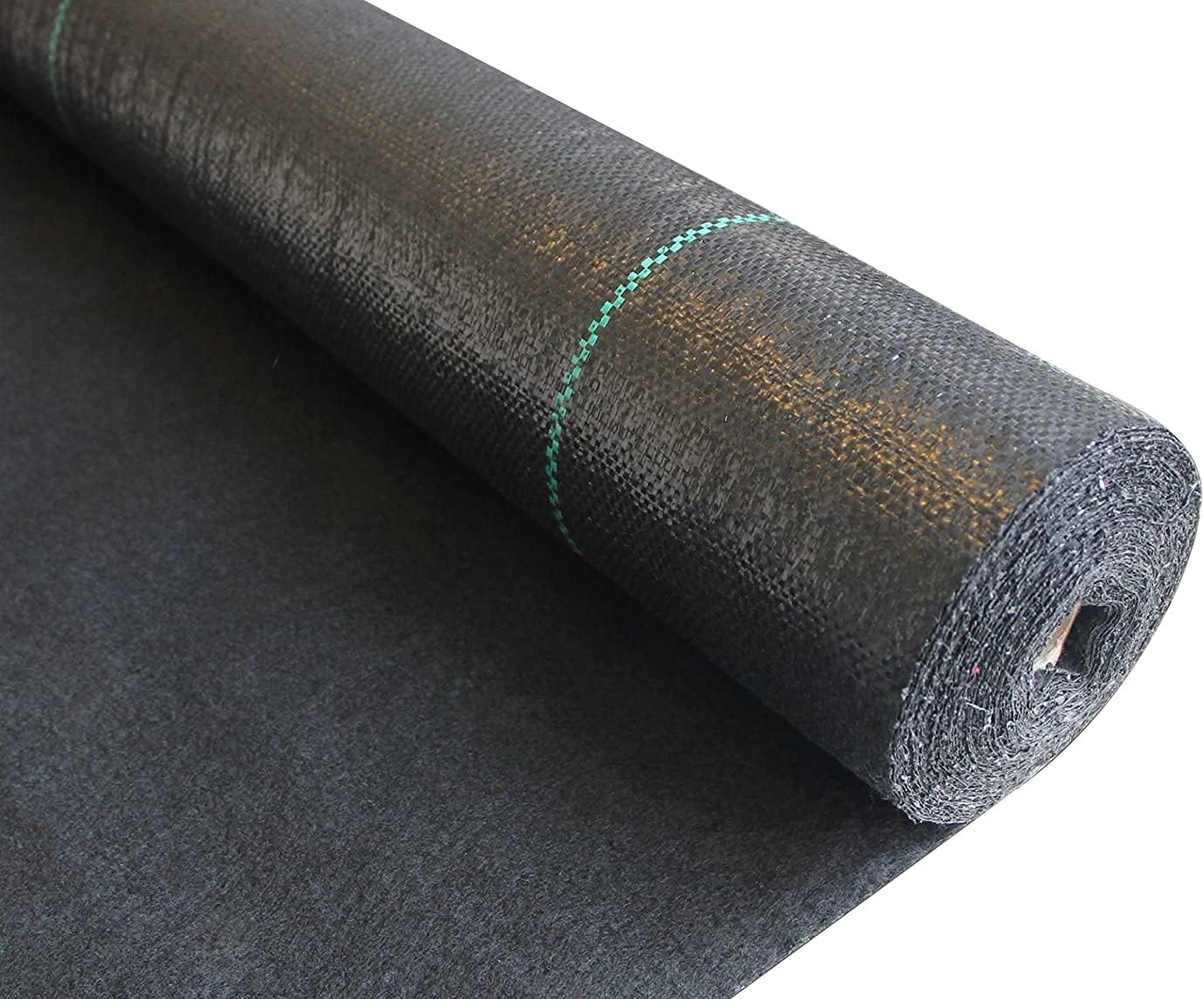
- Two-layer needle-punched 5 oz construction
- Conserves soil moisture while allowing air and water flow
- Helps reduce chemical weed control
Cons
- Not biodegradable
- Requires garden pins or staples (sold separately)
- 3 x 50 ft roll covers only 150 sq ft
The ECOgardener fabric is a well-reviewed, affordable roll for home gardens. The 5 oz material uses a two-layer, needle-punched design to block weeds for extended periods, even in harsh weather.
It conserves soil moisture while letting air and water through, and the maker pitches it as a way to cut back on chemical weed control. It suits raised beds, in-ground gardens and general landscaping, and it installs in minutes with garden pins or landscape staples.
Best premium choice

- True 5 oz dual-layer construction
- Rated to last up to 25 years
- Long 250 ft roll for big projects
Cons
- Higher price than lighter fabrics
- Heavy roll is harder to handle
- Polypropylene is not biodegradable
The Super Geotextile fabric is a premium pick for permanent plantings. It pairs a woven polypropylene layer for strength with a needle-punched layer that filters and holds water, at a true 5 oz weight.
The maker rates it to last up to 25 years and says it stays dimensionally stable in tough conditions. Use it under mulch or gravel in flower beds, raised beds and other landscaping projects; the 3 x 250 ft roll lets you cut long single pieces with little scrap.
Also great

- Very low price per roll
- 3.2 oz woven fabric with high tensile strength and tear resistance
- Lets water and nutrients through
Cons
- Edges may fray when cut
- Lighter than 5 oz fabrics
- Polypropylene is not biodegradable
The LGJIAOJIAO roll is the low-cost option for small beds. The 3.2 oz woven polypropylene is rated for high tensile strength and tear resistance, and it lets water and nutrients through while blocking weeds.
It cuts to any size or shape and is meant to go under mulch or another top layer. The 3 x 50 ft roll also works for paths, driveway underlayment and other garden layouts.
Buying Guide
When selecting an eco-friendly weed barrier for your garden beds, there are several key factors to consider:
Material
We recommend choosing natural, biodegradable materials like:
- Cardboard
- Newspaper
- Burlap
- Coconut fiber
These break down over time, enriching the soil.
Thickness and Durability
Look for barriers that are thick enough to effectively block weeds but allow water and air to penetrate. A thickness of 2-4 mm is often ideal.
Size and Coverage
Measure your garden beds and choose a barrier that provides adequate coverage. Many come in rolls or sheets of various sizes.
Permeability
Ensure the barrier allows water and nutrients to reach plant roots. Avoid plastic or non-porous materials.
Ease of Installation
Consider how easily the barrier can be cut, shaped, and secured in your garden beds. Some come with pre-cut holes for planting.
Longevity
Natural barriers typically last 1-3 growing seasons before decomposing. Choose based on your garden’s needs.
Cost
Compare prices. Remember that investing in a quality eco-friendly barrier can save money long-term by reducing weed control efforts.
By carefully evaluating these factors, we can select the most suitable eco-friendly weed barrier for our garden beds.
We independently select all products and services. If you click through links we provide, Plant Native may earn a commission with no extra cost to you. As an Amazon Associate I earn from qualifying purchases.
do the biodegradable fabrics hold up a full season, or do they break down too fast?