5 Standout Commercial-Grade Grain Moisture Tester Buyer’s Guide for Farm Managers to Ensure Accurate Crop Assessment
We independently select all products and services. If you click through links we provide, Plant Native may earn a commission with no extra cost to you.
Last updated: November 7, 2026
Grain moisture testers really matter if you’re a farm manager who cares about the quality and value of your harvest. These devices check the moisture content in grains like corn, wheat, and soybeans.
Knowing the moisture level helps you decide when to store or sell your crop. It’s a crucial step if you want to avoid spoilage and keep up with market standards.
Commercial-grade testers bring more durability and advanced features than the entry-level stuff. You’ll usually get temperature compensation, larger sample capacities, and rugged builds that handle the rough-and-tumble of farm life.
The right tester can make your operation noticeably smoother. It’s one of those little upgrades that saves you headaches in the long run.
When you shop for a moisture tester, accuracy and ease of use should top your list. It’s also smart to look at sample size, calibration options, and whether the thing can survive real field conditions.
We spent some time digging into the details and trying out several models. Here are five commercial-grade grain moisture testers that really stood out for farm managers.
Best Commercial-Grade Grain Moisture Testers
We picked out five top commercial-grade grain moisture testers that seem like a great fit for most farm managers. Each one offers solid accuracy and durability, which makes life a bit easier when you’re juggling crop quality.
Take a look below for more details to help you choose.
Our top pick
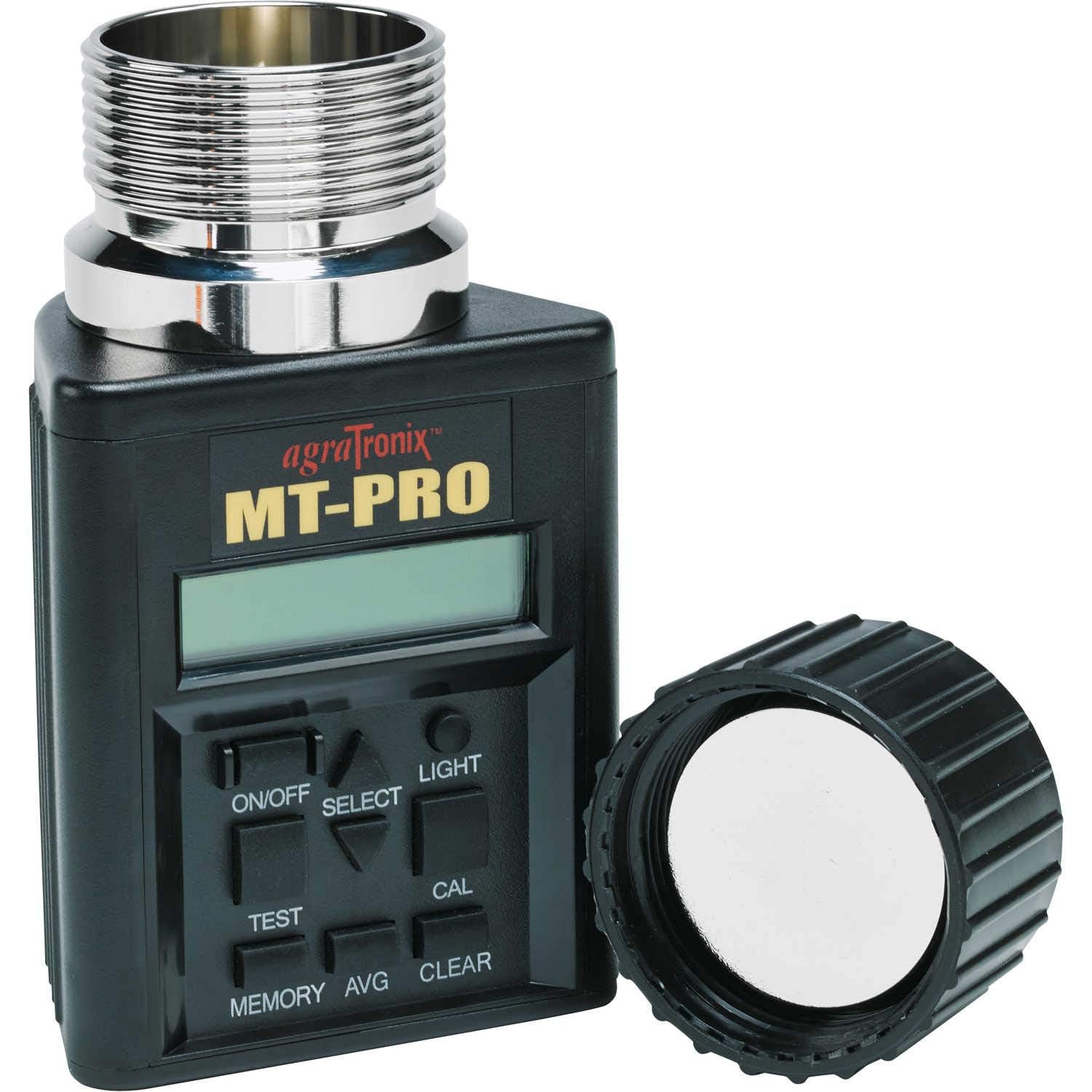
- Supports 40 different grain scales for versatile use
- Illuminated display in seven languages is easy to read in low light
- Single-point or multi-point calibration to match your local elevator
Cons
- Pricier than basic handheld meters
- A bit heavier than some portable models
- Accuracy depends on careful calibration and the person using it
The protective carrying case with shoulder strap is a nice touch if you’re moving between storage sites. Single-point calibration keeps setup simple, and precision multi-point calibration is there when you need a closer match to your elevator.
Best rain option

- Supports 16 different grain types with tailored calibrations
- Backlit, multilingual display that’s easy to read in low light
- Automatically averages up to 99 readings for reliable results
Cons
- Runs on two 9V batteries, which may need replacing often
- Bulkier than some smaller handheld testers
- Advanced calibration mode can take a while to set up
An easy basic mode keeps everyday checks simple, and the advanced precision mode lets you adjust each scale to your local elevator. Quick switching between grain types helps when you’re sampling corn, wheat, and soybeans all in one day. Overall, it’s a reliable device for farm managers who want precise readings across a variety of grains.
Best automatic option

- Supports testing moisture in 22 different grains
- Automatic temperature compensation improves accuracy
- 9V battery lasts up to a year, with auto shutoff to save power
Cons
- Instructions are tough to follow for several reviewers
- Fewer grain scales than the 40-scale AgraTronix MT-Pro
- Slightly bulky for field use
The LCD is clear, so quick checks are simple whether you’re in the field or back at the shed. Multi-point calibration and large-range error correction help keep readings accurate across the supported grains and seeds. It’s a reliable, versatile tool for farm managers who need to keep tabs on a wide range of grains.
Best from GOYERRNES

- Results within 10 seconds, with ±0.5% accuracy per the maker
- 200 g calibration weight for a quick check before each weighing
- Runs on 4 AA batteries or a USB power adapter
Cons
- Not a ton of user reviews yet
- Heavier because of the included accessories
- Easy to misplace the calibration weight if you’re not careful
The GOYERRNES meter covers more than 20 grain varieties over a 3–35% moisture range, so you don’t have to keep swapping tools during a busy harvest. It ships with an aluminum case, calibration weight, sampler and chute bucket. Overall, it’s a dependable pick for daily commercial use.
Best plastic option
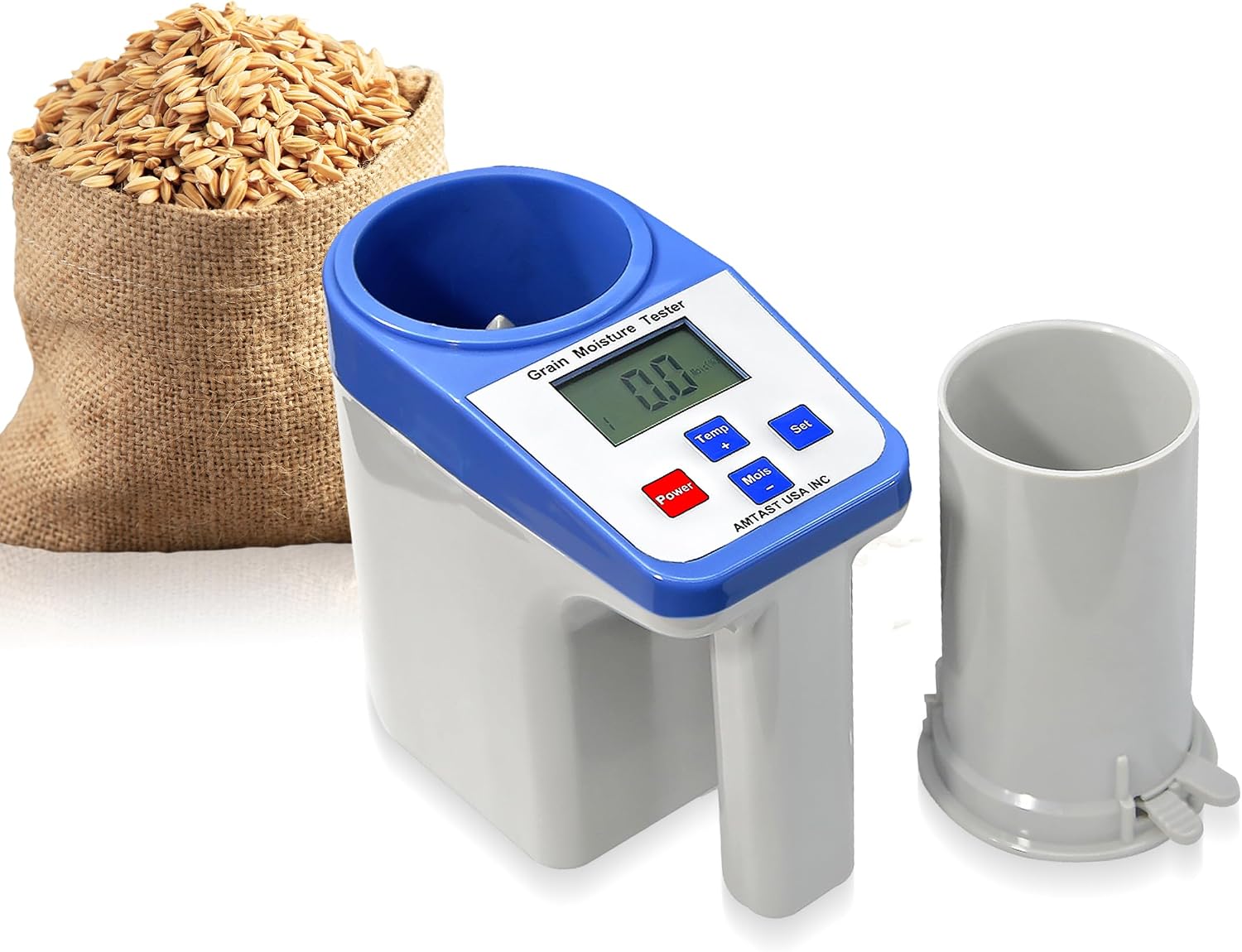
- 16 grain codes, including wheat, maize, rice, soybean and sorghum
- Shows grain temperature in °C or °F
- Multi-point calibration and large-range error correction
Cons
- Fewer grain codes than the 22-grain AMTAST AMT155
- Several codes cover rice types most U.S. farms won’t need
- Plastic body is less rugged than metal-cased testers
A single 9V battery lasts up to a year thanks to automatic shutdown, and readings appear in seconds. If you need measurements across dozens of crops, you may want to look elsewhere—but for the price, it covers the core grains well.
Buying Guide
When picking out a commercial-grade grain moisture tester, accuracy and durability really come first. You want a tester that gives you steady readings across all sorts of grain—otherwise, what’s the point?
Ease of use matters too. Devices with clear displays and straightforward calibration just make life easier, especially when the harvest rush hits.
I always lean toward testers that offer multiple grain settings and quick measurements. That way, you can breeze through mixed grain batches without a hitch.
Battery life and portability shouldn’t get overlooked. If you’re hauling equipment around the field, a lightweight tester with a solid battery is just less hassle.
| Feature | Why It Matters |
|---|---|
| Accuracy | Ensures reliable moisture readings |
| Calibration ease | Maintains precision over time |
| Grain variety options | Supports different crops |
| Speed of measurement | Saves time during busy harvest seasons |
| Battery life | Reduces downtime in the field |
| Portability | Enables easy transport and use |
I’d suggest checking out build quality as well. A tester with a tough casing and some water resistance tends to survive the rough-and-tumble of farm work.
Take a look at warranty and support options, too. Good after-sales help can really bail you out if something goes sideways.
We independently select all products and services. If you click through links we provide, Plant Native may earn a commission with no extra cost to you. As an Amazon Associate I earn from qualifying purchases.