Top 5 Amazon Commercial-Grade Grain Moisture Tester to Consider for High-Volume Production Efficiency
We independently select all products and services. If you click through links we provide, Plant Native may earn a commission with no extra cost to you.
Last updated: November 7, 2026
Grain moisture testers are crucial in agriculture and grain processing. They help make sure crops get harvested and stored at the right moisture levels to avoid spoilage and keep the quality up.
For high-volume production, commercial-grade testers offer faster, more accurate readings. They’re built to handle heavy use and demanding conditions.
Most of these devices measure moisture by checking electrical properties or weight changes in the grain. In commercial settings, you need a tester that works with different grains, delivers quick and reliable results, and doesn’t slow down your workflow.
When you’re picking a commercial grain moisture tester, accuracy, speed, measurement range, durability, and easy calibration matter most. Battery life and portability also make a difference, especially if you’re working out in the field.
We checked out several options on Amazon and narrowed it down to the top five testers that balance these features for high-volume production.
Top 5 Commercial-Grade Grain Moisture Testers
We researched a bunch of commercial-grade grain moisture testers made for high-volume jobs. Here are our top picks, chosen for their accuracy, toughness, and user-friendly design.
Our top pick
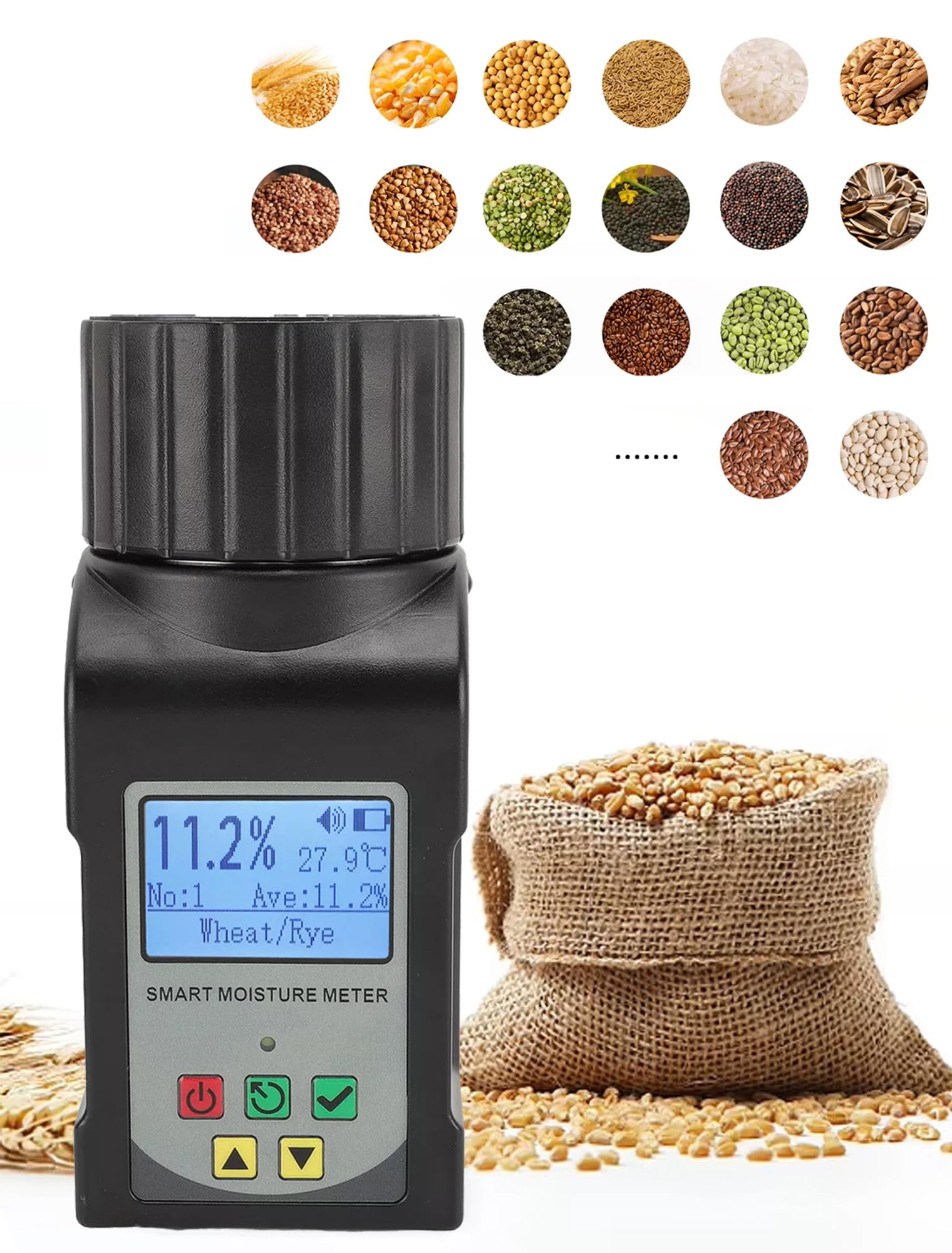
- Rated ±0.5% accuracy with automatic temperature compensation
- Supports 25 common grains for versatile use
- Data storage for tracking and analysis over time
Cons
- Batteries not included (4 AAA plus a CR-2032), so you’ll need to grab some
- Limited number of Amazon ratings so far
- Sold by a third-party seller, though shipped by Amazon
The GOYOJO GS25A is lightweight, compact and built to carry into the field or storage, with an intuitive LCD display and a straightforward interface. Switching between grain types is quick, and temperature compensation keeps readings consistent indoors and out. It covers the features that matter most for high-volume grain work, which makes it an easy recommendation.
Best value set

- Supports 16 different grain scales for broad versatility
- Automatically averages up to 99 readings to improve data reliability
- Backlit multilingual display for reliable readings in low light
Cons
- Needs two 9V batteries, which isn’t ideal for everyone
- Calibrating to local elevator settings takes some practice
- Display looks a bit old-school compared to newer models
The AgraTronix MT-16 handles grains like corn, soybeans and wheat, and each of its 16 scales can be adjusted to match your local elevator using the basic mode or the advanced precision calibration mode. Once you’ve got it dialed in, the MT-16 gives moisture readings in the 5% to 40% range, works from 32° to 113°F, and comes with a protective carrying case and shoulder strap.
Most durable option
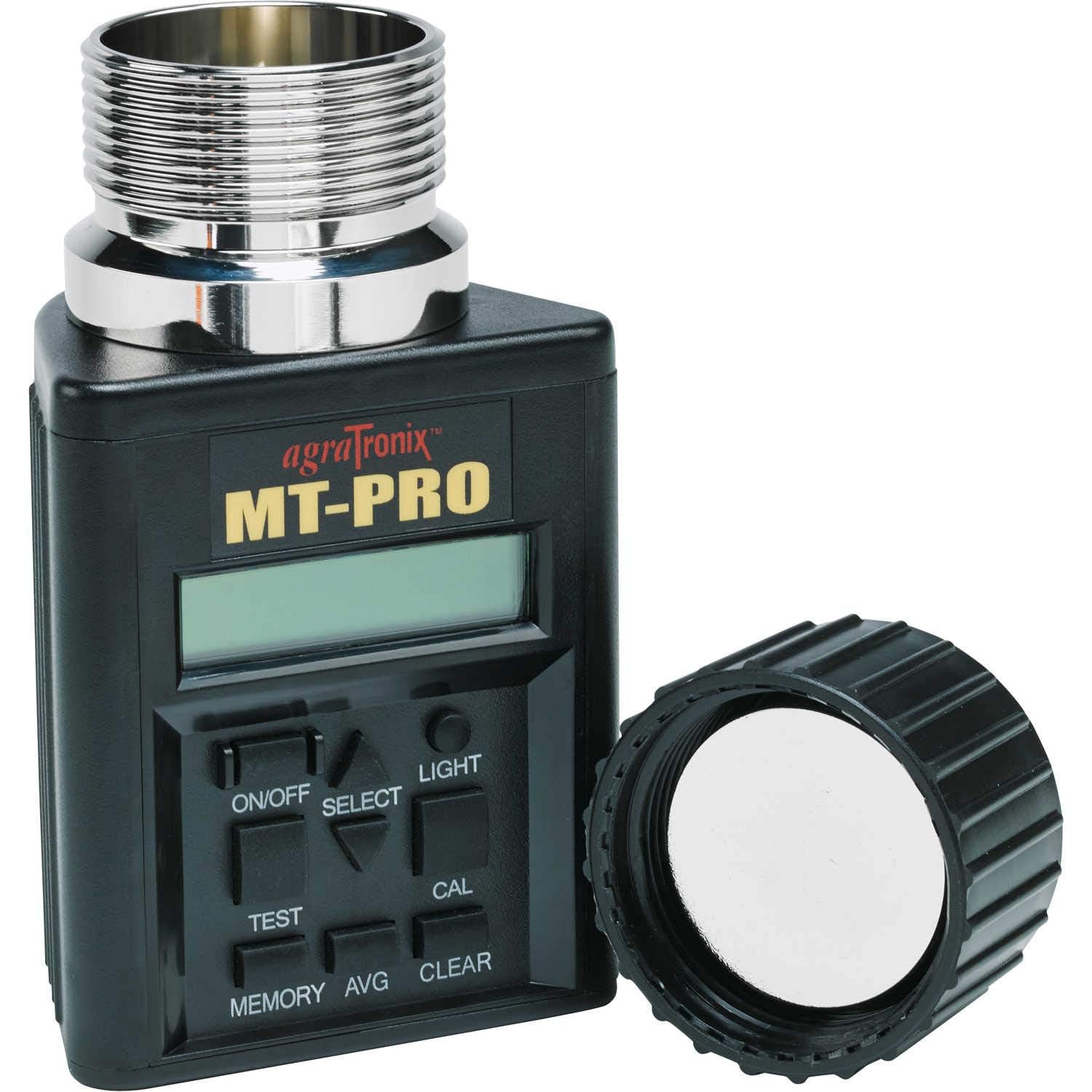
- Covers 40 grain types with easy direct readout
- Illuminated multilingual display makes nighttime use simple
- Protective carrying case with shoulder strap included
Cons
- Priced above most compact meters
- Calibration isn’t always straightforward without a local standard
- Heavier than some other compact meters
The MT-Pro is intuitive if you’ve used moisture meters before, and it offers single-point or precision multi-point calibration to match your local elevator. If you want something ultra-light, this might feel bulky. Still, the 40 grain scales and calibration flexibility make it a smart pick for high-volume grain jobs.
Best for quick results

- Readings in about 10 seconds, rated ±0.5% accuracy
- 200g calibration weight included for quick checks before weighing
- Flexible power options with USB or 4 AA batteries
Cons
- Not many user reviews, so long-term reliability is unclear
- Calibration takes a bit to learn the first time
- Bulkier benchtop-style design isn’t super portable
The GOYERRNES meter supports more than 20 grains, which makes testing several types in one day straightforward. It measures moisture, weight, density and temperature in seconds, so you’re not waiting around, and it ships with an aluminum case, power adapter, batteries, sampler and chute bucket. For the price, it does a solid job if you need fast, reliable testing in bulk.
Best budget pick
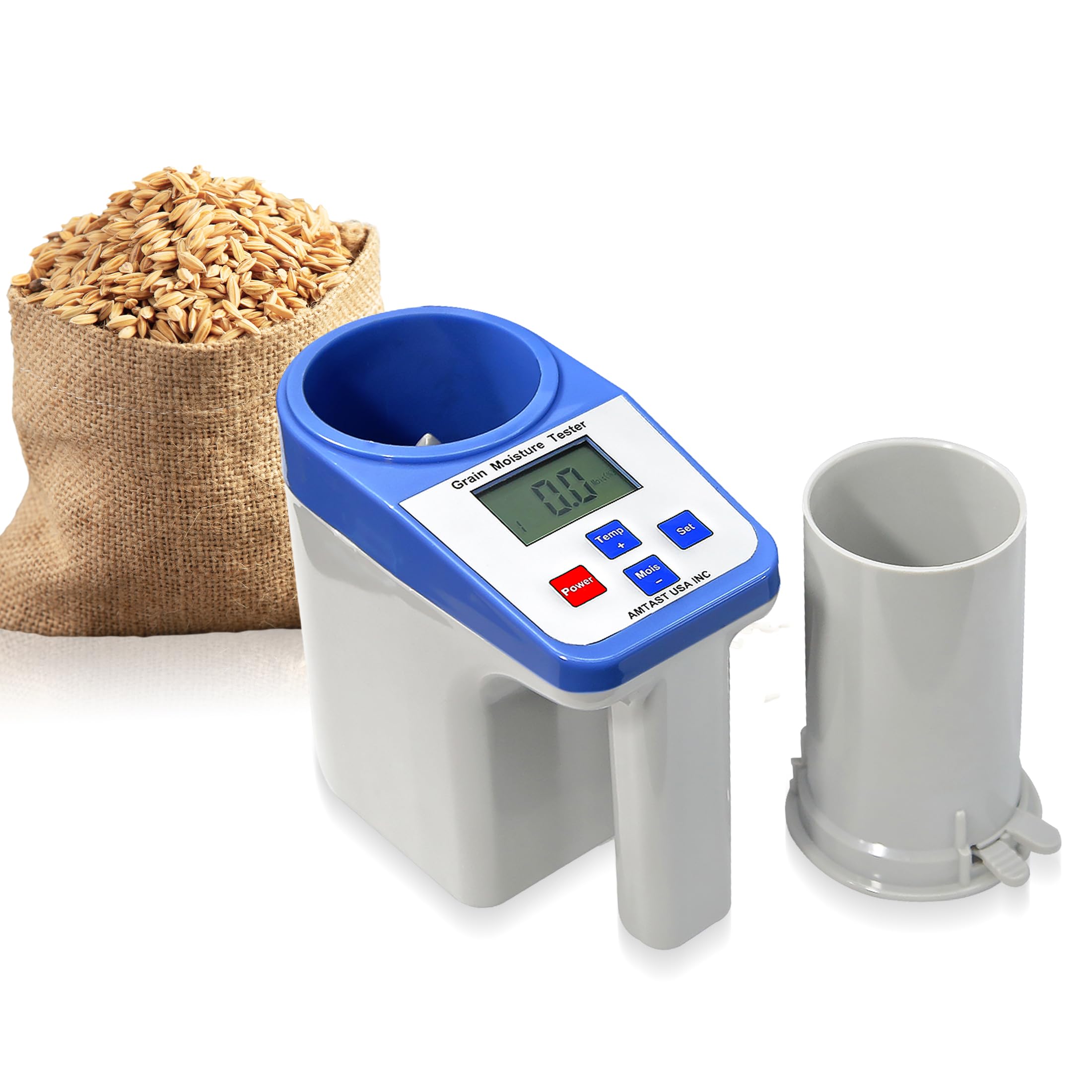
- Tests moisture for 16 different grains
- Quick results, plus temperature in °C or °F
- Low power use: one 9V battery lasts up to a year, with auto-shutdown
Cons
- Calibration can be tricky and mess with accuracy
- Display and interface are pretty basic
- Mixed feedback on reliability and durability
The AMTAST tester checks moisture across 16 grain codes, including wheat, maize, rice, soybean and sorghum, without swapping tools, and it supports multi-point calibration and large-range error correction. If you need versatile grain checks with minimal battery upkeep, it’s a practical choice.
Buying Guide
Choosing the right grain moisture tester really matters for accuracy and efficiency, especially if you’re dealing with high-volume production. It’s smart to focus on features that balance precision, durability, and ease of use.
Accuracy should come first, no question. Testers with a reliable sensor system and a digital readout help cut down on human error.
Consistent measurements lead to better decisions during processing. That’s just common sense.
Durability can’t be ignored, either. Commercial environments can get rough, so a tester with a rugged build and resistance to dust and moisture will probably last longer.
You’ll want something that doesn’t need constant repairs. Less maintenance is always a win.
Portability and ease of use can make a big difference in your workflow. Lightweight models with simple controls and clear displays speed up testing and make training less of a headache.
Battery life and flexible power options matter too. Long-lasting batteries or models that let you switch power sources help keep things moving during those busy times.
It’s worth comparing key features side by side. Here’s a table that highlights what to keep an eye on:
| Feature | Why It Matters |
|---|---|
| Accuracy | Ensures correct moisture levels for storage |
| Durability | Withstands rough handling and harsh conditions |
| Display | Clear, easy-to-read results minimize mistakes |
| Portability | Facilitates testing in different locations |
| Power Source | Reduces interruptions during extended use |
Don’t forget about sample size capacity and calibration options. Bigger capacity testers mean you don’t have to run as many batches, and easy calibration helps you keep things accurate.
We independently select all products and services. If you click through links we provide, Plant Native may earn a commission with no extra cost to you. As an Amazon Associate I earn from qualifying purchases.