Top 5 Commercial-Grade Row Tunnel for High-Volume Production: Efficient Solutions for Industrial Operations
We independently select all products and services. If you click through links we provide, Plant Native may earn a commission with no extra cost to you. As an Amazon Associate I earn from qualifying purchases.
Last updated: October 27, 2026
Row tunnels play a big role in commercial food production. They cook, bake, or dry products efficiently along a conveyor system.
You’ll find them in bakeries, snack plants, and anywhere high-volume food processing needs steady, even heat. Their design keeps products moving at a set pace through temperature-controlled zones, so everything gets cooked or dried evenly.
Commercial-grade row tunnels come in lots of sizes, with different heating methods and conveyor speeds. Manufacturers use electric, gas, or steam for heat, and the controls let you dial in the temperature just right.
Picking the right tunnel depends on your product, how much you need to process, and how much space you have. You’ll want to know each machine’s capacity and what it takes to keep it running smoothly.
Look at heat distribution, conveyor toughness, and how easy it is to clean when you’re choosing. Energy efficiency and automation matter too, since they’ll affect your long-term costs.
We tried out several row tunnels to find the five that actually hold up under heavy use.
Top 5 Commercial-Grade Row Tunnels for High-Volume Production
We dug through the options and landed on the best commercial-grade row tunnels for high-volume agricultural production. These picks are durable, efficient, and genuinely make a difference for crop protection and plant growth.
Our top pick
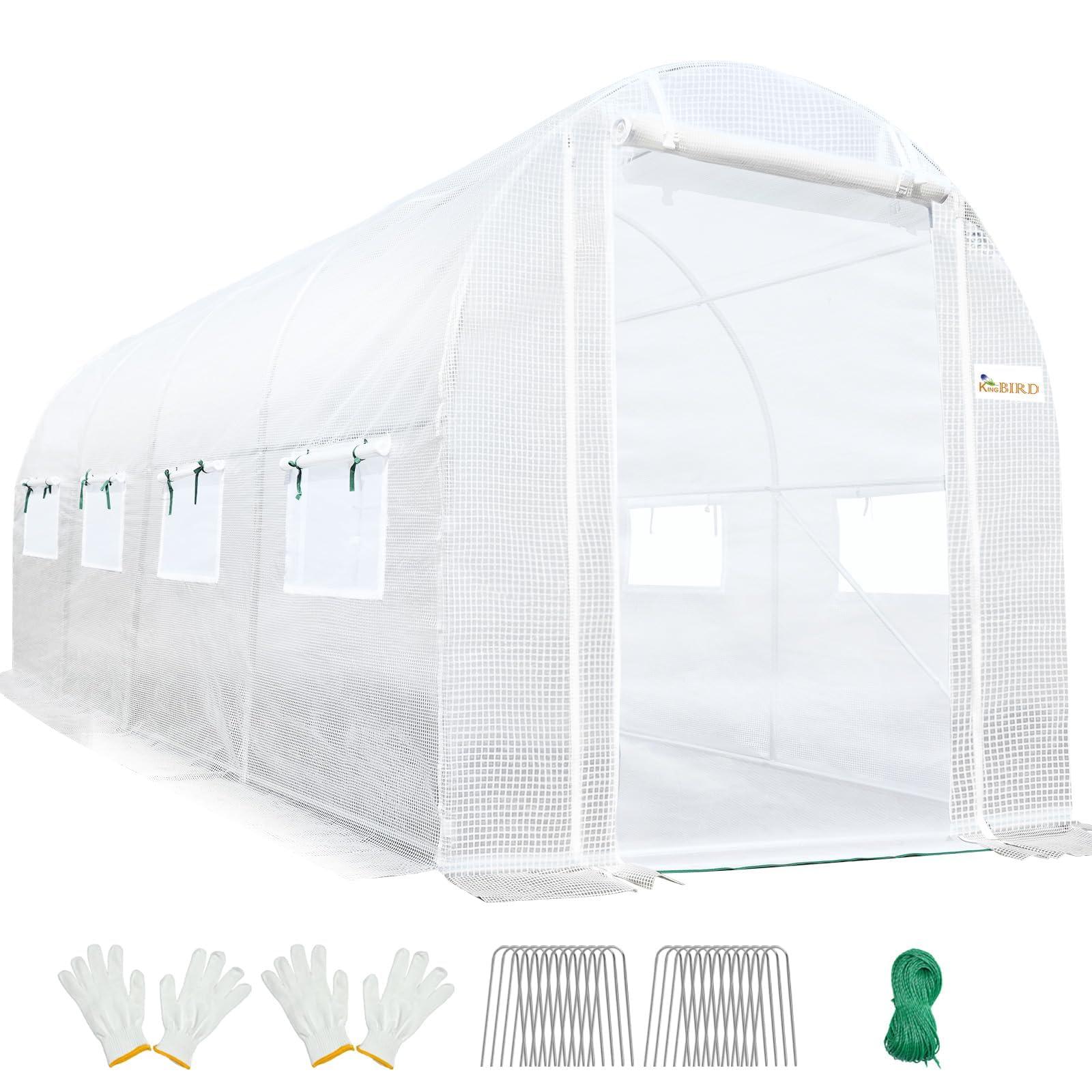
- Strong galvanized steel frame holds up well in varied weather
- UV-protected PE cover lasts much longer than typical greenhouse plastics
- Multiple roll-up windows and dual doors allow excellent airflow management
Cons
- Assembly requires at least two people and some time commitment
- While sturdy, it’s best placed in protected areas, not extreme wind zones
- The size demands a clear, leveled outdoor space for setup
We liked the reinforced steel frame—it felt sturdy even on windy days. The design kept the whole structure stable, which gave us confidence to use it season after season.
Managing temperature was pretty straightforward thanks to the roll-up windows and mesh doors. We could let in fresh air on hot days and keep warmth in during cold snaps without much fuss.
The PE cover really impressed us. It doesn’t break down quickly in the sun, which saves money in the long run compared to other greenhouses we’ve tried.
Best runner-up

- Spacious layout fits high-volume planting easily
- Multiple vents help manage humidity well
- Heavy-duty galvanized steel frame boosts durability
Cons
- No assembly instructions included, complicating setup
- Structure is vulnerable in strong wind without extra anchoring
- Watering system controls are basic and limited
The large size gave us plenty of space for different crops. Walking through the double zipper doors made moving plants and tools in and out a breeze.
Ventilation worked well, keeping humidity in check during our longer production runs. But putting it together took patience. Without instructions, we spent extra time figuring out which parts went where.
Ground securing materials didn’t feel like enough, so we added heavy stones to keep everything in place when the wind picked up. The watering system was handy, but we struggled to control the water flow as precisely as we wanted.
Overall, it’s a good fit for large-scale planting—if you’re willing to put in the work to set it up and reinforce it.
Best budget option

- Speeds up early plant growth by maintaining warmth
- Breathable design prevents overheating and promotes airflow
- Easy to place over garden beds with no assembly required
Cons
- Fabric can tear with rough handling or extended use
- Zipper quality is weak and may break quickly
- Lack of anchors means wind can displace the cover
We saw seedlings grow faster with the Garden Row Accelerator thanks to the warmer microclimate. The mesh fabric felt light but blocked cold wind, which helped our young plants get through chilly spring days.
We could slip it right over raised beds and rows without any hassle. Ventilation was good, so we didn’t see heat build up on sunny days.
But the lack of anchors was a pain—on windy days, it shifted more than we’d like. The fabric held up okay, but tore after a few weeks where it rubbed against bed edges. The zipper broke the first time we used it, which was frustrating.
Still, if you handle it gently and store it carefully, it does the job for early-season protection.
Best premium choice

- Quick setup with hoops and cover combined
- Good shade and heat protection for plants
- Accessible from both ends with drawstring openings
Cons
- Frame wires can be tricky to reinstall after removal
- No included storage bag
- Smaller height may limit larger plants
We set this tunnel up in minutes without hunting for extra parts. Folding it accordion-style let us reach any spot in the row, which made planting and harvesting easier.
The PE cover kept warmth in and blocked harsh sun, wind, and light frost. It noticeably improved growing conditions during heat waves and stormy weather.
It’s lightweight, so moving it around was simple. But the metal wires slipped out easily and took some fiddling to get back in place. Not having a storage bag was mildly annoying, but not a dealbreaker.
For smaller plants, it’s a straightforward way to stretch the season and keep things protected.
Also great

- Simple setup with no extra tools needed
- Dual zippered doors allow good ventilation and easy access
- Lightweight and foldable for convenient storage
Cons
- Material can pop loudly when first unfolded
- May require frequent securing to stay in place during wind
- Size limits large or very wide garden beds
We used this tunnel to shield plants from chilly spring nights. The zippered doors made it easy to check on seedlings without letting out all the warmth.
It’s super light, so setup took just a few minutes. The loud popping noise when unfolding caught us off guard at first, but we got used to it.
On windy days, we had to anchor it down with the included ground nails, or it would shift. For smaller beds or focused rows, it offers a nice mix of protection and usability.
It’s not made for huge plots, but it fits well on standard garden beds. Folding it up for storage was a breeze after the season wrapped up.
When you’re picking out a commercial-grade row tunnel for high-volume production, durability and efficiency really matter. The equipment should handle constant heavy use without breaking down all the time.
Ease of maintenance is another big deal. Machines with accessible parts and clear diagnostics can save you time and headaches.
Energy efficiency? That’s a factor too—it affects your ongoing bills. Look for models that use less power and offer energy-saving modes.
If you can, try out the equipment or at least watch some operation videos to see if it fits your workflow. Customer support and warranty terms can make a big difference down the line.
Buying Guide
When you’re picking out a commercial-grade row tunnel for high-volume production, durability and efficiency really matter. The equipment should handle constant heavy use without breaking down all the time.
Key features to consider include:
- Construction quality: Go for corrosion-resistant materials and sturdy frames.
- Throughput capacity: Make sure the machine matches or beats your production volume needs.
- Automation level: Higher automation usually cuts down on labor and keeps things consistent.
Ease of maintenance is another big deal. Machines with accessible parts and clear diagnostics can save you time and headaches.
Energy efficiency? That’s a factor too—it affects your ongoing bills. Look for models that use less power and offer energy-saving modes.
| Feature | Why It Matters | What to Look For |
|---|---|---|
| Build Quality | Longevity and reliability | Stainless steel, robust welds |
| Production Speed | Meeting output targets | High throughput rating |
| Automation | Labor reduction and precision | Programmable controls |
| Maintenance | Downtime minimization | Easy access panels |
| Energy Efficiency | Cost-saving on utility bills | Low power consumption |
If you can, try out the equipment or at least watch some operation videos to see if it fits your workflow. Customer support and warranty terms can make a big difference down the line.