Butterfly Garden Plants for Tennessee: Best Species for Year-Round Color and Pollinator Support
Last updated: October 26, 2026
Creating a butterfly garden in Tennessee means picking plants that handle the local climate and support native butterfly species.
Native milkweeds, coneflowers, and bee balm are top choices here. These plants offer essential nectar and host spots for butterflies through Tennessee’s growing seasons.
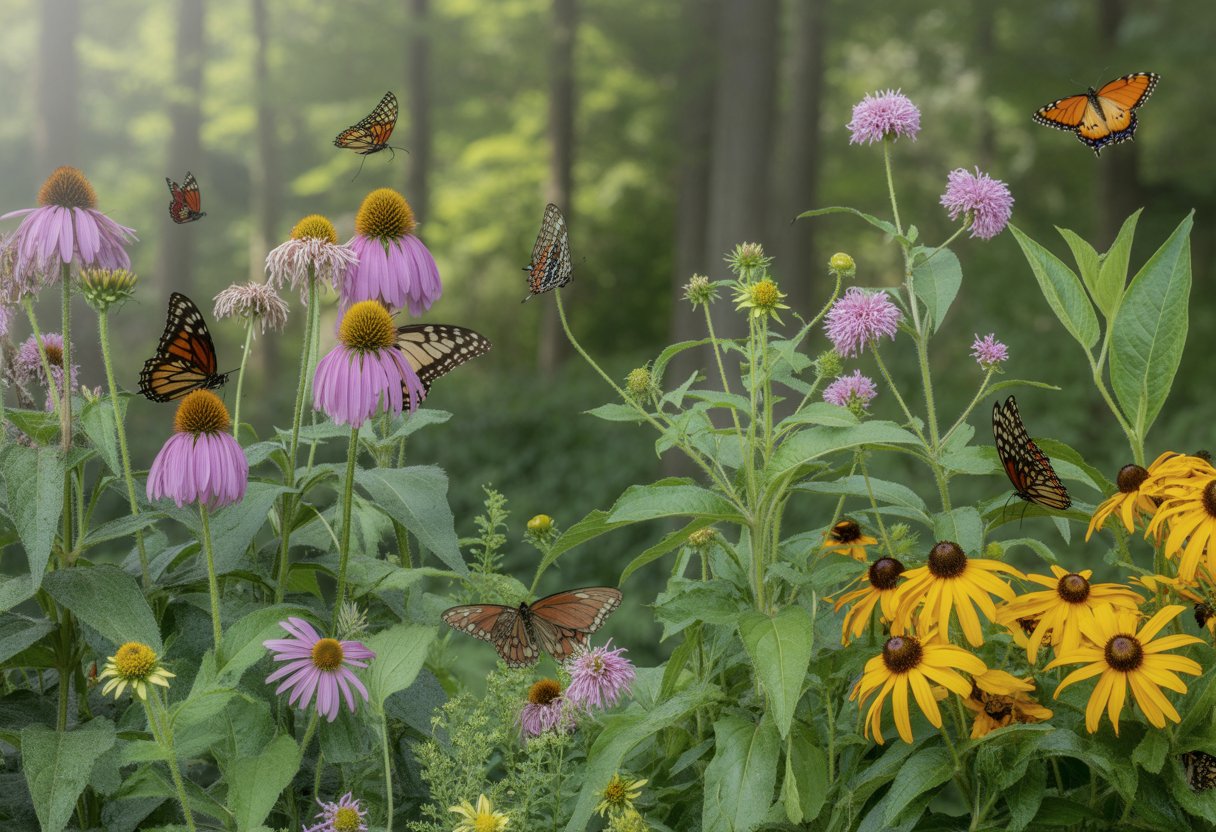
If you want to attract butterflies, focus on flowers that bloom at different times. That way, food sources stick around all season.
Mixing nectar-rich blooms with host plants for caterpillars helps butterflies at every stage.
Knowing which plants thrive in Tennessee makes it easier to build a vibrant, lasting butterfly garden.
Best Butterfly Garden Plants for Tennessee
Tennessee’s climate lets you grow a wide variety of butterfly-friendly plants.
Choose a good mix of native perennials, host plants, and nectar sources for a thriving butterfly garden all season.
Native Perennials for Attracting Butterflies
Native perennials stick around for years, offering steady food and shelter for butterflies. Plants like purple coneflower (Echinacea purpurea) and black-eyed Susan (Rudbeckia hirta) love Tennessee’s soils and attract lots of butterfly species.
Milkweed (Asclepias spp.) stands out—especially common milkweed and butterfly weed. Monarch butterflies depend on them for nectar and as a host.
Ironweed (Vernonia noveboracensis) and bee balm (Monarda didyma) put out bright blossoms that butterflies can’t resist.
Native perennials make life easier for gardeners, too, since they usually need less fertilizer and fewer chemicals.
Host Plants for Caterpillars
Host plants are where butterflies lay eggs and caterpillars eat.
Spicebush (Lindera benzoin) is the main host for spicebush swallowtail caterpillars. It also brings early spring blooms that pollinators enjoy.
Milkweed remains critical for monarch larvae. If you add parsley, dill, and fennel, you’ll help black swallowtails as well.
These plants let you support butterfly populations naturally, which is always a win.
Fragrant and Colorful Nectar Sources
Butterflies go for bright, fragrant flowers with open nectar.
Buddleia, or butterfly bush, is a favorite—its long flower spikes bloom from summer into fall.
Other good nectar plants include lantana, zinnias, and verbena. They bring color and loads of nectar.
Fragrant flowers like phlox and joe-pye weed also pull in butterflies.
If you combine these with native and host plants, you’ll see more butterfly species sticking around.
Plant Selection and Placement Tips
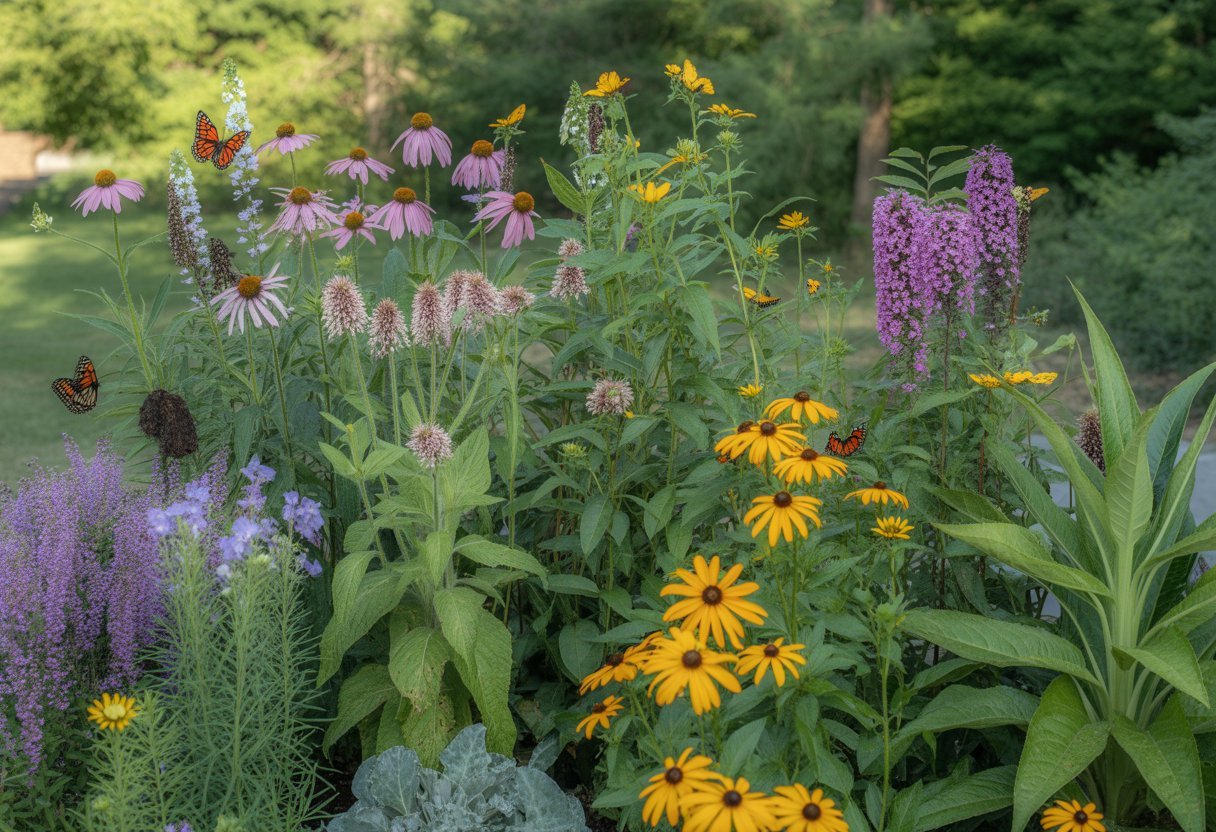
Choosing the right plants and placing them thoughtfully can really boost butterfly activity. Soil quality, sunlight, and watering needs all matter.
Bringing in companion plants can draw in more butterfly species and help with their lifecycle.
Garden Design for Maximum Butterfly Activity
Butterflies prefer clusters of flowers, not single plants scattered around. Grouping three to five of the same species makes your garden more inviting.
Vary the heights—tall plants like Joe-Pye weed go in the back, with shorter ones like milkweed up front. That creates layers butterflies can navigate.
Leave some sunny, open spots where butterflies can bask. Shrubs or fences can block wind, since butterflies hate blustery gardens.
Soil, Light, and Watering Considerations
Most butterfly plants in Tennessee do best in well-drained, moderately fertile soil. Aim for a slightly acidic to neutral pH, somewhere between 6.0 and 7.0.
You might need to amend clay or sandy soils to improve drainage.
Sunlight is huge. Pick full sun spots (at least 6 hours daily) for nectar plants like Purple Coneflower and Black-eyed Susan. Shade-tolerant plants, like Virginia Bluebells, work in partial shade.
Water regularly, especially the first year. Drip irrigation or soaker hoses help keep leaves dry and avoid fungal issues.
Companion Plants to Enhance Butterfly Diversity
Mix nectar plants and host plants to cover every stage of the butterfly lifecycle. Nectar plants like Butterfly Bush, Liatris, and Goldenrod are great picks.
Host plants—think milkweed for Monarchs or spicebush for Swallowtails—are just as important.
Flowering herbs like dill and fennel attract butterfly larvae. Native grasses near flower beds give pupae shelter.
Steer clear of invasive species; they can hurt native butterflies and reduce diversity.
Seasonal Maintenance and Care Guidelines
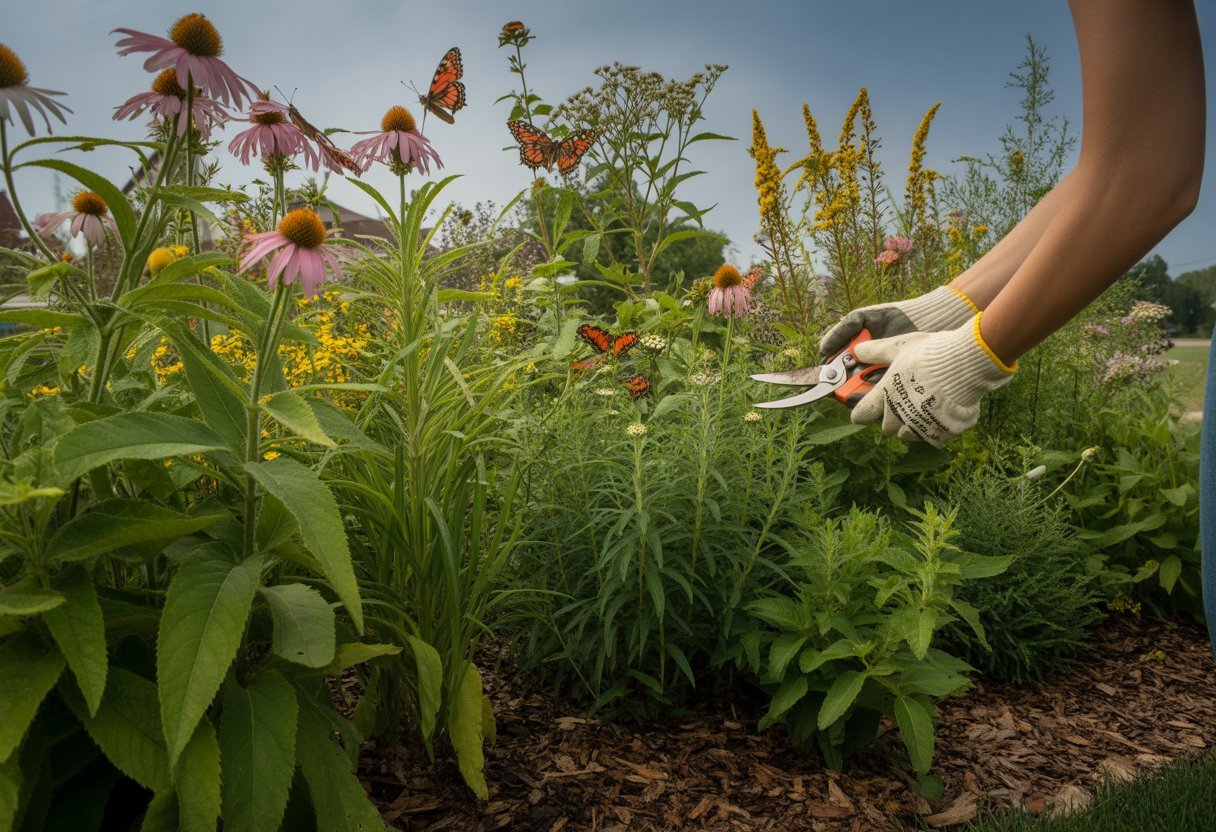
Keeping a butterfly garden going in Tennessee means handling specific tasks each season. Watering, pruning, and prepping for winter keep plants healthy and blooms coming.
Spring and Summer Care Strategies
When spring rolls around, clear out dead plant material and lay down fresh mulch. That helps regulate soil temperature and moisture.
Water about an inch per week, but don’t go overboard—roots can rot if things get soggy.
Deadhead spent flowers to keep blooms coming through summer. Pinch back tall plants like Joe-Pye weed for bushier growth.
A little organic fertilizer once a month helps flowers, but too much nitrogen can actually reduce blooms.
Watch for pests like aphids and caterpillars. Hand-picking or using insecticidal soap works best, and you won’t risk harming the butterflies.
Fall Preparation for Perennial Success
In fall, cut back certain perennials like milkweed to about 6 inches once they stop blooming. If you leave some seed heads, you’re actually helping overwintering butterflies and birds.
After the ground freezes, toss on a 2-3 inch layer of mulch to shield roots from Tennessee’s winter temperatures. Skip heavy fertilization during fall since plants are heading into dormancy.
Rake up fallen leaves to help prevent fungal diseases. Still, letting a bit of leaf litter stay can give beneficial insects a place to hide out.