
Best Soil for Rosemary Growth: Essential Tips for Healthy Plants
Last updated: August 21, 2026
Rosemary really likes well-draining soil, especially if it’s sandy or loamy. Ideal soil for rosemary should be slightly acidic to neutral, with a pH somewhere between 6.0 and 7.0—and it has to keep water from pooling around the roots.
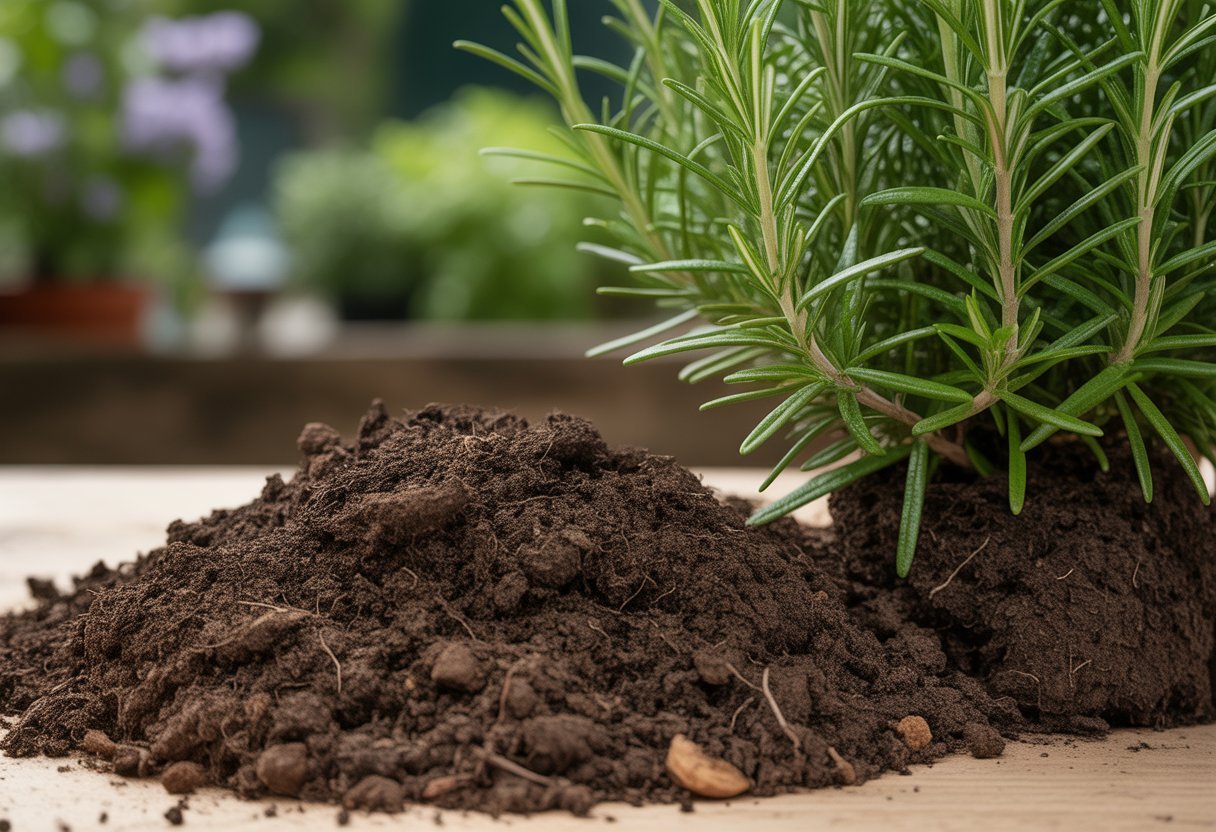
If you’ve ever tried growing rosemary in heavy, clay soil, you’ve probably seen it struggle with root rot. Improving drainage is just non-negotiable for healthy rosemary.
Adding organic matter like compost can boost soil fertility while still letting water drain away. That’s a win-win for your plants.
Essential Soil Requirements for Rosemary
Rosemary plants need certain soil conditions to really thrive. Good soil supports their roots, helps them take up nutrients, and just makes them happier overall.
Soil Type and Texture
You’ll get the best results with well-drained soil that has a light texture. Sandy or loamy soils work well because they let water escape and give roots some breathing room.
Heavy clay soils, on the other hand, tend to keep water trapped, which can lead to root rot. No one wants that.
Loamy soil—basically a mix of sand, silt, and clay—holds onto moisture but doesn’t get soggy. If your soil isn’t quite right, add some sand or organic matter to help rosemary plants out.
Optimal Soil pH Levels
Rosemary does best in slightly alkaline soil pH, usually between 6.0 and 7.5. If the pH drifts outside that range, the plant might struggle to get nutrients.
It’s worth testing your soil pH now and then. If it’s too acidic, add lime; if it’s too alkaline, a bit of sulfur can help. Keeping the pH in check supports healthy, robust rosemary.
Drainage and Aeration
Good drainage is absolutely key—rosemary roots hate sitting in water. Soil that drains quickly keeps roots happy and healthy.
Aeration matters too, especially since rosemary hangs around in the ground for years. Raised beds or adding gravel underneath can really help with air flow and drainage.
Soil Amendments and Preparation
Getting the soil right before planting makes a world of difference for rosemary. You’ll want to focus on texture, drainage, and nutrients to give these Mediterranean natives a good home.
Organic Matter and Compost
Mixing in organic matter like compost or well-rotted manure can make soil looser and richer. Compost adds nutrients slowly and also encourages helpful microbes.
A blend of garden compost or peat moss holds moisture but won’t drown the roots. Steer clear of fresh manure—it’s just too strong for young rosemary.
Spread about 2-3 inches of organic matter over the soil before planting. Work it into the top 6-8 inches so roots can move easily. Mulch around established plants to hold in moisture and cut down on weeds.
Enhancing Drainage with Perlite and Sand
Rosemary roots absolutely need great drainage. Mixing in perlite or coarse sand helps air get to the roots and keeps soil from packing down.
A common mix is 1 part perlite or sand to 2-3 parts soil or potting mix. Perlite is especially nice for container rosemary, keeping everything light.
Don’t use fine sand—it can actually make things worse by compacting. If your soil is heavy, a drainage layer under the planting spot or pot does wonders.
Balancing Nutrients and Fertilization
Rosemary isn’t a heavy feeder, but it does like balanced nutrients. Try a slow-release, low-nitrogen fertilizer in early spring.
You can go organic with compost tea or diluted fish emulsion every month or so during the growing season. Skip high-nitrogen fertilizers—they’ll make the plant leafy but less fragrant.
Test your soil pH to keep it between 6.0 and 7.0. If it’s off, adjust with lime or sulfur to keep rosemary happy.
Planting and Propagation Techniques
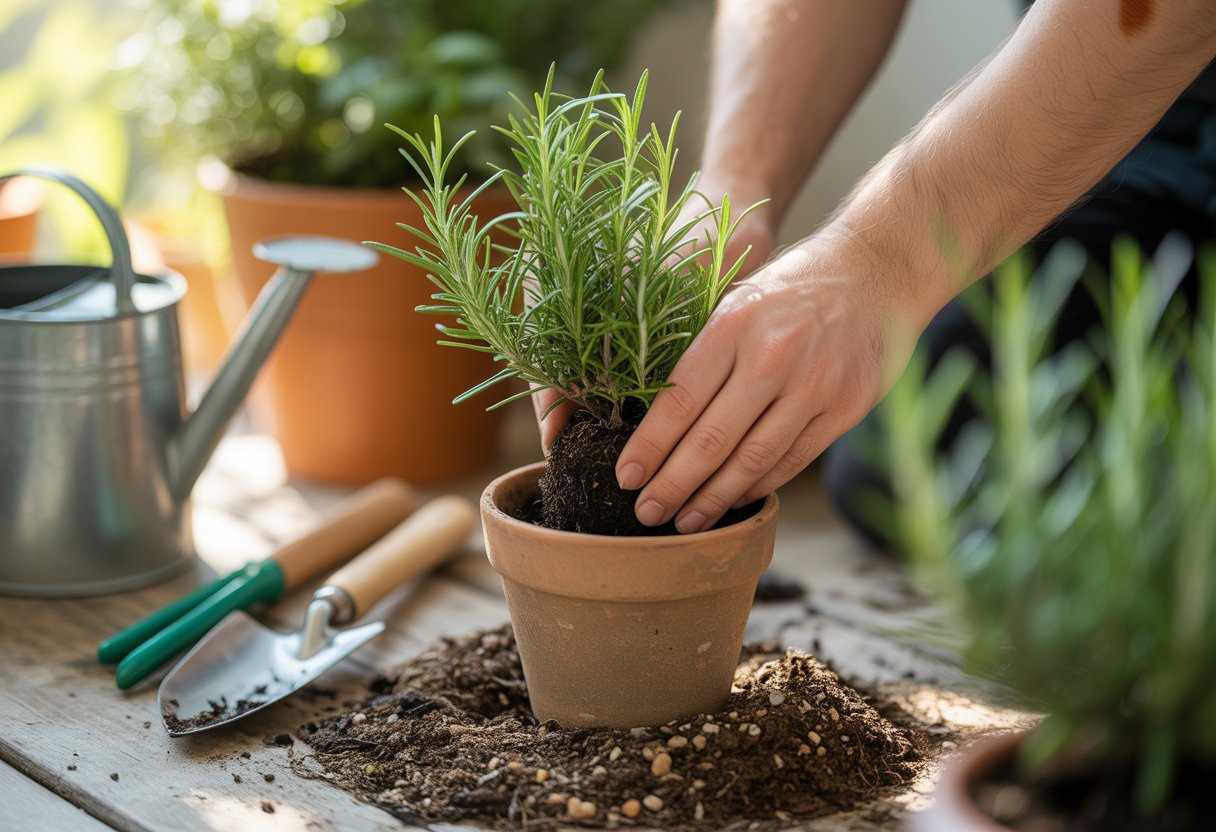
Rosemary does best when you use the right planting and propagation techniques. Starting from seed or cuttings each has its quirks, and transplanting gently keeps the plant healthy.
Growing Rosemary from Seed
Most folks start rosemary seeds indoors since it’s easier to control temperature and moisture. Just press seeds lightly into a well-draining mix—don’t bury them, since they need light to sprout.
Aim for a temperature of about 70°F (21°C), and keep the soil moist but not soaked. Germination can take anywhere from 2 to 4 weeks, sometimes more.
Once seedlings have two sets of true leaves, give them plenty of light so they don’t get leggy. Thin them out and space them 6 to 8 inches apart when you move them outside.
Honestly, growing rosemary from seed can be a slow, sometimes unpredictable process. Some seeds just don’t want to wake up.
Planting and Transplanting Rosemary
Pick an outdoor spot with sandy or loamy, well-draining soil and a pH between 6.0 and 7.5. Dig a hole just a bit bigger than the root ball.
Gently remove the plant, keeping the root ball together. Set it in at the right depth—level with the soil surface. Backfill with your amended soil and press gently.
Water well after planting to help the soil settle. Space rosemary plants 2 to 3 feet apart, since they can get pretty bushy—sometimes up to 4 feet tall.
Don’t overwater. Rosemary really doesn’t forgive soggy roots.
Propagation by Cuttings and Layering
Lots of gardeners prefer cuttings to keep their favorite rosemary traits. Take semi-hardwood cuttings about 4 to 6 inches long from healthy stems.
Strip the lower leaves, dip the end in rooting hormone, and stick it in a well-draining medium. Keep things moist and give them indirect light. Roots usually show up in 3 to 6 weeks.
Layering works too—just bend a low branch to the soil, nick it a bit, and pin it down. Roots should form along that spot after a few weeks.
Both methods work faster and more reliably than starting from seed.
Ongoing Rosemary Care and Harvesting
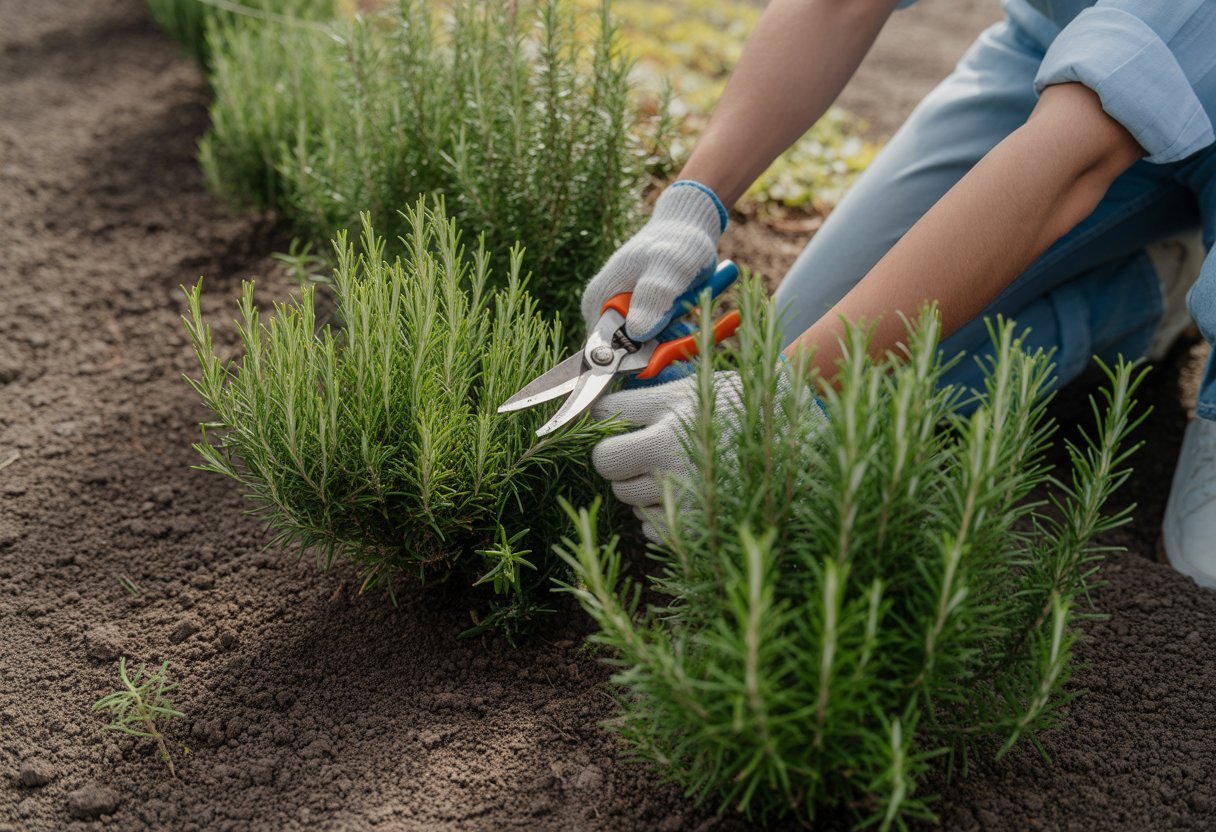
Caring for rosemary means paying attention to watering, watching out for root rot, and harvesting at the right time. If you get these basics down, you’ll have healthy plants and plenty of fragrant sprigs for cooking.
Watering and Drought Tolerance
Rosemary is pretty drought tolerant once it’s settled in. It likes well-drained soil and full sun.
Water only when the top inch or two of soil feels dry. Overwatering stresses the plant, so go for deep, infrequent watering.
During hot spells, watering once or twice a week is usually enough. If you’re growing rosemary in a pot, you’ll need to water more often.
Mulch helps keep the soil moist but don’t let it pile up against the stems.
Preventing Root Rot
Root rot usually happens when soil stays too wet. Rosemary should never sit in soggy soil.
If you’re worried, try raised beds or containers with drainage holes. Sandy or loamy soil cuts down the risk.
If leaves turn yellow or the soil smells bad, cut back on watering right away. Sometimes, trimming off affected roots and repotting in fresh, dry soil can save the plant if you catch it early.
Harvesting and Uses
You can start harvesting rosemary when the plant hits about 6 inches tall. I usually snip stems early in the morning since that’s when the oils—and the flavor—are at their peak.
Grab some sharp scissors or pruners, not your kitchen shears, so you don’t crush the stems. Trim off 3 to 5-inch sections from the top, but make sure to leave at least two-thirds of the plant so it keeps growing strong.
Fresh rosemary? Fantastic for seasoning pork or tossing into all sorts of recipes. If you dry it, you can use it for potpourri or stash it away for later.

Some of this might be region-specific. What works in the south doesn’t always apply up north.
Thanks for the constructive input! We’ll look into updating with more detail. -Plant Native Team