
Ornamental Rosemary for Landscaping: Enhancing Gardens with Aromatic Elegance
Last updated: August 16, 2026
Ornamental rosemary pops up everywhere in landscaping, and it’s easy to see why. The evergreen leaves, that fresh scent, and low maintenance requirements win over gardeners again and again.
It adds structure and texture to garden beds. Rosemary thrives in all sorts of climates, especially if you give it a sunny, well-drained spot.
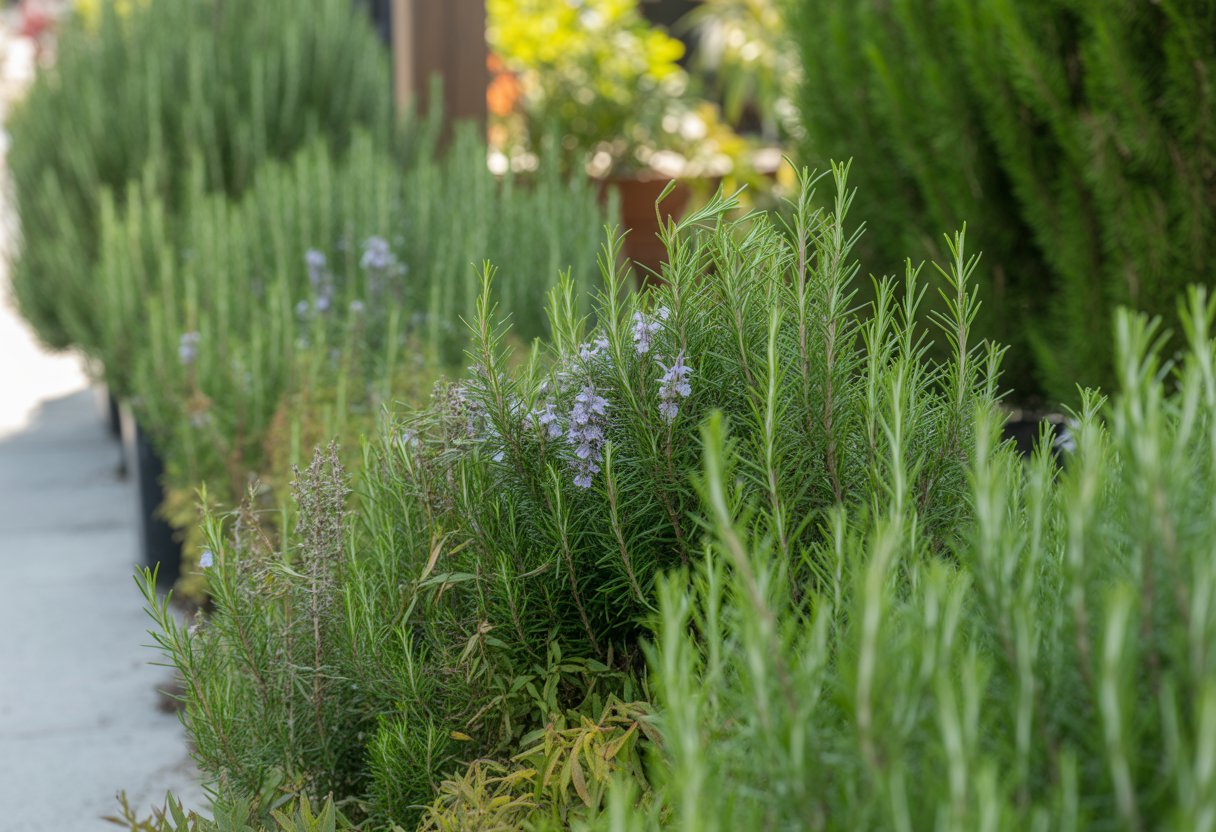
Rosemary looks great and works hard, too, attracting pollinators and fitting right into a natural herb garden. You can shape it into hedges, let it sprawl as ground cover, or keep it as a bold accent—there’s really no wrong way to use it.
Thanks to its drought tolerance and pest resistance, rosemary is a solid pick for sustainable landscaping. Landscapers and home gardeners alike appreciate how it balances beauty with reliability.
Understanding Ornamental Rosemary
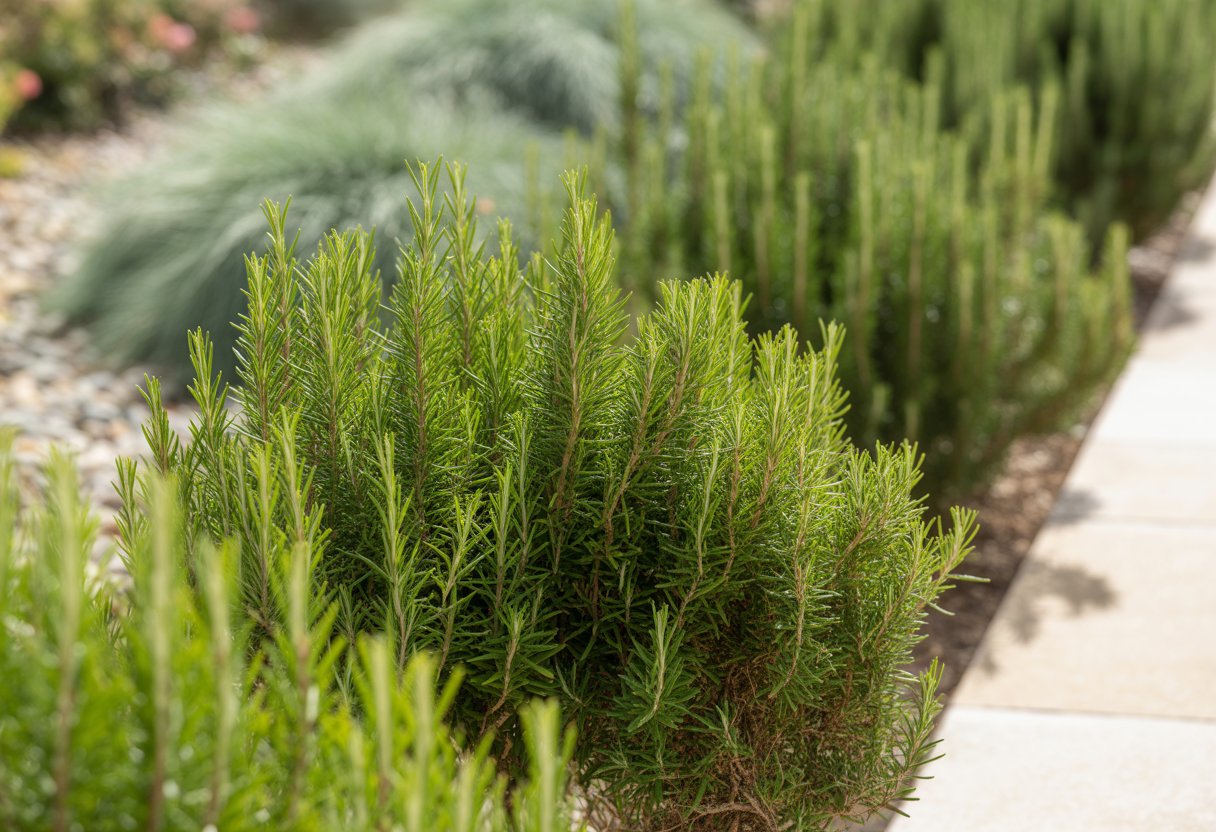
Ornamental rosemary brings together visual charm and practical perks. Landscapers find it useful for more than just looks.
It stands out with unique botanical traits and benefits that actually matter in a real garden.
What Sets Ornamental Rosemary Apart
Unlike rosemary you toss into your soup, ornamental types focus on form. They usually grow with denser foliage and can be trimmed into hedges, spirals, or even quirky topiaries.
The leaves tend to be smaller, sometimes showing off silver-blue or deep green shades that boost visual interest. You’ll spot delicate flowers, too—pale blue, sometimes purple, and always a nice pop of seasonal color.
Outdoors, especially in Mediterranean climates, these plants handle heat, drought, and poor soils better than most other herbs.
Botanical Varieties and Characteristics
A few Rosmarinus varieties stand out for landscaping, like ‘Blue Spires’, ‘Tuscan Blue’, and ‘Prostratus’. Each brings something different:
- Blue Spires: Tall and upright, with narrow leaves and deep blue flowers.
- Tuscan Blue: Upright and dense, aromatic leaves, lavender flowers.
- Prostratus: Low and trailing—perfect for ground cover.
All share that classic needle-like, evergreen leaf and strong resinous scent. They develop woody stems over time, so they fit right into structured gardens. Plus, they’re drought-resistant and need well-drained soil.
Benefits of Using Rosemary in Landscaping
Rosemary’s a real workhorse. Once it settles in, you barely need to water it, which helps save resources.
The dense leaves make solid privacy screens and windbreaks. Thanks to aromatic oils, rosemary deters pests like mosquitoes and deer—no chemicals needed.
Bees and butterflies love the flowers, so your pollinator population gets a boost. The evergreen foliage brings steady texture and color to the garden, pairing well with other Mediterranean herbs and drought-tolerant plants.
Planting and Caring for Ornamental Rosemary
Rosemary needs a few things to really shine: the right soil, watering routine, sunlight, and good plant neighbors. These factors can make or break how it looks and smells.
Ideal Growing Conditions
Give rosemary full sun—at least six hours a day. Warm climates suit it best, but it can handle a touch of frost if you keep it sheltered.
Good air movement helps keep fungal disease away. Temperature-wise, 60°F to 80°F is the sweet spot.
Rosemary hates soggy feet and shade. If you want thick, vibrant growth, make sure it gets plenty of sun.
Soil, Watering, and Sunlight Requirements
You need well-draining soil. Sandy or loamy works, with a pH between 6.0 and 7.0.
Mix in some organic matter for better soil structure and nutrients. Water when the top inch dries out—overdoing it leads to root rot, but letting it get bone dry isn’t great either.
Full sun fuels healthy, robust growth.
Companion Planting Strategies
Rosemary gets along with other Mediterranean herbs—think thyme, sage, oregano, and mint. They all want similar sun and soil, and together, they help deter pests naturally.
Don’t plant rosemary next to water-hungry or shade-loving plants. Mixing herbs in beds or containers makes care easier and saves space.
You get more variety in looks and scents, too.
Dealing with Climate and Humidity
Rosemary doesn’t love humidity or poorly draining soils. In muggy areas, give it space and airflow to keep fungus at bay.
If winters get cold, grow rosemary in pots so you can bring it inside or find shelter. Mulch helps even out soil temperature and moisture, giving the plant a fighting chance during wild weather swings.
Adjust how often you water based on humidity—less during damp spells, a bit more when it’s hot and dry.
Designing Landscapes with Ornamental Rosemary
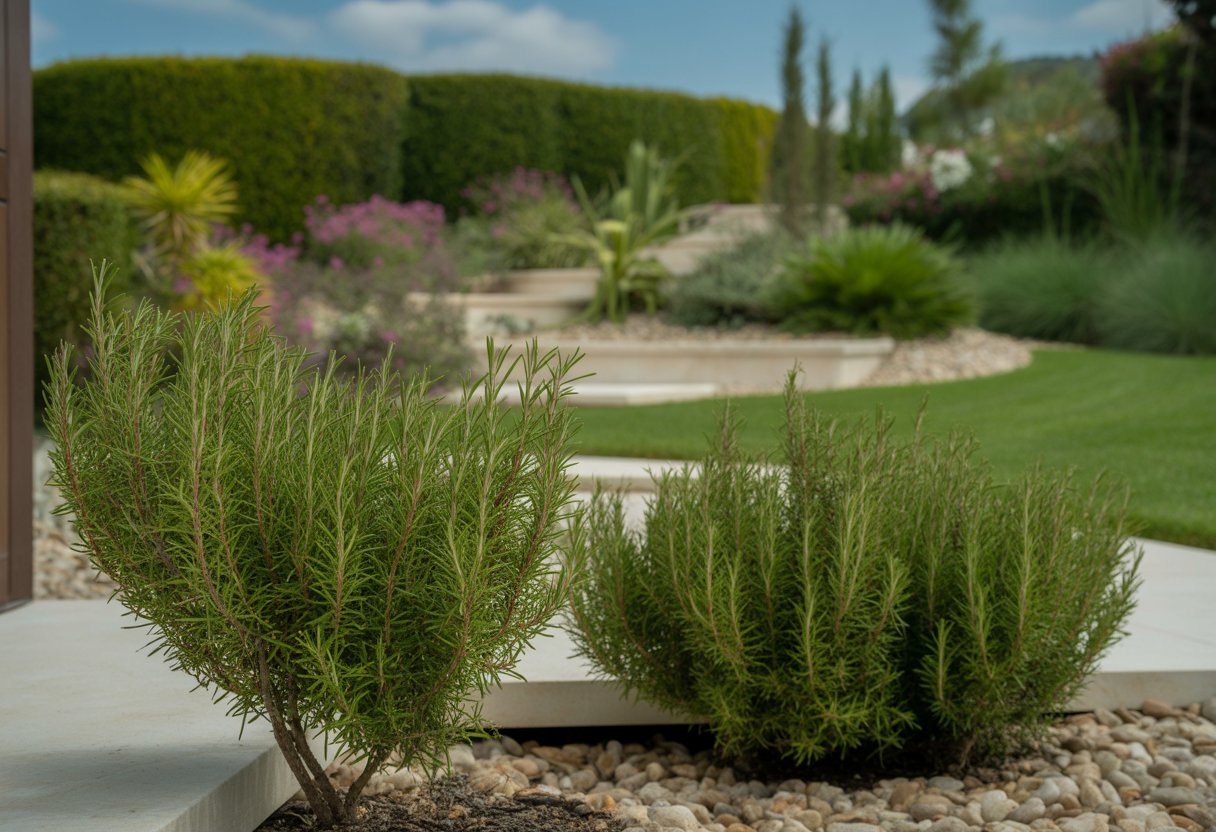
Rosemary can fit into so many landscape styles. Its texture, fragrance, and evergreen habit make it a go-to for Mediterranean and herb gardens.
If you place it well, you’ll get both good looks and practical benefits.
Creative Landscaping Ideas
Shape rosemary into low hedges or borders, or use it as ground cover to mark out pathways. The dense growth gives structure and green color all year.
Trim it into geometric shapes for a formal vibe—honestly, it’s kind of fun. Rosemary works in containers, too, so patios and small spaces aren’t left out.
Pair it with gravel or stone for a classic Mediterranean look. Mixing varieties adds a little surprise with different colors and leaf shapes.
Attracting Pollinators
Rosemary blooms draw in bees and butterflies, mostly in spring and early summer. That helps your whole garden thrive.
The aromatic oils don’t scare away the good bugs, so rosemary fits right into pollinator-friendly gardens. Keep some rosemary blooming through the season for a steady stream of pollinator visitors.
Combining Rosemary with Other Plants
Rosemary, sage, thyme, oregano, and mint make a great team. They all like the same conditions and create a handy kitchen garden that looks good, too.
Stick to drought-tolerant companions to avoid overwatering headaches. Mint can take over, so keep an eye on it.
Grouping these herbs attracts more pollinators and helps with natural pest control.
Practical and Culinary Uses in the Garden
Rosemary isn’t just for show. That strong aroma and evergreen look make it a favorite for both design and the kitchen.
Gardeners can snip sprigs for seasoning or work it into edible landscape plans.
Harvesting and Using Rosemary as a Seasoning
For the best flavor, harvest rosemary in the morning after dew has dried. Snip leaves from the new growth so you don’t stress the plant.
Fresh rosemary works wonders in meat dishes, stews, and roasted veggies. To dry it, hang sprigs in a warm, dry spot out of direct sunlight for about two weeks.
Store dried leaves in airtight containers—they hold onto their flavor. Both fresh and dried, rosemary adds a piney aroma and a touch of bitterness to recipes. Not everyone loves that, but it’s hard to imagine a roast chicken without it.
Edible Landscaping Options
Rosemary just works in edible landscapes. It’s tough, shrugs off drought, and keeps its greenery all year.
Plant it close to your veggie beds—it can help keep pests away and pull in pollinators. Smaller rosemary types look great along borders or tucked into a mixed herb patch.
You can shape its thick growth into tidy hedges or even quirky topiaries. That way, you get a bit of structure and fresh herbs right at your fingertips.
Rosemary pairs well with thyme, sage, and lavender in edible gardens. You get a mix that’s both good-looking and useful for your kitchen.


Any idea where to find these locally? The big box stores near me never seem to carry them.
Good question! Spacing depends on the variety but a general rule is to give them room to breathe. Check the tag or seed packet for specifics. -Plant Native Team
Wish this went into more detail on the maintenance side. That’s where most people run into trouble.
Fair point, Robert. Every garden is different and results can definitely vary by region. Thanks for sharing your experience! -Plant Native Team