
How to Propagate Parsley Efficiently for a Thriving Herb Garden
Last updated: September 14, 2026
Propagating parsley is actually a pretty simple way to get fresh herbs growing at home. You can use seeds or cuttings, so there’s some flexibility depending on what you’ve got on hand.
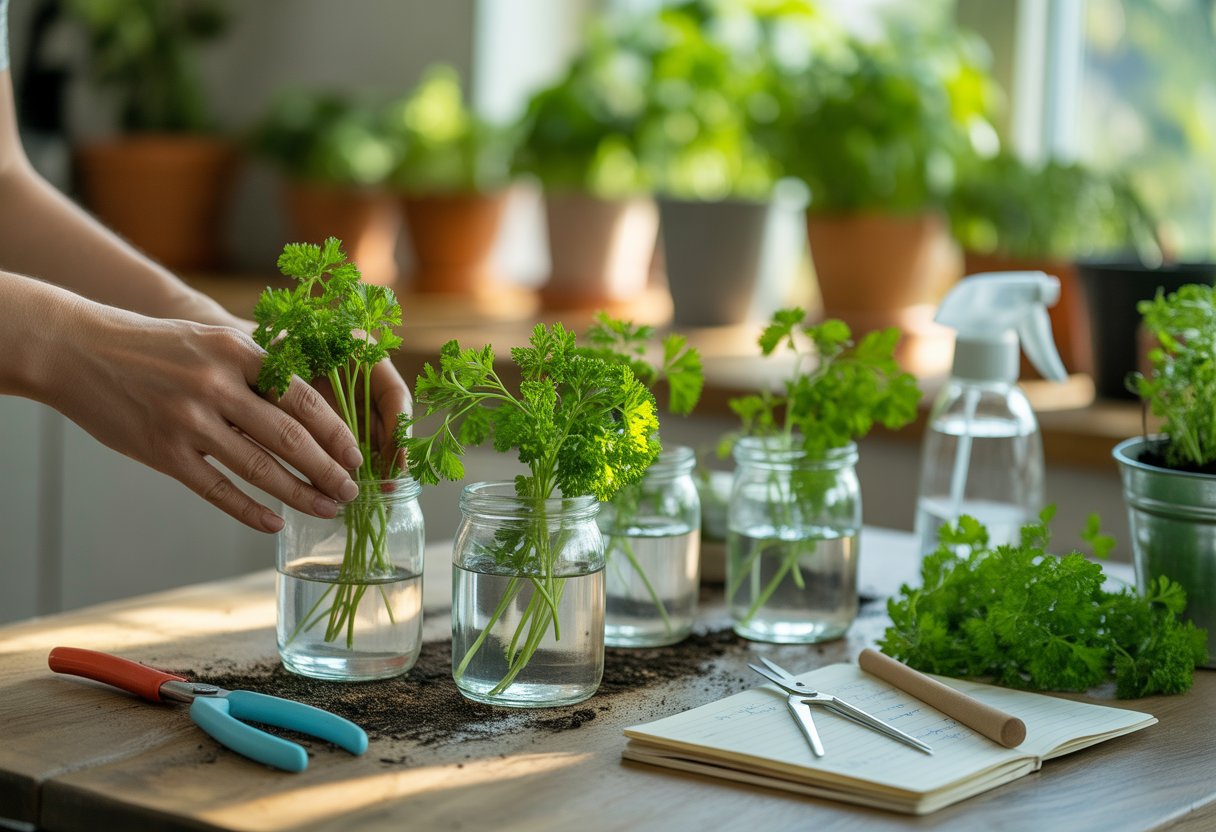
Starting parsley from seeds is usually the easiest and most reliable method. Just plant them in well-drained soil and keep it moist until they sprout.
Cuttings will root in water or soil, but honestly, seeds tend to give you stronger, healthier plants. If you’re new to this, you don’t need fancy gear or expert skills.
Let’s break down the basics so anyone can give parsley propagation a try.
Essential Requirements for Propagating Parsley
You’ll want to pick the right parsley variety, make sure there’s enough light and the right temperature, and use good soil. Each of these things matters if you want lush, dark green leaves.
Choosing the Right Parsley Variety
There are two main types of parsley: curly leaf and flat leaf (Italian). Most people go for flat leaf because it’s got a stronger flavor and grows a bit easier.
Flat leaf parsley usually has bigger, darker leaves, which is a good sign of health. Parsley’s technically a biennial, but most folks grow it as an annual.
Pick seeds or plants that look fresh and healthy—skip anything that looks sketchy or old.
Ideal Light and Temperature Conditions
Parsley likes full sun, but it’ll tolerate some shade. It grows best in cooler temps, somewhere between 50°F and 70°F (10°C to 21°C).
If it gets too hot, parsley can bolt and stop making leaves. For indoor propagation, put your parsley near a south-facing window or use grow lights.
Try to keep the temperature steady and within that ideal range. It really does help with germination and growth.
Soil Preparation and Compost Use
Parsley needs soil that drains well, is rich in organic matter, and has a neutral pH—think 6.0 to 7.0. Mixing in some high-quality potting soil and compost makes a big difference.
Compost doesn’t just feed the plant; it also helps roots grow strong. Avoid heavy, clay soils because they hold too much water and can rot the roots.
Methods for Propagating Parsley
You’ve got a few options: grow from seeds, use softwood cuttings, or start parsley indoors. Each way has its own steps, and you’ll want to pay attention to things like humidity, light, and cutting technique.
Growing Parsley from Seeds
Parsley seeds are stubborn—they can take 2 to 4 weeks to sprout because the seed coat is tough. Soak them overnight in warm water if you want to speed things up.
Sow seeds about ¼ inch deep in a well-draining seed mix. Keep the soil moist but not soaking wet.
Aim for a temperature around 65-70°F for the best germination. Once the seedlings have 2-3 true leaves, thin them so they’re not too crowded.
Seedlings need at least 6 hours of direct sunlight or a grow light to get strong. Parsley from seed takes 70-90 days before you can really harvest it.
Softwood Cuttings Technique
Take softwood cuttings from fresh, tender parsley stems in spring or early summer. Look for healthy, non-flowering shoots about 3-4 inches long.
Remove the lower leaves, leaving just a couple at the top. Dab the cut end in rooting hormone if you have it (it helps).
Stick the cutting into moist potting mix or a sand-perlite blend. Cover it with a plastic bag or a propagation dome to keep humidity high.
Keep it in indirect light at about 65-75°F. Roots should show up in about three weeks.
Once you see roots, move the cutting to a bigger pot or outside.
Growing Parsley Indoors
If you’re growing parsley indoors, it needs lots of light—ideally 8-10 hours a day from a grow light or a bright window. Use a potting mix that drains well and make sure your container has holes in the bottom.
Water when the top inch of soil feels dry, but don’t drown the plant. Parsley hates soggy roots.
Keep the temperature steady, between 60-70°F. Feed indoor parsley with a diluted, balanced fertilizer every month or so.
Harvest leaves regularly to keep the plant bushy and productive.
Best Practices for Healthy Growth
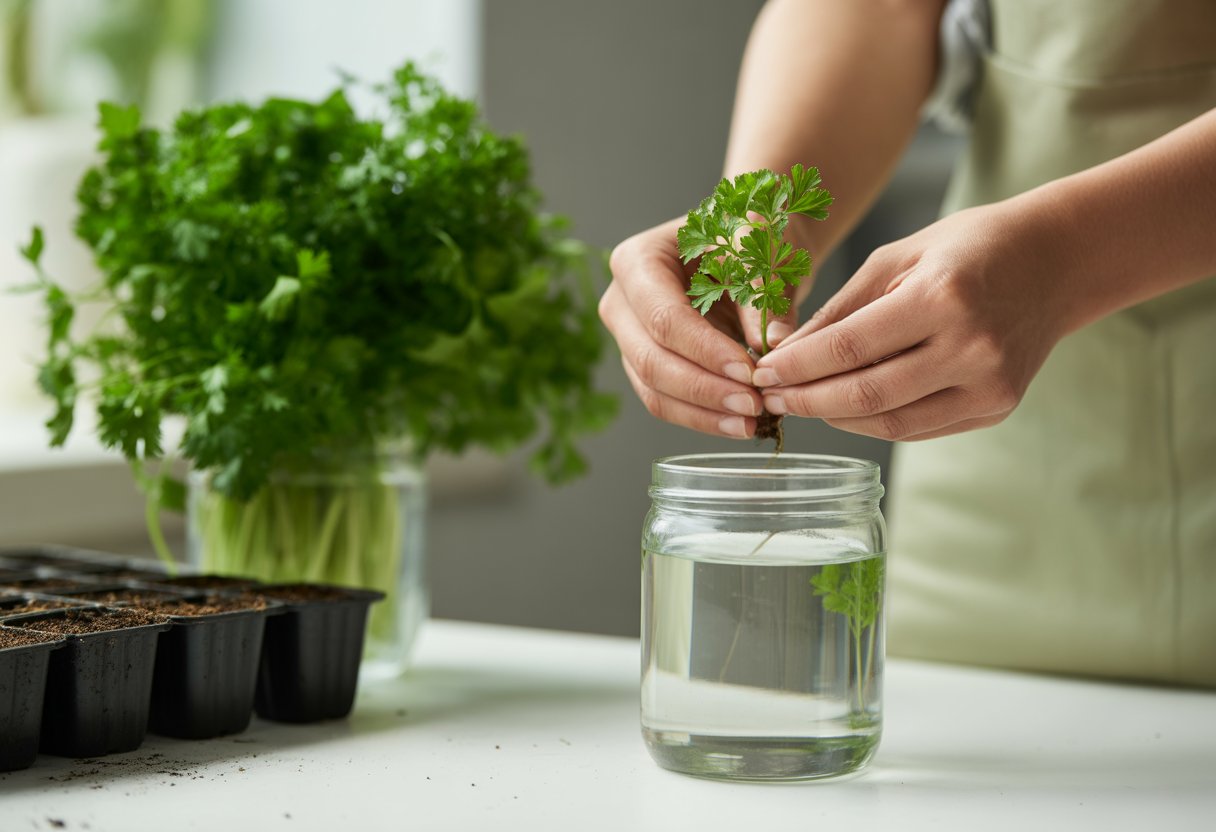
Parsley needs regular care—watering, feeding, and a bit of maintenance go a long way. Good soil coverage and keeping an eye out for pests will help your plants stay happy.
Watering and Fertilizing
Parsley likes soil that’s evenly moist, but don’t let it sit in water. Root rot is a real pain.
Water regularly, especially if it’s hot or dry. The soil should feel damp about an inch down, but not soggy.
Use a balanced, water-soluble fertilizer every 4-6 weeks. High nitrogen boosts leafy growth, but too much can make the flavor bland.
You can use slow-release fertilizer at planting if you want to feed less often.
Mulching and Disease Prevention
Mulch keeps moisture in and helps regulate temperature around the roots. Straw or shredded bark works great and cuts down on weeds.
Good air circulation keeps fungal problems away. Water early in the day and avoid getting the leaves wet.
Check your plants for pests or signs of disease. If you spot damaged or yellowing leaves, just snip them off.
Encouraging Robust New Growth
Pinch back stems to make parsley bushier—this triggers more side shoots. Harvesting often also keeps new leaves coming.
If your parsley gets leggy, thin out crowded plants or move them to a sunnier spot.
When you see healthy new growth, you know things are going right. Keep up with nutrients, water, and a little pruning, and your parsley will keep producing.
Harvesting and Culinary Uses of Propagated Parsley
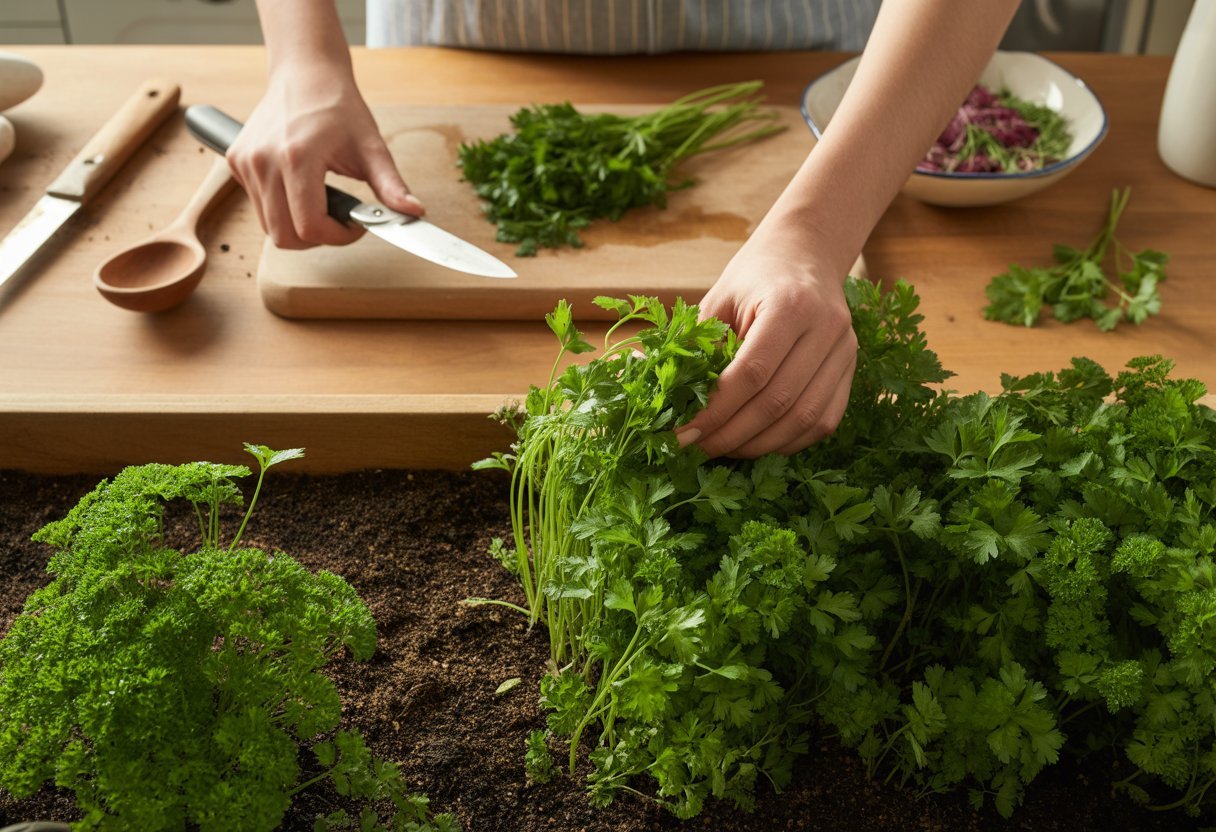
Harvest parsley gently to keep the plant healthy and get the best leaves. It’s awesome as a garnish, bumps up the flavor in soups and stews, and pairs well with other popular herbs.
Optimal Harvesting Techniques
Cut the outer leaves at the base, about 1-2 inches above the soil. This lets new growth push up from the center.
Don’t take more than a third of the plant at once or you’ll stress it out.
If you harvest in the morning, the leaves usually have more essential oils, so they taste better. Use clean, sharp scissors or pruning shears to avoid damaging the plant.
Regular harvesting helps keep parsley from bolting. If you see flower stalks, cut them off so the plant keeps making leaves.
Healthy Uses as Garnish
Fresh parsley makes food look great and adds a nutrient boost. Sprinkle it over grilled meats, roasted veggies, or pasta for a pop of color and a mild, peppery kick.
Its bright green leaves and gentle flavor freshen up heavier dishes. Plus, parsley is packed with vitamins A, C, and K, so it’s not just for looks.
Don’t cook parsley for too long if you’re using it as a garnish. Add it right before serving to keep the flavor and nutrients.
Adding Parsley to Soups and Stews
Parsley brightens up soups and stews, balancing out rich flavors. Toss in chopped parsley near the end of cooking or use it as a garnish.
It plays well with thyme, rosemary, oregano, and basil—especially in slow-cooked dishes. Parsley’s slightly bitter, fresh taste cuts through the earthiness of other herbs.
For the best texture, use the leaves, not the stems, in soups and stews. Stems are fine for stocks, but fish them out before serving.
Pairing Parsley with Other Herbs
Parsley gets along really well with herbs like chervil, mint, thyme, rosemary, oregano, and basil. You can toss them together to make blends like bouquet garni or gremolata.
Its flavor stays pretty mild, so it doesn’t bulldoze stronger herbs like rosemary. In salads or sauces, parsley with mint and chervil brings a fresh, layered taste.
I find thyme and oregano especially nice with parsley in meat dishes or anything tomato-based. When you mix fresh herbs, think about when to add them—parsley, basil, and mint do better when you toss them in at the end.
Thyme, rosemary, and oregano? Those can simmer longer and still hold their own.
Any idea where to find these locally? The big box stores near me never seem to carry them.
Patience is key! Sometimes it takes a full season to really see results. Make sure the soil conditions are right and give it time. -Plant Native Team