Best Ground Cover Plants for Massachusetts: Top Choices for Year-Round Growth and Low Maintenance
Last updated: November 13, 2026
Choosing the right ground cover plants for Massachusetts isn’t just about looks—it’s about matching the region’s wild swings in climate, soil quirks, and those unpredictable seasonal shifts.
Hardy, low-maintenance species that handle cold winters and warm summers, control erosion, and keep weeds at bay? That’s really what you want.
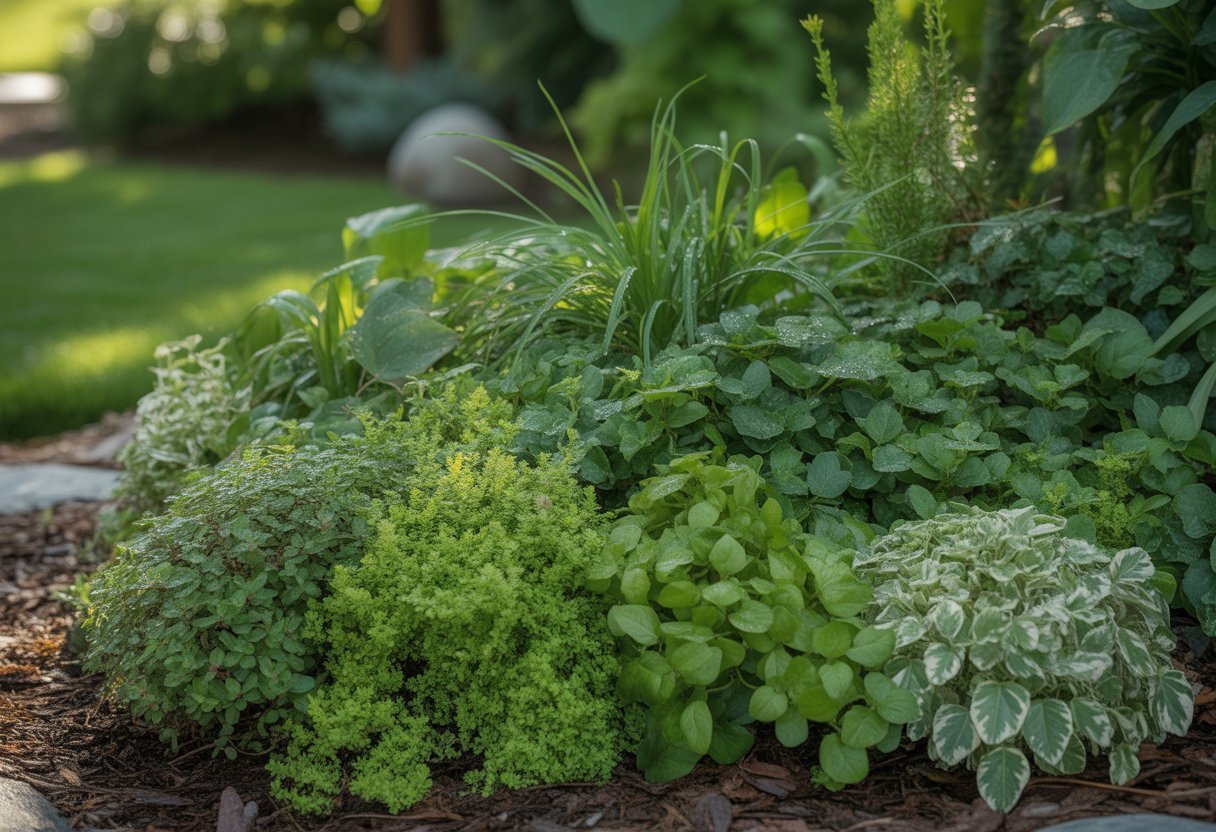
There’s a surprising range of ground covers out there. Some love shade, others shrug off drought, and each one brings something different to the table.
If you know which ones actually do well in Massachusetts, you’ll spend way less time fussing over your yard.
This guide highlights several dependable options, making it a little less overwhelming to pick plants that really work for your spot.
Top Ground Cover Plants for Massachusetts
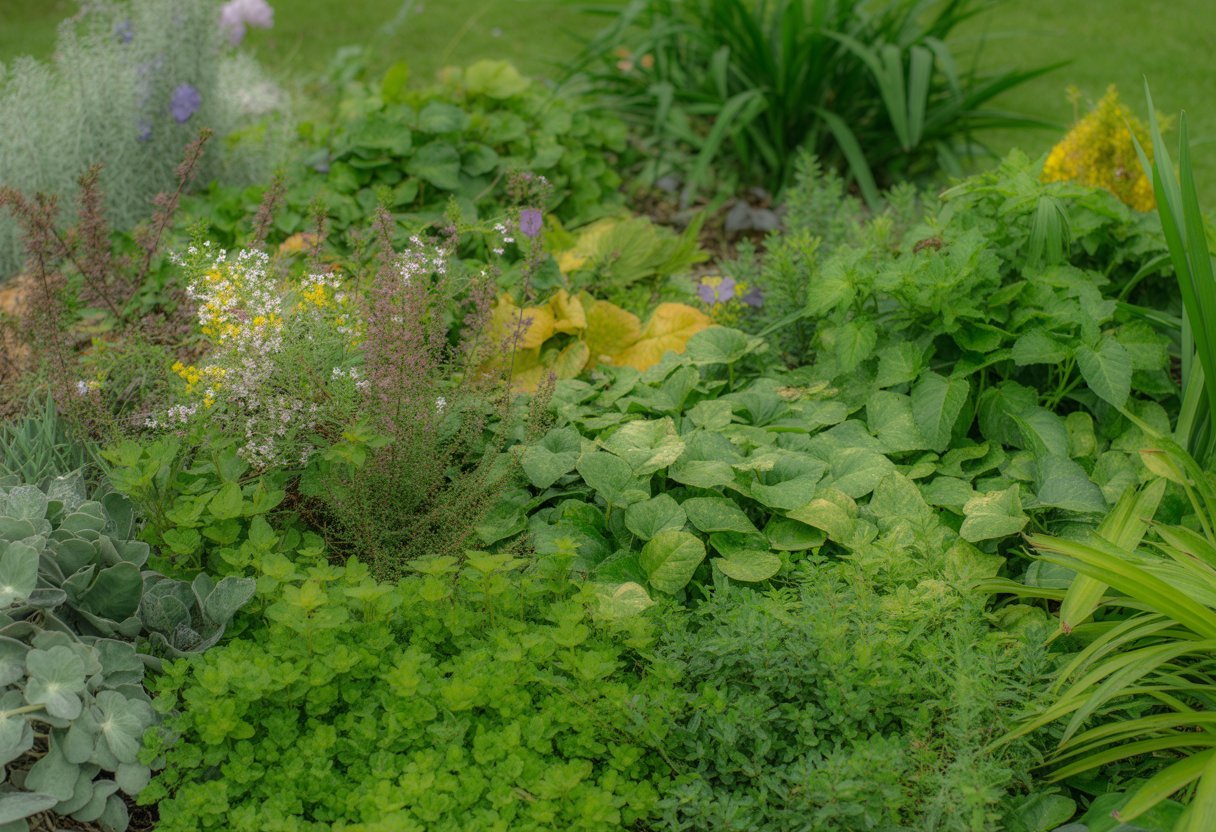
You’ve got to match groundcover to the site—light and moisture matter more than you might think.
Some ground covers thrive in shade, others need sun, and a few won’t mind if things get a little dry.
Picking the right one makes a big difference in how your garden looks and how much you have to mess with it.
Shade-Loving Ground Covers
For shaded corners, Pachysandra terminalis (Japanese pachysandra) handles dense shade and the acidic soils that pop up all over Massachusetts.
Its evergreen leaves stick around all year, and you barely have to do anything once it’s established.
Vinca minor works in the shade, too. It puts out those little blue flowers in spring and spreads fast, making a thick mat that helps with erosion.
Lamium maculatum is nice for under trees and shrubs. The variegated leaves look great, and you get pink or white blooms in spring. It likes partial to full shade and doesn’t fuss much about soil.
Sun-Loving Ground Covers
If you’ve got a sunny, well-drained spot, Massachusetts kinnikinnick (Arctostaphylos uva-ursi) really shines. It’s native, shrugs off drought, and those red berries in summer are a bonus.
Its evergreen leaves don’t quit, even in winter.
Black mondo grass can take sun or partial shade, but it’s happiest with a bit of sunlight. The dark foliage is striking, and it grows in tidy clumps—definitely adds some drama to the landscape.
Vinca minor can handle part sun, too. These options keep soil in place and add some color, which is always nice.
Drought-Tolerant Options
If you’re dealing with dry spots, Massachusetts kinnikinnick is a lifesaver. Once it’s settled in, you barely need to water it.
Pachysandra terminalis isn’t bad with drought, though it’ll look its best if you water it now and then.
Vinca minor puts up with dry spells better than most, though it prefers regular moisture to stay really dense.
If your garden’s got sandy soil or you just forget to water sometimes, these drought-tolerant picks make life easier.
Selecting the Right Ground Cover for Your Landscape
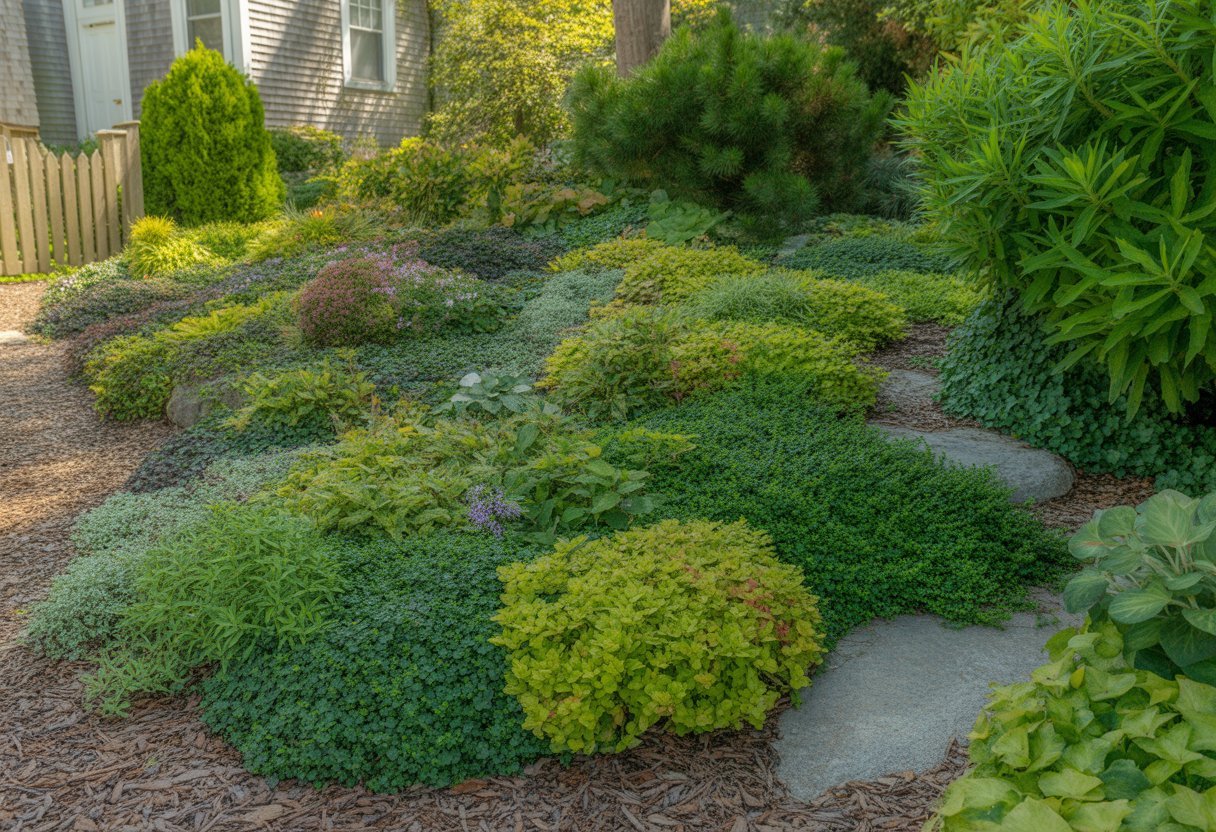
It’s all about matching what the plant wants to what your yard actually offers. Soil moisture, sunlight, the whole deal.
When you get that right, plants thrive, you work less, and the beds just look better.
Assessing Soil Moisture and Drainage
Knowing your soil’s moisture level is huge. Plants like Ajuga or Lysimachia love moist soils, so they’re perfect for wetter spots or near water features.
If your soil drains fast, creeping thyme or sedum will handle it just fine.
Drainage can really make or break things. If water pools up, some plants will rot out in no time.
Dig a little, see how the soil holds water, and you’ll make way better choices.
Some ground covers form dense mats that help hold moisture, while others are more sparse. Size and spread matter, so don’t cram them together.
Evaluating Sun Exposure
Sunlight is a dealbreaker for a lot of ground covers. Full sun (six hours or more) lets sun-tolerant species like creeping phlox or thyme do their thing. They make tough, low-growing mats that don’t mind the heat.
Shady spots, like under trees or next to buildings, need plants like pachysandra or vinca minor. They don’t mind the lack of light and won’t get leggy.
Partial shade is a mixed bag, but some ground covers can roll with it. Pay attention to how the sun moves during the day—sometimes a spot that’s shady in June is blazing hot by August.
Designing and Maintaining Ground Cover Plantings
Designing with ground covers is more than just tossing plants in the dirt. You’ve got to think about soil stability, plant selection, and what it’ll take to keep things healthy.
Install them right, do a little upkeep, and you’ll avoid erosion and keep things looking good.
Erosion Control Strategies
Ground covers can really help with erosion, especially on slopes or anywhere runoff gets wild.
Plants like creeping juniper or some ornamental grasses have roots that grab onto the soil and hold tight.
Mulch helps, too—it keeps the soil in place and locks in moisture. In tough spots, you might want to use erosion control mats or geotextiles for backup.
If you’re on a hill, adding stone borders or building terraces can make a big difference. After big rains, check for trouble spots—you want to catch problems before they get worse.
Ground Cover Installation Tips
Prepping the site is everything. Get rid of weeds, loosen up the soil, and mix in some compost to help roots settle in.
For Massachusetts, planting in early spring or fall usually gives the best results since the weather’s not too harsh.
Spacing is key—usually somewhere between 6 and 18 inches apart, depending on the plant. Give them space to spread but not so much that weeds sneak in.
Water them well after planting so roots dig deep. Drip irrigation is handy if you want to save water and keep things consistent.
Container-grown plants are easy to transplant, while seeds take more patience and need good soil contact. Edging helps keep everything tidy and stops plants from wandering where you don’t want them.
Long-Term Care and Maintenance
Keeping ground covers looking good takes a bit of effort. You’ll need to weed, water, and trim now and then.
If you pull invasive weeds early, they won’t steal space or nutrients from your plants. In Massachusetts, those dry summer stretches can really stress ground covers, so a little extra watering helps a lot.
Go easy on the fertilizer—check your soil first. Too much can make ground covers wild or even weaken them.
A quick seasonal prune tidies things up and encourages a thicker mat of growth. Toss on some fresh mulch every year; it helps block weeds and keeps the soil damp.
Watch out for pests or diseases, but don’t go overboard with chemicals. If you spot bare patches, overseeding or replanting can fill them in and keep erosion under control.