
Organic Pest Control for Bee Balm: Effective Methods to Protect Your Garden
Last updated: August 25, 2026
Organic pest control for bee balm (Monarda) means managing harmful insects without synthetic chemicals. Using natural predators, homemade sprays, and proper plant care can cut down on pests while keeping the plant healthy—and the environment, too.
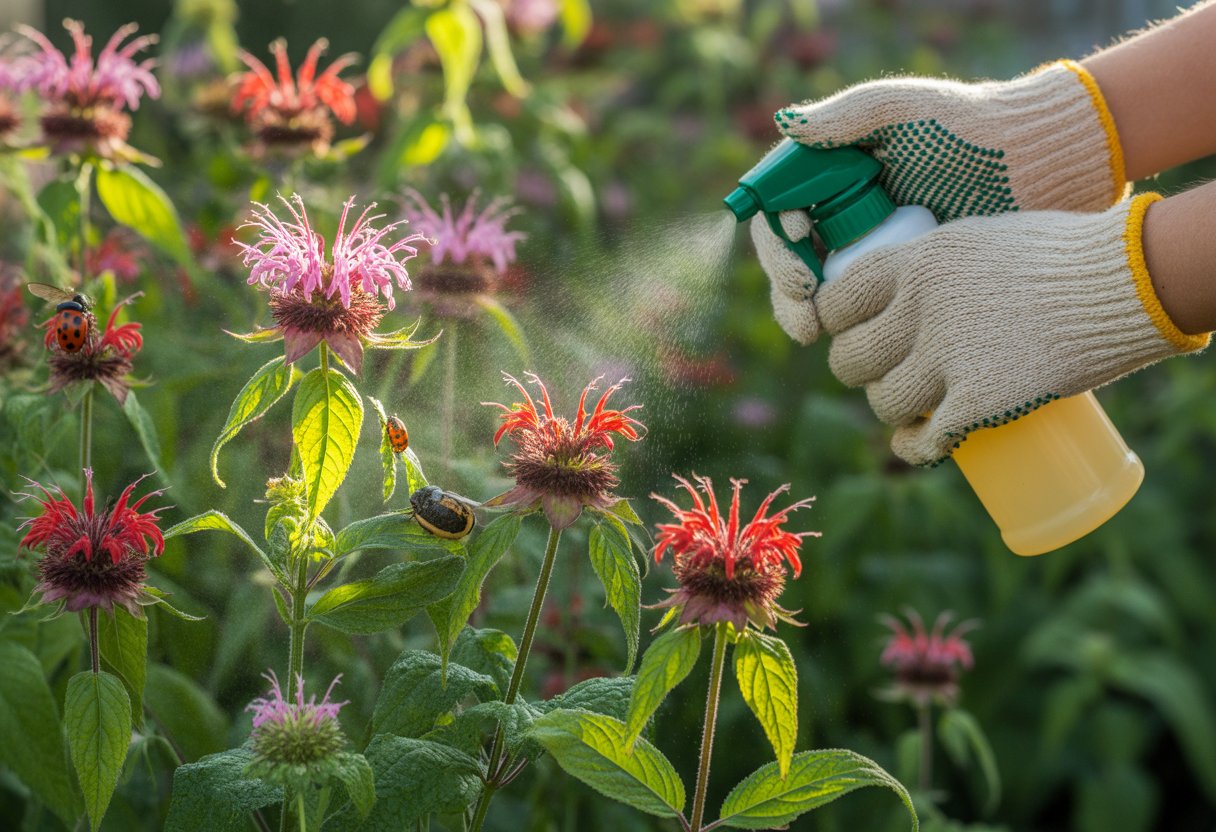
Bee balm draws in pollinators, but it’s not immune to aphids, spider mites, or powdery mildew. Tackling these issues organically helps the plant and the helpful bugs it attracts.
You can encourage ladybugs, use neem oil, or just make sure air moves freely around your plants. Honestly, these methods keep bee balm lively and mostly pest-free without leaving behind sketchy residues.
Understanding Common Pests of Bee Balm
Bee balm tends to attract several pests that mess with leaves, stems, and flowers. You’ll need to spot what’s bugging your plants and know how each pest affects them.
Aphids and Other Sap-Sucking Insects
Aphids, those tiny soft-bodied bugs, love to hang out on new growth and leaf undersides. They suck sap, which leads to curling, yellowing, and stunted growth.
Whiteflies and spider mites also steal plant juices. Spider mites leave behind fine webbing, and the leaves start looking speckled and feel dry.
These pests multiply fast, so things can get out of hand before you know it. Check your plants often, blast off clusters with water, and invite natural predators like ladybugs.
You can also use organic insecticidal soaps or neem oil—they cut down aphids and mites but leave beneficial insects alone.
Caterpillars, Beetles, and Stalk Borers
Caterpillars chew up leaves and flowers, sometimes leaving them almost see-through. Moth larvae, in particular, seem to have a taste for bee balm.
Beetles munch on leaves and flowers, leaving ragged holes that aren’t pretty. Stalk borers dig into stems, which weakens the plant and can make it wilt.
Handpick caterpillars and beetles when you see them. Bacillus thuringiensis (Bt) works well for caterpillars as an organic treatment.
Try crop rotation and clear out debris to make life harder for stalk borers.
Ants, Flies, and Moths
Ants sometimes farm aphids for honeydew, which just makes aphid problems worse. If you control ants, you usually get fewer aphids.
Some flies lay eggs on bee balm, and their larvae eat leaves or roots. Root flies aren’t common, but they can stress plants by damaging roots.
Moths can pollinate, but their larvae chew up leaves. If you check at night, you might catch moth activity early.
Keep the garden tidy and bring in natural predators to help manage these pests. Spacing plants out helps air move, which pests don’t love.
Organic Preventive Strategies
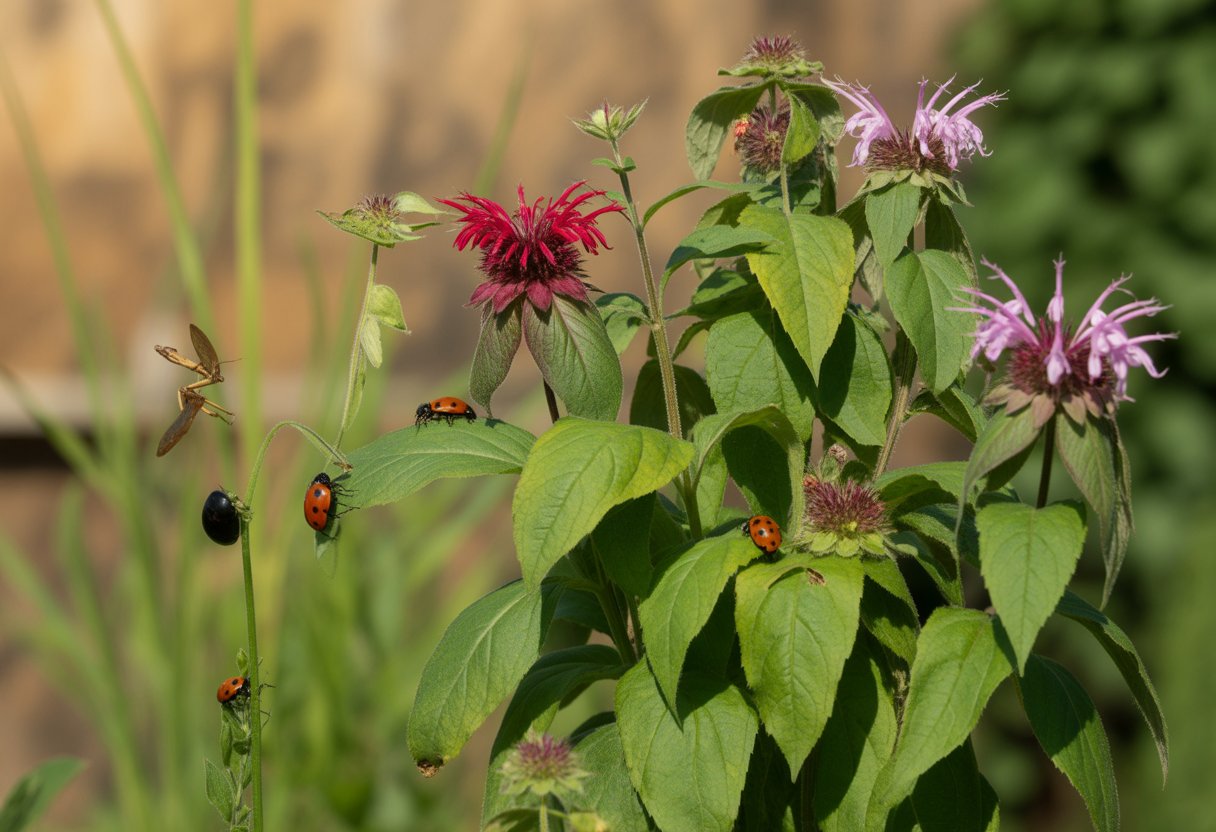
Preventing pests on bee balm mostly comes down to tweaking the growing environment. Some plants naturally help keep pests away, too.
Cultural Control and Prevention
Good cultural habits keep pests in check by improving airflow and reducing humidity around bee balm. Give your plants enough space—crowding leads to more fungal problems and invites bugs.
Pull weeds regularly, since they can shelter insects that attack bee balm. Use a balanced fertilizer, but don’t go overboard on nitrogen or you’ll just make your plants more tempting to aphids.
Snip off damaged or infested bits to keep pests from spreading. Water early in the day so leaves dry out quickly, which means less mildew and fewer pests.
Companion Planting and Pest Control Plants
Plant herbs like basil and dill near bee balm—they give off oils that pests don’t like. Growing veggies that attract beneficial insects, like ladybugs and lacewings, helps keep the bad guys in check.
Some plants work as trap crops, luring pests away from bee balm. This helps pollinators and means you don’t need to reach for chemicals.
Companion planting boosts garden diversity, which just makes everything more resilient.
Managing Pests Organically
Managing pests in bee balm means building up natural defenses and using targeted organic treatments. You want to protect the good bugs and the plants—no need for harsh chemicals.
Encouraging Beneficial Insects
Ladybugs, green lacewings, and dragonflies eat common bee balm pests like aphids and spider mites. You can attract these helpful insects by planting nectar-rich flowers and steering clear of broad-spectrum insecticides.
Butterflies and hummingbirds don’t hunt pests, but they help pollinate and keep the garden lively. Planting a mix of flowers near bee balm brings in these pollinators without messing up your pest control.
Try adding nematodes to the soil—they go after root-dwelling pests but leave bee balm and helpful insects alone.
Organic Sprays and Treatments
Neem oil and horticultural oil can help suppress soft-bodied pests without hurting bee balm foliage. These oils mess with insect feeding and reproduction if you follow the label directions.
Baking soda sprays have mild antifungal and insect-repellent effects. They’re handy against powdery mildew and a few insect pests, but you need to mix them carefully—too much can burn the leaves.
You can find insecticides labeled for organic use, but honestly, it’s smart to pick them carefully so you don’t harm beneficial insects. Spot treatments usually mean less chemical exposure and a healthier garden overall.
 Looking for a nursery that carries native plants?
Browse our native plant nursery directory

Would this work in partial shade? My yard only gets about 4 hours of direct sun.
Hi Steven! Containers can definitely work — just make sure you have good drainage and a large enough pot. -Plant Native Team
Bookmarked.
Thank you for the kind words! Wishing you a great growing season. -Plant Native Team