
Companion Planting for Vegetables: Strategies to Boost Growth and Yield
Last updated: September 13, 2026
Companion planting for vegetables means growing certain plants together to boost growth, cut down on pests, and get better yields. It’s all about using natural plant relationships to keep your garden healthy and productive—no need to go overboard with chemicals.
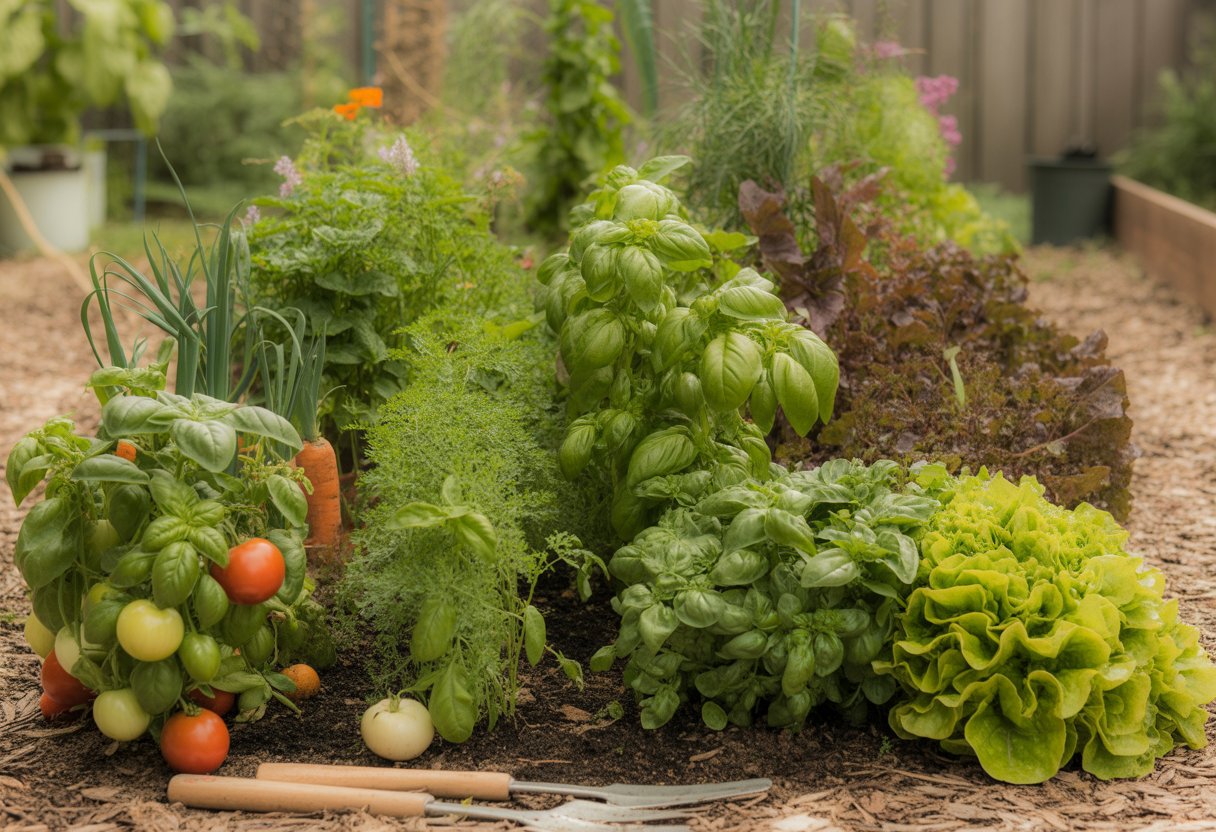
Gardeners lean on companion planting to make the most of their space and help plants support each other. Mutual benefits like pest control or nutrient sharing really matter here.
Knowing which veggies get along can change the whole game for your garden’s success.
Put plants in the right spots, and you’ll see better soil health and less need for extra fertilizers. This method taps into natural processes, building a more sustainable growing environment.
Principles of Companion Planting
Companion planting means putting certain plants together to boost growth, cut pests, and help your garden thrive. It actually depends on knowing how plants interact and using those relationships to keep everything balanced.
Understanding Plant Relationships
Companion planting starts with how plants affect each other—chemically, physically, or biologically. Some plants release stuff that keeps pests or diseases away.
Others attract helpful bugs that eat the bad ones. Legumes, for example, fix nitrogen in the soil, which gives a boost to nearby veggies.
Knowing which plants are good companions helps you dodge problems like stunted growth or extra pests. It’s a bit of a puzzle, but figuring out these relationships pays off.
Benefits for Vegetable Gardens
Companion planting cuts down on pest problems by bringing in predators or chasing away certain insects. That means you don’t have to use as many chemicals.
Some plant combos even make veggies taste better. Basil near tomatoes? Not only does it keep aphids away, but it also seems to improve the flavor.
This approach helps the soil, too, by cycling nutrients and stopping erosion. You end up with a more balanced, productive garden.
Companion Planting Chart Overview
A companion planting chart shows which veggies, herbs, and flowers get along—and which don’t. It’s a handy guide for planning your garden.
Here are some classic pairings:
| Vegetable | Good Companions | Bad Companions |
|---|---|---|
| Tomato | Basil, Marigold, Carrot | Cabbage, Corn |
| Cucumber | Beans, Radish, Peas | Potatoes |
| Carrot | Onion, Leek, Lettuce | Dill |
Charts point out pest control perks, nutrient sharing, and which plants just don’t play nice. Using one helps you pick combos that keep your veggies happy.
Essential Companion Planting Combinations
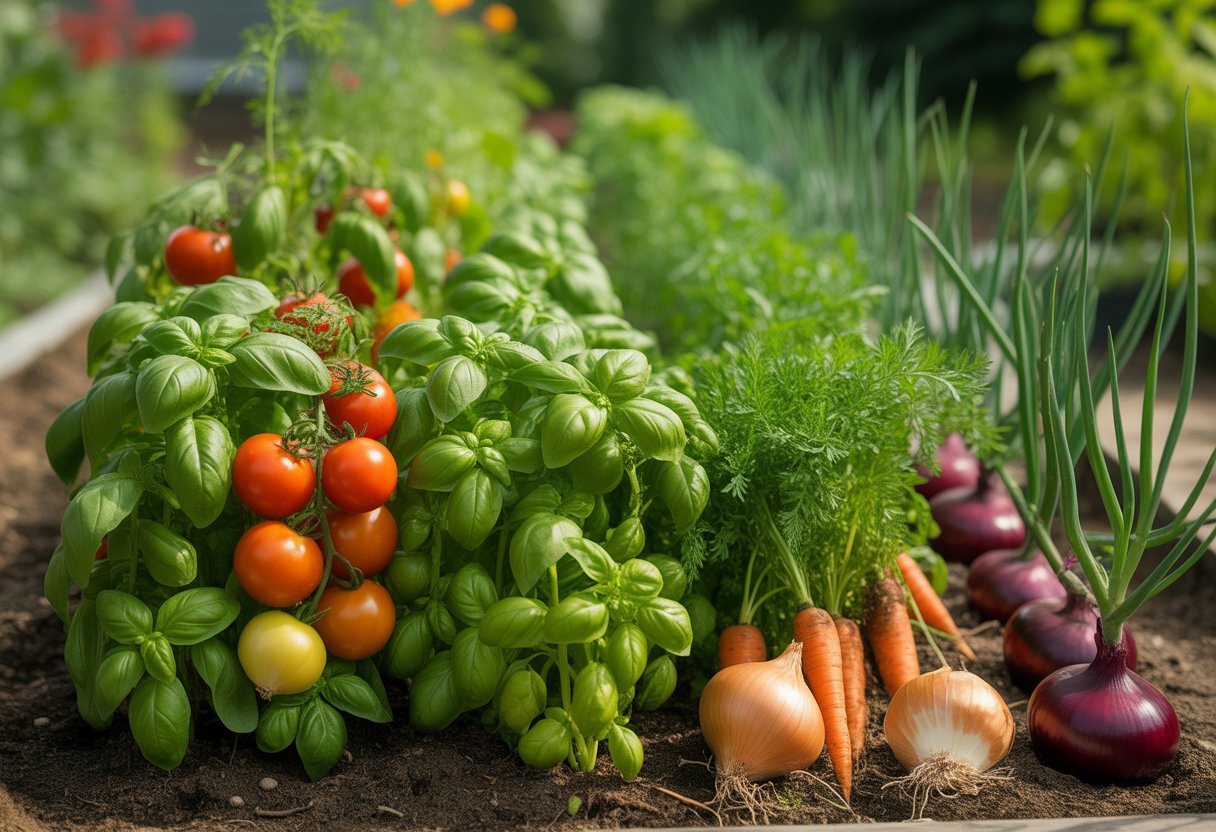
Some plant pairings really do boost growth, cut down on pests, and draw in beneficial insects. Knowing these combos lets you get more from your space with less fuss.
Improving Growth and Yield
Beans add nitrogen to the soil, which leafy veggies like spinach, lettuce, and cabbage love. Planting beans nearby means you don’t need as much fertilizer.
Tomatoes thrive next to basil and parsley. Basil brings out the tomato flavor and helps them grow, while parsley invites helpful bugs.
Squash and corn are a classic team—corn gives beans something to climb, and squash shades the ground, keeping weeds down and moisture in.
Carrots and onions also make a good pair. Onions chase away carrot root fly, and carrots help loosen up soil for onions.
Beets and cabbage benefit from being close to aromatic herbs like rosemary and thyme. These herbs improve soil and keep pests at bay.
Natural Pest Control Strategies
Marigolds keep nematodes and lots of bugs away, so plant them near tomatoes, peppers, or potatoes. Nasturtiums work as a trap crop for aphids and whiteflies, especially next to cabbage or broccoli.
Garlic and chives put out strong smells that drive off aphids and spider mites. Put them near eggplants and kale to cut down on insect damage.
Fennel and dill bring in ladybugs and lacewings—those guys eat garden pests. Pair these herbs with Brussels sprouts or rutabaga to help keep things in check, no chemicals needed.
Encouraging Pollination and Beneficial Insects
Sunflowers and borage pull in pollinators, which bumps up yields for cucumbers, melons, and peas. Borage also adds trace minerals to the soil.
Dill and fennel bloom with flowers that attract parasitic wasps and other good bugs. These insects help control whiteflies and aphids around tomatoes and cabbage.
Aromatic herbs like sage, oregano, and thyme support a variety of helpful insects. These bugs help with pollination and keep the bad ones in check, which just makes the garden healthier overall.
Designing and Planning Your Companion Vegetable Garden
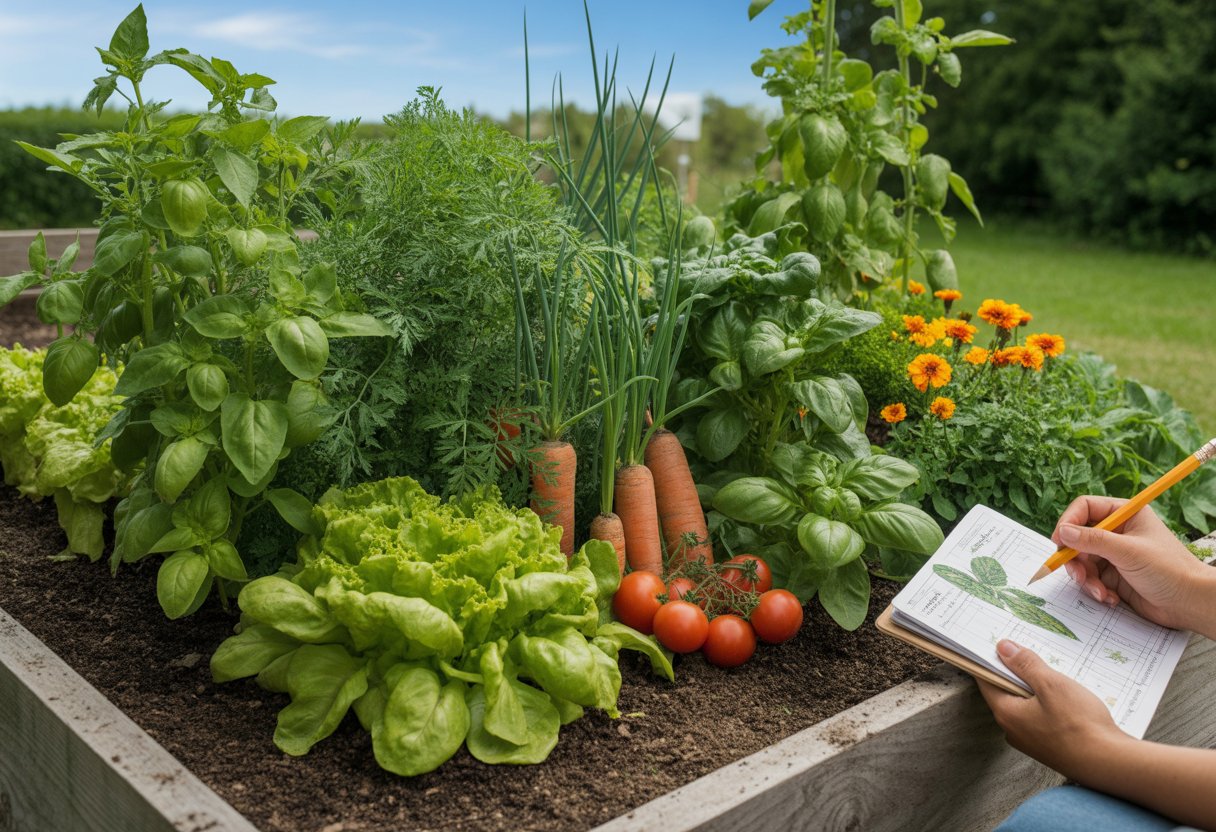
Effective companion planting starts with a garden layout that balances what each plant needs. Good design uses natural plant relationships to improve soil and cut down on pests.
Garden Bed Layouts and Configurations
Raised beds or rows make it easier to control spacing and soil quality. Group plants with similar water and sunlight needs, like tomatoes and basil, to avoid competition and boost flavor.
Square-foot gardening lets you divide beds into sections—great for mixing quick growers like radishes with slower ones like peppers. If you’ve got space, use trellises for beans to add a vertical layer.
Don’t overcrowd. Leave enough room for mature plants and plan paths for easy access and airflow. Put pest-repelling plants like marigolds and nasturtiums along the edges to help protect your main crops.
The Three Sisters Garden Method
The Three Sisters method brings corn, beans, and squash together for a mini-ecosystem. Corn gives beans a place to climb, beans add nitrogen, and squash spreads out to cover the ground.
Squash’s big leaves block weeds and keep the soil moist. This setup copies nature and boosts yield without extra fertilizer.
Plant corn in blocks, not single rows, so beans have plenty to climb. If your space is tight, go for bush beans. Choose squash with big leaves to get the best ground cover.
Integrating Herbs and Flowers for Maximum Benefit
Aromatic herbs like borage and thyme attract pollinators and helpful insects. Borage even improves soil and helps strawberries, tomatoes, and squash grow stronger.
Marigolds and nasturtiums work as trap crops, luring pests like aphids away from your veggies. They also repel nematodes and beetles with their roots and scent.
Sunflowers make natural trellises, throw some shade for plants that need it, and draw in pollinators. Mixing these flowers and herbs around your beds creates layers of pest defense and pollination help.
Plant herbs in clusters so you can harvest them easily and boost garden health. Just don’t put strong-smelling herbs too close to delicate greens—they can mess with the flavor.
Potential Challenges and Tips for Success
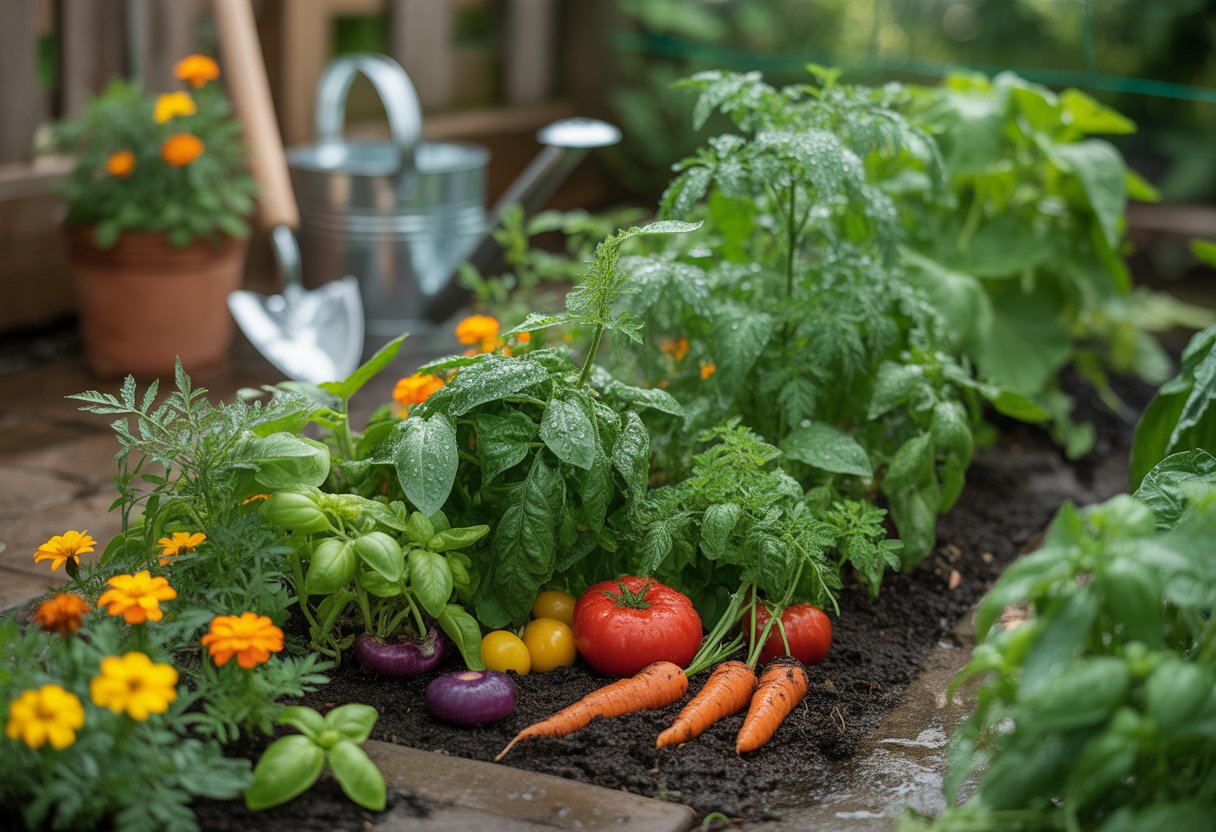
Companion planting takes some awareness—knowing which plants get along, watching for pests, and timing things right. You’ll run into issues like bad pairings, insect pests, or seasonal shifts, but a little planning goes a long way.
Identifying and Avoiding Bad Plant Companions
Some plants just don’t like each other. Onions can stunt peas or beans, and tomatoes and potatoes share diseases, so keep them apart.
It’s smart to watch out for plants that compete for nutrients or release chemicals that harm neighbors. Use companion planting charts to avoid these troublemakers.
A few classic bad combos:
| Plant A | Plant B | Reason |
|---|---|---|
| Carrots | Dill | Dill can stunt carrot growth |
| Cabbage | Strawberries | Competes for nutrients |
| Beans | Alliums | Inhibits nitrogen fixation |
Don’t plant heavy feeders right next to each other. Mix things up and space them out to keep everyone happy.
Managing Common Garden Pests
Companion planting helps with pests, but it’s not a magic fix. Marigolds chase off nematodes and aphids, and garlic keeps spider mites away.
Keep an eye out—check your plants often for aphids, caterpillars, or beetles. Bring in beneficial insects like ladybugs to help out.
A few tips for pest management:
- Use trap crops (nasturtiums for aphids) to lure pests away.
- Prune out damaged leaves whenever you spot them.
- Skip the broad-spectrum insecticides—they’ll wipe out your helpful bugs, too.
Pair companion planting with physical barriers like row covers to give your crops an extra layer of protection.
Seasonal Considerations and Crop Rotation
Companion planting works differently depending on the season. Growth patterns and pest populations shift a lot from spring to summer and fall.
Spring crops might need one set of companions, but summer or fall plants could benefit from others. It really depends on the temperature and how much sunlight your garden gets at different times of year.
Gardeners should think about these seasonal changes when planning plant pairings. That way, you can squeeze out the most benefits from your garden beds.
Crop rotation helps break up pest life cycles and keeps soil-borne diseases in check. If you follow nightshades with legumes, for example, you’ll balance out nutrient demands and keep your soil happier.
Rotation principles:
- Don’t plant the same family in the same spot back-to-back.
- Switch up heavy feeders with nitrogen-fixers.
- Toss in cover crops during the off-season to help the soil bounce back.
Mixing up your planting strategy with the seasons and rotating crops can make a big difference for long-term garden health.
 Looking for a nursery that carries native vegetables?
Browse our native plant nursery directory

Decent overview. If you’re just starting out this covers the basics well enough.