Vine Maple (Acer circinatum) – Native Plant Guide
Last updated: February 17, 2026

Acer circinatum, commonly known as Vine Maple, is a graceful, multi-stemmed small tree native to the Pacific Northwest. Beloved for its spectacular fall color and elegant arching form, Vine Maple is one of the most versatile and attractive native trees for residential landscapes in western Oregon and Washington. It belongs to the Sapindaceae (soapberry) family and is closely related to the Japanese Maple (Acer japonicum) and Korean Maple (Acer pseudosieboldianum), with which it shares a common ancestor dating back millions of years.
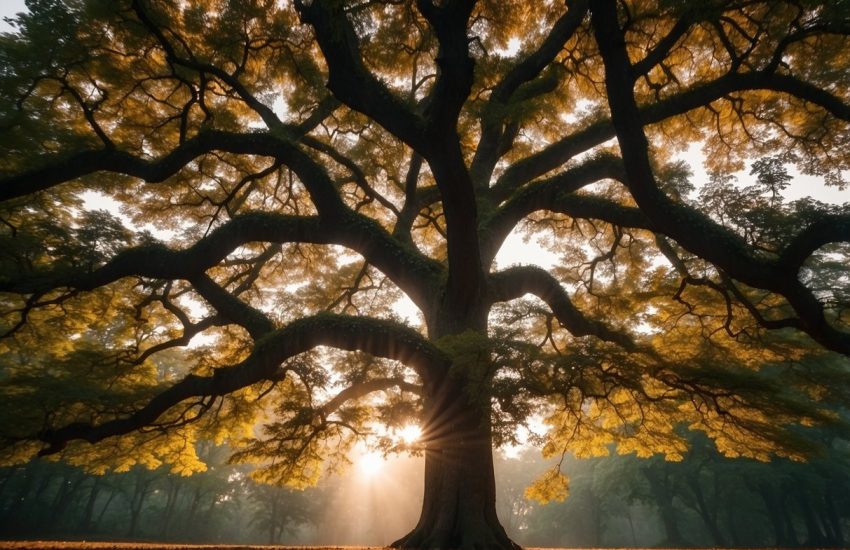
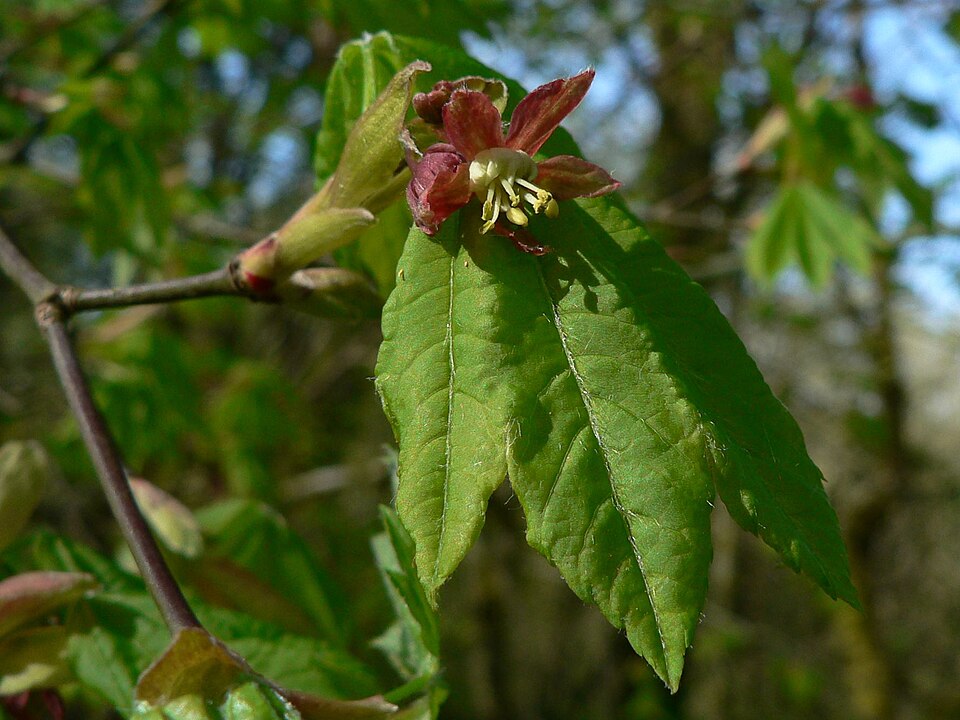
Growing naturally in the understory of Douglas fir, western hemlock, and western red cedar forests, Vine Maple thrives in the dappled light beneath taller conifers. Its nearly circular, palmately lobed leaves — with 7 to 11 pointed lobes forming a distinctive round outline — emerge bright green in spring alongside clusters of small red-and-white flowers, then transform into a stunning palette of yellows, oranges, and crimsons each autumn.
Whether used as a specimen tree, a naturalized woodland planting, or an erosion-control solution along streams, Vine Maple brings year-round beauty to any native landscape. It has been cultivated as an ornamental tree well outside its native range, from Juneau, Alaska to Huntsville, Alabama, and even in northwestern Europe — a testament to its adaptability and visual appeal.
Identification
Vine Maple typically grows as a many-stemmed, shrub-like tree, most commonly reaching 15 to 25 feet tall, though exceptional specimens can reach nearly 60 feet in favorable conditions. It often grows as a spray of slender stems with trunks ranging from 1 to 4 inches in diameter, though more tree-like specimens can develop trunks up to 10 inches across. The bark is smooth and hairless on young stems, becoming lightly furrowed with age.
The leaves are 1¼ to 5½ inches long, coarsely toothed along the margins, and palmately lobed with 7 to 11 pointed lobes. This distinctive lobing pattern — with the lobe points forming a nearly circular outline — is what gives the species its scientific name: circinatum, meaning “rounded” or “circular.” In autumn, the foliage puts on one of the Pacific Northwest’s most vivid displays, turning brilliant shades of yellow, orange, and scarlet red.
The flowers appear in April and May — small but charming clusters with dark red sepals and five short white to yellowish petals, each bloom measuring about ¼ to ⅜ inch in diameter. These develop into paired winged samaras (the classic “helicopter” seeds of maples), with wings spread nearly 180 degrees apart. Each wing is ¾ to 1½ inches long, holding a seed about ⅜ inch in diameter. The samaras start green, turn reddish through summer, and mature to brown in fall.
Quick Facts
| Scientific Name | Acer circinatum |
| Family | Sapindaceae (Soapberry) |
| Plant Type | Deciduous Tree / Large Shrub |
| Mature Height | 15–25 ft (occasionally to 60 ft) |
| Spread | 10–20 ft |
| Growth Rate | Moderate to Fast |
| Sun Exposure | Full Sun to Full Shade |
| Water Needs | Average to Wet |
| Soil Type | Moist, well-drained; loamy, sandy, or clay |
| Soil pH | 5.0–7.0 (acidic to neutral) |
| Bloom Time | April – May |
| Flower Color | Red sepals with white/yellow petals |
| Fall Color | Yellow, Orange, Scarlet Red |
| Fruit | Paired winged samaras |
| Deer Resistant | No (deer and elk browse foliage) |
| Conservation Status | Least Concern (IUCN) |
| USDA Hardiness Zones | 5–9 |
Native Range
Vine Maple is native to the Pacific coast of North America, ranging from southwestern British Columbia south through western Washington and Oregon to northern California. It is found primarily west of the Cascade Range crest, usually within 190 miles of the Pacific Ocean, and grows commonly along the Columbia River Gorge and throughout coastal forests. The species thrives at elevations from sea level to approximately 4,000 feet.
In its natural habitat, Vine Maple grows interspersed within conifer forests dominated by Douglas fir (Pseudotsuga menziesii), western hemlock (Tsuga heterophylla), and western red cedar (Thuja plicata). It is most commonly found as an understory tree in moist, shaded forests, but also colonizes forest openings, stream banks, and forest edges where more light is available.
Scientists believe Vine Maple entered western North America during the mid-Pliocene epoch (roughly 3 to 5 million years ago). Despite its long isolation from the Asian maple species with which it shares a common ancestor, Vine Maple has not diverged significantly from its Asian relatives in either appearance or genetics — a fascinating example of evolutionary stability.
📋 Regional plant lists featuring Vine Maple: Western Oregon & Western Washington · Idaho, Eastern Oregon & Eastern Washington

Growing & Care Guide
Vine Maple is remarkably adaptable and easy to grow, making it an excellent choice for both novice and experienced native plant gardeners. It tolerates a wide range of light conditions — from full sun (where it develops a more compact, rounded form with the best fall color) to deep shade (where it grows taller and more open, reaching toward the light with graceful arching stems).
Soil & Water
This species prefers moist, well-drained soil but adapts to a variety of soil types including clay, loam, and sandy soils. It thrives in the slightly acidic to neutral soils (pH 5.0–7.0) typical of Pacific Northwest forests. Once established, Vine Maple is moderately drought-tolerant, though it performs best with regular moisture — especially during the dry summers typical of the region. Mulching around the base with 2–3 inches of organic material helps retain soil moisture and mimics the natural leaf litter of its forest habitat.
Planting & Spacing
Plant in fall or early spring for best results. Vine Maple transplants well as a young tree — look for container-grown stock at your local native plant nursery. Space plants 10–15 feet apart if creating a screen, hedge, or grove effect. For a single specimen planting, give it at least 15–20 feet of space to allow its natural spreading form to develop fully.
Growth Habit & Pruning
One of Vine Maple’s most distinctive features is its ability to reproduce through layering — when flexible branches bend to the ground, they can take root and send up new stems, gradually forming natural arches and expanding the grove. A single tree can eventually form an attractive multi-stemmed clump this way. Pruning is generally unnecessary, but you can selectively remove lower stems to create a more tree-like form or thin interior branches to showcase the elegant structure. Vine Maple also makes an excellent subject for bonsai.
Landscape Uses
Vine Maple is incredibly versatile in the landscape:
- Understory planting beneath tall conifers or deciduous trees
- Woodland gardens and naturalized areas
- Stream bank and riparian restoration for erosion control
- Privacy screening when planted in groups
- Specimen tree for fall color in mixed borders
- Shade garden anchor — one of the few native trees that thrives in deep shade
- Rain garden plantings — tolerates periodic wet conditions
Common Issues
Vine Maple is largely pest- and disease-free, which is one of the reasons it’s such a reliable landscape choice. Occasional aphid infestations may occur in spring but rarely cause lasting damage. Leaf scorch can happen in very hot, exposed sites — if planting in full sun in warmer zones, ensure adequate water during heat waves. Powdery mildew may appear in late summer during warm, humid conditions but is primarily cosmetic and doesn’t affect tree health.
Wildlife & Ecological Value
Vine Maple is a keystone understory species in Pacific Northwest forest ecosystems. Its ecological contributions are substantial and wide-ranging, making it one of the most ecologically important small trees in the region.
For Birds
Nuthatches, black-capped chickadees, evening grosbeaks, warblers, cedar waxwings, vireos, and woodpeckers all feed on Vine Maple seeds. The dense, multi-stemmed branching structure provides excellent nesting habitat and protective cover from predators. The spring flowers also attract insects that insectivorous birds depend on during the breeding season.
For Mammals
Squirrels and chipmunks cache the winged samaras as a critical fall and winter food source. Black-tailed deer and Roosevelt elk browse the foliage and tender shoots, particularly in winter when other food sources are scarce. Beavers eat the bark of young trees growing along waterways, and the fallen stems can become part of beaver dam construction.
For Pollinators
The early spring flowers — blooming in April and May when many other plants are just leafing out — provide an important nectar and pollen source for native bees, honeybees, and other early-season pollinators. The flowers are particularly valuable because they bloom in the forest understory where few other nectar sources are available at that time of year.
Forest Ecosystem Role
Vine Maple plays a critical role in nutrient cycling within Pacific Northwest forests. Its leaves decompose significantly faster than conifer needles, creating thinner, more nutrient-rich soil layers with higher concentrations of nitrogen, phosphorus, calcium, magnesium, potassium, iron, and zinc near the forest floor surface. This enriched soil promotes biodiversity in the understory by supporting a wider range of plants, fungi, and soil organisms.
The moss-covered branches of mature Vine Maples serve as hotspots for epiphytes — the mosses, lichens, and ferns that add so much character to Pacific Northwest forests. As the tree ages, its bark provides increasingly varied microhabitats for these non-parasitic organisms, supporting a diverse community of bryophytes.
Vine Maple is also a strong competitor in forest succession. Due to the speed at which it grows and spreads through layering, it can quickly colonize forest openings caused by tree mortality, windstorms, or logging — and once established, it can maintain dominance in these gaps by shading out conifer seedlings.

Cultural & Historical Uses
Vine Maple has a long history of use by Indigenous peoples of the Pacific Northwest. The Quinault people used the straight, flexible shoots for weaving baskets. Other Coast Salish peoples used the hard, dense wood for tool handles, fish hooks, and frames for dip nets. The wood, while small in diameter, is very hard and takes a fine polish — qualities that made it valuable for utilitarian objects requiring strength and flexibility.
Today, Vine Maple is prized in the horticultural trade as a native alternative to Japanese Maple for Pacific Northwest gardens. Its similar leaf shape, brilliant fall color, and graceful multi-stemmed form offer the same aesthetic appeal while supporting local ecosystems. It has also gained popularity in the bonsai community, where its naturally twisting, layering growth habit creates dramatic, naturalistic forms.
Frequently Asked Questions
How fast does Vine Maple grow?
Vine Maple has a moderate to fast growth rate, typically adding 1–2 feet per year in favorable conditions. Growth is faster in partial shade with consistent moisture, and slower in deep shade or dry conditions.
Can Vine Maple grow in full sun?
Yes! In full sun, Vine Maple develops a more compact, rounded form and produces the most vivid fall color. However, in hot climates or exposed sites, it will need supplemental water during summer dry spells to prevent leaf scorch.
Is Vine Maple the same as Japanese Maple?
No, but they are closely related. Vine Maple (Acer circinatum) is native to the Pacific Northwest, while Japanese Maple (Acer palmatum) is native to East Asia. They share a common ancestor and have similar leaf shapes, but Vine Maple is generally hardier, more pest-resistant, and better adapted to Pacific Northwest conditions. Choosing Vine Maple over Japanese Maple supports local wildlife and ecosystems.
Does Vine Maple fix nitrogen?
No, Vine Maple does not fix nitrogen. However, its rapidly decomposing leaf litter enriches the soil with nitrogen and other nutrients, making it an important contributor to forest soil health.
How do I propagate Vine Maple?
Vine Maple can be propagated from seed (requiring cold stratification), softwood cuttings taken in early summer, or by encouraging natural layering — simply bending a flexible branch to the ground, partially burying it, and waiting for roots to form.
![]()
Looking for a nursery that carries Vine Maple?
Browse our native plant nursery directory: Oregon · Washington · Idaho