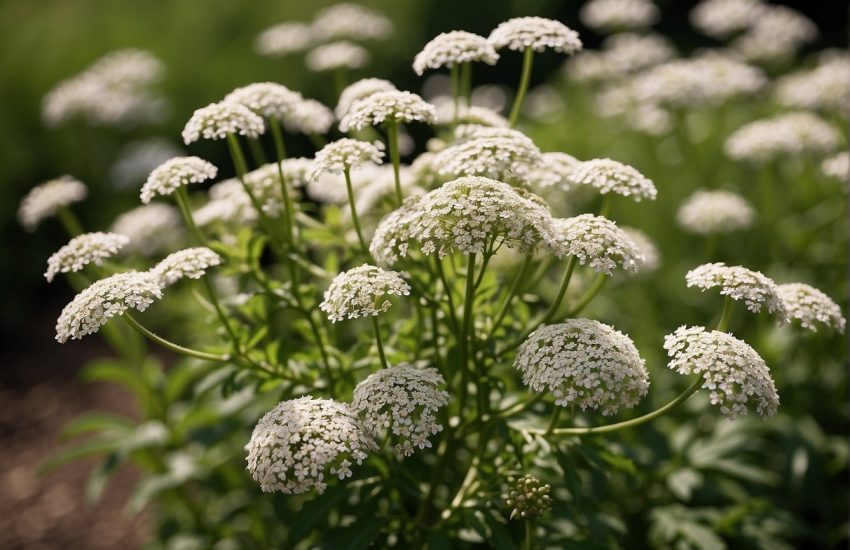
Washington Hawthorn (Crataegus phaenopyrum)
Crataegus phaenopyrum, commonly known as Washington Hawthorn, is a stunning native small tree that exemplifies the beauty of American landscapes across four distinct seasons. This member of the rose family (Rosaceae) offers an exceptional combination of spring flowers, summer foliage, brilliant fall color, and persistent winter berries, making it one of the most ornamentally valuable native trees for residential and commercial landscapes.
Reaching 25 to 30 feet tall with a rounded to oval crown, Washington Hawthorn produces masses of small white flowers in dense, flat-topped clusters during late spring, creating a spectacular floral display that rivals any ornamental tree. These blooms give way to bright red berries that persist well into winter, providing food for wildlife and adding vivid color to the winter landscape. The glossy green foliage transforms into brilliant shades of orange, scarlet, and red in autumn, creating one of the most reliable fall color displays of any native tree.
Originally native to the southeastern United States, Washington Hawthorn has proven remarkably adaptable across a wide range of growing conditions and climates, thriving from USDA zones 4 through 8. Its tolerance for urban conditions, combined with its exceptional ornamental qualities and wildlife value, makes it an outstanding choice for street trees, landscape specimens, and naturalized plantings throughout much of the eastern and central United States.
Identification
Washington Hawthorn typically grows as a small deciduous tree or large shrub, reaching 25 to 30 feet tall with a spread of 20 to 25 feet. The growth habit is generally upright when young, developing a rounded to oval crown with age. The trunk is usually single with smooth, gray bark that becomes slightly furrowed with maturity.
Bark
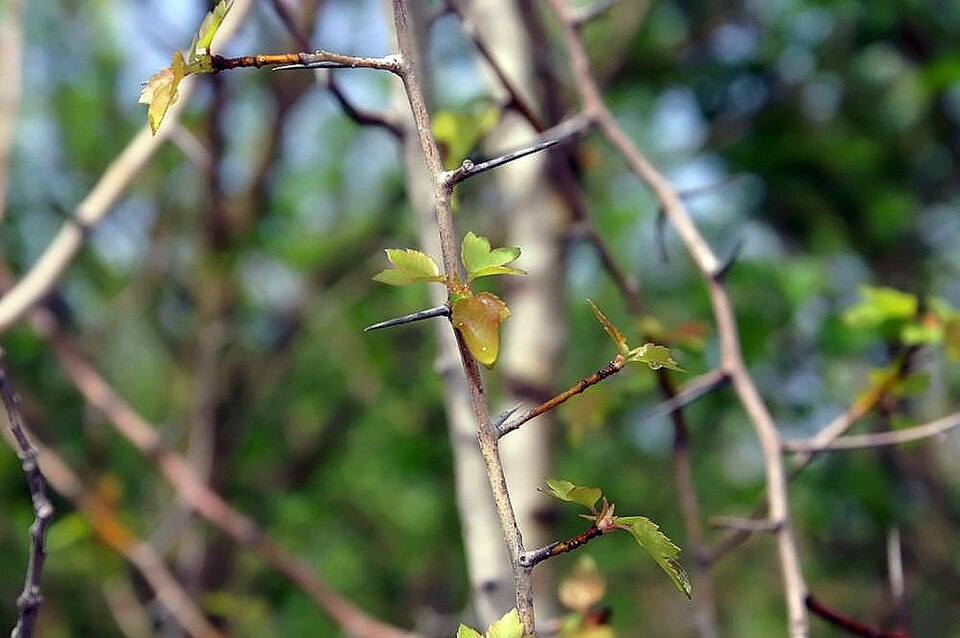
The bark is initially smooth and gray, developing shallow furrows and scaly plates as the tree matures. Young twigs are reddish-brown to gray-brown and armed with sharp thorns 1 to 3 inches long. These thorns are straight, slender, and extremely sharp, making the tree somewhat difficult to prune without proper protection but also providing natural deterrent value in the landscape.
Leaves
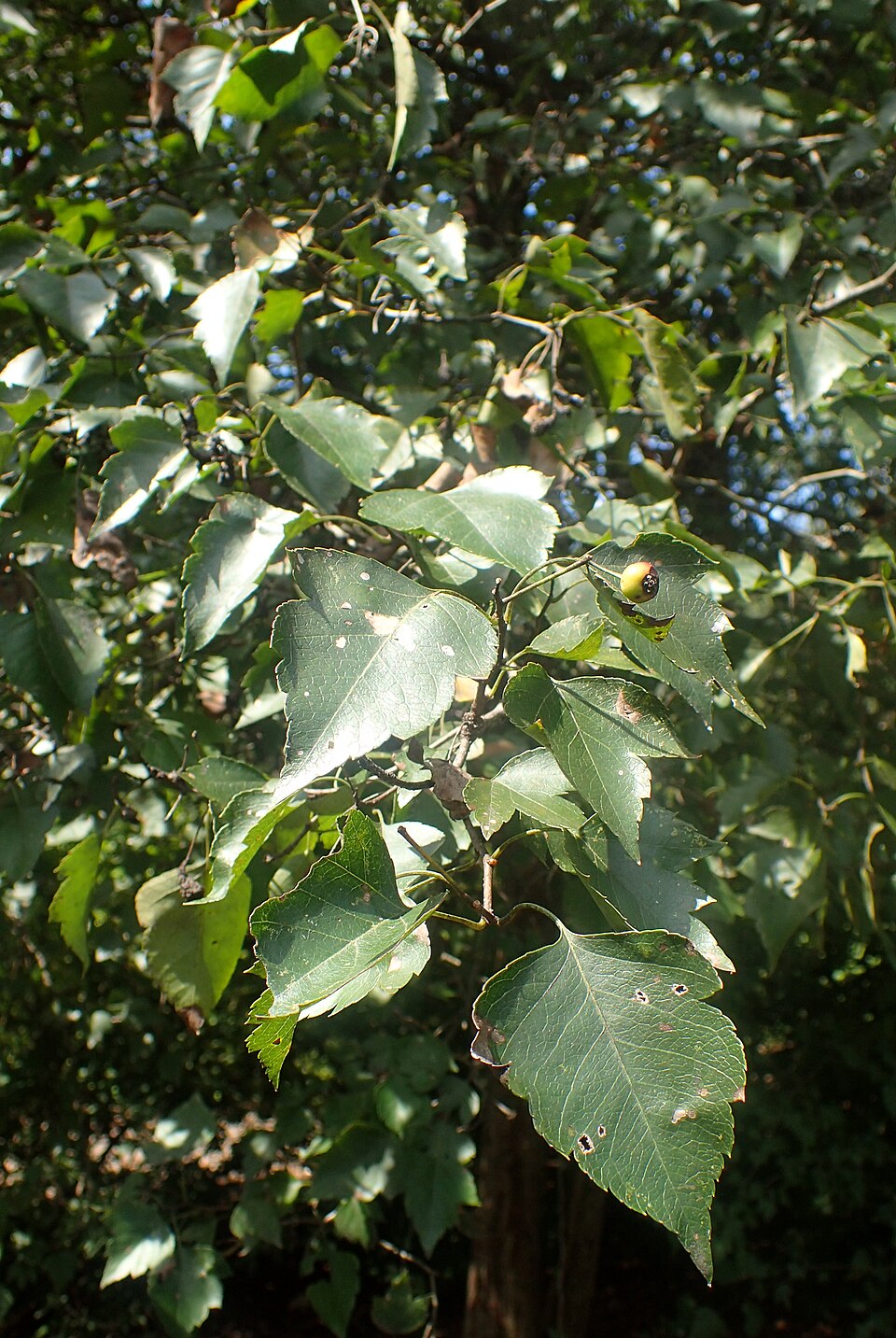
The leaves are simple, alternate, and broadly ovate to triangular, measuring 1 to 3 inches long and wide. They are deeply lobed with 3 to 5 sharp-pointed lobes and serrated margins. The leaf surface is glossy dark green above and paler beneath, with prominent veining. The foliage remains attractive throughout the growing season before transforming into spectacular fall colors ranging from bright orange to deep scarlet and burgundy.
Flowers
The flowers appear in late spring (May to early June) in dense, flat-topped clusters (corymbs) 2 to 3 inches across. Each individual flower is small, about ½ inch diameter, with five white petals and numerous prominent stamens with pink to red anthers. The flowers have a distinctive, somewhat unpleasant odor that attracts flies and other pollinators. Despite the odor, the profuse blooming creates a spectacular white canopy that is highly ornamental.
Fruit
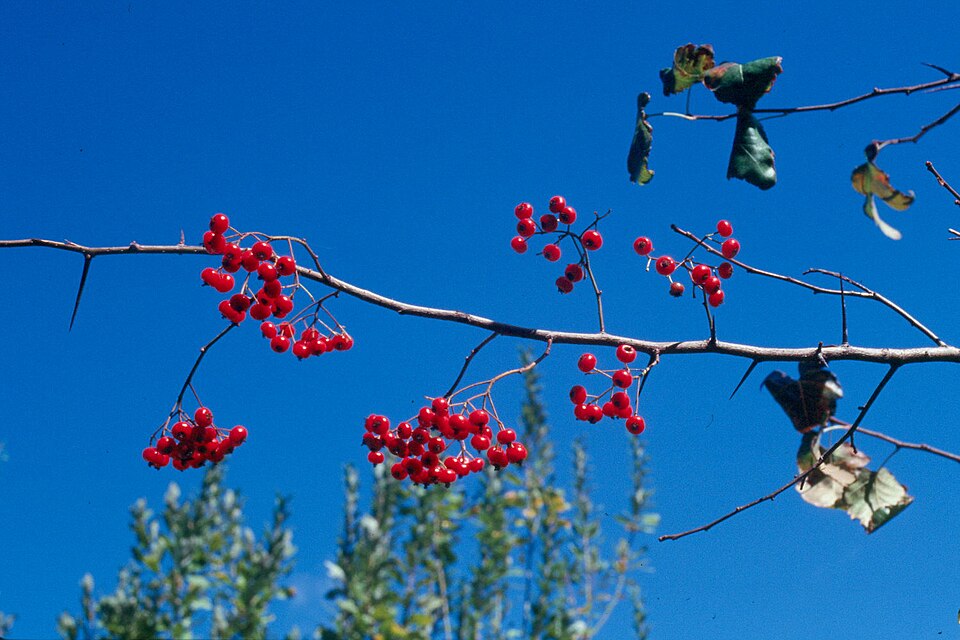
The fruit develops in late summer as small pomes (similar to tiny apples) that ripen to bright red or orange-red in early fall. Each berry is ¼ to ⅓ inch across and contains 2 to 5 hard seeds. The fruits are produced in abundant clusters and persist well into winter, often remaining on the tree until February or March. While the berries are technically edible, they are quite tart and astringent, better left for wildlife consumption.
Quick Facts
| Scientific Name | Crataegus phaenopyrum |
| Family | Rosaceae (Rose) |
| Plant Type | Deciduous Tree |
| Mature Height | 25–30 ft |
| Sun Exposure | Full Sun to Part Shade |
| Water Needs | Moderate |
| Bloom Time | May – June |
| Flower Color | White |
| USDA Hardiness Zones | 4–8 |
Native Range
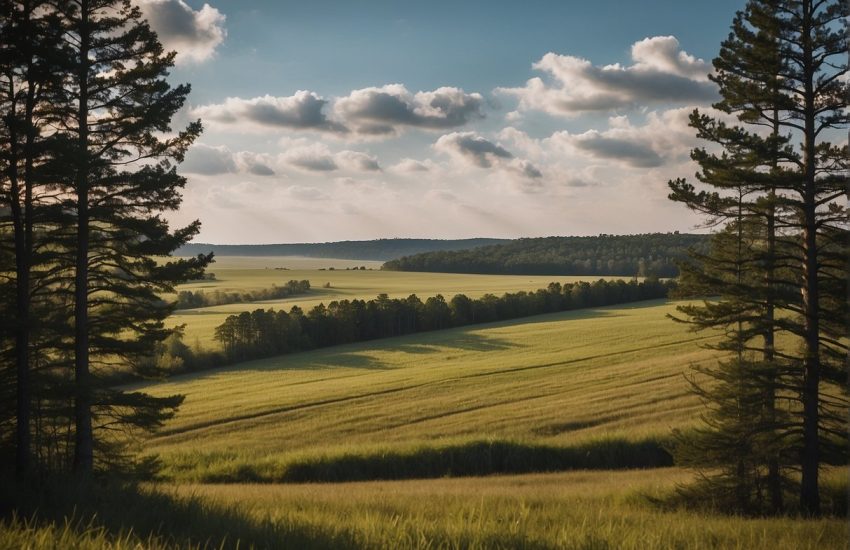
Washington Hawthorn is native to the southeastern United States, with its original range centered in Virginia, the Carolinas, and extending into Tennessee, Kentucky, and northern Georgia. The species gets its common name from its abundance in the areas around Washington, D.C., where it was first botanically described and where it remains a common native tree in forest edges and openings.
In its native habitat, Washington Hawthorn typically grows in forest margins, old fields, woodland openings, and along stream corridors where it receives good light exposure. It thrives in the transition zones between dense forest and open areas, often forming part of the natural succession process as abandoned agricultural land reverts to woodland. The species is particularly common in the Piedmont and Coastal Plain regions, where it grows in association with other native trees like Red Maple, Tulip Tree, and various oaks.
While native to a relatively limited southeastern range, Washington Hawthorn has proven remarkably adaptable to cultivation and has been widely planted throughout the eastern United States and beyond. Its cold tolerance allows it to thrive as far north as southern Canada, while its heat and humidity tolerance make it suitable for southern climates. This adaptability, combined with its outstanding ornamental qualities, has made it one of the most widely planted native hawthorns in North America.
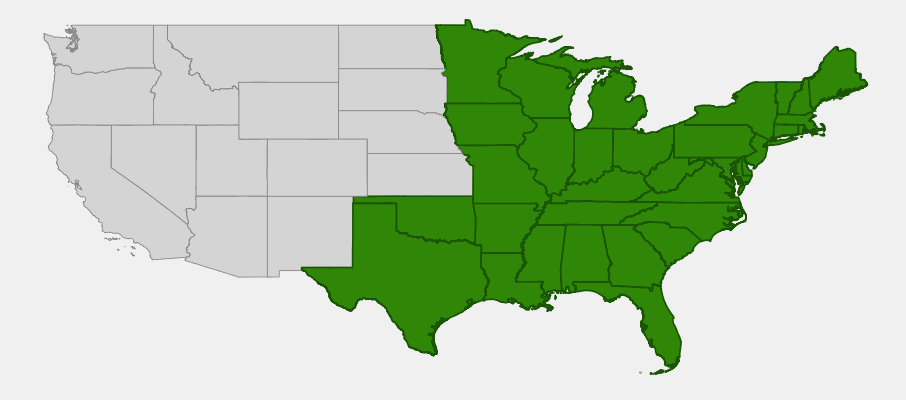
📋 Regional plant lists featuring Washington Hawthorn: North Carolina & South Carolina
Growing & Care Guide
Washington Hawthorn is among the most adaptable and low-maintenance native trees, thriving in a wide range of growing conditions while providing exceptional four-season interest. Its tolerance for urban stresses makes it an excellent choice for both residential and commercial landscapes.
Light
Washington Hawthorn performs best in full sun to partial shade, with at least 6 hours of direct sunlight per day for optimal flowering and fruiting. In full sun, the tree develops a dense, symmetrical crown and produces the most abundant flowers and berries. While it tolerates partial shade, flowering and fall color may be reduced in shadier locations. The species adapts well to urban conditions and is tolerant of reflected light and heat.
Soil & Water
This adaptable tree grows well in a wide range of soils, from clay to sandy loam, as long as drainage is adequate. It prefers slightly acidic to neutral soil (pH 6.0–7.5) but tolerates both acidic and alkaline conditions. Once established, Washington Hawthorn is quite drought tolerant, though moderate moisture produces the best growth and appearance. It handles both wet and dry periods better than many other trees, making it excellent for challenging sites.
Planting Tips
Plant Washington Hawthorn in spring or fall, spacing trees 20–25 feet apart for optimal crown development. Choose a location where the thorny branches won’t pose a hazard to foot traffic. The tree transplants well from container stock and establishes quickly with proper watering during the first year. Consider the mature size when planting near structures or power lines — while not a large tree, it does develop a substantial crown.
Pruning & Maintenance
Minimal pruning is required beyond removing dead, damaged, or crossing branches. Prune in late winter while dormant to avoid disrupting spring flowering. When pruning is necessary, wear heavy gloves and protective clothing due to the sharp thorns. The tree naturally develops good structure, so extensive pruning is rarely needed. Remove suckers from the base if they appear, and thin interior branches if the crown becomes too dense.
Landscape Uses
Washington Hawthorn’s versatility makes it valuable in many landscape applications:
- Specimen tree — exceptional four-season interest for focal points
- Street tree — tolerates urban conditions and fits under power lines
- Wildlife gardens — berries feed birds, flowers attract pollinators
- Native plant gardens and naturalized areas
- Security plantings — thorns provide natural barrier
- Small space gardens — compact size suitable for residential lots
- Mixed borders and woodland edge plantings
Wildlife & Ecological Value
Washington Hawthorn provides exceptional wildlife habitat and food resources throughout multiple seasons, supporting a diverse array of birds, mammals, and beneficial insects.
For Birds
The bright red berries are consumed by over 20 species of birds, including Northern Cardinals, Blue Jays, American Robins, Cedar Waxwings, and various sparrows and finches. The persistent fruit provides crucial winter food when other sources are scarce, often sustaining bird populations through harsh weather periods. The dense, thorny branching structure offers excellent nesting sites and protective cover, particularly valuable for smaller songbirds seeking protection from predators.
For Mammals
Small mammals including chipmunks, squirrels, and mice consume the fallen berries, while deer occasionally browse the foliage and twigs during winter. The thorny nature of the branches provides natural deterrent value while still allowing wildlife access to the fruit. Raccoons and other climbing mammals also take advantage of the berry crop when it’s available.
For Pollinators
The abundant spring flowers attract a variety of beneficial insects including native bees, flies, beetles, and butterflies. While the flower fragrance may be unpleasant to humans, it’s highly attractive to pollinators, particularly flies which are important early-season pollinators for many plants. The extended blooming period provides nectar during a crucial time when many other native flowers aren’t yet available.
Ecosystem Role
As a native tree that bridges forest and open habitats, Washington Hawthorn plays an important role in ecological succession and habitat connectivity. Its ability to colonize disturbed sites helps stabilize soil and provides stepping-stone habitat for wildlife moving between larger forest patches. The tree supports numerous insects, which in turn feed birds and other wildlife, making it a valuable component of food webs.
Cultural & Historical Uses
Washington Hawthorn shares the rich cultural heritage common to many hawthorn species, with a history of use spanning both Indigenous traditions and European folk medicine. Native American tribes throughout the tree’s range recognized the value of various hawthorn species, using different parts of the plants for medicinal, food, and tool-making purposes.
The Cherokee and other southeastern tribes utilized hawthorn berries as food, though they required processing to reduce their astringency. The berries were often cooked into a sauce or dried for winter storage. The hard wood was valued for making small tools, arrow shafts, and other implements that required strong, dense material. Various plant parts were also used in traditional medicine, particularly for heart and circulatory system ailments — a use that has been validated by modern research showing hawthorns contain compounds beneficial for cardiovascular health.
European settlers brought their own hawthorn traditions to North America, and Washington Hawthorn became integrated into folk medicine practices that developed in the colonial period. The tree was often called “Red Haw” or “Southern Thorn” and was recognized for both its medicinal properties and its value as a natural fence or boundary marker. The thorny nature of the tree made it valuable for creating livestock barriers in areas where stone or wooden fences were impractical.
In modern times, Washington Hawthorn has gained recognition as one of America’s finest native ornamental trees. Its outstanding combination of spring flowers, summer foliage, brilliant fall color, and persistent winter fruit has made it a favorite among landscape architects and urban planners. The species has been widely planted in parks, along streets, and in residential landscapes throughout much of North America, far beyond its original native range. This widespread cultivation has introduced millions of people to the beauty and ecological value of native trees, making Washington Hawthorn an ambassador species for native plant gardening.
Frequently Asked Questions
Are the thorns on Washington Hawthorn dangerous?
The thorns are quite sharp and can cause injury, so care should be taken when pruning or working around the tree. However, they’re not poisonous and pose no special danger beyond typical puncture wounds. Wear heavy gloves and protective clothing when pruning, and avoid planting in high-traffic areas where people might accidentally contact the branches.
Can you eat Washington Hawthorn berries?
The berries are technically edible but are quite tart and astringent, with large seeds and little flesh. They’re much better left for wildlife. However, they can be processed into jams or jellies if you’re interested in foraging, though the preparation is time-consuming and the flavor is generally considered poor compared to other wild fruits.
Why don’t the flowers smell good?
The unpleasant odor is an adaptation to attract fly pollinators rather than bees or butterflies. Many trees in the rose family that rely on fly pollination have flowers with musty or fishy scents. While offensive to humans, this fragrance is highly attractive to the flies that pollinate the flowers.
How long does it take for Washington Hawthorn to start flowering and fruiting?
Young trees typically begin flowering and fruiting 3–5 years after planting, depending on their size at planting and growing conditions. Container-grown nursery stock often flowers sooner than bare-root trees. Full ornamental value is usually achieved within 5–7 years.
Is Washington Hawthorn prone to any serious pests or diseases?
Like other hawthorns, it can be susceptible to fire blight, rust diseases, and scale insects, but these problems are generally manageable with proper care. Avoid overhead watering, provide good air circulation, and select healthy nursery stock. The species is generally quite hardy and disease-resistant when grown in appropriate conditions.

Looking for a nursery that carries Washington Hawthorn?
Browse our native plant nursery directory: North Carolina · South Carolina