Hop Tree (Ptelea trifoliata)
Ptelea trifoliata, commonly known as Hop Tree, Wafer Ash, or Stinking Ash, is a distinctive native small tree or large shrub that offers unique ornamental value and exceptional adaptability to challenging growing conditions. This member of the Rutaceae (citrus) family gets its common name from the papery, circular seed pods that resemble hops and were historically used as a substitute for brewing hops by early settlers.
Native to much of the central and eastern United States, Hop Tree is particularly valued for its ability to thrive in difficult sites where many other trees would struggle. The plant tolerates everything from full sun to deep shade, wet to dry soils, and urban pollution, making it an excellent choice for challenging landscape situations. Its three-leaflet compound leaves, fragrant clusters of small greenish-white flowers, and distinctive circular seed pods provide multi-season interest and conversation value in the garden.
Beyond its ornamental qualities, Hop Tree holds special significance as the sole host plant for the Giant Swallowtail butterfly, North America’s largest butterfly species. This ecological relationship makes the tree invaluable for butterfly gardens and native plant enthusiasts interested in supporting specialized wildlife relationships. The plant’s drought tolerance, deer resistance, and low maintenance requirements further enhance its value in sustainable landscaping.
Identification
Hop Tree is easily recognized by its distinctive three-part compound leaves and unique circular seed pods. The plant typically grows as a small, multi-stemmed tree or large shrub with an irregular, somewhat spreading crown that becomes more open and graceful with age.
Leaves
The leaves are compound, consisting of three leaflets arranged in a palmate pattern (trifoliate), giving the plant its species name. Each leaflet is oval to elliptical, 2 to 5 inches long and 1 to 3 inches wide, with smooth or slightly toothed margins and pointed tips. The leaflets are dark green above and paler beneath, with prominent veining. When crushed, the leaves emit a strong, somewhat unpleasant citrus-like odor due to aromatic oils in the tissues — hence the common name ‘Stinking Ash.’ In fall, the foliage turns bright yellow to golden-yellow, providing excellent autumn color.
Flowers
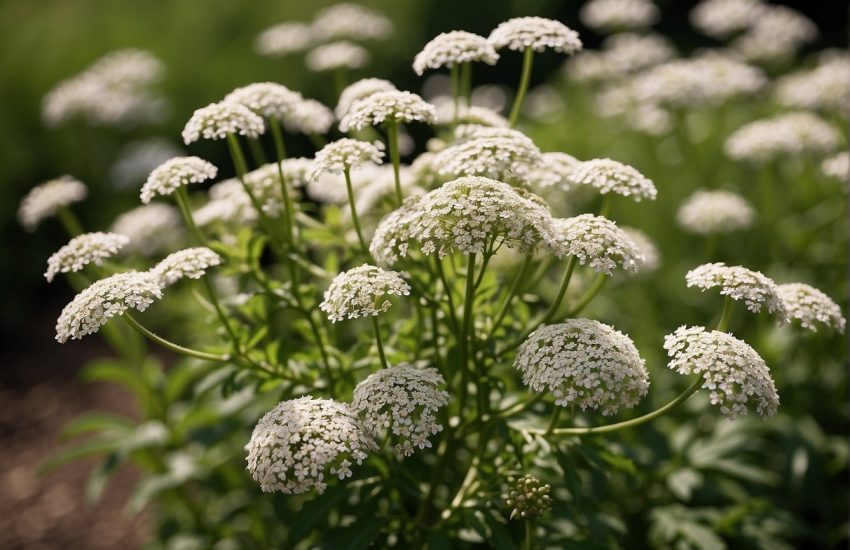
The flowers appear in late spring to early summer in dense, flat-topped clusters (corymbs) at the ends of branches. Individual flowers are small, about ¼ inch across, with 4-5 greenish-white petals and prominent yellow anthers. Male and female flowers are usually borne on separate plants (dioecious), though some plants may have perfect flowers. The flowers have a sweet, honey-like fragrance that attracts various pollinators, including bees, flies, and butterflies. The blooming period typically lasts 2 to 3 weeks.
Bark & Stems
The bark is smooth and gray to brown on young stems, developing shallow furrows and becoming slightly scaly with age. Young twigs are green to reddish-brown and may have small raised dots (lenticels). The wood is light-colored and somewhat brittle, but the plant rarely suffers from wind damage due to its typically sheltered growing locations.
Fruit & Seeds
The fruit is Hop Tree’s most distinctive feature — flat, circular, papery pods (samaras) about 1 inch in diameter with the seed in the center surrounded by a broad, membranous wing. These wafer-like pods are initially green, maturing to brown or tan, and persist on the tree well into winter, creating interesting visual texture. The pods are produced in dense clusters and can cover much of the tree when fruit production is heavy.
Quick Facts
| Scientific Name | Ptelea trifoliata |
| Family | Rutaceae (Citrus) |
| Plant Type | Small Deciduous Tree / Large Shrub |
| Mature Height | 15–20 ft |
| Sun Exposure | Full Sun to Full Shade |
| Water Needs | Moderate |
| Bloom Time | Late Spring to Early Summer |
| Flower Color | Greenish-White |
| USDA Hardiness Zones | 4–9 |
Native Range
Hop Tree has an extensive native range across much of the central and eastern United States, extending from southern Ontario and Quebec south to northern Florida and west to Colorado, New Mexico, and eastern Texas. The species shows remarkable adaptability across this broad range, thriving in diverse climatic conditions from the humid Southeast to the semi-arid Southwest.
In its natural habitat, Hop Tree typically grows in woodland edges, forest openings, stream banks, rocky slopes, and disturbed areas. It’s commonly found in oak-hickory forests, riparian woodlands, prairie edges, and limestone outcrops where its tolerance for alkaline soils gives it a competitive advantage. The plant often colonizes disturbed sites and can be found along roadsides, fence rows, and abandoned areas where it helps stabilize soil and provide wildlife habitat.
Throughout its range, Hop Tree demonstrates remarkable ecological flexibility, growing in everything from rich, moist bottomland soils to dry, rocky upland sites. This adaptability has made it valuable for restoration projects and sustainable landscaping across a wide variety of site conditions and geographic regions.
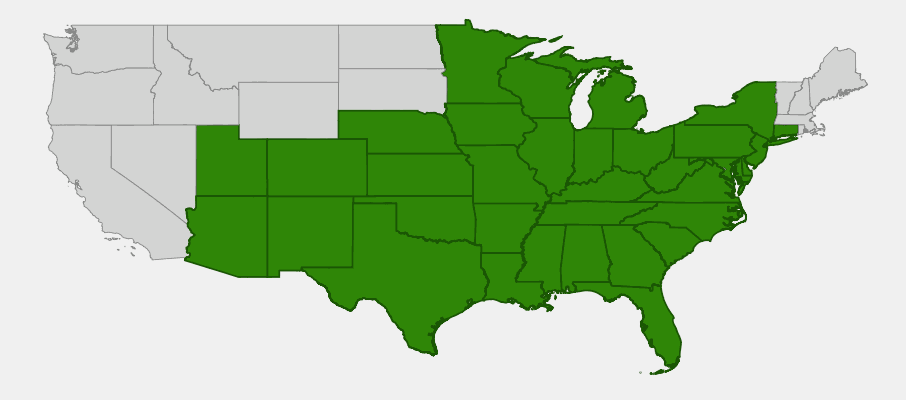
📋 Regional plant lists featuring Hop Tree: North Carolina & South Carolina
Growing & Care Guide
Hop Tree is one of the most adaptable and low-maintenance native trees available, thriving in conditions that would challenge many other species. Its tolerance for diverse growing conditions makes it valuable for difficult sites and sustainable landscaping applications.
Light
Hop Tree demonstrates remarkable adaptability to different light conditions, growing successfully in everything from full sun to full shade. In full sun, the plant tends to develop a denser, more compact form with heavier flowering and fruiting. In partial shade, it maintains good form while requiring less water. In deep shade, the plant becomes more open and may lean toward available light, but remains healthy and attractive. This versatility makes it excellent for transitional areas and sites with changing light conditions.
Soil & Water
One of Hop Tree’s greatest assets is its tolerance for diverse soil conditions. It grows well in everything from rich, moist soils to poor, dry, rocky conditions, and tolerates both acidic and alkaline soils — unusual among native plants. The tree is particularly valuable for limestone soils and other alkaline conditions where many native plants struggle. Once established, Hop Tree is quite drought-tolerant, though it performs best with moderate moisture. It also tolerates periodic flooding and poorly drained soils better than many other trees.
Planting Tips
Plant Hop Tree in spring or fall, spacing trees 10-15 feet apart if planting multiples. The tree transplants easily and establishes quickly compared to many other native trees. Choose a planting site based on desired size — the tree can be maintained as a large shrub through pruning or allowed to develop into a small tree. When planting, dig a hole twice as wide as the root ball but no deeper, and water thoroughly after planting.
Pruning & Maintenance
Hop Tree requires minimal maintenance once established. Prune in late winter or early spring to maintain desired size or shape, or to remove dead or crossing branches. The plant can be maintained as a large shrub through annual pruning or allowed to develop its natural small tree form. Young trees may benefit from training to develop a single trunk if a tree form is desired. The plant rarely suffers from serious pest or disease problems and typically requires no fertilization or special care.
Landscape Uses
Hop Tree’s adaptability and unique features make it valuable in many landscape settings:
- Difficult sites — excellent for challenging locations with poor soil or extreme conditions
- Butterfly gardens — essential host plant for Giant Swallowtail butterflies
- Native plant gardens — conversation piece with unique seed pods and fragrant flowers
- Naturalized areas — good for restoration and wildlife habitat projects
- Urban landscapes — tolerates pollution and compacted soils
- Shade gardens — one of few trees thriving in deep shade
- Screening — can be used for informal hedges or natural barriers
Wildlife & Ecological Value
Hop Tree provides exceptional ecological value, particularly for specialized wildlife relationships that depend on this specific plant for survival and reproduction.
For Birds
Various bird species consume Hop Tree seeds, including finches, cardinals, and other seed-eating birds. The dense branching structure provides nesting sites for small songbirds, while the tree’s ability to thrive in edge habitats makes it valuable for species that prefer transitional environments. Game birds such as wild turkey occasionally consume the seeds, and the tree’s fruits can be an important food source during winter when other resources are scarce.
For Mammals
Small mammals including chipmunks, squirrels, and mice consume Hop Tree seeds and may seek shelter among the dense branches. The tree is generally avoided by deer due to the strong-smelling oils in the leaves, making it valuable for gardens where browsing pressure is high. The extensive root system provides habitat for various soil-dwelling organisms and helps prevent erosion.
For Pollinators & Butterflies
Hop Tree’s most significant ecological relationship is as the exclusive host plant for Giant Swallowtail butterfly caterpillars. This large, beautiful butterfly — North America’s largest — cannot complete its life cycle without Hop Tree or its close relatives. Female Giant Swallowtails lay their eggs exclusively on Hop Tree leaves, and the caterpillars feed only on this plant. This makes Hop Tree absolutely essential for maintaining Giant Swallowtail populations. The fragrant flowers also attract various other pollinators, including bees, flies, and other butterfly species seeking nectar.
Ecosystem Role
Hop Tree plays important roles in forest edge and succession ecology. As a pioneer species that colonizes disturbed areas, it helps stabilize soil and create conditions suitable for other native plants. The tree’s tolerance for diverse conditions allows it to serve as a ‘nurse plant’ that provides shelter and improved soil conditions for more sensitive species. Its deep taproot helps break up compacted soils and access water from deeper layers, benefiting surrounding plants.
Cultural & Historical Uses
Hop Tree has a fascinating history of human use dating back thousands of years. Native American tribes throughout the plant’s range utilized various parts of the tree for medicinal, practical, and ceremonial purposes. Many tribes, including the Cherokee, Delaware, and various Plains tribes, used the bark and root preparations to treat digestive problems, skin conditions, and various other ailments. The aromatic qualities of the plant made it valuable for ceremonial uses and as an insect repellent.
Early European settlers quickly adopted many Native American uses for Hop Tree and developed new applications. The plant’s most famous historical use was as a substitute for hops in beer brewing — hence the common name. During times of hop shortages or high prices, brewers would use the dried seed pods to add bitterness and flavor to their beer. While not identical to true hops, the substitution was common enough that the plant became widely known as Hop Tree throughout much of its range.
In traditional folk medicine, various parts of Hop Tree were used to treat a wide range of conditions, from digestive problems to skin ailments to respiratory issues. The bark was particularly valued for its bitter properties and was used in tonics and digestive aids. However, modern medical research has not validated these traditional uses, and the plant should not be used medicinally without proper guidance.
During the 19th and early 20th centuries, Hop Tree found new uses in commercial applications. The wood, while not particularly strong, was used for small items and crafts, while the bark was harvested for various medicinal preparations. The plant was also recognized for its value in erosion control and was sometimes planted for land reclamation projects.
Frequently Asked Questions
Why is Hop Tree called ‘Stinking Ash’?
The leaves and stems of Hop Tree contain aromatic oils that produce a strong, somewhat unpleasant citrus-like odor when crushed or bruised. This smell, combined with the compound leaves that somewhat resemble ash trees, led to the common name ‘Stinking Ash.’ Despite the name, many people find the fragrance of the flowers quite pleasant.
Can I use Hop Tree seed pods to make beer?
While historically used as a substitute for hops in brewing, using Hop Tree pods for making beer is not recommended without proper knowledge and preparation. The pods contain different compounds than true hops and may have different effects. Modern brewing should use commercially available hops for safety and quality.
How important is Hop Tree for Giant Swallowtail butterflies?
Hop Tree is absolutely critical for Giant Swallowtail butterflies — it’s their exclusive host plant in most of their range. Without Hop Tree and related species, Giant Swallowtails cannot complete their life cycle. Planting Hop Tree is one of the most direct ways to support this magnificent butterfly species.
Will Hop Tree grow in alkaline soil?
Yes, Hop Tree is one of the few native trees that actually thrives in alkaline soils. This makes it particularly valuable for gardens with limestone-derived soils or other high pH conditions where many native plants struggle. It’s an excellent choice for challenging alkaline sites.
How fast does Hop Tree grow?
Hop Tree has a moderate growth rate, typically adding 12-18 inches per year under good conditions. Young trees may grow faster initially, slowing as they mature. The tree typically reaches its mature height of 15-20 feet within 10-15 years, making it relatively quick to establish compared to larger native trees.

Looking for a nursery that carries Hop Tree?
Browse our native plant nursery directory: North Carolina · South Carolina