Bishop’s Cap (Mitella diphylla)
Mitella diphylla, commonly known as Bishop’s Cap, Twoleaf Miterwort, or simply Miterwort, is a delicate native perennial wildflower that brings ethereal beauty to the shaded woodlands of eastern North America. This member of the Saxifragaceae (Saxifrage) family is renowned for its distinctive clusters of tiny, intricate white flowers that resemble miniature snowflakes or delicate lacework dancing above heart-shaped leaves. The common name “Bishop’s Cap” derives from the shape of the seed capsule, which resembles a bishop’s mitre or ceremonial cap.
Growing naturally in rich, moist deciduous forests, Bishop’s Cap is a quintessential woodland wildflower that thrives in the dappled shade beneath mature trees. The plant forms low colonies through underground rhizomes, creating drifts of soft green foliage topped with delicate flower spikes in late spring. Each individual flower, though tiny at only ⅛ to ¼ inch across, is a masterpiece of botanical architecture, with deeply fringed petals that create an almost crystalline appearance when viewed closely.
For gardeners seeking to create authentic woodland gardens or restore native forest understory, Bishop’s Cap represents one of the most charming and ecologically appropriate choices available. Its modest size, refined beauty, and ability to naturalize in suitable conditions make it perfect for shaded borders, woodland walks, and areas where more aggressive plants might overwhelm the delicate forest ecosystem. The plant’s early summer bloom period provides nectar for small pollinators at a time when few other woodland flowers are active, making it an important component of forest biodiversity.
Identification
Bishop’s Cap is a small, herbaceous perennial that typically grows 8 to 16 inches tall, forming low colonies in favorable woodland conditions. The plant consists of basal leaves arising from underground rhizomes, with delicate flowering stalks emerging in late spring to early summer.
Leaves
The basal leaves of Bishop’s Cap are heart-shaped to broadly ovate, measuring 2 to 4 inches long and nearly as wide. They are palmately lobed with 3 to 5 shallow, rounded lobes and have a distinctly hairy or fuzzy texture on both surfaces. The leaves are medium green in color with prominent veining and are supported by long, slender petioles that can be 2 to 6 inches in length. The leaves remain attractive throughout the growing season, often persisting into early winter in mild climates.
A distinctive feature of Bishop’s Cap is the presence of two small stem leaves (cauline leaves) located partway up each flowering stalk, positioned opposite each other. These stem leaves are similar in shape to the basal leaves but much smaller, typically ½ to 1 inch across, and help distinguish this species from other woodland wildflowers.
Flowers
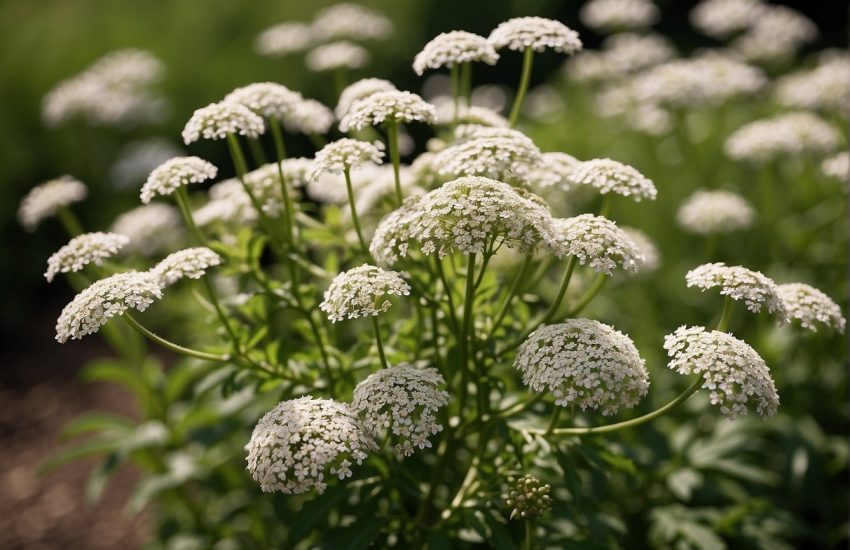
The flowers of Bishop’s Cap are perhaps the plant’s most remarkable feature. They are arranged in a loose, elongated raceme (spike-like cluster) that rises 6 to 12 inches above the foliage. Each raceme contains 10 to 25 individual flowers arranged along one side of the stem. The individual flowers are tiny, measuring only ⅛ to ¼ inch across, but are exquisitely detailed.
Each flower has 5 white petals that are deeply divided into thread-like segments, creating a delicate, fringed appearance that resembles tiny snowflakes or intricate lacework. The flowers have 10 stamens with bright yellow anthers and a single pistil. The overall effect is one of extraordinary delicacy and refinement, particularly when backlit by filtered sunlight in the forest understory.
Fruit & Seeds
The fruit is a small, two-beaked capsule that splits open when mature to release numerous tiny seeds. The capsule’s distinctive shape, resembling a bishop’s mitre or cap, gives the plant its common name. The seeds are extremely small and are likely dispersed by wind, water, and possibly ants, helping the plant establish new colonies in suitable woodland habitats.
Quick Facts
| Scientific Name | Mitella diphylla |
| Family | Saxifragaceae (Saxifrage) |
| Plant Type | Herbaceous Perennial |
| Mature Height | 1–2 ft |
| Sun Exposure | Part Shade to Full Shade |
| Water Needs | Low to Moderate |
| Bloom Time | May – July |
| Flower Color | White |
| USDA Hardiness Zones | 4 – 8 |
Native Range
Bishop’s Cap has a primarily northeastern North American distribution, with its range extending from southeastern Canada south through the Appalachian Mountains to northern Georgia and Alabama. The species shows a strong preference for mountainous and hilly regions, where it inhabits the rich, moist soils of mature deciduous forests. In the Carolinas, Bishop’s Cap is found primarily in the mountains and upper Piedmont regions, where suitable forest conditions exist.
The plant’s distribution closely follows that of rich, mesic deciduous forests dominated by maple, beech, birch, and other hardwood species. It is particularly common in areas with deep, humus-rich soils and consistent moisture throughout the growing season. Bishop’s Cap typically grows at elevations ranging from 1,000 to 4,000 feet in the southern portion of its range, though it can be found at lower elevations further north.
Throughout its range, Bishop’s Cap serves as an indicator species for high-quality forest habitat. Its presence often indicates a mature, undisturbed forest ecosystem with the complex soil chemistry and stable moisture conditions that support diverse native plant communities. Climate change and forest fragmentation pose ongoing challenges to the species, as it requires the stable, cool conditions provided by intact forest canopies.
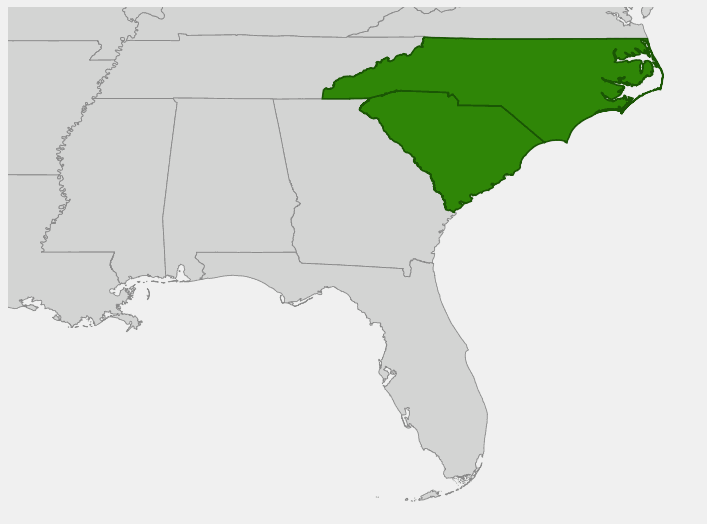
📋 Regional plant lists featuring Bishop’s Cap: North Carolina & South Carolina
Growing & Care Guide
Bishop’s Cap is a specialized woodland plant that requires specific conditions to thrive, but rewards careful cultivation with delicate beauty and naturalistic charm. Success with this species depends on recreating the cool, moist, humus-rich environment of its native forest habitat.
Light
Bishop’s Cap is adapted to the filtered light conditions of the forest understory and performs best in partial to full shade. It cannot tolerate direct sunlight, which will quickly stress the plant and may cause leaf scorch. The ideal location provides bright, indirect light or dappled shade throughout the day, such as beneath deciduous trees or on the north side of buildings. Deep shade is tolerated but may result in reduced flowering.
Soil & Water
The most critical requirement for Bishop’s Cap is rich, consistently moist, well-draining soil with high organic matter content. The plant thrives in woodland soils with pH ranging from slightly acidic to neutral (6.0-7.0). The soil should be deep, loose, and rich in decomposed organic matter — think of the deep leaf mold found on the forest floor. Heavy clay soils or sandy soils without organic amendments are unsuitable.
Moisture is crucial but must be balanced with good drainage. The soil should remain evenly moist throughout the growing season but never waterlogged. In natural settings, the deep forest duff and tree canopy provide consistent moisture retention while preventing oversaturation. Mulching with 2-3 inches of leaf mold or composted organic matter helps replicate these conditions.
Planting Tips
Plant Bishop’s Cap in early spring or fall when temperatures are cool and moisture is naturally higher. Choose a location that closely mimics natural woodland conditions — beneath existing trees, in a woodland garden, or in a naturalized area with rich, organic soil. Space plants 12-18 inches apart if planting multiple specimens, as they will gradually form colonies through underground rhizomes.
When planting, ensure the crown is at soil level and water thoroughly. A thick mulch of leaf mold or composted leaves helps maintain moisture and provides the organic matter the plant requires. Avoid disturbing the soil around established plants, as the rhizomes are relatively shallow and can be easily damaged.
Pruning & Maintenance
Bishop’s Cap requires minimal maintenance once established in suitable conditions. Remove spent flower stalks after blooming if desired, though leaving them allows for natural seed dispersal and self-sowing. The basal leaves often persist through much of winter, providing structure and interest in the woodland garden. Avoid disturbing the soil around plants, and refresh the organic mulch annually with leaf mold or compost.
Landscape Uses
Bishop’s Cap is best suited for specialized landscape applications that match its natural habitat requirements:
- Woodland gardens — ideal for naturalistic forest understory plantings
- Shade borders — provides delicate texture and late spring interest
- Native plant gardens — authentic Appalachian forest wildflower
- Rain gardens — in shaded locations with consistent moisture
- Naturalized areas — allows natural colony formation and spread
- Rock gardens — in shaded, moist locations between stones
Wildlife & Ecological Value
While small in stature, Bishop’s Cap plays important ecological roles in forest ecosystems and provides resources for specialized woodland wildlife.
For Pollinators
The delicate flowers of Bishop’s Cap attract small, specialized pollinators including native sweat bees, small hover flies, and gnats. The tiny size of the flowers excludes larger pollinators, creating a specialized niche for small insects. The flowers bloom during late spring to early summer when many other woodland plants are not yet flowering, providing an important nectar source during this period of relative scarcity in the forest understory.
For Wildlife
The seeds of Bishop’s Cap are likely consumed by small woodland birds and may be dispersed by ants, contributing to forest floor biodiversity. The leaves provide texture and cover for small invertebrates living in the forest duff layer, supporting the complex food webs that sustain woodland ecosystems. Slug and snail species may occasionally browse the foliage, though the plant is generally not considered a major wildlife food source.
Ecosystem Role
As an indicator species for high-quality forest habitat, Bishop’s Cap serves as a living barometer of ecosystem health. Its presence indicates mature forest conditions with stable soil moisture, appropriate pH, and high organic matter content. The plant contributes to the understory layer of forest vegetation, helping to stabilize soil, retain moisture, and provide habitat structure for countless small organisms that form the foundation of forest food webs.
Cultural & Historical Uses
Bishop’s Cap has a modest but interesting history in traditional medicine and folklore. Native American tribes, particularly in the northeastern regions where the plant is most common, used various parts of Bishop’s Cap for medicinal purposes. The leaves were sometimes brewed into teas for treating digestive ailments and respiratory issues, while poultices made from crushed leaves were applied to cuts and wounds for their supposed healing properties.
The distinctive name “Bishop’s Cap” reflects European settlers’ observations of the plant’s seed capsules, which reminded them of the ceremonial caps or mitres worn by bishops in Christian religious ceremonies. The scientific name Mitella comes from the Latin word for “little cap,” further emphasizing this distinctive feature. Alternative common names include “Miterwort” and “Twoleaf Miterwort,” the latter referring to the characteristic pair of opposite leaves found on each flowering stem.
In traditional folk medicine, Bishop’s Cap was sometimes called “coolwort” due to its use in treating fevers and inflammatory conditions. However, there is little scientific evidence to support these traditional uses, and the plant is rarely used medicinally today. Modern appreciation of Bishop’s Cap focuses primarily on its value as a native wildflower for woodland gardens and its role as an indicator of healthy forest ecosystems.
The plant has gained recognition among native plant enthusiasts and woodland gardeners as one of the most delicate and refined native wildflowers. Its ethereal flowers and naturalistic growth habit make it a prized addition to authentic woodland gardens, where it provides a sense of wild, untouched beauty that connects modern gardens to the ancient forests of eastern North America.
Frequently Asked Questions
Is Bishop’s Cap difficult to grow?
Bishop’s Cap can be challenging to establish and grow successfully because it has very specific habitat requirements. It needs consistent shade, rich organic soil, and steady moisture without waterlogging. Once established in suitable conditions, however, it is relatively low-maintenance and may form attractive colonies over time.
Can Bishop’s Cap tolerate any sun?
No, Bishop’s Cap cannot tolerate direct sunlight and should be grown only in partial to full shade. Even brief periods of direct sun can stress the plant and cause leaf scorch. The plant is adapted to the deep shade of forest understories and requires these conditions to thrive.
How do I know if my soil is suitable for Bishop’s Cap?
Suitable soil should be rich, dark, and crumbly with high organic matter content, similar to forest floor soil. It should retain moisture well but not become waterlogged. A simple test: squeeze a handful of moist soil — it should hold together but crumble easily when disturbed. If you can grow plants like Wild Ginger, Trout Lily, or other woodland wildflowers successfully, your soil is likely suitable for Bishop’s Cap.
Will Bishop’s Cap spread in my garden?
Bishop’s Cap spreads slowly through underground rhizomes and may form small colonies over several years in suitable conditions. The spread is typically gradual and non-invasive, creating attractive drifts rather than overwhelming nearby plants. This natural spreading habit is part of the plant’s charm in woodland settings.
When do the flowers appear?
Bishop’s Cap typically flowers from late May through July, with peak flowering usually occurring in June in most regions. The exact timing can vary based on elevation, local climate, and seasonal weather conditions. The flowers are small and delicate, so close observation is needed to fully appreciate their intricate beauty.

Looking for a nursery that carries Bishop’s Cap?
Browse our native plant nursery directory: North Carolina · South Carolina