Fringetree (Chionanthus virginicus)
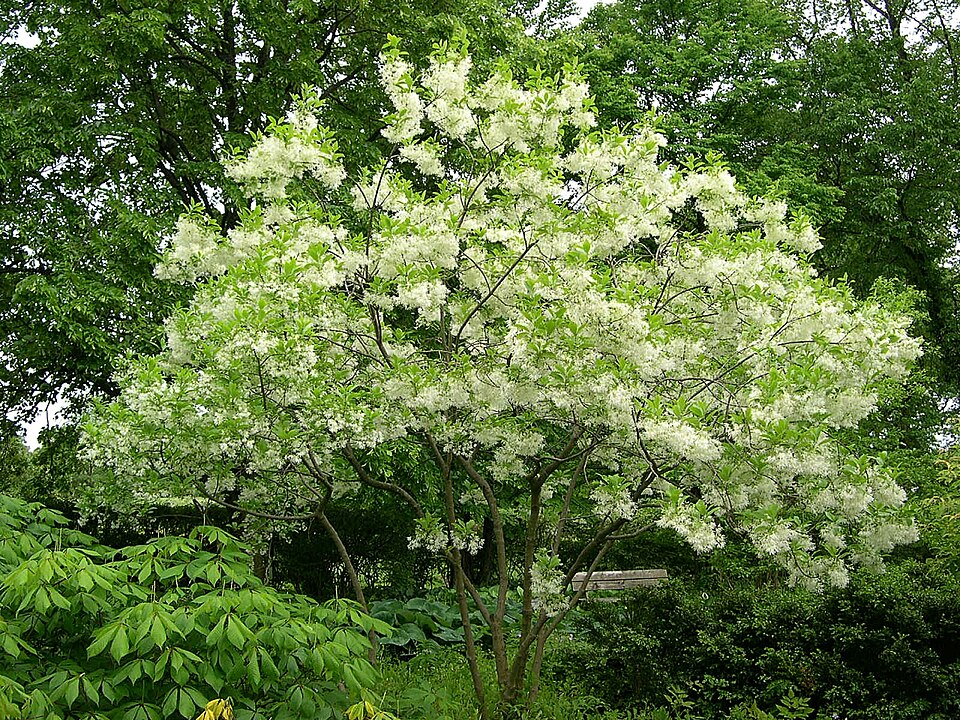
Chionanthus virginicus L., commonly known as Fringetree, White Fringetree, or Old Man’s Beard, stands as one of North America’s most spectacular native flowering trees, earning widespread recognition as the “showiest native tree in the South.” This small to medium-sized member of the Oleaceae (olive) family produces one of the most stunning spring displays in the entire native flora, covering itself in clouds of fragrant, snow-white flowers with delicate, fringe-like petals that seem to float like lace against the emerging green foliage.
Native from New Jersey south to northern Florida and west to eastern Texas, Fringetree thrives in diverse habitats from mountain slopes to coastal plains, demonstrating remarkable adaptability while maintaining its reputation as a landscape treasure. The genus name Chionanthus derives from the Greek words for “snow flower,” perfectly describing the ethereal beauty of its late-spring blooms. This drought-tolerant, deer-resistant native offers four seasons of interest: spectacular white flowers in spring, lustrous dark green foliage in summer, brilliant yellow fall color, and attractive winter silhouette.
Despite its ornamental value rivaling any exotic flowering tree, Fringetree remains an underutilized gem in American landscaping. Its moderate size, exceptional wildlife value, and tolerance for various growing conditions make it perfect for residential gardens, urban plantings, and naturalized areas. The dark blue fruits provide important nutrition for songbirds, while the nectar-rich flowers support native pollinators during a critical period in late spring when many other nectar sources have finished blooming.
Identification
Fringetree typically grows as a small tree or large shrub, reaching 12 to 20 feet (3.5–6 m) tall with a similar spread, though exceptional specimens can reach 30 feet. The growth habit is naturally multi-stemmed and somewhat irregular, creating an open, airy canopy that allows light to filter through. Young trees often maintain a more upright form, while mature specimens develop a broader, more rounded crown with gracefully arching branches.
Bark
The bark is smooth and gray on young trees, gradually developing shallow furrows and narrow ridges as specimens mature. The bark has an attractive, fine texture that becomes more interesting with age, though it never develops the deep furrows of many other native trees. On older trunks, the bark develops a distinctive pattern of interwoven ridges that create visual interest throughout the year, particularly in winter when the tree is leafless.
Leaves
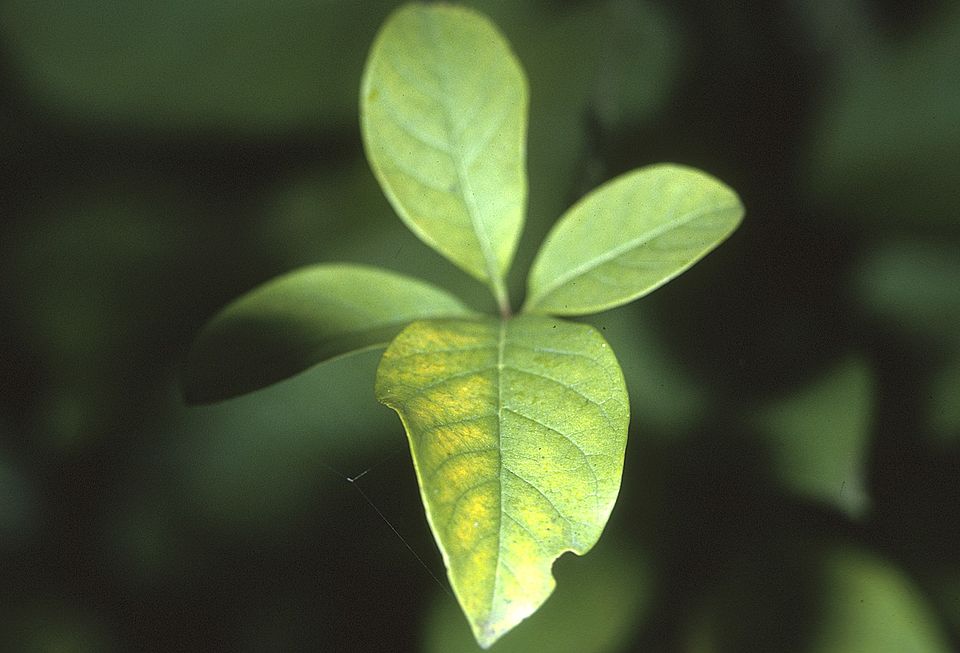
The leaves are simple and arranged in opposite pairs along the branches, a key identifying characteristic that distinguishes Fringetree from many other native trees. Each leaf is oval to elliptic, measuring 3 to 8 inches (7.5–20 cm) long and 1 to 4 inches (2.5–10 cm) wide, with smooth margins and a glossy, dark green upper surface. The leaves emerge late in spring, often not fully expanding until after the flowers have finished blooming. Fall color is consistently excellent, ranging from bright golden yellow to rich butter yellow, creating a spectacular autumn display that rivals the spring flowering.
Flowers & Fruit
The flowers are the crowning glory of Fringetree, appearing in late spring (typically May in the Carolinas) in loose, drooping clusters called panicles that can be 4 to 8 inches (10–20 cm) long. Each individual flower is small but features four narrow, strap-like white petals that are 1 to 1.5 inches (2.5–4 cm) long, creating the distinctive “fringe” appearance. Male and female flowers typically occur on separate trees (dioecious), with male flowers being showier due to their longer petals and more abundant clusters. The flowers have a delicate, sweet fragrance that attracts numerous pollinators.
The fruit develops on female trees as olive-like drupes about ½ to ¾ inch (1.3–2 cm) long, ripening from green through red to dark blue or purple-black in late summer. The fruits have a thin flesh surrounding a large seed and are eagerly consumed by birds, particularly thrushes, mockingbirds, and various songbirds. The fruiting display can be quite ornamental, with clusters of dark berries contrasting beautifully against the glossy green foliage.
Quick Facts
| Scientific Name | Chionanthus virginicus |
| Family | Oleaceae (Olive) |
| Plant Type | Deciduous Tree / Large Shrub |
| Mature Height | 20 ft |
| Sun Exposure | Full Sun to Part Shade |
| Water Needs | Low to Moderate |
| Bloom Time | April – June |
| Flower Color | White |
| USDA Hardiness Zones | 4–9 |
Native Range
Fringetree has a broad native distribution across the eastern United States, extending from southern New Jersey and southeastern Pennsylvania south through the Carolinas and Georgia to northern Florida, and west through Tennessee and Kentucky to eastern Texas, Arkansas, and southeastern Oklahoma. This extensive range reflects the species’ remarkable adaptability to diverse climatic conditions, from the temperate regions of the mid-Atlantic to the subtropical conditions of the Gulf Coast.
Throughout its native range, Fringetree typically occurs as an understory tree in mixed hardwood forests, often growing along woodland edges, in forest openings, and on well-drained slopes. It shows a preference for acidic soils but tolerates a wide range of soil types, from sandy coastal plains to rocky mountain slopes. In the southern Appalachians, Fringetree can be found at elevations up to 3,000 feet, where it often grows in association with other native trees like Eastern Redbud, Flowering Dogwood, and various oak species.
The species demonstrates particular abundance in the Piedmont regions of the Carolinas and Georgia, where it thrives in the transitional zone between mountain and coastal plain habitats. In coastal areas, Fringetree often grows in maritime forests and woodland borders, showing tolerance for salt spray and sandy soils. Its natural habitat preferences make it well-suited to modern landscape applications, as it tolerates the challenging conditions often found in suburban and urban environments.
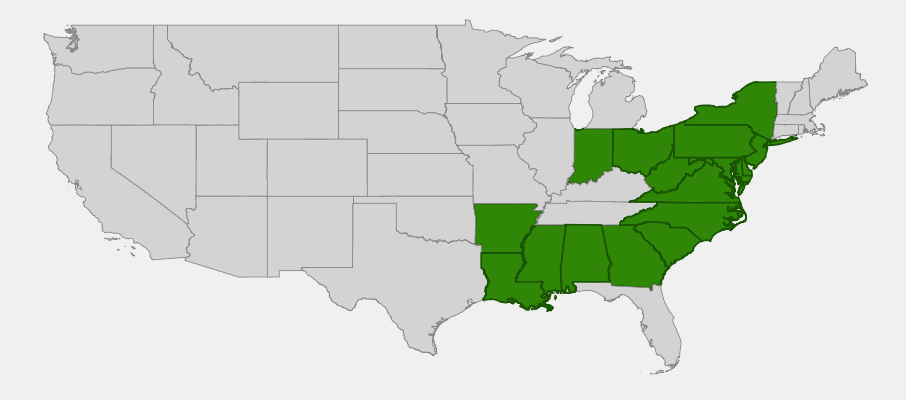
📋 Regional plant lists featuring Fringetree: North Carolina & South Carolina
Growing & Care Guide
Fringetree is one of the most rewarding native trees to grow, combining exceptional ornamental value with remarkable adaptability and low maintenance requirements. Its tolerance for various growing conditions and natural resistance to pests and diseases make it an excellent choice for both novice and experienced gardeners.
Light
Fringetree performs best in full sun to partial shade, with at least 4–6 hours of direct sunlight daily for optimal flowering. In full sun, trees develop more compact, dense crowns and produce the most abundant flower displays. In partial shade, the growth becomes more open and the flowering may be somewhat reduced, but the tree remains healthy and attractive. Very deep shade should be avoided, as it significantly reduces flowering and can lead to weak, spindly growth.
Soil & Water
One of Fringetree’s greatest assets is its adaptability to diverse soil conditions. It thrives in well-drained soils ranging from sandy to clay, and tolerates both acidic and slightly alkaline pH levels (5.0–7.5). The tree shows excellent drought tolerance once established, making it suitable for xeriscaped gardens and low-water landscapes. However, consistent moisture during the first two years after planting helps establish a strong root system. Fringetree tolerates periodic flooding but performs best in soils that don’t remain waterlogged for extended periods.
Planting Tips
Plant Fringetree in early spring or fall, choosing a location with good air circulation and adequate space for the mature size. The tree transplants well from container stock and establishes readily. Space specimens 15–20 feet apart for screening applications, or provide 20–25 feet of space for individual specimens. Fringetree works well in both formal and naturalized settings, and its moderate size makes it suitable for smaller residential lots.
Pruning & Maintenance
Minimal pruning is required for Fringetree. Remove dead, damaged, or crossing branches in late winter while the tree is dormant. If training to a single-trunk tree form, gradually remove lower branches and competing leaders over several years. For multi-stemmed specimens, selective thinning maintains good air circulation and prevents overcrowding. Avoid heavy pruning, as this can reduce flowering for the following year. Fringetree is naturally pest and disease resistant, requiring no regular spray programs.
Landscape Uses
Fringetree excels in numerous landscape applications:
- Specimen planting — showcases spectacular spring flowering display
- Mixed borders — provides vertical interest and seasonal color
- Wildlife gardens — supports pollinators and seed-eating birds
- Native plant gardens — authentic regional flora with ornamental value
- Urban landscapes — tolerates pollution and challenging city conditions
- Screening — creates seasonal privacy with attractive form
- Woodland edges — natural transition between lawn and forest
- Small spaces — appropriate scale for residential lots and courtyards
Wildlife & Ecological Value
Fringetree provides exceptional ecological value throughout its growing season, supporting a diverse array of wildlife species while contributing to pollinator conservation during a critical period in late spring.
For Birds
The dark blue fruits are consumed by numerous bird species, including American Robin, Northern Mockingbird, Wood Thrush, Brown Thrasher, and various finches and sparrows. The fruits ripen at a time when many spring berries have been consumed, providing crucial late-season nutrition for both resident and migrating birds. The open branching structure also provides nesting sites for smaller songbirds, while the late leaf emergence allows early-nesting birds to build before the canopy fully develops.
For Mammals
Small mammals including chipmunks and squirrels consume the fruits, helping disperse seeds to new locations. White-tailed deer occasionally browse the foliage, though Fringetree is generally considered deer resistant due to its thick, somewhat bitter leaves. The tree’s moderate size and branching pattern provide shelter and nesting opportunities for various small mammals.
For Pollinators
Fringetree’s late spring blooming period makes it especially valuable for native pollinators, as it provides abundant nectar when many earlier-flowering species have finished. Native bees, including mason bees, leafcutter bees, and various solitary bee species, are primary pollinators. The flowers also attract butterflies, beneficial wasps, and hover flies. The synchronized blooming with late spring wildflowers creates important pollinator corridors in both natural and cultivated landscapes.
Ecosystem Role
As an understory tree, Fringetree contributes to forest structural diversity and provides habitat complexity in woodland ecosystems. Its relatively open growth habit allows understory plants to flourish beneath its canopy, supporting diverse plant communities. The species’ drought tolerance and adaptability make it valuable for restoration projects in disturbed sites, where it can help establish tree cover while supporting wildlife populations during ecosystem recovery.
Cultural & Historical Uses
Fringetree holds a special place in both Indigenous and European-American traditions, valued for its medicinal properties, ornamental beauty, and symbolic significance. Native American tribes throughout the Southeast, including the Cherokee, Creek, and Seminole, recognized Fringetree as a powerful medicinal plant, using various parts of the tree to treat ailments ranging from skin conditions to digestive disorders. The Cherokee called it nvhi uyvsdi and used bark preparations as treatments for cuts, wounds, and inflammation.
The bark, particularly the root bark, became widely known in 19th-century American folk medicine as a remedy for liver and kidney ailments, earning Fringetree the alternative name “Liver Wood.” European settlers adopted Indigenous uses and developed their own applications, including treatments for gallstones, jaundice, and various digestive complaints. The bark was officially listed in the U.S. Pharmacopoeia from 1882 to 1926, reflecting its accepted medicinal status during that period.
Beyond its medicinal uses, Fringetree has long been celebrated for its ornamental value. Thomas Jefferson grew Fringetree at Monticello, where he appreciated both its beauty and its native origins. Early American botanists and horticulturists, including John Bartram and his son William, praised Fringetree as one of the most beautiful native flowering trees, helping establish its reputation in cultivated gardens.
In modern times, Fringetree has gained recognition as a symbol of sustainable landscaping and native plant gardening. Its combination of exceptional beauty, wildlife value, and environmental adaptation makes it a flagship species for the movement toward more ecologically responsible gardening practices. The tree is now widely planted in botanical gardens, arboreta, and public landscapes throughout its natural range and beyond, serving as an ambassador for the beauty and value of North American native flora.
Frequently Asked Questions
Do I need both male and female Fringetrees to get fruit?
Yes, Fringetree is dioecious, meaning male and female flowers occur on separate trees. You need at least one male tree nearby to pollinate female trees for fruit production. However, male trees often have showier flowers with longer fringe-like petals, so they’re quite ornamental even without fruiting.
Why do Fringetree leaves emerge so late in spring?
This is a natural characteristic that helps Fringetree avoid late frost damage. The tree focuses its early energy on flowering before the leaves emerge, creating the spectacular display of white flowers against bare branches. Don’t worry if your Fringetree appears “dead” while other trees are leafing out—this is completely normal.
How long does it take for Fringetree to bloom after planting?
Young Fringetrees typically begin flowering when they’re 4–6 years old, though container-grown specimens may bloom sooner. Trees grown from seed may take 6–8 years to reach flowering maturity. The wait is worth it, as the flowering display improves dramatically as trees mature.
Is Fringetree really deer resistant?
Fringetree is generally considered deer resistant due to its thick, somewhat bitter leaves and the fact that it leafs out later than many preferred deer foods. However, no plant is completely deer-proof, and young trees may need protection in areas with very high deer populations until they become established.
Can Fringetree grow in clay soil?
Yes, Fringetree is quite tolerant of clay soils as long as they don’t remain waterlogged for extended periods. In heavy clay, consider planting on a slight mound or slope to improve drainage, or amend the planting area with organic matter to improve soil structure. The tree’s drought tolerance makes it better suited to clay than many other ornamental trees.

Looking for a nursery that carries Fringetree?
Browse our native plant nursery directory: North Carolina · South Carolina