Shooting Star (Dodecatheon meadia)
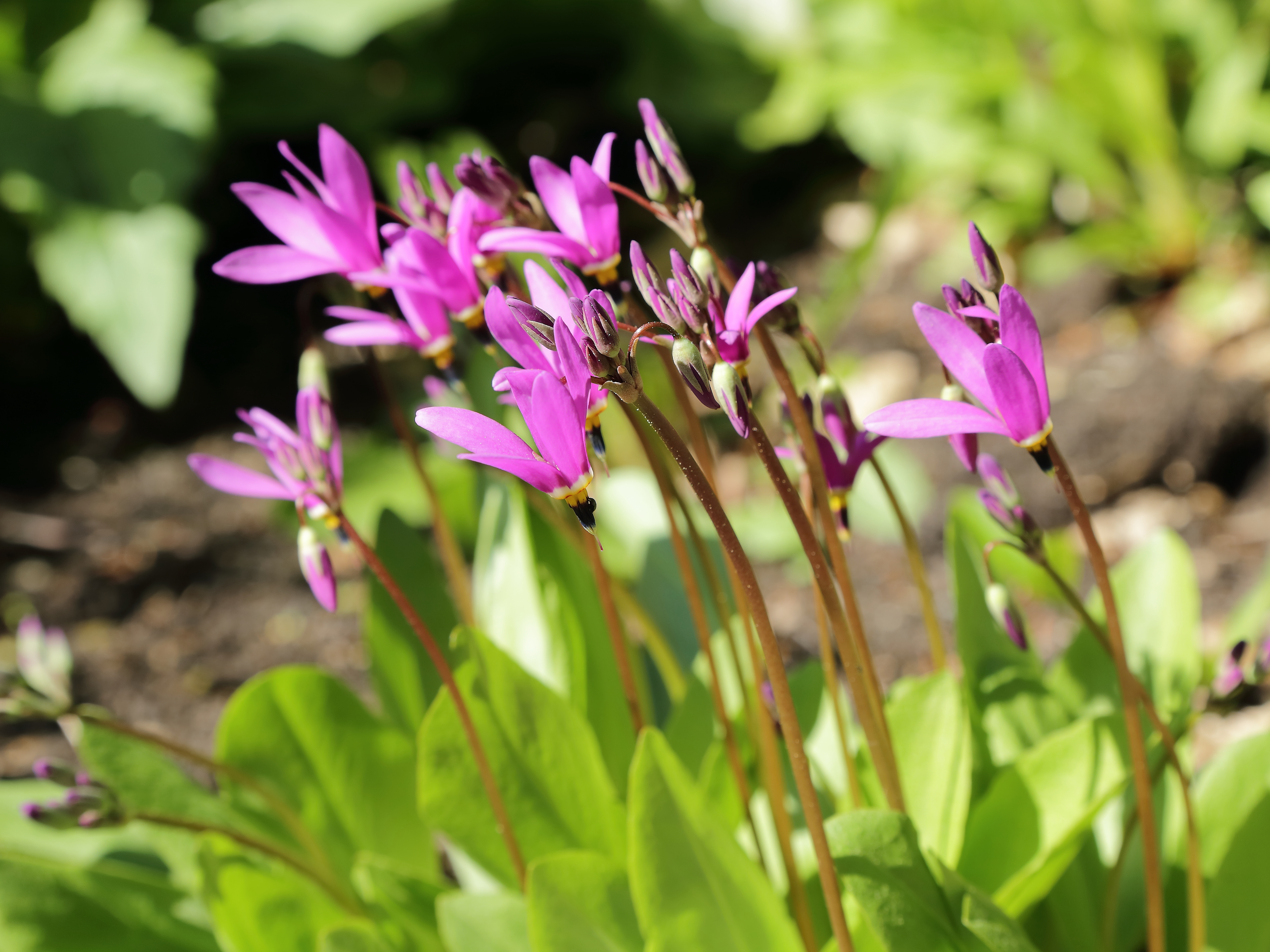
Dodecatheon meadia, commonly known as Shooting Star or Eastern Shooting Star, is one of North America’s most distinctive and beloved native wildflowers, bringing dramatic early-season color to woodlands, prairies, and meadow edges across much of the eastern and central United States. This extraordinary member of the Primulaceae (primrose) family earned its evocative common name from the unique arrangement of its flowers, which feature sharply reflexed (backward-swept) petals that create the illusion of a falling star or comet streaking across the landscape. The protruding stamens and pistil form a pointed “nose cone” that completes this celestial imagery, making Shooting Star one of the most instantly recognizable wildflowers in its range.
Growing naturally in rich, loamy soils with consistent moisture, Shooting Star typically inhabits the transitional zones between full woodland and open meadow — places where morning sun filters through emerging tree canopies but afternoon shade provides relief from intense heat. These edge habitats, including oak savannas, prairie borders, and woodland clearings, were historically maintained by periodic fires that prevented complete forest closure. The plant forms attractive basal rosettes of smooth, paddle-shaped leaves from which emerge tall, graceful flower stalks that can reach 12-20 inches in height, creating spectacular displays when planted in naturalistic drifts or allowed to colonize suitable areas.
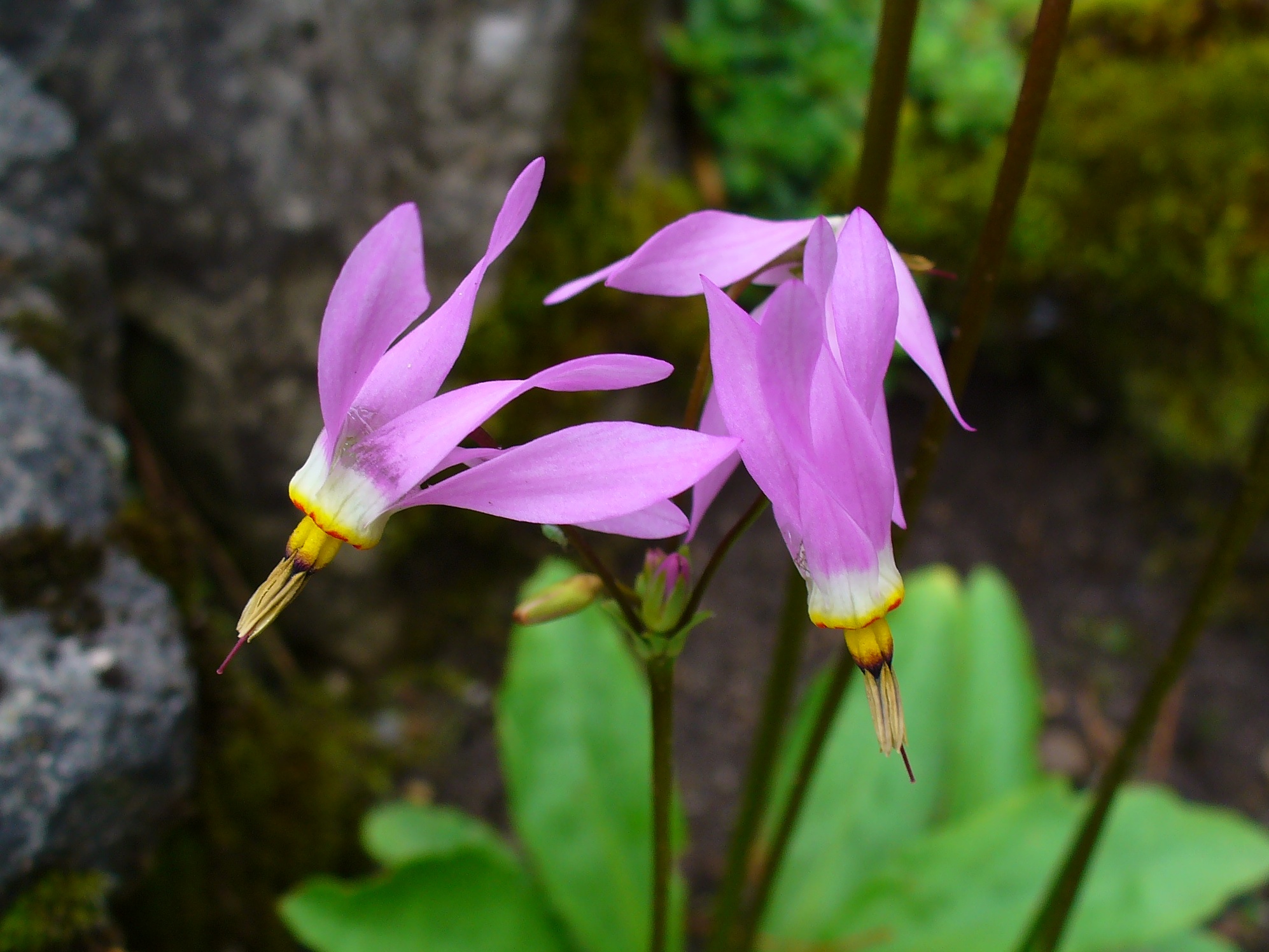
The flowers themselves are botanical marvels — each bloom measuring about an inch across with four to five petals that sweep dramatically backward to reveal the cone-shaped reproductive structures. Colors range from pure white through various shades of pink to deep rose-purple, often with yellow markings at the base of each petal and contrasting dark lines that guide pollinators to the nectar. The blooming period is relatively brief but intense, typically lasting 3-4 weeks in late spring when few other wildflowers are at their peak, making Shooting Star particularly valuable for early-season garden interest and pollinator support.
Despite its delicate appearance, Shooting Star is surprisingly hardy and long-lived when provided with appropriate growing conditions. Individual plants can persist for decades, slowly expanding their basal rosettes and producing more flower stalks each year as they mature. However, the species has experienced significant population declines throughout much of its range due to habitat loss, agricultural conversion of native prairies and savannas, and fire suppression that has allowed many open habitats to succeed to closed forest. Today, Shooting Star is considered rare, uncommon, or of special concern in numerous states where it was once abundant, making its cultivation and conservation increasingly important for maintaining this irreplaceable component of North America’s native flora.
Identification
Shooting Star exhibits a distinctive growth habit that makes it unmistakable among North American wildflowers. The plant develops as a basal rosette — all leaves emerge directly from the root crown at ground level, with no stem leaves present. From this leafy base arise one to several tall, completely leafless flower stalks (scapes) that can reach 8-20 inches in height, depending on growing conditions and the age of the plant. This architectural form creates an elegant, minimalist appearance that is both striking and graceful in the landscape.
Basal Foliage
The leaves of Shooting Star are perhaps its most diagnostic vegetative feature when the plant is not in bloom. Arranged in a tight basal rosette, each leaf is distinctly spatulate or oblong-spatulate in shape — narrow at the base where it attaches to the root crown, then gradually widening toward a rounded tip, resembling a paddle or spoon. Mature leaves typically measure 2-6 inches in length and ½-2 inches at their widest point, though exceptional specimens in ideal conditions may produce leaves up to 8 inches long.
The leaf surfaces are completely smooth (glabrous) and somewhat thick or fleshy in texture, with a pale to medium green coloration that often takes on subtle purplish tints in cool weather. The margins are entire (without teeth or lobes), and the venation is relatively simple, with a prominent midrib and several pairs of lateral veins that curve toward the leaf tip. Unlike many spring wildflowers, Shooting Star leaves persist through the entire growing season, remaining fresh and attractive long after the flowers have faded and seed has been set.
Distinctive Flowers
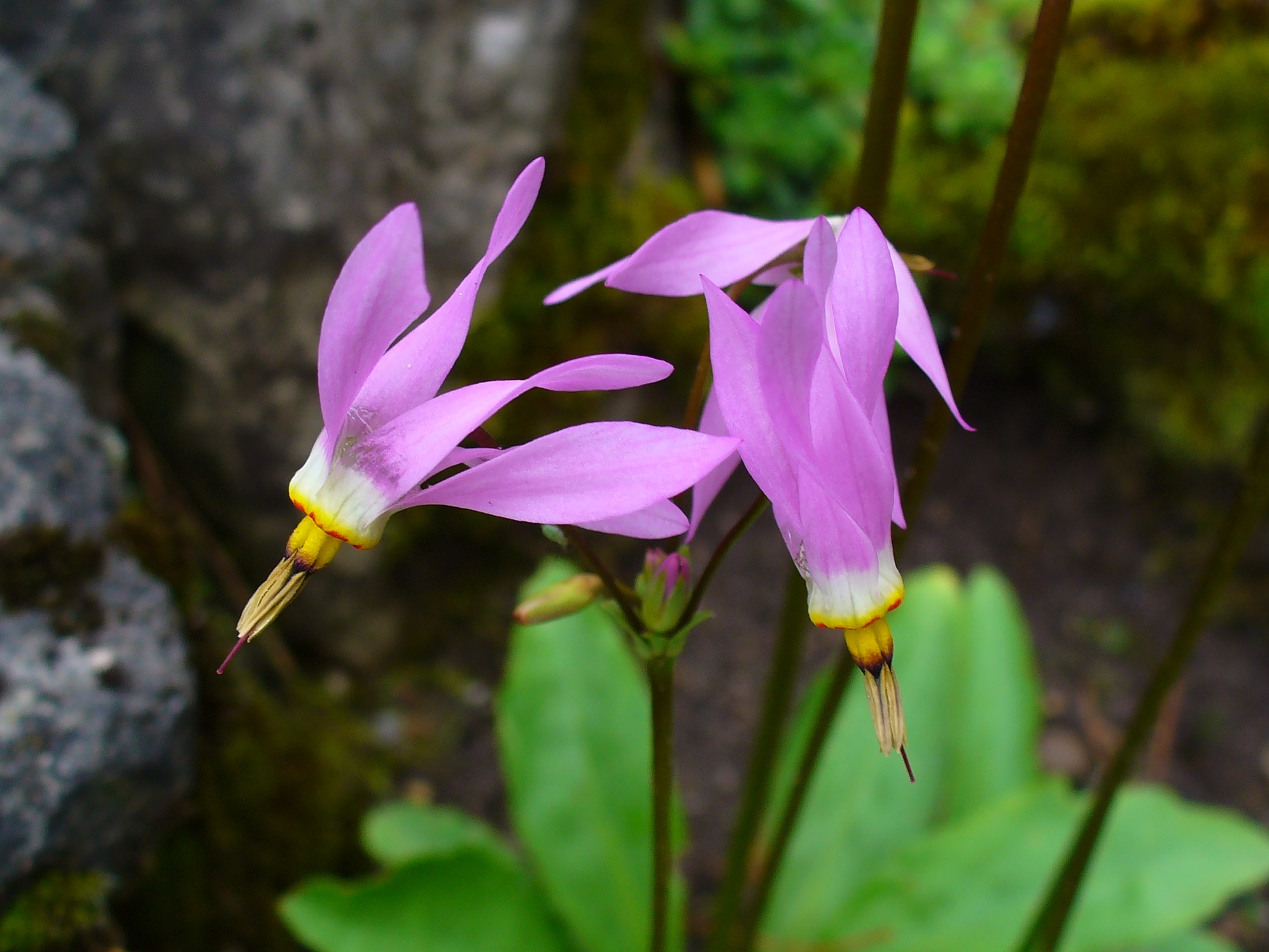
The flowers of Shooting Star are unlike those of any other North American wildflower, making identification virtually foolproof when the plant is in bloom. Each flower measures approximately 1 inch across and is composed of four to five (occasionally six) petals that are dramatically reflexed — swept sharply backward toward the stem, exposing the reproductive structures in a cone-like arrangement. This backward-facing posture of the petals creates the distinctive “shooting star” silhouette that gives the plant its common name.
The exposed reproductive cone consists of the five stamens and single pistil fused together into a prominent, pointed structure that projects forward from the center of each flower. The stamens form a yellow, orange, or reddish tube around the style, creating the “beak” or “nose cone” effect. Flower colors range from pure white through various shades of pink to deep rose-purple, with many flowers displaying yellow patches at the petal bases and distinctive dark purple or maroon lines that serve as nectar guides for pollinators.
The flowers are arranged in terminal umbels — flat-topped or slightly rounded clusters of 3-15 individual blooms at the top of each leafless flower stalk. Each flower is supported by a slender pedicel (individual flower stem) that allows the blooms to nod gracefully, creating an elegant, tiered effect in the cluster. The entire inflorescence typically faces slightly downward or to one side, adding to the plant’s graceful demeanor.
Fruit & Seed
Following successful pollination, Shooting Star produces small, egg-shaped capsules approximately ¼ inch long that split into five sections when mature to release numerous tiny, dark brown seeds. The seeds are quite small — typically less than 1/16 inch in diameter — and require specific conditions for successful germination, including a period of cold, moist stratification over winter followed by the right combination of temperature and moisture in spring. This dependency on natural seasonal cycles helps explain why Shooting Star can be challenging to establish from seed in garden settings.
Quick Facts
| Scientific Name | Dodecatheon meadia |
| Family | Primulaceae (Primrose) |
| Plant Type | Herbaceous Perennial |
| Mature Height | 1–2 ft |
| Sun Exposure | Full Sun to Part Shade |
| Water Needs | Moderate |
| Bloom Time | April – May |
| Flower Color | Pink, white, or purple |
| USDA Hardiness Zones | 4–8 |
Native Range
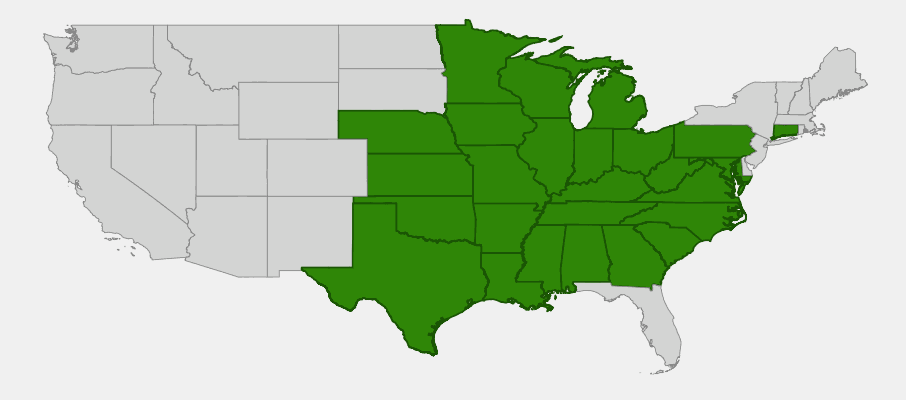
Shooting Star possesses one of the most extensive native ranges of any North American wildflower, stretching from the Maritime Provinces of Canada south to the Gulf Coast states and from the Atlantic seaboard west to the Great Plains. This remarkable distribution encompasses virtually the entire eastern half of the continent, making Shooting Star one of the most widespread members of the primrose family in North America. The species reaches its greatest abundance in the tallgrass prairie regions of the Midwest, where it originally occurred in vast numbers in the oak savannas and prairie-forest borders that characterized the pre-settlement landscape.
The extensive range of Shooting Star reflects its ability to adapt to a wide variety of climatic conditions, from the harsh continental climate of Minnesota and Wisconsin to the humid subtropical conditions of Louisiana and eastern Texas. However, throughout this vast range, the species consistently seeks out similar microhabitats — areas with rich, moist but well-drained soils, partial shade to dappled sunlight, and protection from the harshest environmental extremes. These requirements typically translate to woodland edges, streamside meadows, prairie borders, and the understory of open oak woodlands and savannas.
Historically, Shooting Star populations were maintained and even enhanced by the periodic fires that swept across the prairie-forest transition zone. These natural fires prevented the complete closure of woodland canopies, maintained the open conditions that Shooting Star prefers, and created the mineral seedbeds necessary for successful germination. The suppression of natural fire cycles over the past century has led to the succession of many open habitats to closed forest, contributing significantly to the decline of Shooting Star populations throughout much of its range. Today, the species is considered rare, threatened, or of special concern in numerous states where it was once common, including much of the northeastern United States.
Climate change presents additional challenges for Shooting Star conservation, as the species appears to be particularly sensitive to changes in precipitation patterns and seasonal timing. The plant’s dependence on specific spring moisture conditions for flowering and early summer rainfall for seed development makes it vulnerable to the increasingly erratic weather patterns associated with global climate change. Conservation efforts now focus on habitat restoration, prescribed burning to maintain open conditions, and ex-situ cultivation to preserve genetic diversity for future reintroduction efforts.
📋 Regional plant lists featuring Shooting Star: North Carolina & South Carolina
Growing & Care Guide
Successfully cultivating native plants requires understanding their natural habitat preferences and recreating those conditions in garden settings. The key to thriving native plant gardens lies in matching plants to appropriate sites rather than trying to force plants to adapt to unsuitable conditions.
Light Requirements
Shooting Star performs best in partial shade to filtered sunlight conditions that mimic its natural woodland edge habitat. In the wild, it typically grows where morning sun penetrates through emerging tree canopies but where afternoon shade provides protection from intense heat. In garden settings, this translates to locations that receive 3-6 hours of direct sunlight, preferably in the morning, with dappled shade or protection during the hottest part of the day.
Plants grown in too much shade will become tall and spindly, with weak flower stalks that may require staking. Conversely, plants in full sun may suffer from heat stress, especially in southern portions of the range, and may have shortened blooming periods. The ideal location provides bright, indirect light for most of the day — conditions often found on the east side of buildings, under high-canopied trees, or in woodland gardens with mature deciduous trees.
Soil & Water Requirements
Shooting Star requires consistently moist but well-drained soil with high organic content — conditions that replicate the rich woodland soils where it grows naturally. The ideal soil is a deep, loamy mixture with abundant organic matter from decomposed leaves and other plant materials. Heavy clay soils should be amended with compost and coarse organic matter to improve drainage, as waterlogged conditions, especially in winter, can cause root rot and plant death.
Soil pH can range from slightly acidic to neutral (6.0-7.0), with the species showing good tolerance for the naturally acidic conditions found under oak and other deciduous trees. Consistent moisture is critical during the active growing season from spring through early summer, but the soil should never become waterlogged. A deep mulch of shredded leaves or aged wood chips helps maintain soil moisture while suppressing weeds and gradually improving soil structure as it decomposes.
During the plant’s summer dormancy period, when the foliage dies back naturally, reduced watering is appropriate, but the soil should never become completely dry. This dormancy period is not a sign of plant stress but rather a natural adaptation to avoid summer heat and drought stress.
Planting & Establishment
The best time for planting most native perennials is early fall, which allows plants to establish strong root systems before the stress of their first summer. Spring planting is also successful but requires more careful attention to watering during the first growing season. When planting, dig holes only as deep as the root ball but 2-3 times as wide to encourage lateral root development.
Space plants according to their mature spread requirements, allowing adequate room for air circulation to prevent disease problems. Water thoroughly after planting and maintain consistent moisture for the first full growing season while plants establish. Mulching is particularly important for newly planted natives, as it moderates soil temperature, conserves moisture, and suppresses weed competition.
Pruning & Maintenance
Native plants generally require less maintenance than non-native alternatives, but some basic care helps ensure optimal performance. Deadheading spent flowers can extend the blooming period and prevent excessive self-seeding, though many gardeners prefer to leave some seed heads for wildlife food and winter interest.
Most herbaceous natives can be cut back in late fall or early spring, though leaving the stems through winter provides seed for birds and overwintering habitat for beneficial insects. Remove any diseased or damaged foliage promptly to prevent disease spread, and divide overcrowded clumps every 3-4 years to maintain vigor.
Landscape Applications
Native plants excel in naturalistic landscape designs that work with natural processes rather than against them. Consider these applications:
- Native plant gardens that recreate regional plant communities
- Rain gardens for managing stormwater runoff
- Pollinator gardens that support local wildlife
- Restoration projects for damaged or degraded sites
- Low-maintenance landscapes that reduce input requirements
- Educational gardens that showcase regional natural heritage
Wildlife & Ecological Value
Native plants form the foundation of healthy ecosystems, providing food, shelter, and habitat complexity that supports biodiversity at multiple levels. Each native plant species has evolved complex relationships with local wildlife over thousands of years, creating irreplaceable ecological connections that cannot be replicated by non-native alternatives.
For Birds
While Shooting Star may seem like a modest contributor to bird habitat, its role in supporting avian diversity is more significant than its small size might suggest. The seeds produced by Shooting Star are consumed by several species of sparrows, finches, and other granivorous birds, particularly during fall migration when energy-rich seeds are crucial for building fat reserves. The dense basal foliage provides cover for ground-foraging birds and small mammals, while the flower stalks offer perching sites for territorial songbirds.
More importantly, Shooting Star supports birds indirectly through its relationships with insects. The flowers attract numerous species of native bees, flies, and other pollinators, which in turn become food for insectivorous birds including wrens, vireos, and flycatchers. During the breeding season, when many songbirds switch from seed-based diets to protein-rich insects to feed their young, the insect communities supported by native wildflowers like Shooting Star become critical resources.
The plant’s preference for woodland edge habitats also makes it valuable for birds that require diverse habitat structure — the ecotones where forest meets meadow support higher bird diversity than either habitat type alone. Species such as Indigo Buntings, American Goldfinches, and various warbler species benefit from the habitat complexity that Shooting Star and its associated plant communities provide.
For Pollinators
Shooting Star has evolved a remarkable pollination strategy that demonstrates the intricate relationships between native plants and their specialized pollinators. The unique flower structure — with its reflexed petals and protruding cone of fused stamens — is specifically adapted for “buzz pollination,” a specialized technique used by certain native bees. These bees, primarily species in the genus Bombus (bumblebees) and some solitary bee species, grasp the protruding anther cone and vibrate their flight muscles at specific frequencies to shake pollen loose from the flowers.
This buzz pollination mechanism is so specialized that many common pollinators, including honeybees, cannot effectively pollinate Shooting Star flowers. The plant’s dependence on native bees for successful reproduction highlights the critical importance of supporting diverse native pollinator communities rather than relying solely on introduced species like European honeybees. The co-evolution between Shooting Star and its native bee pollinators represents millions of years of mutual adaptation that cannot be easily replaced if either partner is lost from local ecosystems.
The early blooming period of Shooting Star — typically late April through May — makes it particularly valuable for supporting native bee populations during the crucial spring emergence period. Many native bees emerge from winter hibernation or pupation during this time and require immediate access to high-quality pollen and nectar sources to survive and reproduce. The timing of Shooting Star’s bloom coincides perfectly with the emergence of several specialized native bee species, providing essential resources when few other flowers are available in woodland habitats.
For Mammals
Native plants support mammalian wildlife through direct food resources, habitat structure, and the complex food webs they create. Even plants that don’t provide obvious mammal foods often support the insects, seeds, and other resources that mammals depend on indirectly.
While Shooting Star may not provide direct food resources for most mammals, its role in supporting mammalian diversity through habitat structure and food web connections is significant. The dense basal foliage provides cover and foraging areas for small mammals including various species of mice, voles, and shrews that hunt for insects and seeds in the leaf litter beneath the plants. These small mammals, in turn, become prey for larger predators including foxes, weasels, and birds of prey, illustrating the interconnected nature of ecosystem function.
The seeds of Shooting Star are occasionally consumed by small granivorous mammals, though this represents a relatively minor food source compared to larger-seeded plants. More importantly, the plant’s preference for rich, organic soils creates habitat conditions that support healthy populations of soil invertebrates, which become food sources for insectivorous mammals including shrews, moles, and various bat species that hunt for insects above the plant canopy.
Ecosystem Relationships
The true ecological value of native plants lies not in any single function but in their complex web of relationships with other organisms. Each native plant species has evolved over millennia to fit precisely into local ecosystems, creating relationships that cannot be replicated by non-native alternatives regardless of their ornamental value or practical benefits.
Native plants support far more insect diversity than non-native plants — research by Dr. Douglas Tallamy and others has shown that native plants support 35 times more butterfly and moth species than non-native plants. This insect diversity forms the foundation of food webs that support birds, mammals, amphibians, and other wildlife. The loss of native plants therefore creates cascading effects throughout entire ecosystems, reducing wildlife diversity at multiple trophic levels.
Beyond their direct relationships with animals, native plants play crucial roles in maintaining healthy soil ecosystems. Their root systems, leaf litter, and chemical compounds create soil conditions that support diverse communities of bacteria, fungi, and invertebrates. These soil organisms, in turn, cycle nutrients, improve soil structure, and create the foundation for healthy plant communities. The replacement of native plants with non-native alternatives often disrupts these belowground ecosystems, leading to simplified, less resilient soil communities.
Cultural & Historical Uses
The relationship between North America’s indigenous peoples and their native plants represents thousands of years of accumulated knowledge about sustainable resource use, ecological management, and the medicinal properties of native species. This traditional ecological knowledge provides invaluable insights into plant uses and conservation strategies that remain relevant today.
Shooting Star holds a special place in the traditional knowledge systems of numerous Native American tribes throughout its extensive range, with different groups developing distinct uses and cultural associations for this striking wildflower. The Menominee people of Wisconsin and Michigan traditionally used Shooting Star roots as a treatment for various ailments, including stomach problems and as a general tonic to promote health and vitality. The preparation typically involved drying and grinding the roots, then steeping them in hot water to create medicinal teas.
The Cherokee nation, whose traditional territory included much of the southeastern portion of Shooting Star’s range, incorporated the plant into their complex pharmacopeia as a treatment for kidney and bladder ailments. Cherokee healers often combined Shooting Star with other native plants to create compound remedies, demonstrating the sophisticated understanding of plant synergies that characterized traditional Native American medicine. The timing of root collection was considered crucial, with most tribes harvesting roots in late fall when the plant had stored maximum nutrients for winter survival.
Beyond its medicinal applications, Shooting Star played important roles in the spiritual and ceremonial life of many Native American communities. The dramatic, star-like appearance of the flowers led to associations with celestial events and seasonal changes, with some tribes incorporating the blooming of Shooting Star into their calendars as a marker of specific seasonal activities. The Ojibwe people of the Great Lakes region considered the appearance of Shooting Star flowers as a signal for certain gathering activities and as an indication that other important plants were reaching optimal harvest conditions.
Early European settlers and botanists were quick to recognize the beauty and uniqueness of Shooting Star, leading to its inclusion in some of the earliest botanical collections and garden plantings in North America. However, the plant proved challenging to cultivate outside its natural habitat requirements, and many early attempts at domestication failed. This difficulty in cultivation, combined with widespread habitat loss as prairies and woodlands were converted to agriculture, contributed to the species’ decline throughout much of its range during the 19th and early 20th centuries.
In modern times, there has been renewed interest in both the cultivation and conservation of Shooting Star, driven partly by the growing native plant movement and partly by increased recognition of its ecological importance. Contemporary herbal practitioners have revived some traditional uses of the plant, though modern scientific research on its medicinal properties remains limited. The plant’s striking beauty and unique pollination biology have also made it a favorite among native plant enthusiasts and pollinator garden advocates.
Today, Shooting Star serves as something of a flagship species for prairie and woodland restoration efforts, representing the irreplaceable natural heritage that has been lost through habitat destruction and the importance of preserving remaining populations. Its presence in an area is often considered an indicator of high-quality native habitat, and its successful establishment in restoration projects is viewed as a sign of ecological health and resilience.
Frequently Asked Questions
How do I successfully establish this plant in my garden?
Success with native plants begins with site selection — choose a location that matches the plant’s natural habitat preferences for light, soil, and moisture conditions. Plant in early fall when possible to allow root establishment before winter, and maintain consistent moisture during the first growing season. Mulching with organic matter helps retain moisture and suppress weeds while the plant establishes.
When is the best time to plant native species?
Early fall is generally the optimal planting time for most native perennials, as cooler temperatures and increased rainfall reduce transplant stress while allowing plants to develop strong root systems before their first summer. Spring planting is also successful but requires more careful attention to watering during establishment. Avoid planting during the heat of summer unless you can provide intensive care and irrigation.
How long does it take for native plants to become established?
Most native perennials require 2-3 full growing seasons to become fully established, though many will flower in their first or second year. The old saying “first year they sleep, second year they creep, third year they leap” applies well to native plant establishment. Patience during the establishment period is crucial, as native plants are investing energy in developing deep, extensive root systems that will support long-term health and drought tolerance.
Do native plants really require less maintenance than non-native plants?
Once established, native plants typically require significantly less maintenance than non-native alternatives because they are adapted to local climate, soil, and pest conditions. However, they do require some maintenance, particularly during establishment and in garden settings where they may be grown outside their optimal habitat conditions. The key is choosing plants appropriate for your specific site conditions rather than trying to force plants to adapt to unsuitable locations.
Can I grow native plants in formal garden settings?
Absolutely! Many native plants are perfectly suitable for formal gardens and can be incorporated into traditional landscape designs. The key is selecting species that match your design goals and site conditions, then providing appropriate care during establishment. Many native plants actually perform better than non-native alternatives in formal settings because they are better adapted to local growing conditions.
How do I know if a plant is truly native to my area?
True natives are species that evolved in your region prior to European settlement and are genetically adapted to local conditions. Check regional flora guides, native plant society resources, and botanical databases to verify native status. Be aware that plant sellers sometimes use the term “native” loosely, including plants that are native to North America but not necessarily to your specific region. When possible, choose plants that are not just regionally native but are sourced from local genetic stock.
What’s the difference between native plants and cultivars of native plants?
Native plants are the straight species as they exist in wild populations, while cultivars (cultivated varieties) are selected or bred forms that may differ in color, size, bloom time, or other characteristics. While cultivars can be attractive and may have some wildlife value, they often provide less ecological benefit than straight native species and may not be adapted to local conditions. For maximum wildlife and ecological value, choose straight native species when possible.
How do native plants help local wildlife?
Native plants form the foundation of local food webs, supporting far more insect diversity than non-native plants. These insects, in turn, provide food for birds, bats, and other wildlife. Native plants also provide appropriate nesting materials, shelter, and seasonal resources that wildlife have evolved to depend on. The complex relationships between native plants and wildlife cannot be replicated by non-native alternatives, regardless of their beauty or practical benefits.

Looking for a nursery that carries Shooting Star?
Browse our native plant nursery directory: North Carolina · South Carolina