Blue-eyed Grass (Sisyrinchium angustifolium)
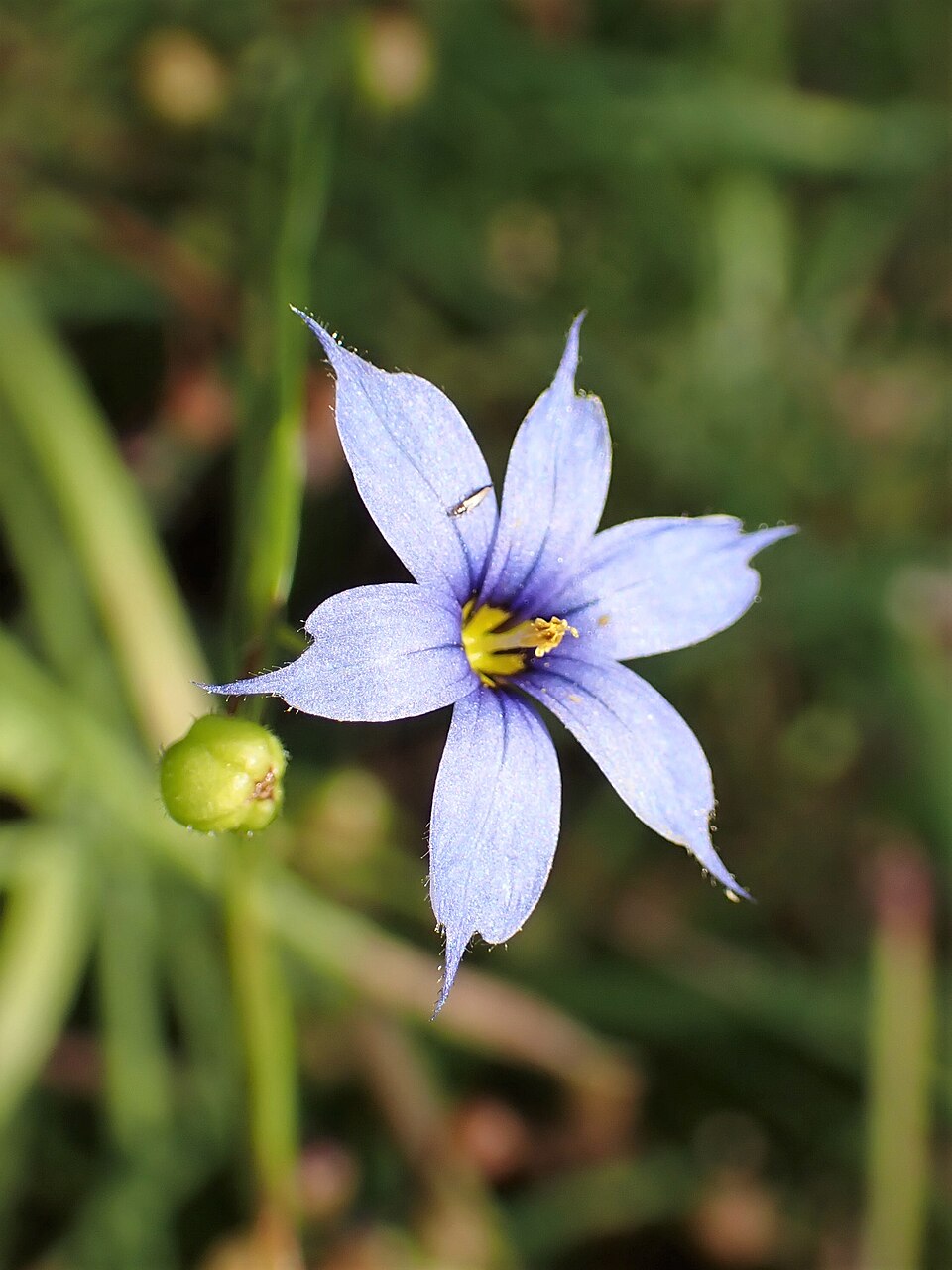
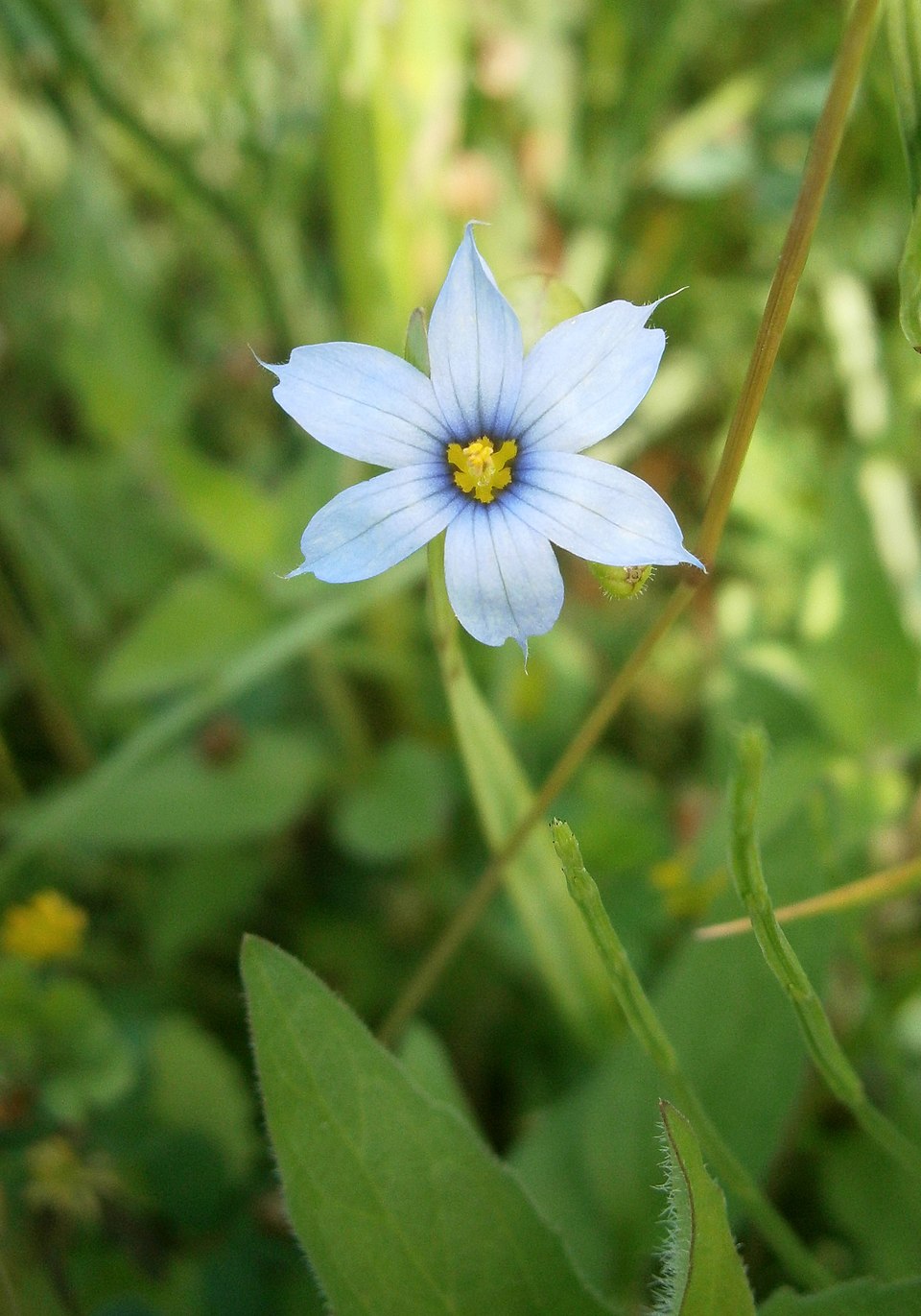
Sisyrinchium angustifolium, commonly known as Blue-eyed Grass, Narrow-leaved Blue-eyed Grass, or Pointed Blue-eyed Grass, is one of North America’s most charming and widespread native wildflowers. Despite its common name, this delicate plant is not actually a grass at all, but rather a member of the Iridaceae (iris) family, related to irises and crocuses. The “blue-eyed” name refers to its stunning flowers: six-petaled stars of brilliant blue to purple with bright golden-yellow centers that seem to glow like tiny suns.
This diminutive perennial typically stands just 6–18 inches tall, forming neat clumps of slender, grass-like leaves that blend seamlessly into meadows, prairies, and open woodlands. Blue-eyed Grass blooms from late spring through midsummer, producing clusters of ½-inch flowers that open in the morning and often close by afternoon on sunny days. Each bloom lasts only one day, but the plants produce flowers in succession over many weeks, creating an extended season of color.
Blue-eyed Grass has one of the most extensive native ranges of any North American wildflower, stretching from coast to coast and from southern Canada to northern Florida and Texas. This remarkable distribution reflects the species’ exceptional adaptability to diverse growing conditions, from moist meadows to dry prairies, making it an outstanding choice for native plant gardens, naturalized areas, and pollinator habitat throughout much of the continent.
Identification
Blue-eyed Grass is easily distinguished by its combination of iris-like grass foliage and distinctive star-shaped blue flowers with bright yellow centers. The plant forms compact clumps or colonies through short rhizomes, creating neat patches that integrate beautifully into grassy areas.
Leaves
The leaves are the source of the plant’s “grass” common name — they are narrow, flat, and grass-like, measuring 2–6 inches (5–15 cm) long and about ⅛ inch (2–4 mm) wide. The leaves are blue-green to gray-green in color and arise in fan-like clusters from the base of the plant, similar to iris foliage but much smaller. Despite their grass-like appearance, the leaves have parallel veins characteristic of monocots and lack the rolled vernation (growth pattern) of true grasses. The leaves are evergreen in warmer climates but may die back in winter in colder regions.
Stems
The flowering stems are distinctive and help separate Blue-eyed Grass from true grasses. The stems are flattened and winged, measuring 6–18 inches (15–45 cm) tall, with a characteristic zigzag or branched pattern. These stems, called scapes, arise from the center of the leaf clump and bear the flower clusters at their tips. The flattened, two-edged stems are unique among small grassland plants and are a reliable identification feature.
Flowers
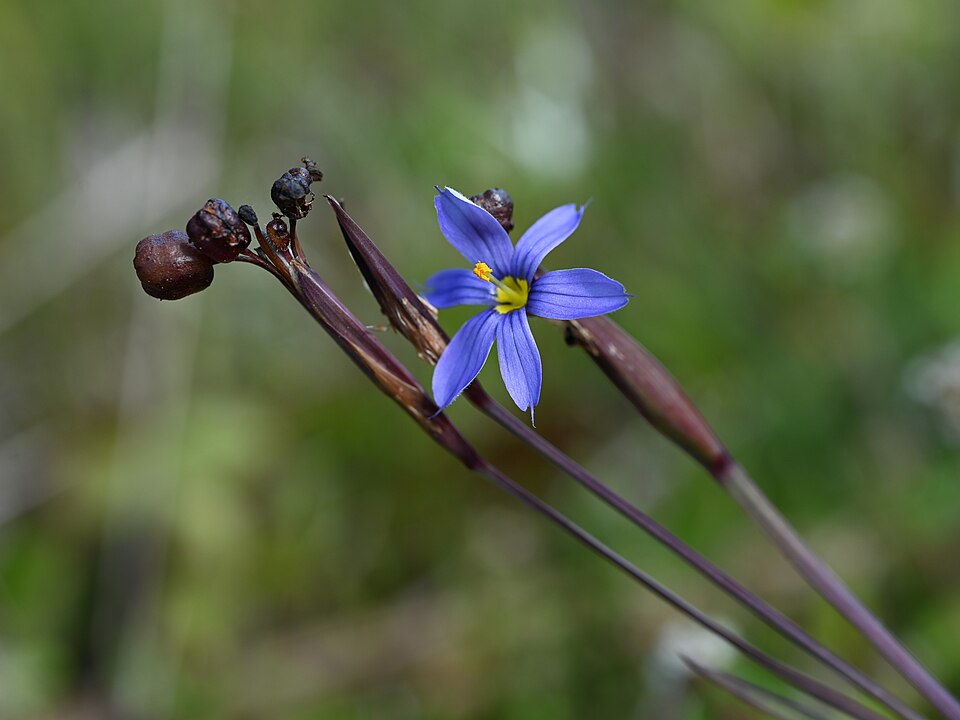
The flowers are Blue-eyed Grass’s crown jewel — small but absolutely stunning six-petaled stars, each about ½ inch (12–15 mm) across. The petals range from deep blue to violet-purple, occasionally pale blue or rarely white, each with a bright golden-yellow center that creates the distinctive “eye.” The flowers are arranged in small terminal clusters (umbels) of 2–6 blooms, each cluster enclosed in distinctive green bracts that look like small leaves.
Individual flowers are ephemeral, typically opening in the morning and closing by afternoon on sunny days, with each bloom lasting only one day. However, plants produce flowers in succession over 6–10 weeks from late spring through midsummer, ensuring continuous color. The flowers are followed by small, round seed capsules that split open to release tiny black seeds.
Quick Facts
| Scientific Name | Sisyrinchium angustifolium |
| Family | Iridaceae (Iris) |
| Plant Type | Perennial Wildflower |
| Mature Height | 1 ft |
| Sun Exposure | Full Sun to Part Shade |
| Water Needs | Moderate to Low |
| Bloom Time | May – July |
| Flower Color | Blue to purple with yellow centers |
| USDA Hardiness Zones | 2–9 |
Native Range
Blue-eyed Grass boasts one of the most impressive native ranges of any North American wildflower, extending from Atlantic to Pacific coasts and from southern Canada south to northern Florida and Texas. This extraordinary distribution — covering virtually the entire continental United States except for the most arid southwestern regions — demonstrates the species’ remarkable adaptability to diverse climates and growing conditions.
Within this vast range, Blue-eyed Grass occupies an equally diverse array of habitats. It thrives in moist to moderately dry meadows, prairies, open woodlands, and grasslands from sea level to moderate mountain elevations. The species is particularly common in areas with seasonal moisture variation, such as spring-wet meadows that become drier in summer. This adaptability has allowed Blue-eyed Grass to maintain stable populations across most of its range, though habitat loss and degradation threaten local populations in some agricultural regions.
The plant’s ecological flexibility extends to soil preferences as well — it grows successfully in everything from sandy soils to clay loams, and tolerates pH levels from acidic to slightly alkaline. This broad tolerance explains its success across such diverse ecoregions, from Atlantic coastal plains to Great Plains prairies to Pacific Northwest meadows. Climate change and habitat fragmentation pose emerging challenges, but Blue-eyed Grass’s wide tolerance and extensive seed dispersal help maintain population connectivity.
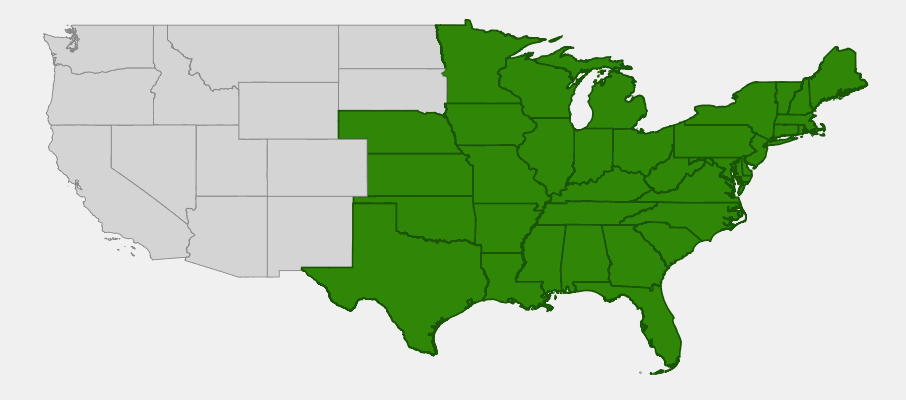
📋 Regional plant lists featuring Blue-eyed Grass: North Carolina & South Carolina
Growing & Care Guide
Blue-eyed Grass is one of the easiest and most rewarding native wildflowers to grow, combining minimal care requirements with reliable performance and exceptional wildlife value. Its compact size and understated beauty make it perfect for naturalizing in meadows, incorporating into perennial borders, or using as a groundcover in sunny to partially shaded areas.
Light
Blue-eyed Grass performs best in full sun to partial shade, with at least 4–6 hours of direct sunlight producing the most prolific flowering. The plant tolerates more shade than many meadow species, making it valuable for woodland edges and partially shaded gardens. In deep shade, flowering is reduced but the foliage remains attractive and the plants persist well, making them useful for transitional areas between sun and shade gardens.
Soil & Water
This adaptable plant tolerates a wide range of soil conditions but performs best in well-drained soils with moderate fertility. Blue-eyed Grass thrives in everything from sandy loams to clay soils, as long as drainage is adequate — standing water can cause crown rot. The plant is moderately drought-tolerant once established but appreciates consistent spring moisture during the growing and flowering season. Avoid overwatering, especially in heavy soils.
Planting Tips
Plant Blue-eyed Grass in spring or fall, spacing plants 6–12 inches apart for naturalistic drifts. The species readily self-seeds, so initial plantings often expand naturally over time. For meadow plantings, seed can be scattered directly in fall or early spring — the tiny seeds need light to germinate, so barely cover with soil. Container plants establish quickly and begin flowering in their first season.
Pruning & Maintenance
Blue-eyed Grass requires virtually no maintenance once established. Deadheading spent flowers prolongs blooming slightly, but allowing some flowers to set seed enables natural spread and supports seed-eating birds. In warmer climates where foliage stays evergreen, occasional grooming to remove tattered leaves keeps plants tidy. In colder regions, cut back dead foliage in late winter before new growth begins.
Landscape Uses
Blue-eyed Grass’s versatility and small stature make it valuable in numerous garden settings:
- Meadow gardens and prairie restorations as an early-blooming component
- Rock gardens and alpine gardens where its delicate texture provides contrast
- Pollinator gardens — flowers attract native bees and beneficial insects
- Naturalized lawns and eco-lawns as a flowering groundcover
- Container gardens and fairy gardens for small-scale interest
- Woodland edges and transition areas between habitats
- Therapeutic gardens where its delicate beauty provides calm and focus
Wildlife & Ecological Value
Despite its small stature, Blue-eyed Grass provides significant ecological value, supporting a diverse array of pollinators and serving as an important component of grassland and meadow ecosystems.
For Pollinators
Blue-eyed Grass flowers attract a variety of small native bees, including sweat bees (Lasioglossum species), small carpenter bees, and various solitary bee species. The bright yellow centers provide both nectar and pollen, while the flowers’ small size makes them particularly accessible to tiny native bees that are often overlooked by gardeners. Syrphid flies (flower flies) also visit the blooms regularly, contributing to pollination while their larvae help control aphids and other garden pests.
For Birds
Seed-eating birds, particularly goldfinches, sparrows, and juncos, consume Blue-eyed Grass seeds throughout late summer and fall. The small, dark seeds are particularly valuable for smaller bird species and provide important nutrition during migration and winter months. The plant’s tendency to grow in colonies creates concentrated feeding areas that birds learn to revisit regularly.
For Beneficial Insects
Beyond direct pollination services, Blue-eyed Grass supports beneficial insects in multiple ways. The plant serves as a host for several moth species, and its presence in meadow communities helps support the complex web of predatory and parasitic insects that maintain ecological balance. The flowers bloom during a critical period when many native bees are emerging and establishing nests, providing essential early-season resources.
Ecosystem Role
Blue-eyed Grass plays an important role in meadow and prairie ecosystems as part of the diverse forb community that supports grassland health. Its relatively shallow root system helps prevent soil erosion, while its presence indicates healthy, diverse grassland conditions. The species contributes to the genetic diversity and resilience of native plant communities, and its widespread distribution helps maintain connectivity between fragmented habitats.
Cultural & Historical Uses
Blue-eyed Grass holds a special place in both Native American traditions and early European-American folk medicine, valued for its delicate beauty and perceived medicinal properties. Various Indigenous peoples throughout its range incorporated Blue-eyed Grass into traditional healing practices, though uses varied significantly among different tribes and regions.
The Cherokee and other southeastern tribes used Blue-eyed Grass preparations for digestive ailments and as a general tonic. Some Plains tribes incorporated the plant into ceremonial practices, valuing its association with clear vision and insight — reflected in the “blue-eyed” common name. The plant’s tiny, ephemeral flowers were sometimes seen as symbols of the fleeting nature of beauty and the importance of appreciating life’s small moments.
European settlers and herbalists adopted Blue-eyed Grass for various folk remedies, particularly for eye-related conditions — a use inspired by the doctrine of signatures, the belief that a plant’s appearance indicated its medicinal uses. While modern science has not validated most traditional uses, the plant was commonly included in “spring tonics” designed to restore health after long winters. Blue-eyed Grass tea was sometimes used for stomach complaints and general weakness.
In contemporary culture, Blue-eyed Grass has gained appreciation as a symbol of resilience and widespread beauty. Its ability to thrive across such an enormous geographic range while maintaining its delicate, unassuming character has made it a favorite subject for botanical artists and nature photographers. The species represents the often-overlooked diversity and beauty of native grassland ecosystems, serving as an ambassador for prairie and meadow conservation efforts.
Frequently Asked Questions
Is Blue-eyed Grass really a grass?
No, despite its common name and grass-like leaves, Blue-eyed Grass is not a grass at all. It’s a member of the iris family (Iridaceae), related to irises, crocuses, and gladiolas. The flattened, two-edged flowering stems and six-petaled flowers clearly distinguish it from true grasses, which have round stems and very different flower structures.
Why do the flowers only last one day?
Blue-eyed Grass flowers are ephemeral, typically opening in the morning and closing by late afternoon on the same day. This is an adaptation that concentrates pollinator activity during peak morning hours when bees and other pollinators are most active. While individual flowers are short-lived, plants produce new flowers daily over 6–10 weeks, ensuring continuous blooming.
Will Blue-eyed Grass spread and take over my garden?
Blue-eyed Grass spreads slowly through short rhizomes and self-seeding, but it’s not aggressive or invasive. It forms neat clumps that gradually expand over time, and any unwanted seedlings are easily removed. The spreading habit is generally considered beneficial, as it creates naturalistic drifts and helps establish sustainable populations.
Can I grow Blue-eyed Grass in containers?
Yes, Blue-eyed Grass grows well in containers and is excellent for small-space gardens, balcony gardens, and fairy gardens. Use a well-draining potting mix and ensure adequate drainage holes. Container plants may need more frequent watering than ground-planted specimens, especially during the growing season.
When do I plant Blue-eyed Grass seeds?
Seeds can be planted in fall or early spring, scattered on the surface and barely covered with soil — they need light to germinate. Fall planting allows natural cold stratification over winter. Spring plantings should be done early, as soon as the soil can be worked, to take advantage of cool, moist conditions for germination.

Looking for a nursery that carries Blue-eyed Grass?
Browse our native plant nursery directory: North Carolina · South Carolina