Sweetshrub (Calycanthus floridus)
Calycanthus floridus, commonly known as Sweetshrub, Carolina Allspice, or Strawberry Shrub, is a distinctive native deciduous shrub of the southeastern United States that captivates gardeners with its intensely fragrant, deep red to maroon flowers that smell remarkably like strawberries. This member of the Calycanthaceae (sweetshrub) family has been beloved by American gardeners since colonial times, when it was among the first native plants to be cultivated in formal gardens for its unique combination of exotic-looking flowers and delightful fragrance.
Growing naturally along stream banks and in the understory of rich, moist forests, Sweetshrub is a medium to large shrub reaching 6 to 10 feet tall and equally wide, with aromatic bark, opposite oval leaves, and remarkable flowers that bloom sporadically from late spring through midsummer. The burgundy to deep red blooms feature numerous strap-like petals arranged in a distinctive layered pattern, and their sweet, fruity fragrance can perfume an entire garden area on warm, humid days.
What makes Sweetshrub particularly valuable in modern landscapes is its adaptability and reliability. It thrives in both sun and shade, tolerates various soil conditions, requires minimal care once established, and provides multi-season interest through its flowers, foliage, and aromatic qualities. This native gem deserves a place in every southeastern garden, where it serves as both an outstanding ornamental and an important wildlife plant.
Identification
Sweetshrub typically grows as a dense, rounded shrub, reaching 6 to 10 feet tall and equally wide at maturity. The plant develops a full, somewhat spreading form with multiple stems arising from the base, creating an attractive multi-trunked appearance that works well as both a specimen plant and in groupings.
Bark & Stems
One of Sweetshrub’s most distinctive features is its aromatic bark and twigs. When scratched or bruised, the bark releases a spicy, camphor-like fragrance that is immediately recognizable. Young twigs are green to reddish-brown and somewhat pubescent (hairy), while older bark becomes gray-brown and slightly rough. The pleasant aroma is present year-round, making it possible to identify the shrub even in winter.
Leaves
The leaves are simple, opposite, and oval to elliptical, measuring 3 to 5 inches long and 1½ to 3 inches wide. Each leaf has a pointed tip, smooth or slightly wavy margins (entire), and a prominent midrib with clearly visible lateral veins. The upper surface is dark green and somewhat rough-textured; the underside is paler and may be slightly hairy. When crushed, the leaves release a pleasant, spicy fragrance. In autumn, the foliage turns clear yellow, providing attractive fall color.
Flowers
The flowers are Sweetshrub’s crowning glory and the source of its common names. Each bloom is 1½ to 2 inches across and consists of numerous narrow, strap-like petals (actually modified sepals and petals) arranged in a distinctive layered, ruffled pattern. The flowers are typically deep red, maroon, or burgundy, though color can vary from nearly purple to reddish-brown. The most remarkable feature is their intense strawberry-like fragrance, which is strongest on warm, humid days and can be detected from many feet away. Blooming begins in late spring and continues sporadically through midsummer, with the heaviest flush typically occurring in May and June.
Fruit
Following the flowers, Sweetshrub produces distinctive urn-shaped fruit capsules that are 1½ to 2½ inches long and brown when mature. These leathery capsules contain numerous large, dark brown seeds arranged in two rows. The fruits persist on the plant well into winter and were historically used in dried arrangements. While not particularly ornamental, they add to the plant’s year-round interest and provide identification clues during the dormant season.
Quick Facts
| Scientific Name | Calycanthus floridus |
| Family | Calycanthaceae (Sweetshrub) |
| Plant Type | Deciduous Shrub |
| Mature Height | 6–10 ft |
| Sun Exposure | Full Sun to Full Shade |
| Water Needs | Moderate |
| Bloom Time | May – August |
| Flower Color | Deep red to maroon |
| USDA Hardiness Zones | 4–9 |
Native Range
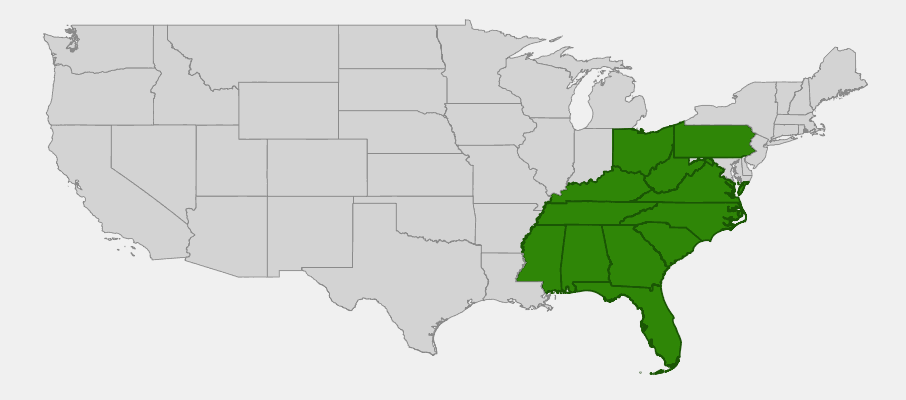
Sweetshrub is native to the southeastern United States, with its natural range extending from southern Pennsylvania and West Virginia south to northern Florida and west to eastern Texas and southeastern Oklahoma. The species is most abundant in the Appalachian Mountains and Piedmont regions, where it thrives in the rich, moist soils of deciduous forests, particularly in areas with good organic matter and consistent moisture.
In its natural habitat, Sweetshrub is commonly found along stream banks, in woodland valleys, and on north-facing slopes where it benefits from protection from hot afternoon sun and access to consistent moisture. It often grows in association with other moisture-loving natives like Spicebush (Lindera benzoin), Wild Ginger (Asarum canadense), and various fern species. The species shows remarkable adaptability to different forest types, from rich cove forests in the mountains to bottomland hardwood forests in the coastal plain.
While Sweetshrub remains relatively common throughout much of its natural range, populations have declined in some areas due to habitat loss and development pressure. The plant’s popularity in cultivation has helped preserve genetic diversity, and many cultivated specimens trace their lineage back to wild collections made centuries ago.
📋 Regional plant lists featuring Sweetshrub: North Carolina & South Carolina
Growing & Care Guide
Sweetshrub is one of the most adaptable and low-maintenance native shrubs, making it an excellent choice for gardeners of all experience levels. Its tolerance of various growing conditions and minimal care requirements make it virtually foolproof once established.
Light
Sweetshrub is remarkably adaptable to different light conditions, growing well in everything from full sun to full shade. In full sun, plants tend to be more compact and flower more heavily, but they will require more consistent moisture, especially during summer heat. In partial to full shade, plants grow larger and more open, with good flowering and excellent foliage. The plant’s adaptability makes it perfect for locations that receive changing light conditions throughout the day or season.
Soil & Water
This native shrub is quite adaptable to different soil types but performs best in rich, moist, well-draining soil with good organic content. It tolerates clay, loam, and sandy soils and adapts to pH levels from slightly acidic to neutral (pH 5.5–7.5). Sweetshrub has moderate water needs and appreciates consistent moisture, especially during the first few years after planting and during extended dry periods. However, established plants show good drought tolerance and can handle brief dry spells without stress.
Planting Tips
Plant Sweetshrub in fall or early spring when temperatures are mild. Choose a location with morning sun and afternoon shade for best results, though the plant will adapt to various exposures. Space plants 6–8 feet apart if creating a hedge or screen, or give single specimens 8–10 feet of space to allow for their full, spreading mature form. The shrub transplants well from container stock and is readily available from many nurseries.
Pruning & Maintenance
Sweetshrub requires minimal pruning and thrives with a “benign neglect” approach. Remove dead, damaged, or crossing branches in late winter or early spring before new growth begins. If size control is needed, prune immediately after the main flowering period to avoid removing next year’s flower buds. The plant can be renewed by cutting it back to 6-12 inches from the ground in late winter, though this will eliminate flowering for one season. Avoid fall pruning as this removes flower buds.
Landscape Uses
Sweetshrub’s versatility and outstanding characteristics make it valuable in many landscape applications:
- Fragrance gardens — plant near patios, walks, and windows to enjoy the scent
- Mixed shrub borders — provides structure and seasonal interest
- Woodland gardens — perfect for naturalistic forest-edge plantings
- Privacy screens — creates effective barriers when planted in groups
- Wildlife gardens — attracts pollinators and provides habitat
- Foundation plantings — works well in partially shaded locations
- Rain gardens — tolerates periodic moisture fluctuations
- Historical gardens — appropriate for colonial and period landscapes
Wildlife & Ecological Value
Sweetshrub provides important ecological services and supports various wildlife species, making it a valuable addition to wildlife-friendly landscapes and native plant communities.
For Birds
While Sweetshrub’s seeds are primarily dispersed by ants rather than birds, the dense, multi-stemmed growth habit provides excellent nesting sites for small songbirds, particularly those that prefer understory locations. Cardinals, wrens, and various sparrows often build nests in the protected interior of mature shrubs. The plant also attracts insects that serve as food sources for insectivorous birds.
For Pollinators
The fragrant flowers attract a variety of pollinators including native bees, small butterflies, and various beneficial insects. The unusual flower structure, with numerous small stamens hidden within the layered petals, provides both nectar and pollen resources. The long blooming period ensures that pollinators have access to resources throughout much of the growing season, making Sweetshrub particularly valuable in pollinator gardens.
For Beneficial Insects
Sweetshrub supports a variety of beneficial insects including predatory beetles, parasitic wasps, and other natural pest controllers. The dense foliage provides shelter and overwintering sites for many beneficial species, while the flowers serve as alternative food sources for insects that help control garden pests during other parts of their life cycles.
Ecosystem Role
As an understory shrub in native forest communities, Sweetshrub contributes to habitat complexity and structural diversity. Its leaf litter decomposes readily, contributing organic matter to the soil and supporting soil microorganisms. The plant’s extensive root system helps prevent erosion along stream banks and slopes, while its ability to thrive in varying light conditions makes it valuable for forest succession and regeneration following disturbances.
Cultural & Historical Uses
Sweetshrub holds a special place in American horticultural history, being among the first native plants to be widely cultivated in colonial gardens and one of the earliest American natives to be introduced to European gardens. The plant was already being grown in Virginia gardens by the 1650s, and Thomas Jefferson cultivated it at Monticello, where specimens still grow today.
Indigenous peoples of the Southeast, including the Cherokee and other tribes, recognized Sweetshrub’s aromatic and medicinal properties. The aromatic bark was used in traditional medicine for various purposes, including as a treatment for fever and stomach ailments. The pleasant scent of the bark and leaves made it useful for creating fragrant sachets and potpourris, a practice that continued among European settlers.
During the colonial period, Sweetshrub became known by various common names reflecting its most notable characteristics: “sweet-scented shrub” for its fragrant flowers, “strawberry shrub” for the fruity flower fragrance, and “Carolina allspice” for the spicy bark aroma. The plant was so beloved that it was often passed between families and friends through cuttings and divisions, leading to widespread cultivation throughout the eastern United States.
In the 19th century, Sweetshrub was a standard component of American cottage gardens and farmstead landscapes. Victorian gardeners particularly appreciated plants that engaged multiple senses, and Sweetshrub’s combination of visual appeal and intense fragrance made it a favorite. The dried fruits were sometimes used in winter arrangements, while the aromatic bark was occasionally used to flavor alcoholic beverages.
Today, Sweetshrub continues to be valued for its historical significance and outstanding garden performance. Many modern cultivars have been selected for improved flower color, fragrance intensity, or compact growth habits, but the original wild forms remain popular among gardeners interested in authentic native plants and historical accuracy in their landscapes.
Frequently Asked Questions
Why don’t my Sweetshrub flowers have much fragrance?
Flower fragrance can vary significantly between individual plants and is influenced by genetics, growing conditions, and weather. Some plants produce intensely fragrant flowers while others may have little scent. Heat and humidity enhance fragrance, so flowers often smell strongest on warm, humid days. If fragrance is important to you, try to purchase plants when in bloom so you can select fragrant specimens.
When is the best time to prune Sweetshrub?
Prune immediately after the main flowering period (usually late June or July) to avoid removing next year’s flower buds. Sweetshrub blooms on old wood, so late summer, fall, or winter pruning will reduce flowering. Light pruning to remove dead or damaged branches can be done anytime, but major pruning should be limited to the post-bloom period.
Can Sweetshrub be grown from seed?
Yes, but the process requires patience. Seeds need a period of cold stratification (3-4 months) and may take two years to germinate. Additionally, seedlings may not have the same flower color or fragrance as the parent plant. For reliable results, purchase plants from reputable nurseries or propagate from cuttings or division.
Is Sweetshrub deer resistant?
Sweetshrub shows good resistance to deer browsing, likely due to the aromatic compounds in its foliage and bark. While no plant is completely deer-proof, Sweetshrub is typically left alone even in areas with high deer pressure, making it a good choice for gardens where deer damage is a concern.
How long does it take for Sweetshrub to bloom after planting?
Young plants typically begin blooming in their second or third year after planting, though this can vary depending on the plant’s size at planting and growing conditions. Container-grown plants often bloom sooner than those grown from seed or small cuttings. Patience is rewarded as plants become more floriferous with age and size.

Looking for a nursery that carries Sweetshrub?
Browse our native plant nursery directory: North Carolina · South Carolina