Awl-fruited Sedge (Carex stipata)
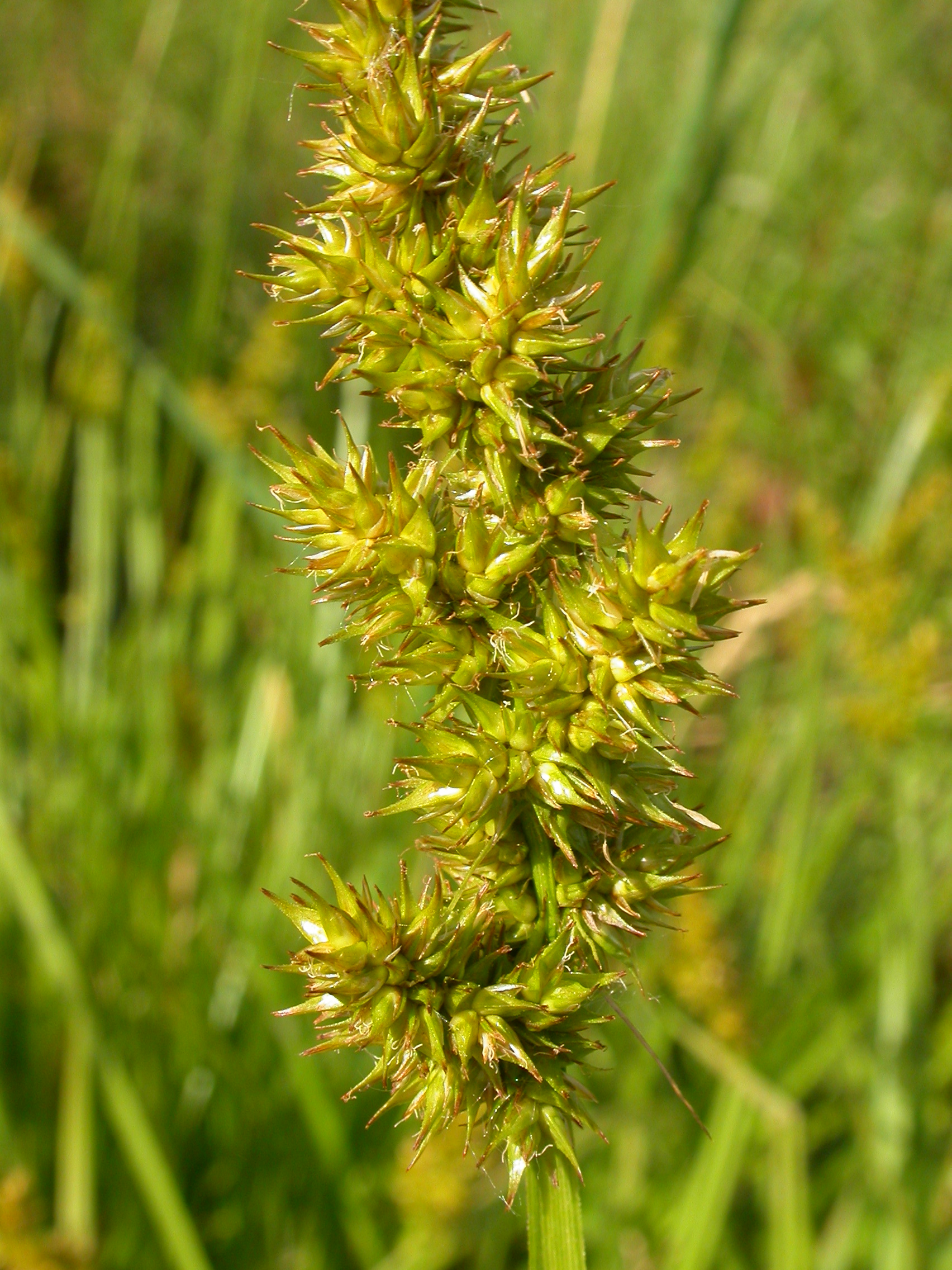
Carex stipata, commonly known as Awl-fruited Sedge or Owlfruit Sedge, is a robust native perennial sedge that forms distinctive clumps in wetlands across much of North America. This member of the Cyperaceae (sedge) family gets its common name from the sharp-pointed, awl-like appearance of its mature fruiting bodies (perigynia). The species epithet “stipata” means “crowded” or “packed closely together,” referring to the densely clustered arrangement of its spikes in the characteristic large, compound inflorescence.
Growing naturally in marshes, wet meadows, and along shorelines, Awl-fruited Sedge is one of the most widespread and ecologically important wetland sedges in North America. Its relatively large green-to-black, spike-like inflorescence makes it easily recognizable among other sedges, appearing as a dense, branching cluster that can reach several inches in length. This vigorous sedge typically grows 1 to 3 feet tall, forming substantial clumps that provide excellent erosion control and habitat structure in wetland environments.
As both an indicator species for healthy wetland ecosystems and a valuable restoration plant, Awl-fruited Sedge plays a crucial role in water filtration, soil stabilization, and wildlife habitat. Its seeds feed numerous waterfowl and songbirds, while its dense growth provides nesting cover and protection for a variety of wetland wildlife. For gardeners and restoration practitioners, this adaptable sedge offers an excellent choice for rain gardens, bioswales, and naturalistic water features where its architectural form and ecological benefits can be fully appreciated.
Identification
Awl-fruited Sedge is a distinctive medium to large sedge that typically grows 1 to 3 feet (30–90 cm) tall, occasionally reaching up to 4 feet in ideal conditions. The plant forms dense, robust clumps from short rhizomes, with numerous culms (stems) arising from the base. The triangular stems are characteristic of sedges and are solid throughout, distinguishing them from the hollow stems of grasses.
Leaves
The leaves are flat, linear, and 4 to 10 mm wide, with a distinctive light green to yellow-green color that helps distinguish this species from darker-leaved sedges. The leaf blades can grow 8 to 24 inches long and have a prominent midrib. The leaf sheaths are typically brown to reddish-brown at the base, and the ligule (junction between leaf blade and sheath) is relatively prominent. The leaves often persist late into the season, maintaining their architectural presence in the landscape.
Inflorescence
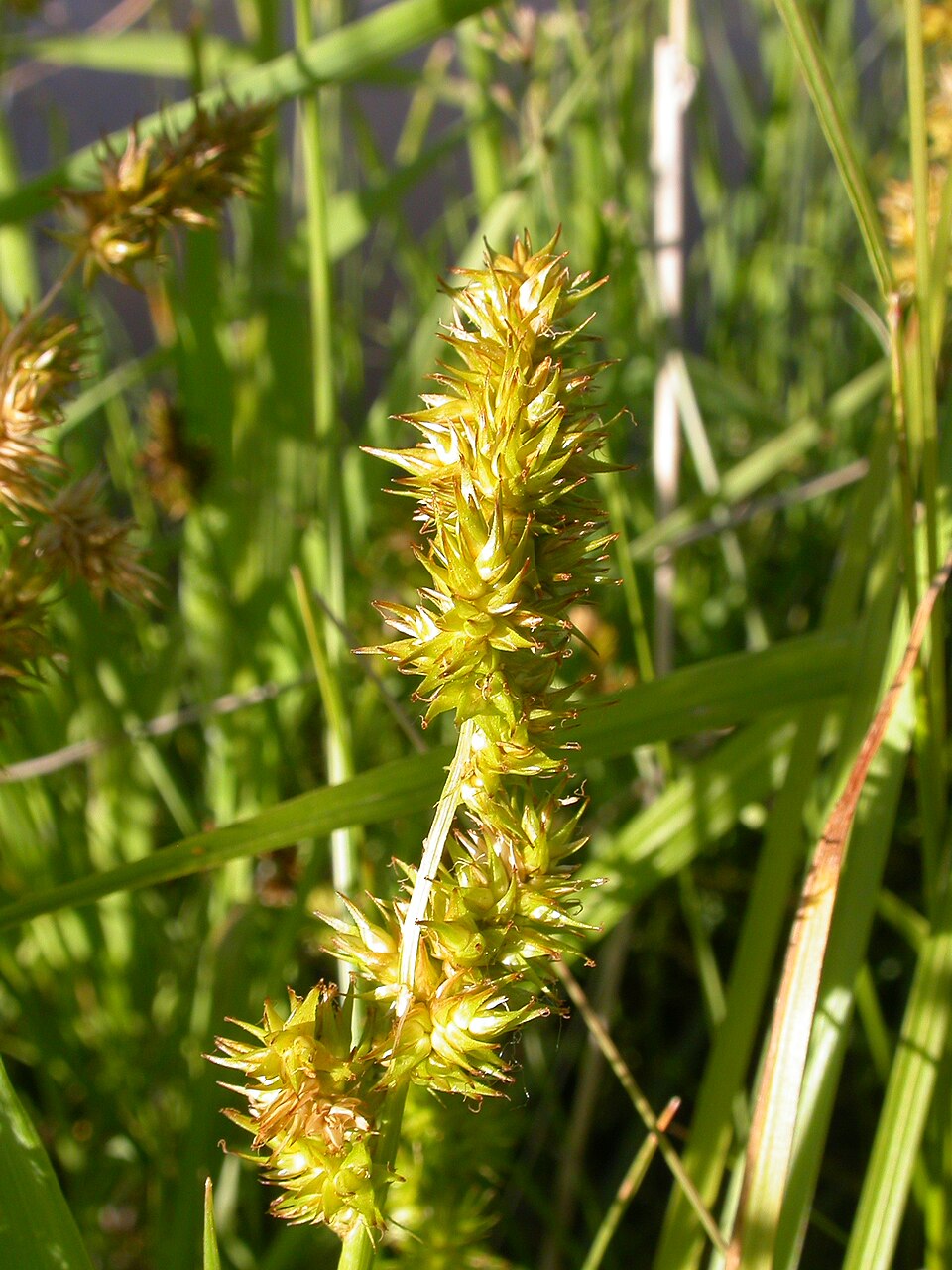
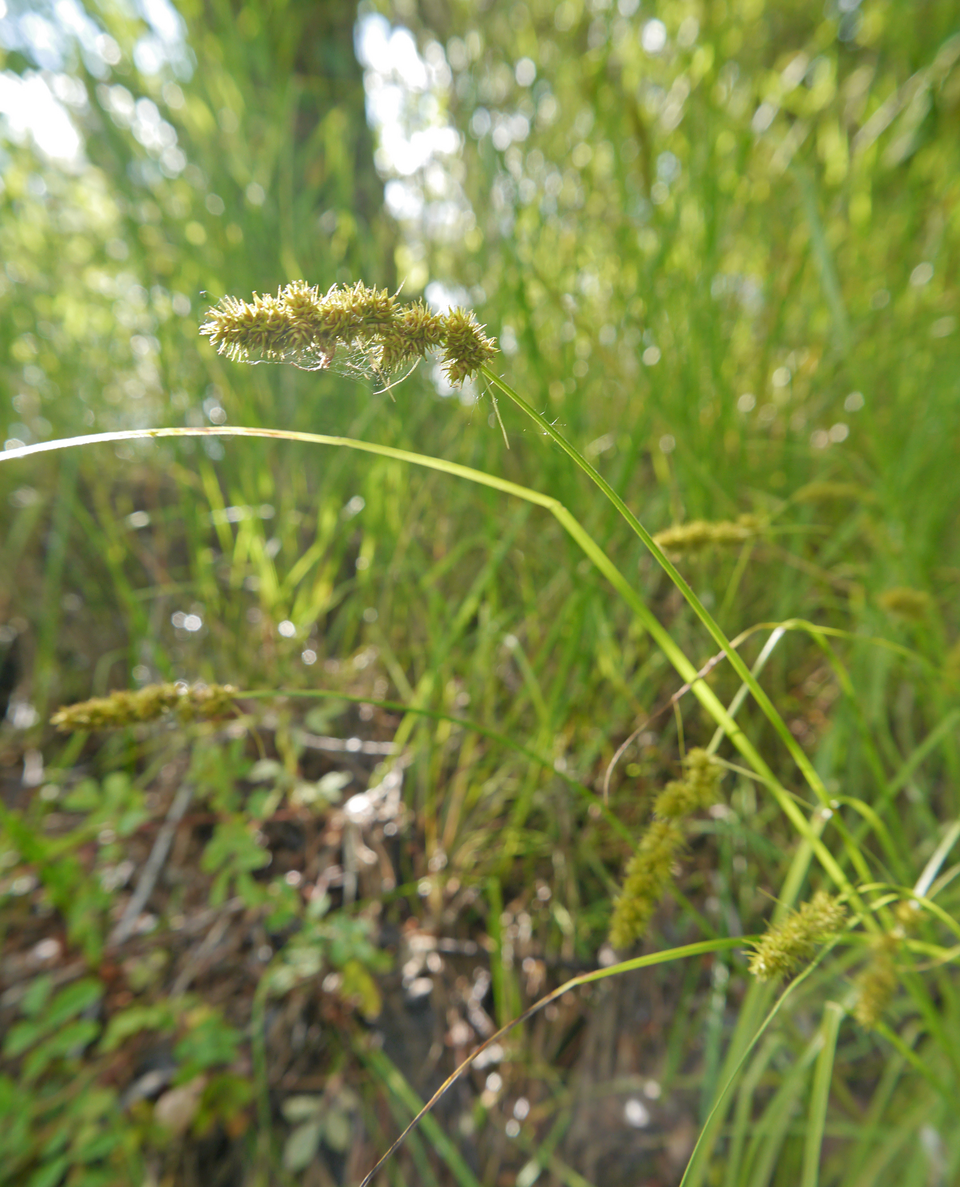
The inflorescence is the most distinctive feature of Awl-fruited Sedge. It consists of a large, dense, compound head that appears as a crowded cluster of numerous small spikes. This inflorescence typically measures 2 to 6 inches long and 1 to 3 inches wide, with a distinctive green color that gradually turns brown to blackish as it matures. The individual spikes are densely packed, giving the entire inflorescence its characteristic “stipata” (crowded) appearance.
Each spike contains both male (staminate) and female (pistillate) flowers, with male flowers typically at the tip and female flowers below. The spikes are subtended by leafy bracts, with the lowest bract often extending well beyond the inflorescence. The overall effect is of a large, densely branched cluster that stands prominently above the foliage.
Fruits
The fruits are small, brown perigynia (specialized sac-like structures containing the actual seeds) that give the sedge its “awl-fruited” common name. Each perigynium is lance-shaped and tapers to a sharp point, measuring about 3–4 mm long. As they mature, these perigynia become distinctly ribbed and develop the characteristic awl-like appearance. The perigynia are numerous and densely packed within each spike, contributing to the crowded appearance of the inflorescence.
Quick Facts
| Scientific Name | Carex stipata |
| Family | Cyperaceae (Sedge) |
| Plant Type | Perennial Sedge |
| Mature Height | 1–3 ft |
| Sun Exposure | Part Shade to Full Sun |
| Water Needs | High to Moderate |
| Bloom Time | May – July |
| Flower Color | Green to brown |
| USDA Hardiness Zones | 3–8 |
Native Range
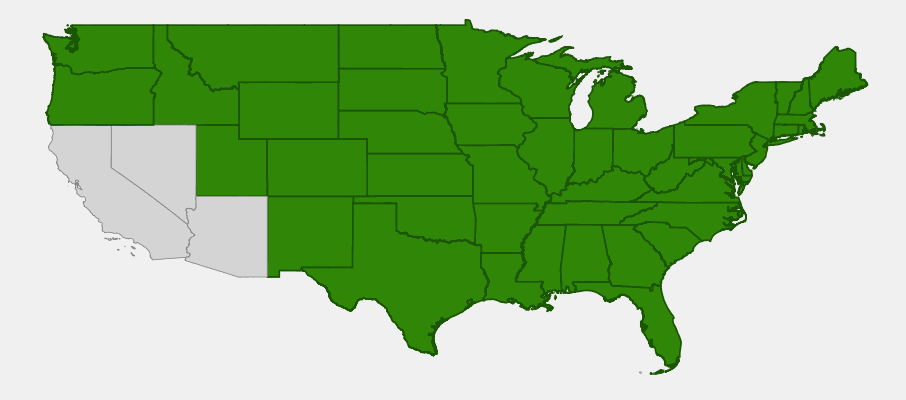
Awl-fruited Sedge has one of the most extensive native ranges of any North American sedge, occurring across most of the continental United States east of the Rocky Mountains, with scattered populations in western states. The species ranges from southern Canada south to Florida and west to the Great Plains, with disjunct populations in the Pacific Northwest and Rocky Mountain regions. This wide distribution reflects the species’ adaptability to various wetland types across diverse climatic zones.
In the eastern United States, Awl-fruited Sedge is particularly common in the Great Lakes region and throughout the Northeast, where it occupies marshes, wet meadows, shores of ponds and streams, and other wetland habitats. The species extends south through the Appalachian Mountains and into the southeastern coastal plain, where it can be found in both freshwater marshes and along brackish water edges.
Westward, the species becomes more restricted to suitable wetland habitats, occurring in prairie potholes, riparian areas, and mountain meadows. In the western states, populations are typically associated with higher elevation wetlands or areas with reliable moisture sources. The species’ broad tolerance for different water chemistries and seasonal flooding patterns has allowed it to colonize a remarkable variety of wetland types across its range.
📋 Regional plant lists featuring Awl-fruited Sedge: North Dakota, South Dakota & Western Minnesota
Growing & Care Guide
Awl-fruited Sedge is an exceptionally valuable plant for wetland restoration, rain gardens, and naturalistic water features. Its vigorous growth, attractive form, and important ecological functions make it an excellent choice for gardeners looking to incorporate native sedges into their landscape.
Light
This adaptable sedge thrives in a range of light conditions, from part shade to full sun. In its native wetland habitats, it often grows in areas that receive full sun during much of the day, but it can also succeed in partially shaded locations such as the edges of wooded swamps or under light tree cover. Full sun locations typically produce the most robust growth and flowering, while partial shade locations may result in slightly taller, more lax growth as the plants reach for available light.
Soil & Water
As a wetland species, Awl-fruited Sedge requires consistently moist to wet soil conditions. It thrives in soil that is saturated or even slightly flooded for much of the growing season, making it ideal for rain gardens, bioswales, and pond margins. The species tolerates a wide range of soil types, from clay to sandy loam, and can handle both acidic and slightly alkaline conditions (pH 5.0–7.5).
While the plant requires high moisture levels during the growing season, it can tolerate brief periods of drought once established, though prolonged dry conditions will cause stress and reduced vigor. Standing water up to 6 inches deep is well tolerated, making this sedge excellent for areas with seasonal flooding or consistently wet conditions.
Planting Tips
Plant Awl-fruited Sedge in spring or early fall when soil moisture is reliable. Choose locations that stay consistently moist, such as low areas in the landscape, edges of water features, or specially prepared rain gardens. Space plants 18–24 inches apart for a naturalistic look, or closer for quicker coverage. The species can be propagated by division of established clumps in early spring or by seed collected in late summer.
Maintenance
This low-maintenance sedge requires little care once established in appropriate conditions. The foliage can be cut back in late winter or early spring before new growth emerges. In naturalistic settings, the dried stems and seed heads can be left standing through winter to provide wildlife habitat and winter interest. The plant will self-seed readily in suitable conditions, making it excellent for naturalizing in wetland areas.
Landscape Uses
Awl-fruited Sedge excels in multiple landscape applications:
- Rain gardens — excellent for water filtration and seasonal flooding tolerance
- Bioswales and retention areas — provides erosion control and pollutant removal
- Pond and stream margins — creates natural-looking water edges
- Wetland restoration — key species for restoring degraded wetland habitats
- Wildlife gardens — provides seeds for birds and habitat for wetland wildlife
- Naturalistic plantings — adds texture and seasonal interest to native plant gardens
Wildlife & Ecological Value
Awl-fruited Sedge provides exceptional ecological value in wetland ecosystems, supporting a diverse array of wildlife species while contributing to crucial ecosystem services such as water filtration and erosion control.
For Birds
The abundant seeds of Awl-fruited Sedge are consumed by numerous waterfowl species including various ducks, geese, and swans. Songbirds such as Red-winged Blackbirds, Swamp Sparrows, and Marsh Wrens utilize both the seeds and the dense growth structure for nesting and cover. Rails and other secretive marsh birds use the thick sedge clumps for protection and foraging areas. The persistent winter structure provides important habitat during harsh weather when other cover may be unavailable.
For Mammals
Muskrats and other semi-aquatic mammals use Awl-fruited Sedge clumps for den sites and as building material for their lodges. The dense root systems help stabilize shorelines and create habitat complexity that benefits small mammals. White-tailed deer and elk may browse the young shoots in spring, though the plant’s wetland habitat typically provides some protection from heavy grazing pressure.
For Pollinators
While sedges are wind-pollinated and don’t produce showy flowers, the dense growth of Awl-fruited Sedge creates habitat structure that supports numerous insects. The humid microclimate around sedge clumps provides favorable conditions for various beneficial insects, including predatory beetles and spiders that help control pest populations in surrounding areas.
Ecosystem Role
Awl-fruited Sedge plays a crucial role in wetland ecosystem function. Its extensive root system helps prevent erosion along shorelines and stream banks, while the above-ground growth slows water flow and allows sediments to settle out. The plant also contributes to water quality improvement by taking up excess nutrients and filtering pollutants from runoff. As organic matter decomposes, it contributes to the nutrient cycling that supports the entire wetland food web.
Cultural & Historical Uses
Like many sedges, Awl-fruited Sedge has a long history of use by Indigenous peoples throughout its range. Various Native American tribes utilized different parts of the plant for both practical and ceremonial purposes. The fibrous leaves and stems were sometimes used for basketry and mat-making, though this species was generally considered less desirable than some other sedges for these purposes due to its coarser texture.
The seeds were occasionally used as a supplemental food source, either eaten raw or ground into meal. However, the small size of the seeds meant that Awl-fruited Sedge was typically not a primary food source, but rather a backup resource during times of scarcity. Some tribes also used various parts of the plant medicinally, though specific applications varied among different cultural groups.
In the realm of ecological restoration, Awl-fruited Sedge has gained recognition as a valuable species for rehabilitating degraded wetlands. Its wide distribution, adaptability, and important ecological functions make it a go-to choice for restoration practitioners working to reestablish healthy wetland communities. The species has been used extensively in constructed wetlands for wastewater treatment, where its ability to process nutrients and tolerate varying water levels makes it particularly valuable.
Modern landscapers and garden designers have begun to appreciate Awl-fruited Sedge for its architectural qualities and low maintenance requirements. In contemporary sustainable landscaping, the species represents an excellent example of how native plants can provide both aesthetic appeal and ecological function, supporting the growing movement toward environmentally responsible gardening practices.
Frequently Asked Questions
How can I distinguish Awl-fruited Sedge from other large sedges?
The large, dense, compound inflorescence is the key identifying feature. Unlike many other sedges that have separate spikes, Awl-fruited Sedge has numerous small spikes crowded together into one large, branching head that is 2–6 inches long. The light green to yellow-green foliage is also distinctive.
Will Awl-fruited Sedge spread aggressively in my garden?
While this sedge does form clumps and can self-seed, it’s generally not considered aggressively invasive in garden settings. It spreads at a moderate rate and can be easily controlled by removing unwanted seedlings. Its need for consistently moist conditions also naturally limits where it can establish.
Can I grow Awl-fruited Sedge in a regular garden border?
This species really needs consistently moist to wet conditions to thrive, so it’s not suitable for typical garden borders unless you can provide constant irrigation. It’s much better suited to rain gardens, pond edges, or other areas that naturally stay wet or can be kept consistently moist.
When should I cut back my Awl-fruited Sedge?
Cut back the previous year’s growth in late winter or early spring before new shoots emerge. If you’re growing it for wildlife value, consider leaving the stems standing through winter, as they provide important habitat and food for birds and other wildlife during the cold months.
How long does it take for Awl-fruited Sedge to establish from seed?
Seeds typically germinate in spring if they’ve experienced proper cold stratification over winter. Plants grown from seed will usually take 2–3 years to reach full size and produce abundant flowers and seeds. Division of established clumps provides faster results and is often the preferred propagation method.

Looking for a nursery that carries Awl-fruited Sedge?
Browse our native plant nursery directory: North Dakota · South Dakota · Minnesota