Stiff Goldenrod (Solidago rigida)
Solidago rigida, commonly known as Stiff Goldenrod or Hard-leaved Goldenrod, is a distinctive native perennial herb that stands out among the many goldenrod species with its unique flat-topped flower clusters and remarkably rigid, sturdy stems. This member of the Asteraceae (sunflower) family is one of the most recognizable late-season wildflowers across the Great Plains and upper Midwest, creating brilliant golden displays that can be seen from great distances across prairies and open woodlands.
Unlike the more common goldenrods with their gracefully arching, plume-like flower heads, Stiff Goldenrod produces dense, flat-topped clusters of tiny yellow flowers that create a distinctive table-like appearance. Growing 1 to 5 feet tall from deep taproots, this hardy perennial is perfectly adapted to the challenging conditions of native grasslands — withstanding drought, extreme temperatures, and strong winds that would topple less robust plants. The common name “stiff” refers not only to the plant’s rigid stems but also to the thick, leathery leaves that feel almost rubbery to the touch.
Ecologically, Stiff Goldenrod serves as a crucial late-season nectar source when few other flowers remain in bloom. Its flat-topped flower clusters provide perfect landing platforms for butterflies, while the abundant small flowers attract dozens of native bee species, beneficial wasps, and other pollinators. As autumn progresses and the flowers fade, the sturdy seed heads become important food sources for goldfinches, sparrows, and other seed-eating birds, making this plant a cornerstone species for wildlife gardens and prairie restorations across its native range.
Identification
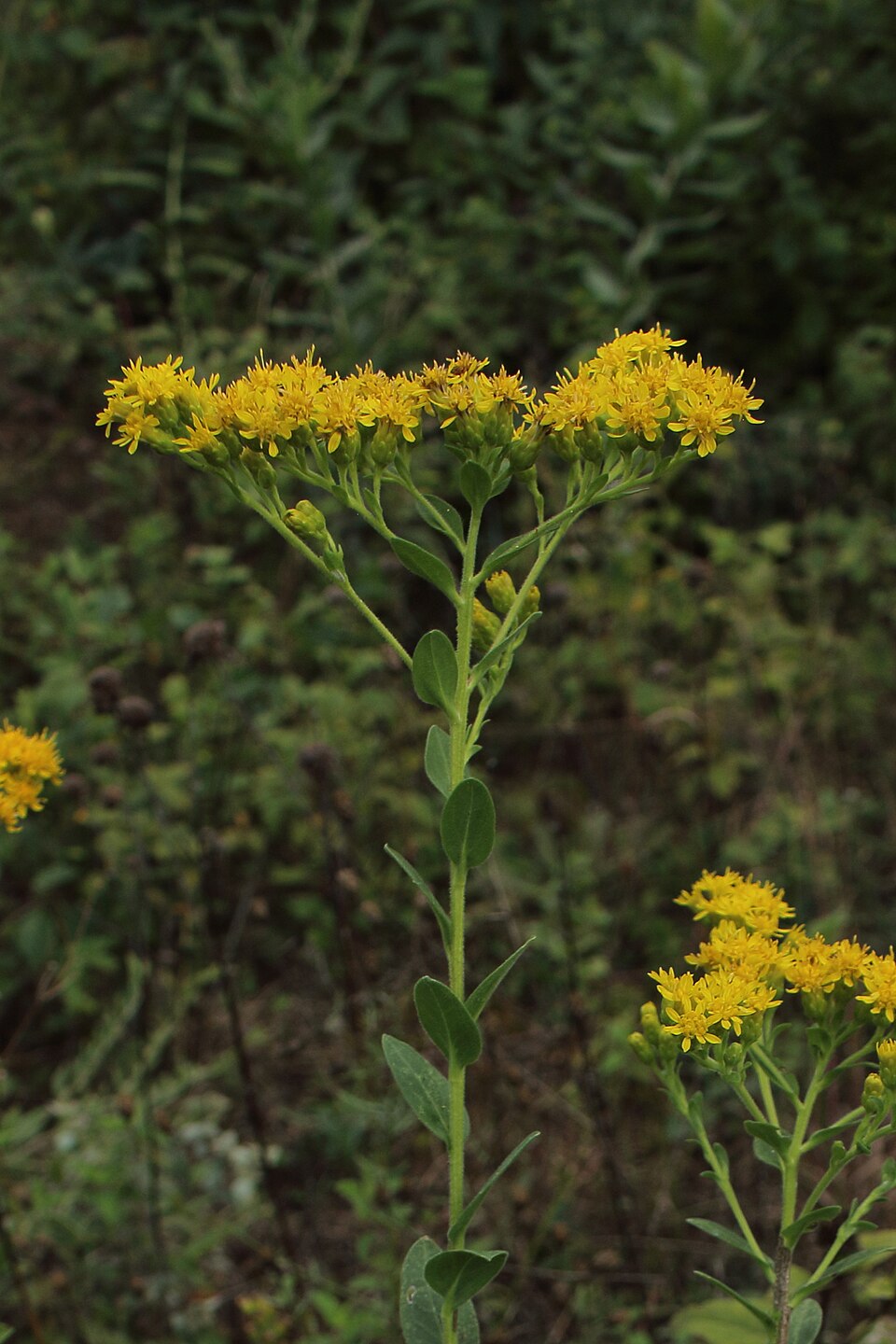
Stiff Goldenrod is easily distinguished from other goldenrod species by its distinctive flat-topped flower arrangement and remarkably rigid growth form. The plant typically reaches 1 to 5 feet in height, though exceptional specimens in ideal conditions may approach 6 feet tall. The entire plant has a sturdy, almost architectural quality that sets it apart in the landscape.
Stems & Growth Form
The stems are distinctively thick, rigid, and unbranched below the flower cluster, giving the plant its common name. Unlike the graceful, often drooping stems of other goldenrods, Stiff Goldenrod’s stems stand perfectly erect and feel almost woody to the touch. The stems are typically smooth or nearly smooth, sometimes with fine short hairs, and range from green to reddish-purple, especially toward the base. The plant grows from a deep, woody taproot that can extend several feet into the soil.
Leaves
The leaves are perhaps the most distinctive feature for identification. They are thick, leathery, and remarkably stiff — feeling almost rubbery when handled. The basal and lower stem leaves are large, typically 2 to 6 inches long and 1 to 3 inches wide, with a distinctive oval to spatula shape. These leaves have prominent parallel veins and are usually smooth-edged (entire) or with very subtle teeth. The leaves become progressively smaller and narrower up the stem, and the upper leaves may be more lance-shaped. All leaves are alternate and have a distinctive blue-green to gray-green color that helps distinguish them from other goldenrods.
Flowers
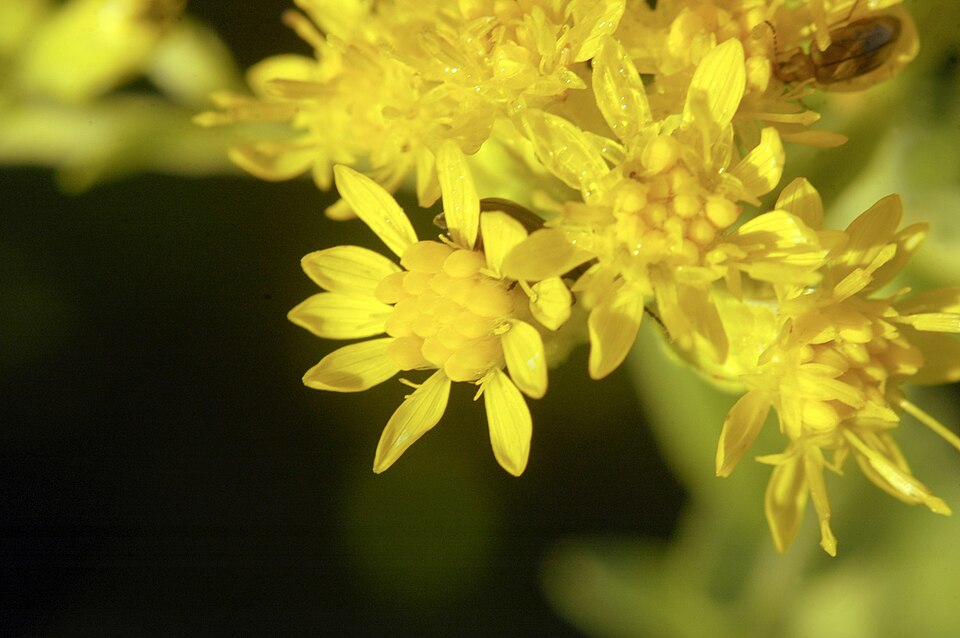
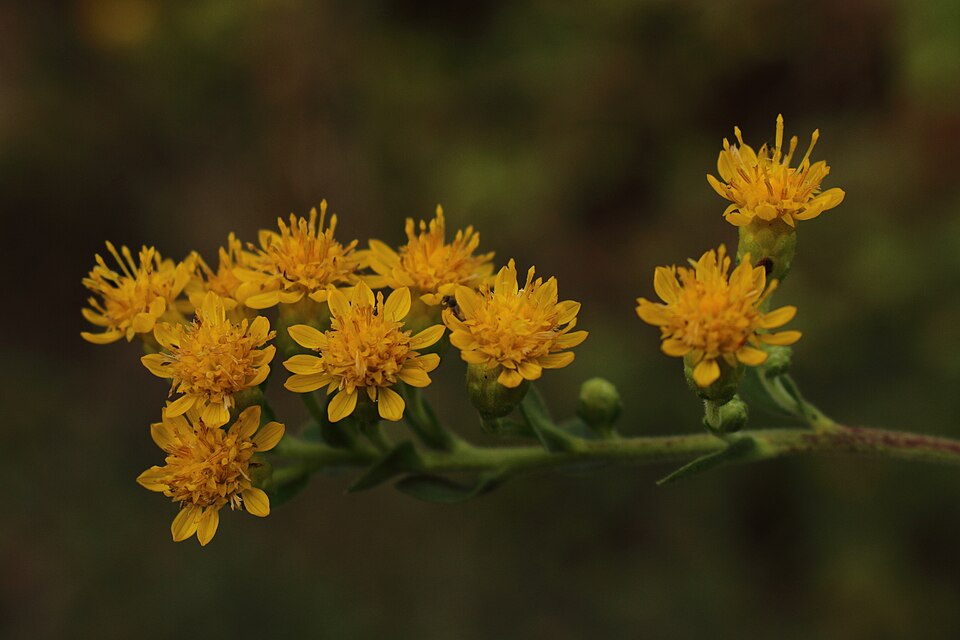
The flowers are arranged in a distinctive flat-topped or table-like cluster (technically called a corymb) at the top of the stem. This flat-topped arrangement is unique among goldenrods and makes identification certain. Each individual flower head is small, about ¼ inch across, and contains both ray flowers (the “petals”) and disk flowers (the center). The ray flowers are bright golden-yellow, typically 7 to 14 per head, while the central disk flowers are also yellow. The entire flower cluster can be 2 to 6 inches across and contains dozens to over 100 individual flower heads, creating a spectacular golden display. Blooming occurs from late July through September, with peak flowering in August and early September.
Quick Facts
| Scientific Name | Solidago rigida |
| Family | Asteraceae (Sunflower/Aster) |
| Plant Type | Perennial Herb |
| Mature Height | 1–5 ft |
| Sun Exposure | Full Sun |
| Water Needs | Low to Moderate |
| Bloom Time | August – September |
| Flower Color | Bright Golden Yellow |
| USDA Hardiness Zones | 3–9 |
Native Range
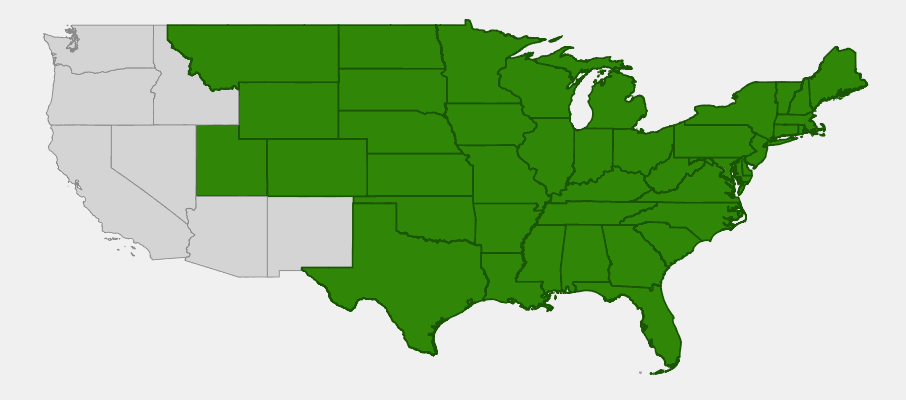
Stiff Goldenrod has one of the most extensive native ranges of any North American goldenrod, naturally occurring across much of the continental United States and southern Canada. The species ranges from the Atlantic coast west to the Rocky Mountains, and from southern Canada south to the Gulf of Mexico and northern Mexico. This wide distribution reflects the plant’s remarkable adaptability to different climatic conditions and soil types.
The species is most abundant across the Great Plains and upper Midwest, where it is a dominant component of native tallgrass and mixed-grass prairie ecosystems. In these grasslands, Stiff Goldenrod often grows alongside Big Bluestem, Little Bluestem, Indian Grass, and other prairie grasses, as well as wildflowers like Purple Coneflower, Black-eyed Susan, and Wild Bergamot. The plant is also common in prairie openings within oak savannas and woodland edges.
While most abundant in grassland habitats, Stiff Goldenrod demonstrates remarkable ecological flexibility, also thriving in open woodlands, forest clearings, roadsides, and disturbed areas with appropriate soil conditions. The species typically grows at elevations from sea level to about 6,000 feet, with the highest populations found on the Great Plains and in the foothills of the Rocky Mountains.
📋 Regional plant lists featuring Stiff Goldenrod: North Dakota, South Dakota & Western Minnesota
Growing & Care Guide
Stiff Goldenrod is one of the easiest native wildflowers to grow, requiring minimal care once established. Its deep taproot and drought tolerance make it an excellent choice for low-maintenance landscaping and prairie restoration projects.
Light
Stiff Goldenrod performs best in full sun, requiring at least 6-8 hours of direct sunlight daily for optimal flowering and growth. While the plant can tolerate partial shade, plants grown in shadier conditions will be taller, more prone to flopping, and produce fewer flowers. In full sun, the plants develop their characteristic sturdy, self-supporting stems and most abundant flower displays.
Soil & Water
This goldenrod is remarkably adaptable to different soil conditions but performs best in well-drained soils of average fertility. It thrives in everything from sandy loam to clay, and can tolerate both slightly acidic to slightly alkaline soil conditions (pH 6.0-8.0). Avoid rich, highly fertile soils, which can cause the plants to grow too tall and require staking. Once established, Stiff Goldenrod is extremely drought tolerant due to its deep taproot, making it ideal for xeriscaping and areas with low rainfall. However, supplemental watering during extended dry periods will promote better flowering.
Planting Tips
Start from seed in fall or early spring, or plant nursery-grown plants in spring after the last frost. Seeds require cold stratification and may take 2-3 years to reach flowering size. If starting from seed, scatter on the soil surface in fall and allow natural winter stratification. Space plants 18-24 inches apart for naturalistic displays, or plant in drifts for maximum visual impact. The deep taproot makes transplanting established plants difficult, so choose the location carefully.
Pruning & Maintenance
Stiff Goldenrod requires very little maintenance. Deadhead spent flowers to prevent excessive self-seeding if desired, though the seed heads provide valuable winter food for birds. Cut plants back to 6 inches in late fall or early spring. In windy locations or rich soils, you may need to stake taller plants, but this is rarely necessary in appropriate growing conditions. The plant may self-seed moderately, but seedlings are easy to remove if unwanted.
Landscape Uses
Stiff Goldenrod’s distinctive form and late-season bloom make it valuable in many landscape applications:
- Prairie and wildflower gardens — a cornerstone species for authentic grassland plantings
- Butterfly gardens — provides crucial late-season nectar when few other flowers are available
- Naturalized areas — excellent for low-maintenance areas and slopes
- Cut flower gardens — the flat-topped blooms are excellent for arrangements
- Rain gardens — tolerates both wet and dry conditions
- Erosion control — deep roots help stabilize soil on slopes
- Background plantings — provides height and structure in perennial borders
Wildlife & Ecological Value
Stiff Goldenrod serves as a crucial late-season resource for wildlife, providing food and habitat when many other plants have finished their growing season. Its ecological importance extends far beyond its striking appearance, making it a keystone species in prairie and grassland ecosystems.
For Birds
The abundant small seeds are eagerly consumed by numerous bird species, particularly American Goldfinches, which are often seen clinging to the seed heads throughout fall and winter. Other regular visitors include Pine Siskins, various sparrows (Tree, Field, Savannah), Dark-eyed Juncos, and Northern Cardinals. The sturdy stems remain standing through winter, providing perching sites and shelter from wind and weather. In prairie habitats, Stiff Goldenrod often serves as important nesting cover for ground-nesting birds like Bobolinks and various grassland sparrows.
For Mammals
While not a primary food source for large mammals, White-tailed Deer occasionally browse the foliage, especially young growth in spring. Small mammals like rabbits and ground squirrels may consume seeds and young shoots. The dense root systems provide habitat for numerous soil-dwelling creatures and contribute to the complex underground ecosystem that supports prairie food webs.
For Pollinators
Stiff Goldenrod is absolutely critical for late-season pollinators, blooming when most other flowers have finished. The flat-topped flower clusters provide perfect landing platforms for butterflies, including Monarchs during their fall migration, Painted Ladies, skippers, and various fritillaries. Native bees are frequent visitors — dozens of species have been recorded visiting the flowers, including sweat bees, leafcutter bees, and bumble bees. Beneficial wasps, flies, and beetles also rely heavily on the abundant nectar and pollen. A single large plant can support hundreds of pollinators during peak bloom.
Ecosystem Role
As a deep-rooted perennial, Stiff Goldenrod plays important ecological roles beyond wildlife support. Its extensive root system — which can extend 10 feet or more into the soil — helps break up compacted layers, improves soil aeration, and brings nutrients from deep soil layers to the surface through leaf drop. The plant contributes to carbon sequestration and soil building in grassland ecosystems. Its late-season growth and bloom also extend the active growing season in prairie communities, supporting soil microorganisms and extending habitat availability for insects and other small creatures.
Cultural & Historical Uses
Stiff Goldenrod has a rich history of use by Indigenous peoples across its range and later by European settlers and herbalists. Various Native American tribes, including the Omaha, Ponca, and other Plains tribes, used different parts of the plant for medicinal purposes. The Omaha used the flowers to make a tea for treating chest pains and respiratory ailments, while other tribes used root preparations for kidney problems and digestive issues. The plant was also used ceremonially, with the bright yellow flowers incorporated into religious and seasonal celebrations.
European settlers and later herbalists adopted many of these traditional uses, and goldenrods in general became important in American folk medicine. The name “goldenrod” itself comes from the Latin “solidago,” meaning “to make whole” or “heal,” reflecting the widespread belief in the plants’ therapeutic properties. However, it’s important to note that despite these historical uses, modern scientific evidence for medicinal efficacy is limited, and the plant should not be used for self-medication.
In the late 1800s and early 1900s, Stiff Goldenrod gained commercial importance as a potential source of rubber. Thomas Edison conducted extensive experiments with various goldenrod species, including Stiff Goldenrod, to develop a domestic rubber industry. While the rubber content proved commercially unviable compared to tropical alternatives, Edison’s work highlighted the species’ unique chemical properties and industrial potential. Today, some goldenrod species are still studied for their latex content and potential industrial applications.
Ecologically, the widespread removal of native grasslands across the Great Plains significantly reduced Stiff Goldenrod populations during the 19th and 20th centuries. However, growing interest in prairie restoration and native plant gardening has led to renewed appreciation for this species. Modern prairie restoration projects often feature Stiff Goldenrod as a key component, and it has become a symbol of grassland conservation efforts across the Midwest. The plant’s striking appearance and critical ecological role have made it a flagship species for native plant enthusiasts and conservation organizations working to restore America’s grassland heritage.
Frequently Asked Questions
Is Stiff Goldenrod the same as the goldenrod that causes allergies?
No! Goldenrods are often wrongly blamed for hay fever, but they are not the culprit. Goldenrods have heavy, sticky pollen that doesn’t become airborne — it’s designed to stick to visiting insects. The real culprit is ragweed (Ambrosia species), which blooms at the same time and releases massive amounts of lightweight, wind-blown pollen. Goldenrods are actually beneficial for allergy sufferers because they attract and feed the insects that would otherwise be spreading ragweed pollen.
How can I tell Stiff Goldenrod apart from other goldenrods?
The flat-topped flower cluster is the definitive identifying feature — no other goldenrod has this table-like arrangement of flowers. Additionally, the thick, leathery leaves that feel almost rubbery and the remarkably rigid, unbranched stems make identification certain. Most other goldenrods have gracefully arching, plume-like flower heads and softer, more flexible stems.
Will Stiff Goldenrod spread aggressively in my garden?
No, Stiff Goldenrod is not aggressive. It grows from a single deep taproot and doesn’t spread by runners or rhizomes like some other perennials. It may self-seed moderately, but seedlings are easy to identify and remove if unwanted. The plant stays in a tidy clump and won’t overtake neighboring plants.
When should I plant Stiff Goldenrod seeds?
Seeds can be planted in fall or early spring, but fall planting is often more successful because the seeds need cold stratification over winter. Simply scatter seeds on the soil surface in October or November and let natural winter conditions prepare them for spring germination. Seeds planted in spring should be cold-stratified in the refrigerator for 30-60 days before planting.
Does Stiff Goldenrod need fertilizer?
No, avoid fertilizing Stiff Goldenrod. Like most native prairie plants, it’s adapted to lean soils and actually performs better without supplemental fertilizer. Rich, fertile soils cause the plants to grow too tall and weak, often requiring staking. The best approach is to plant in average garden soil and let the deep roots find their own nutrients.

Looking for a nursery that carries Stiff Goldenrod?
Browse our native plant nursery directory: North Dakota · South Dakota · Minnesota