
Large-flowered Penstemon (Penstemon grandiflorus)
Penstemon grandiflorus, commonly known as Large-flowered Penstemon, Shell-leaf Penstemon, or Large Beardtongue, is one of the most spectacular native wildflowers of the North American Great Plains. This member of the Plantaginaceae (plantain) family produces some of the largest and most showy flowers of any native penstemon species, with tubular lavender-pink blooms that can reach up to 2 inches long. These dramatic flowers, which resemble foxglove blossoms, create stunning displays against the plant’s distinctive blue-green foliage, making it a prized addition to native plant gardens and prairie restoration projects throughout the central United States.
Growing naturally in the sandy soils and grasslands of the Great Plains, Large-flowered Penstemon typically reaches 2 to 3 feet tall, forming upright clumps that serve as vertical accents in the prairie landscape. The species gets its common name from its exceptionally large flowers, which are among the most conspicuous of all native prairie wildflowers. The blooms are perfectly adapted to attract hummingbirds, which serve as the plant’s primary pollinators, though the flowers also attract long-tongued bees and butterflies. This remarkable relationship between plant and pollinator has evolved over thousands of years, resulting in flowers with precisely the right size, shape, and color to ensure successful reproduction.
Beyond its ornamental value, Large-flowered Penstemon plays important ecological roles in Great Plains ecosystems. The deep taproot helps the plant survive the hot, dry summers and harsh winters characteristic of the region, while also helping to stabilize soil and prevent erosion. The flowers provide crucial nectar for hummingbirds during their long migrations across the prairie, and the seeds feed various small birds and mammals. This beautiful native wildflower combines exceptional drought tolerance with outstanding wildlife value, making it an excellent choice for xeriscaping, prairie gardens, and any landscape design that celebrates the natural beauty of the American West.
Identification
Large-flowered Penstemon forms distinctive upright clumps typically reaching 2 to 3 feet tall and 12 to 18 inches wide. The growth habit is herbaceous perennial, dying back to ground level each winter and re-emerging from a persistent taproot in spring. The overall form is upright and architectural, with strong vertical stems topped by spectacular flower spikes that create dramatic focal points in the landscape.
Stems
The stems are sturdy, upright, and unbranched, typically ½ to ¾ inch in diameter at the base. They are smooth and hairless with a distinctive blue-green to gray-green coloration that helps the plant reflect intense sunlight and conserve moisture. The stems are somewhat succulent when young, becoming more fibrous with age, and they remain attractive even after flowering as they develop distinctive seed pods.
Leaves
The leaves are one of Large-flowered Penstemon’s most distinctive features — they are large, oval, and unusually broad for a penstemon species, measuring 3 to 6 inches long and 2 to 4 inches wide. The leaves are opposite, meaning they emerge in pairs from opposite sides of the stem, and they have a thick, somewhat succulent texture with smooth margins (no teeth). The color is an attractive blue-green to gray-green with a waxy coating that helps the plant conserve moisture in its dry prairie habitat. Upper leaves often clasp the stem partially, while lower leaves are more distinctly stalked.
Flowers
The flowers are the plant’s crowning glory — large, tubular, two-lipped blooms that can reach 1½ to 2 inches long, making them among the largest flowers of any native penstemon. They are typically lavender-pink to pale purple, though color can vary from nearly white to deep rose-pink depending on growing conditions and genetics. The flowers are arranged in terminal spikes with multiple blooms opening progressively from bottom to top over a period of several weeks. Each flower has the characteristic penstemon form with five petals fused into a tube, two upper petals forming a hood, and three lower petals forming a landing platform for pollinators. The interior of the flower often has darker pink or purple guidelines that help direct pollinators to the nectar.
Root System
Large-flowered Penstemon develops a substantial taproot that can extend 3 to 6 feet deep, allowing the plant to access groundwater unavailable to shallow-rooted plants. This extensive root system is crucial for the plant’s survival in the hot, dry conditions of its native habitat and makes established plants extremely drought-tolerant. The root system also helps the plant survive the temperature extremes of the Great Plains, from blazing summer heat to subzero winter cold.
Quick Facts
| Scientific Name | Penstemon grandiflorus |
| Family | Plantaginaceae (Plantain) |
| Plant Type | Herbaceous Perennial |
| Mature Height | 2–3 ft |
| Sun Exposure | Full Sun |
| Water Needs | Low to Moderate |
| Bloom Time | May – July |
| Flower Color | Lavender-pink to pale purple |
| USDA Hardiness Zones | 3–8 |
Native Range
Large-flowered Penstemon is native to the Great Plains region of North America, with a distribution centered in the northern and central portions of this vast grassland ecosystem. The species ranges from southern Canada south through the Dakotas, Nebraska, Kansas, and into northern Texas, with scattered populations extending east into Iowa, Missouri, and Illinois, and west into eastern Wyoming and Colorado. This distribution reflects the plant’s adaptation to the continental climate and well-drained soils characteristic of the Great Plains.
Throughout its range, Large-flowered Penstemon typically grows in sandy or rocky soils in full sun, often in areas that are too dry or harsh for many other wildflowers. It is commonly found on sandy hillsides, rocky outcrops, along railroad tracks, and in disturbed areas where competition from other plants is reduced. The species is particularly abundant in mixed-grass and shortgrass prairie communities, where it provides important vertical structure and spectacular spring color.
Historically, Large-flowered Penstemon was much more widespread across the Great Plains, but like many prairie species, its populations have been reduced by conversion of native grasslands to agriculture. However, the species remains locally common in suitable habitat and has proven to be an excellent plant for restoration projects and native landscaping throughout its range. Its exceptional drought tolerance and striking appearance have also made it popular in xeriscaping and low-water gardens well beyond its native range.
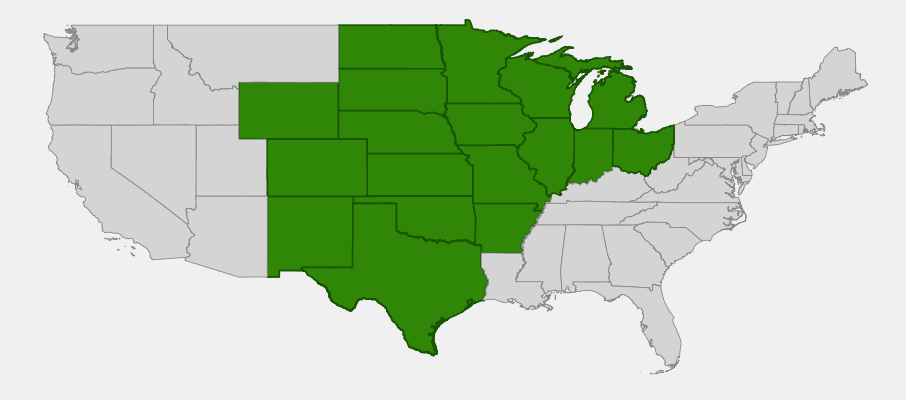
📋 Regional plant lists featuring Large-flowered Penstemon: North Dakota, South Dakota & Western Minnesota
Growing & Care Guide
Large-flowered Penstemon is one of the most rewarding and low-maintenance native wildflowers you can grow, offering spectacular beauty with minimal water requirements and exceptional hardiness. Its adaptation to the harsh conditions of the Great Plains makes it an excellent choice for challenging sites, xeriscaping, and sustainable landscaping throughout much of the central United States.
Light
Large-flowered Penstemon requires full sun for optimal growth and flowering. The plant evolved in the open grasslands of the Great Plains where it receives intense sunlight throughout the day, and it performs poorly in shade. Plants grown in less than full sun will be weak-stemmed, produce fewer flowers, and be more susceptible to disease. Choose the sunniest spot in your garden for best results.
Soil & Water
This prairie native thrives in well-drained, sandy, or rocky soils and is extremely tolerant of poor, infertile conditions. It actually performs better in lean soils than in rich, fertile garden soil, which can cause weak, floppy growth. The plant is exceptionally drought-tolerant once established, thanks to its deep taproot, but benefits from occasional deep watering during extended dry periods. Avoid overwatering, which can lead to root rot and poor flowering. Good drainage is absolutely essential — wet, heavy soils will kill the plant.
Planting Tips
Plant Large-flowered Penstemon in spring after the last frost, or in fall at least 6 weeks before hard frost. Space plants 12–18 inches apart for naturalistic plantings. The plant is somewhat short-lived (3–5 years typically), but it readily self-seeds in suitable conditions, ensuring continuity in the garden. Established plants resent disturbance, so choose your location carefully. The plant transplants best when young — mature plants with their large taproots are difficult to move successfully.
Pruning & Maintenance
Large-flowered Penstemon requires minimal maintenance. Deadhead spent flowers to encourage continued blooming, or leave them in place to develop seeds for wildlife and self-sowing. Cut plants back to ground level in late fall or early spring. The plant rarely needs fertilization and has few pest or disease problems when grown in suitable conditions. Avoid rich, moist soils and overhead watering, which can lead to fungal issues.
Landscape Uses
Large-flowered Penstemon’s striking appearance and low water needs make it valuable in many landscape settings:
- Xeriscaping — exceptional drought tolerance makes it perfect for water-wise gardens
- Prairie gardens — essential component of authentic Great Plains restorations
- Rock gardens — thrives in well-drained, rocky conditions
- Hummingbird gardens — flowers specifically adapted to attract hummingbirds
- Border plants — provides dramatic vertical accents in perennial borders
- Mass plantings — spectacular when planted in drifts for maximum impact
- Cutting gardens — flowers make excellent cut flowers, though they don’t last long in vases
Wildlife & Ecological Value
Large-flowered Penstemon is a keystone species for pollinator conservation, particularly for hummingbirds, and provides important ecological services throughout its range. The plant’s large, tubular flowers have evolved specifically to attract and accommodate hummingbird pollinators, making it a crucial component of hummingbird migration routes across the Great Plains.
For Hummingbirds
The flowers of Large-flowered Penstemon are perfectly designed for hummingbird pollination — their size, shape, color, and nectar production are all precisely adapted to attract these remarkable birds. Ruby-throated Hummingbirds, Broad-tailed Hummingbirds, and other species rely heavily on penstemon nectar during their long migrations across the prairie. The flowers bloom at precisely the right time to provide fuel for northbound spring migrants, and the plant’s distribution coincides with major hummingbird migration corridors. A single plant can produce hundreds of flowers over a period of several weeks, providing sustained nectar resources when hummingbirds need them most.
For Other Pollinators
While hummingbirds are the primary pollinators, Large-flowered Penstemon also attracts long-tongued bees, butterflies, and sphinx moths. Carpenter bees and bumble bees can access the nectar, and many other bee species collect pollen from the flowers. The plant blooms during a critical period in late spring and early summer when pollinator populations are building and need abundant resources.
For Seed-Eating Birds
The seed pods that develop after flowering provide food for numerous small birds, including American Goldfinches, Lesser Goldfinches, and various sparrow species. The seeds are small but numerous, and birds often work over the dried flower heads methodically, extracting every available seed. Leaving the flower heads standing through winter provides important food during the harshest months.
Ecosystem Role
Large-flowered Penstemon helps maintain the structural and species diversity of Great Plains grasslands. Its deep taproot helps stabilize soil and creates channels for water infiltration. The plant also serves as a nurse plant for other prairie species, providing some protection from extreme weather during establishment. Its presence often indicates healthy prairie conditions, as it is sensitive to overgrazing and habitat degradation.
Cultural & Historical Uses
Large-flowered Penstemon has held significance for Indigenous peoples of the Great Plains, though it was never as prominent in traditional medicine as some other native plants. Several Plains tribes used various penstemon species medicinally, primarily for respiratory ailments and as external treatments for wounds and skin conditions. The Lakota and other tribes recognized the plant’s beauty and incorporated it into their understanding of the prairie ecosystem, noting its importance for hummingbirds and other wildlife.
European settlers and early botanists were immediately struck by the plant’s spectacular flowers, and Large-flowered Penstemon was among the first Great Plains wildflowers to be cultivated in Eastern gardens. However, the plant proved difficult to grow in the humid, fertile conditions of Eastern gardens, and it never achieved widespread cultivation despite its beauty. This difficulty in cultivation actually helped preserve wild populations, as there was less pressure to collect plants from the wild for garden use.
In the late 19th and early 20th centuries, as the Great Plains were being rapidly converted to agriculture, many botanists and naturalists recognized Large-flowered Penstemon as a symbol of the vanishing prairie. Its spectacular flowers and unique adaptations made it a favorite subject for early nature photographers and artists attempting to document the prairie before it disappeared. Railroad botanists, in particular, noted that the species often persisted along railroad rights-of-way even after surrounding prairie had been plowed, making these linear habitats crucial refuges for the species.
Today, Large-flowered Penstemon has become an important symbol of prairie conservation and restoration. Its inclusion in native seed mixes and restoration projects helps recreate the spectacular floral displays that once characterized the Great Plains. The plant has also gained recognition in the xeriscaping and sustainable landscaping movements, where its exceptional drought tolerance and low maintenance requirements make it valuable for water-wise gardening. Climate change concerns have further increased interest in the species, as its heat and drought tolerance may make it valuable for gardeners dealing with increasingly challenging growing conditions.
Frequently Asked Questions
Why do my Large-flowered Penstemon plants seem to disappear after a few years?
Large-flowered Penstemon is naturally somewhat short-lived, typically lasting 3–5 years before declining. However, plants readily self-seed in suitable conditions, so new plants should appear nearby if conditions are right. Ensure your soil drains well and isn’t too rich or moist, as these conditions can shorten the plant’s lifespan.
Can I grow Large-flowered Penstemon in humid climates?
This species is adapted to the dry air and well-drained soils of the Great Plains and can struggle in humid conditions, particularly if soils stay moist. In humid areas, provide excellent drainage, avoid overhead watering, and ensure good air circulation around plants. Plants may still be shorter-lived than in their native range.
When is the best time to see Large-flowered Penstemon in bloom?
Peak bloom typically occurs from late May through June in most areas, though timing can vary with weather conditions. Individual plants bloom for 3–4 weeks, with flowers opening progressively from the bottom of the spike upward. For longest bloom season, plant several plants or varieties with slightly different bloom times.
Do hummingbirds really visit Large-flowered Penstemon?
Absolutely! The flowers are specifically adapted for hummingbird pollination, and these birds are frequent visitors during bloom period. Ruby-throated and Broad-tailed Hummingbirds are regular visitors, and the plant is considered essential habitat along hummingbird migration routes across the Great Plains.
Can I save seeds from my Large-flowered Penstemon?
Yes, Large-flowered Penstemon produces abundant seeds that are easy to collect when the seed pods turn brown and begin to split open. Seeds require a cold treatment (stratification) before planting — either sow them directly in fall or store seeds in slightly moist sand in the refrigerator for 60–90 days before spring planting.

Looking for a nursery that carries Large-flowered Penstemon?
Browse our native plant nursery directory: North Dakota · South Dakota · Minnesota